
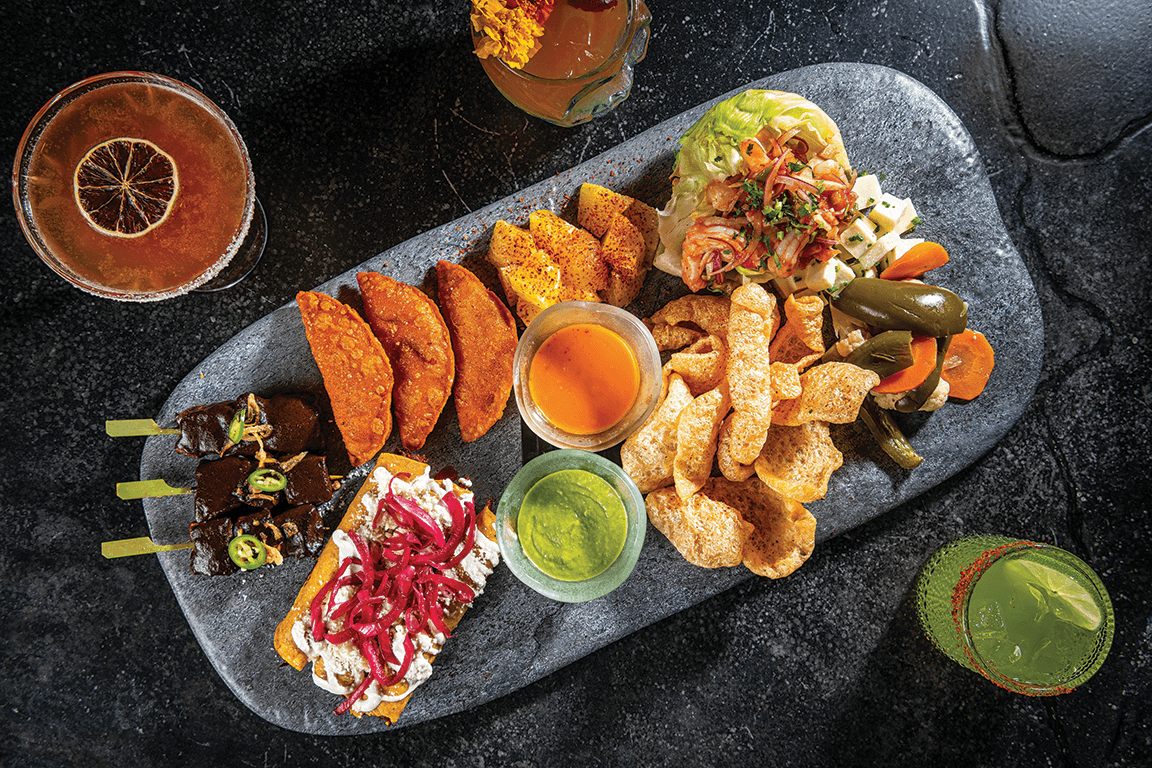
Photo Credit: Mi Vida
Afternoon Delight
Shoulder hours move to prime time
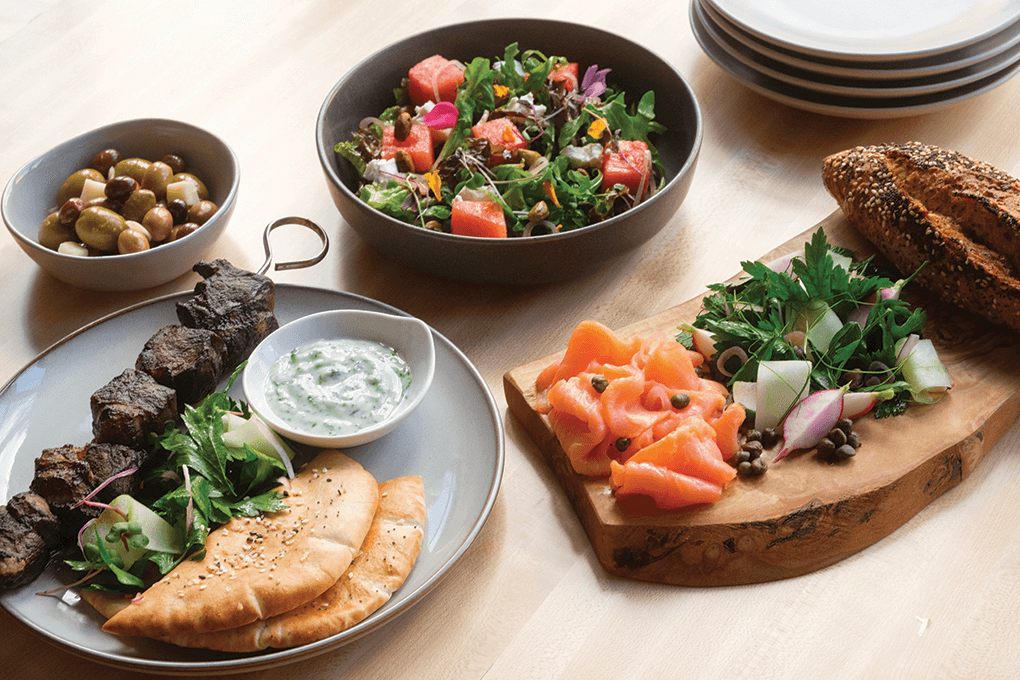 Photo Credit: Reilly Drew
 Pompette serves up all-day comfort for anytime occasions: Watermelon Salad with feta, arugula, balsamic, pickled shallot and pistachio; Marinated Olives with garlic, thyme, oregano and manchego; Smoked Salmon Plate with cucumber, onion, capers, radishes, whipped crème fraîche and everything demi baguette; and Lamb Brochette with cucumber and red onion salad, yogurt and garlic pita.
These strategies at Amaru, Mi Vida and Pompette are working because they key into the fact that many of today’s consumers are following unconventional schedules and are looking for a variety of options on any given day—outside of standard daypart hours. There’s an overarching trend taking shape in foodservice that sees dining habits fundamentally shapeshifting. Offering differentiated, compelling, snackable menus in relaxed, inviting spaces is a major opportunity. “It’s important for restaurant brands to ask themselves, ‘What problems are we solving for our post-pandemic patrons?’” says Maeve Webster, president of Menu Matters. “Adding afternoon service solves for both the operator and the consumer. Restaurants don’t have to open all the way up, and they don’t have to offer the whole menu. But there’s a swath of consumers looking for sit-down food in the afternoons, including people who are only going into work for half a day and need a meal solution, or work-from-home folks who want to get out in the late afternoons.” This is an ideal time for brands to institute change, Webster points out. “Consumers are in a state of flux. Their behavior patterns are all blown apart, and they’re open to new ideas. Now’s the time to start rethinking what to do with those afternoon hours.”
 Photo Credit: Amaru
 The Sweet Plantains at Amaru in Chicago are topped with queso fresco and a mojo drizzle, making for a tempting happy hour shareable.
THIRD PLACES
As Pompette’s Aubin observes, there’s a deep-seated desire by people for “third places,” a term coined by sociologist Ray Oldenburg in 1989, which refers to social environments that are a welcome escape from home and work. Collectively, we lost these spaces during the pandemic, so it makes sense that our yearning for them has helped stoke the fire fueling this trend.
Of course, the rise in working from home or other non-office locations, including cafés and restaurants, is itself a huge driver, as consumers seek snacks, meals and drinks across the entire workday. Apart from wanting a change of scenery and having more time (thanks, in large part, to trading the commute for Teams calls), the pull to socialize and enjoy hospitality with friends or colleagues is strong. “Sometimes they bring their laptops. Sometimes they just want a glass of wine and a slice of quiche. They really just want an experience outside of the home,” says Aubin.
 Photo Credit: Meghan Reardon
 Birdie G’s “Early Birdie” offerings include Whipped Avocado with fried matzo; Vernors Baked Ham with pickled melon; Lavender Almonds; Olives with wild fennel and chile; and Kippered Sable Terrine with crispy potato waffles.
HAPPY HOUR
Operational malleability is a key factor in attracting guests. Their needs can range from free wi-fi for those late afternoon work meetings to fabulous early happy-hour specials and shareables for impromptu gatherings of friends.
“The typical nine-to-five workday was flipped on its head after March 2020,” says John Franke, president of Franke Culinary Consulting. “A shift in dayparts has seen a rise in guests coming in to dine earlier. This gives brands an opportunity to seek more inventive ways to repackage what is on their menus or create dishes with a lower price point using ingredients that are in house.” Franke points out that this approach yields a win for both the operator and the guest. “The guests feel as though they are getting value in what they are eating, and the operator is able to sell items that were low-use SKUs and/or be creative in portioning and pricing.”
Trend-forward offerings that keep flavor in the crosshairs are at the heart of successful modern happy hours. Birdie G’s in Los Angeles, a concept where Eastern European and Californian cuisines meet, added the Early Birdie’s Happy Hour to its line-up last July, running special prices on drinks and snacks every day from 5 to 6 p.m. Menu items include Whipped Avocado with fried matzo (a Jewish rendition of guacamole and chips), Pickle Chicken Wings with dill pickle hot sauce, Olives with wild fennel and chile, Reuben Fries and Lavender Almonds.
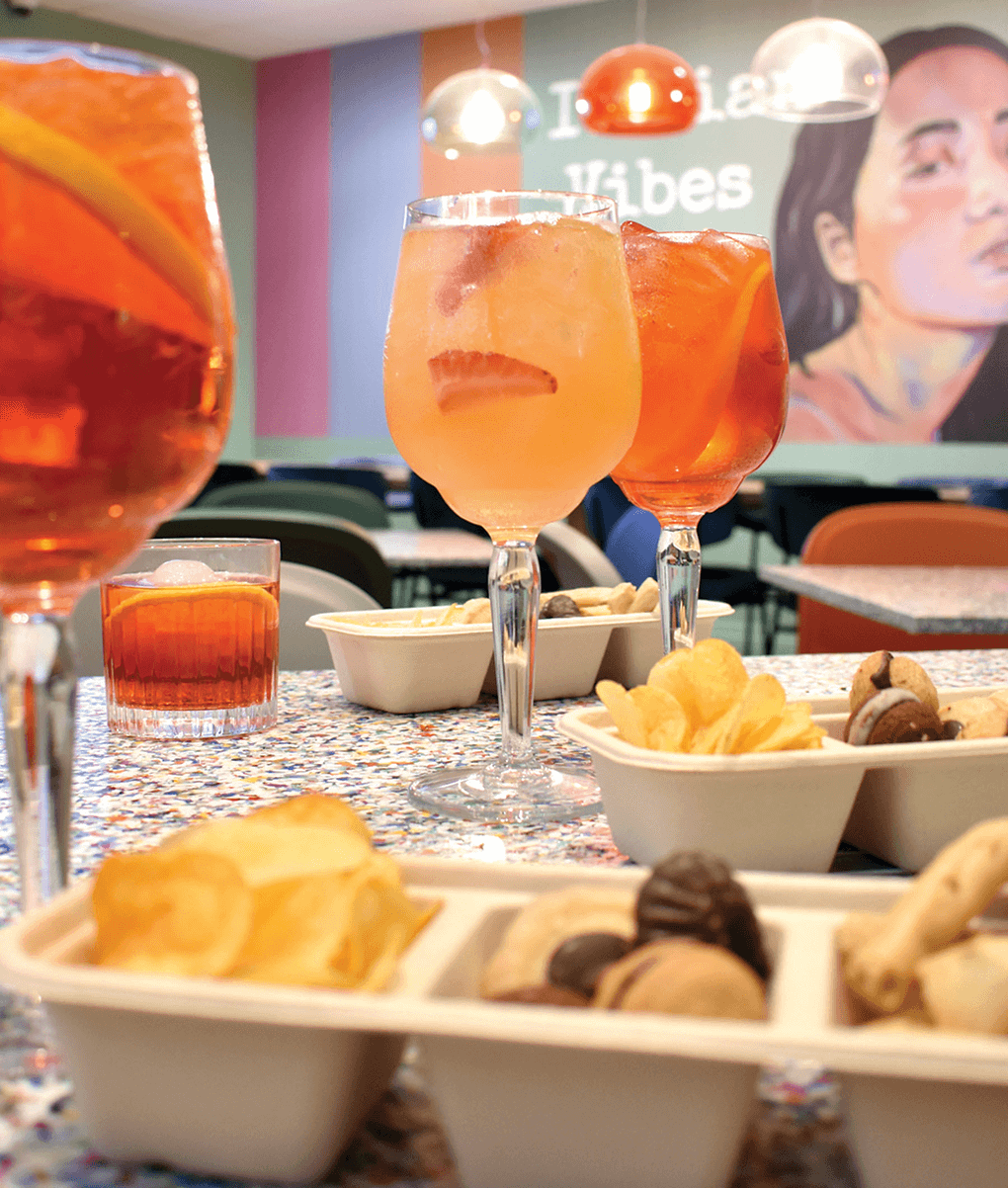 Photo Credit: Puro Gusto
 Puro Gusto serves draft cocktails (Aperol spritz, seasonal spritzes and classic Negroni), alongside light Italian snacks during its Bottomless Apertivo Happy Hour.
Puro Gusto in Washington, D.C., leverages happy hour to express its Italian sensibility, theming it as the Bottomless Aperitivo Happy Hour, running Monday through Wednesday, 4 to 6 p.m. For $17.95, guests enjoy as much draft beer (Peroni, Dogfish Head IPA) or draft cocktails (Aperol spritz, seasonal strawberry spritz, classic Negroni) and snacks as they like.
Happy hour used to be primarily relegated to the after-work crowds in city centers or other hubs of concentrated workforces. Everything has changed, which ensures one foodservice constant: ingenuity.
About the Author
 Katie Ayoub serves as managing editor of Flavor & The Menu and content strategist for the Flavor Experience, an annual conference geared toward chain operators. She is president of Katie Ayoub & Associates, serving up menu trends expertise, content creation and food & beverage consultancy. Based in Chicago, Katie has been working in foodservice publishing for more than 20 years and part of the Flavor team since 2006. katie.ayoub@gmail.comRead More Stories by Katie Ayoub
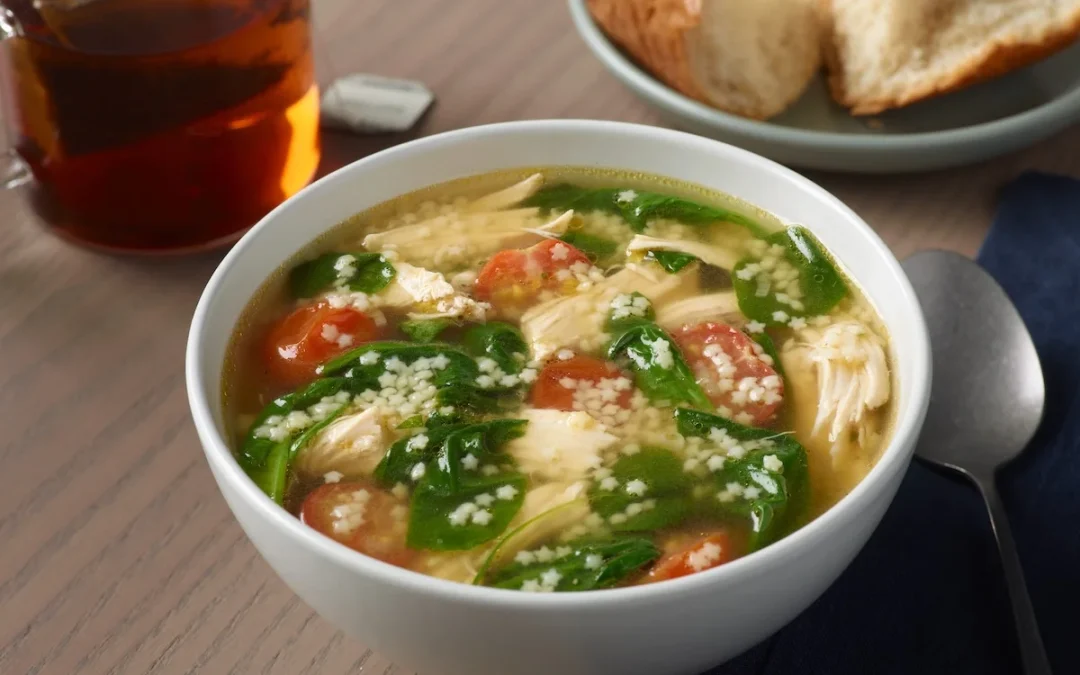
Simple Comfort Pastina proves that restraint still resonates
Flavor Trends, Strategies and Solutions for Menu Development[google_sidebar_ad adslug="2026-04-Surround-Barilla-320x50"...
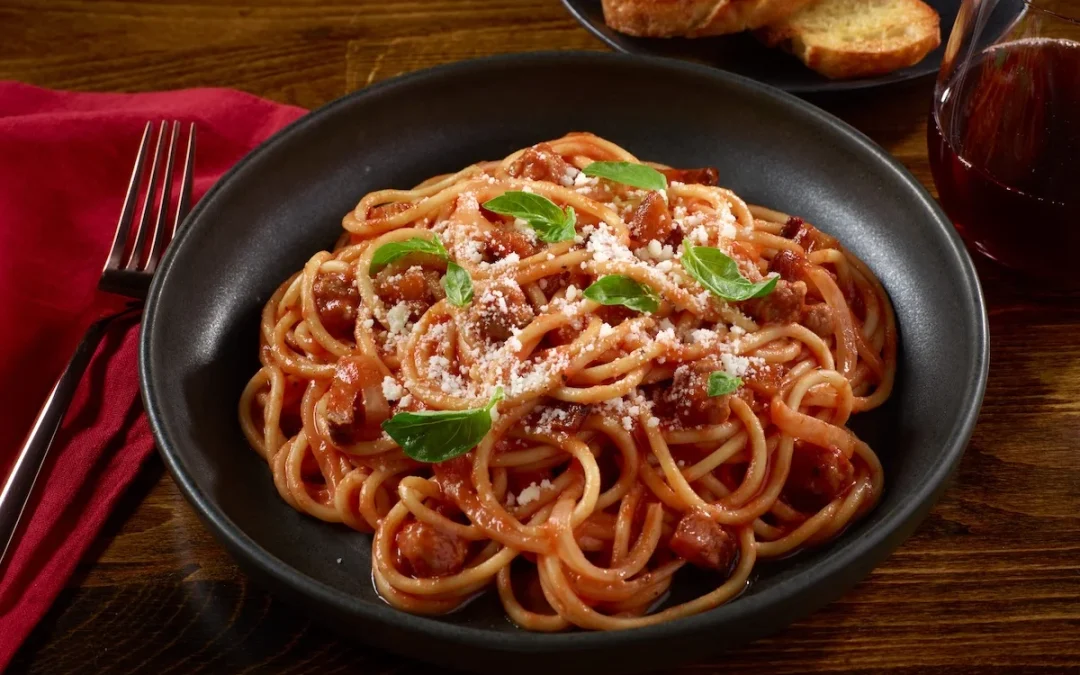
More Is More Alla Zozzona amplifies tradition into craveable indulgence
Flavor Trends, Strategies and Solutions for Menu Development[google_sidebar_ad adslug="2026-04-Surround-Barilla-320x50"...
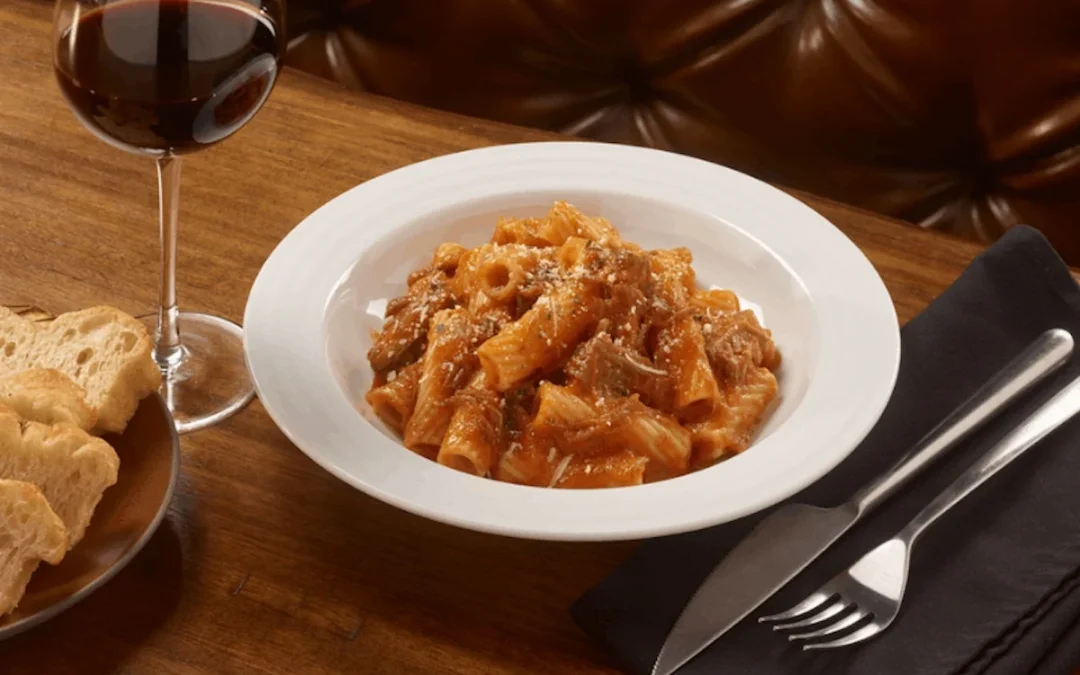
Slow Craft Pasta alla Genovese channels time, memory and menu storytelling
Flavor Trends, Strategies and Solutions for Menu Development[google_sidebar_ad adslug="2026-04-Surround-Barilla-320x50"...
