
How to Lean Into Japanese Cuisine
Four dishes, four different approaches
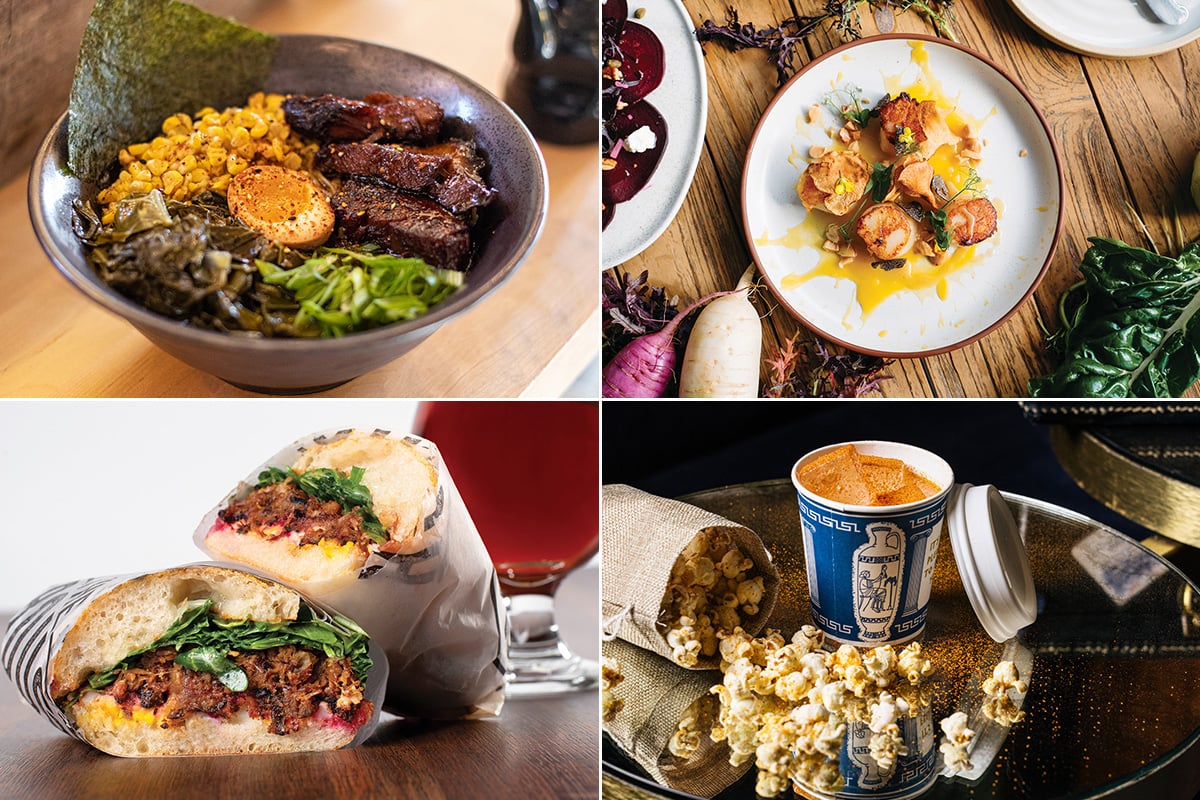
These four Best of Flavor entries adopt elements of Japanese cuisine without directly replicating a specific dish. The result is a fresh creation whose provenance is shared by multiple sources of inspiration and perfected by the chef.
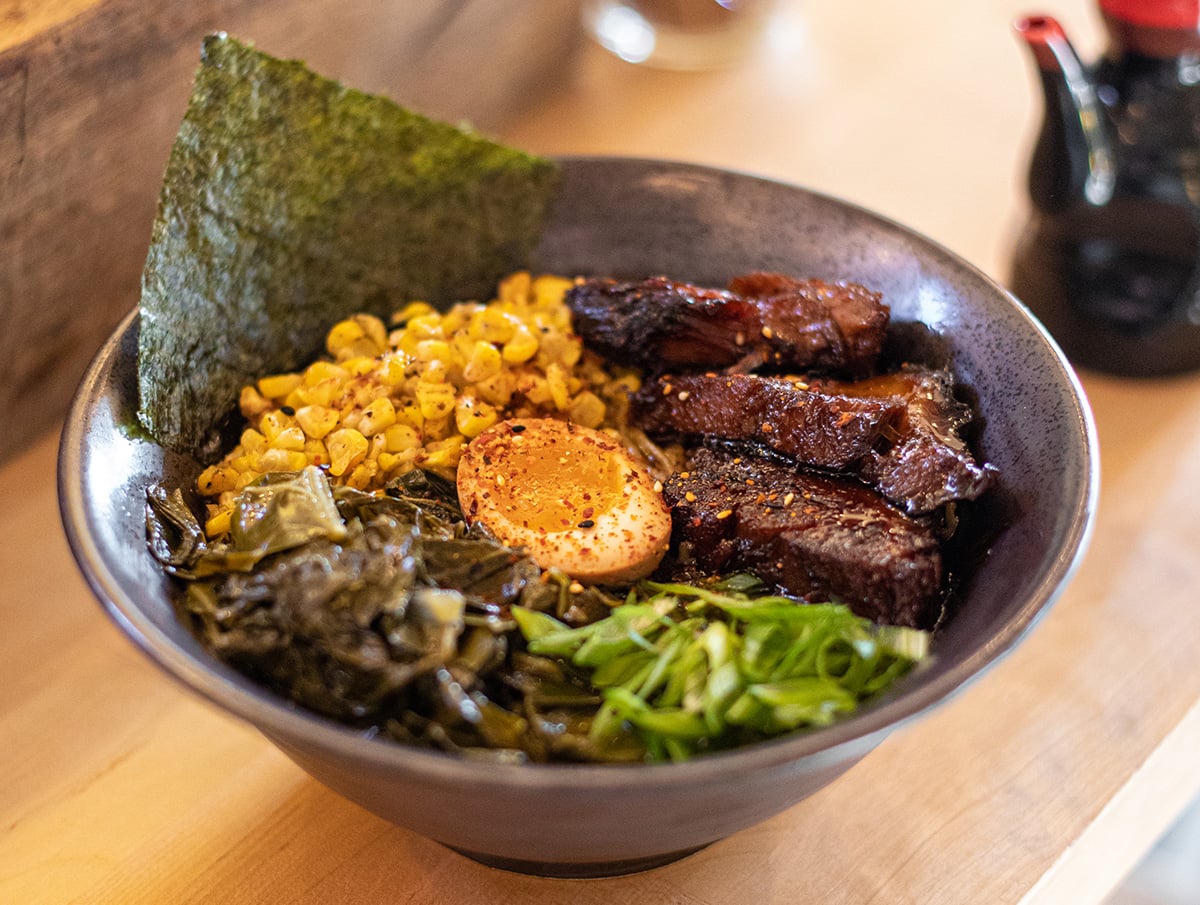 Photo Credit: Nanbu Noodle Bar
 The Nanbu Noodle Bowl marries the best of both worlds with a mix of Southern U.S. and Japanese ingredients.
In the case of Nanbu Noodle Bar, Southern cuisine finds a complementary partner in Japanese flavors and iconic ingredients. Located in the beach town of Santa Rosa Beach in Florida’s panhandle, the restaurant draws visitors from neighboring Southern states who are interested in Southern comfort with a twist, as chef/owner Nikhil Abuvala puts it. This menu approach shines especially brightly in the eponymous Nanbu Noodle Bowl where Japanese ingredients like ramen, a soy-seasoned egg and Kurobuta pork shoulder are mingled with Southern staples, including collard greens, sweet corn and scallion.
“This is a best-seller because of how impactful every individual ingredient is to the bowl’s overall flavor,” Abuvala says. “From the collards to the soy egg to the Kurobuta pork shoulder, we really pulled out all the stops.” The overall effect skews heavily toward Japanese cuisine, both in terms of visuals and flavor, but the addition of key Southern foods solidifies it as a localized dish with global sensibility.
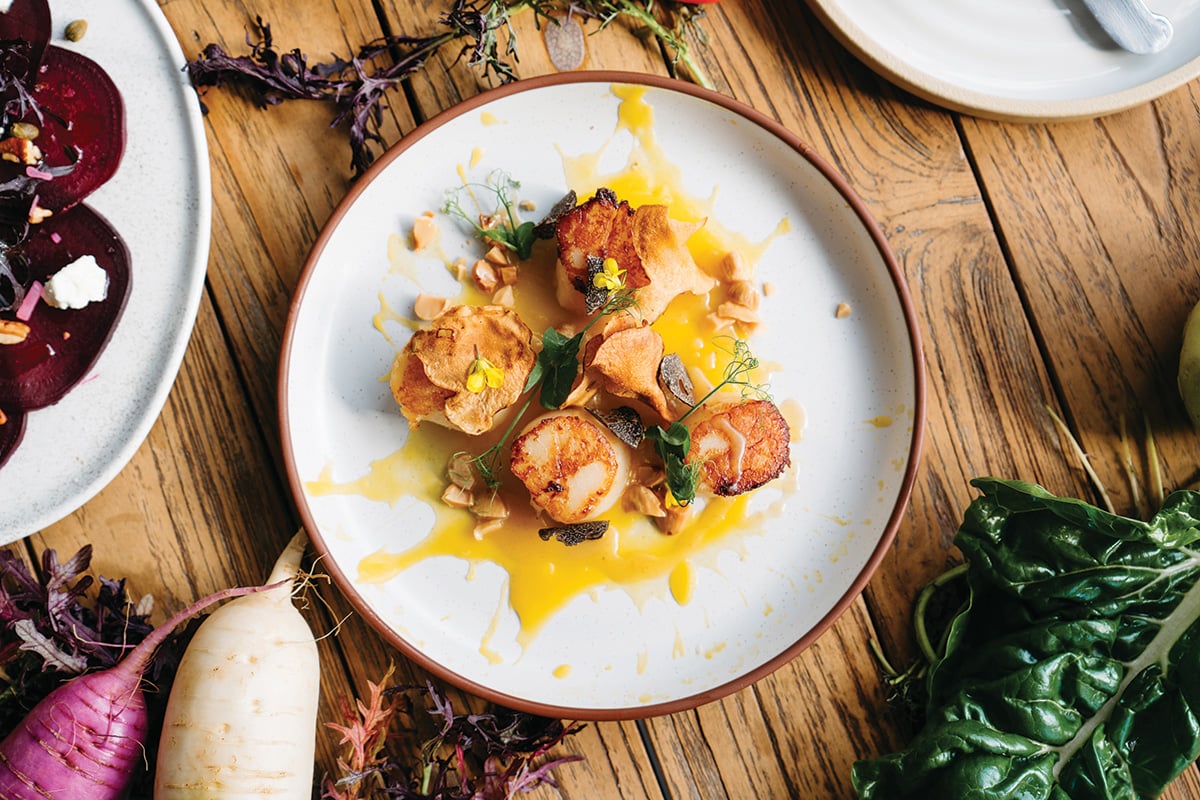 Photo Credit: 1 Hotel Nashville
 The flavor profile of the Hokkaido Scallops at 1 Kitchen Nashville are informed by seasonal ingredients, save for the headlining scallops, sourced directly from Japan.
While the menu at hotel restaurant 1 Kitchen Nashville leans deep into fresh, locally sourced fare, one of its most popular dishes is designed around an ingredient that travels some 6,000 miles to land on guests’ plates. Hokkaido Scallops, which hail from Japan, are renowned for their impressive size, as well as their sweet, buttery flavor. “They are the star of the dish, and I’m just trying to put them on a pedestal,” says Chris Crary, culinary director.
To best showcase the scallops, Crary demonstrates a deft hand in selecting complementary seasonal ingredients. For the menu debut, these included acorn squash purée, fried Marcona almonds, crispy sunchokes, maple-sherry vinegar and brown butter. “Each item is used to highlight the flavor of the scallops and also offer contrasts,” says Crary. For example, the savory, earthy notes of the squash and the salty, nutty taste of the almonds balance the clean, sweet flavor of the scallops. The crispy sunchokes deliver a light, fun, potato chip-like texture, while the maple-sherry vinegar lends a slightly sweet and acidic accent note, rounded out by the rich, nutty taste of the brown butter. “Guests tell us this is the best scallop dish they have ever had,” he says.
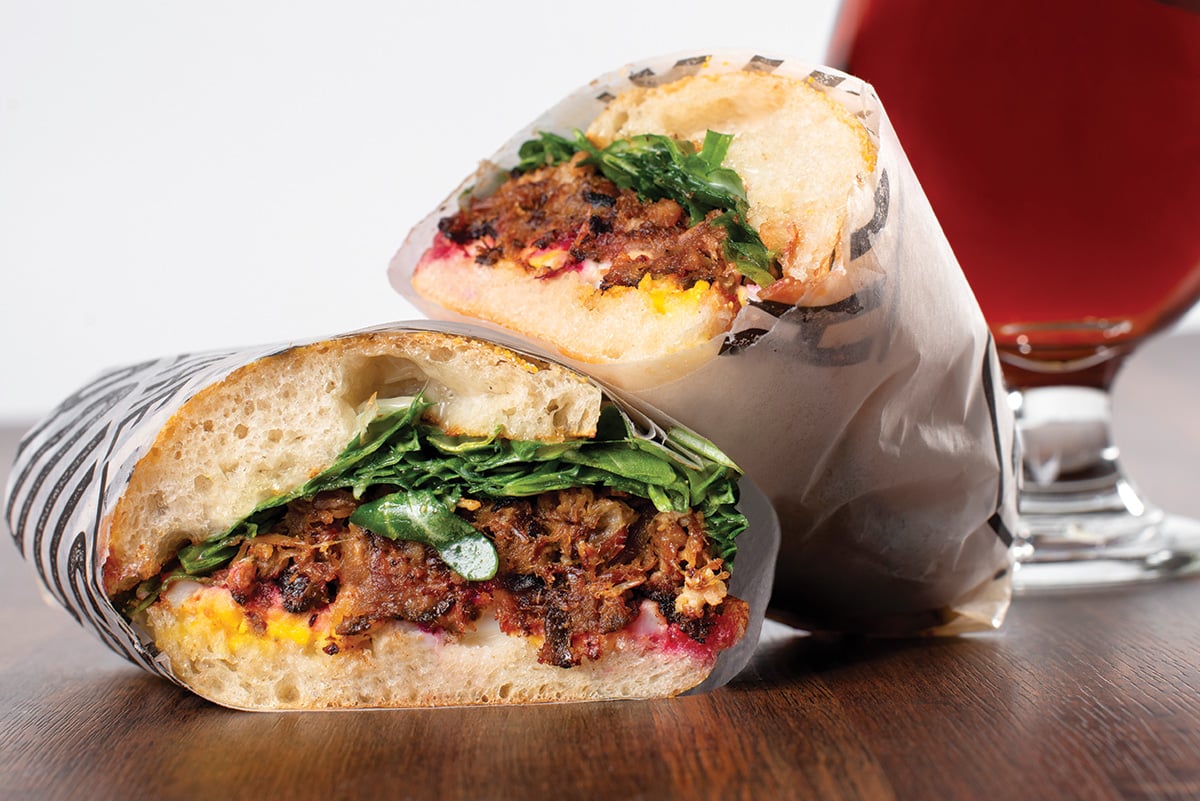 Photo Credit: The Trough Sandwich Kitchen
 This Chasu Sandwich boasts many of the same ingredients as a classic bowl of ramen, but they’re tucked into a cornmeal roll for a handheld twist.
Described as a “bowl of ramen in sandwich form,” it’s easy to understand why the Chasu Sandwich is a menu standout and fan favorite. “It was created with South and East Asian cuisines in mind, taking influence from the flavors, ingredients and cooking methods commonly utilized in those regions,” says Brandin Duda, regional manager and chef of The Trough Sandwich Kitchen, a concept known for its inventive handhelds.
The Chashu highlights the opportunity in taking proven flavor systems and reimagining them in different forms. It stars pork that’s been marinated for 24 hours then slow-braised for 6 hours. It’s topped with a generous layer of pickled ginger, cutting through the richness of the meat nicely. To round out the ramen-inspired build, Duda adds slices of soy-marinated egg, Japanese-style mayo lifted up with rice vinegar and peppery arugula, all tucked into a fresh cornmeal roll. “Alone, each ingredient is delicious, but together they are magic. Every layer of flavor and texture plays an important role in the final product,” he says. “The sum is somehow greater than its parts.”
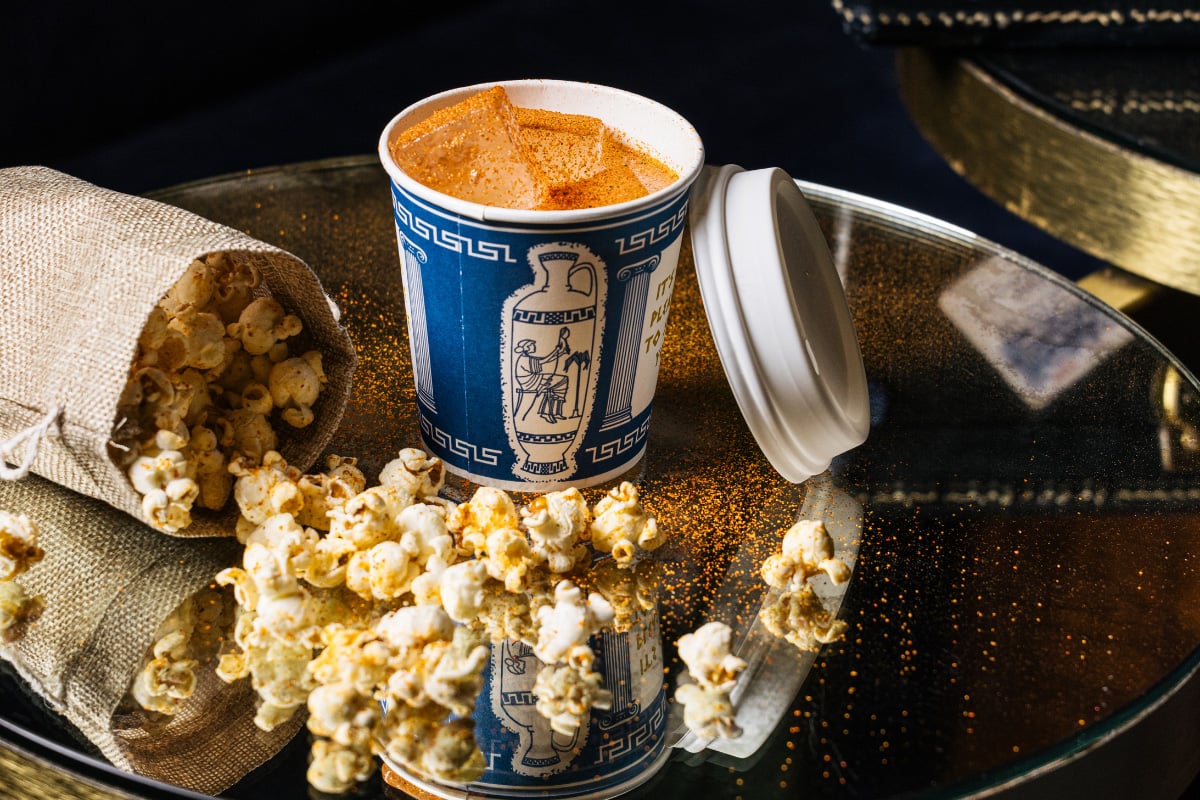 Photo Credit: Grace Stufkosky
 Platform 18’s housemade togarashi spice brings an extra kick of flavor to a popcorn-infused margarita that’s already one-of-a-kind.
“Who doesn’t love a spicy margarita?” poses Jason Asher, co-founder and VP of beverage at Platform 18, a bar concept from Century Grand that celebrates the mystique of New York during Prohibition. “Our version brings extra flair and layers of flavors that guests would never expect from a drink they think they know well,” he notes, describing the Togarashi-infused popcorn margarita, which features a housemade togarashi spice blend paired with butter popcorn-infused tequila. “You’ll taste flavors of a familiar spicy margarita but with a Platform 18 twist,” says Asher, pointing also to a hint of cereal milk in the flavor notes, courtesy of the house pandan tincture. “Served with a bag of togarashi-seasoned popcorn, this drink not only transports you to New York City, but brings the flavors reminiscent of those you find in a theater.”
The drink consistently performs in the top five each week, he reports. “We crafted all the components of this cocktail with meticulous detail, even serving it in the iconic blue-and-white New York to-go coffee cup,” says Asher. “Details like this create such a contagious sense of excitement. It’s one of our favorite things to do.”
About the Author
 Patricia Fitzgerald serves different roles on the Flavor & The Menu team, including writing custom content, Kitchen Collaborative chef spotlights and digital editorial content, as well as acting as a contributing editor for the print magazine. As owner of PFitzCommunications, she specializes in various areas of foodservice and hospitality, while also maintaining clients in other industries and professions. She can be reached at pfitzcommunications@gmail.com.Read More Stories by Patricia Fitzgerald
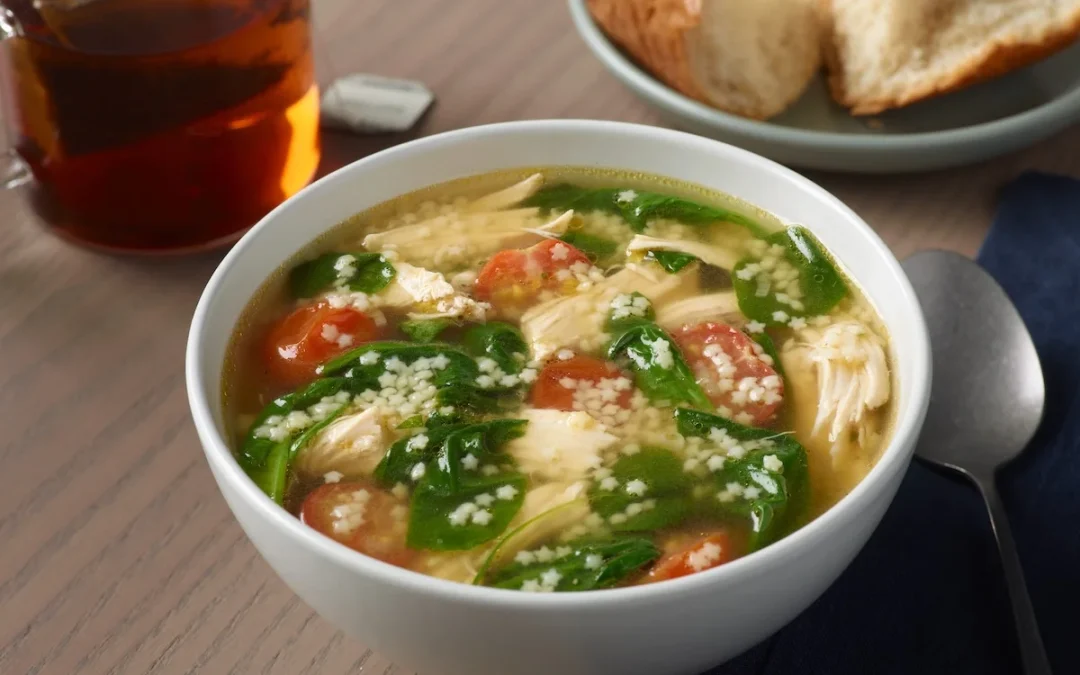
Simple Comfort Pastina proves that restraint still resonates
Flavor Trends, Strategies and Solutions for Menu Development[google_sidebar_ad adslug="2026-04-Surround-Barilla-320x50"...
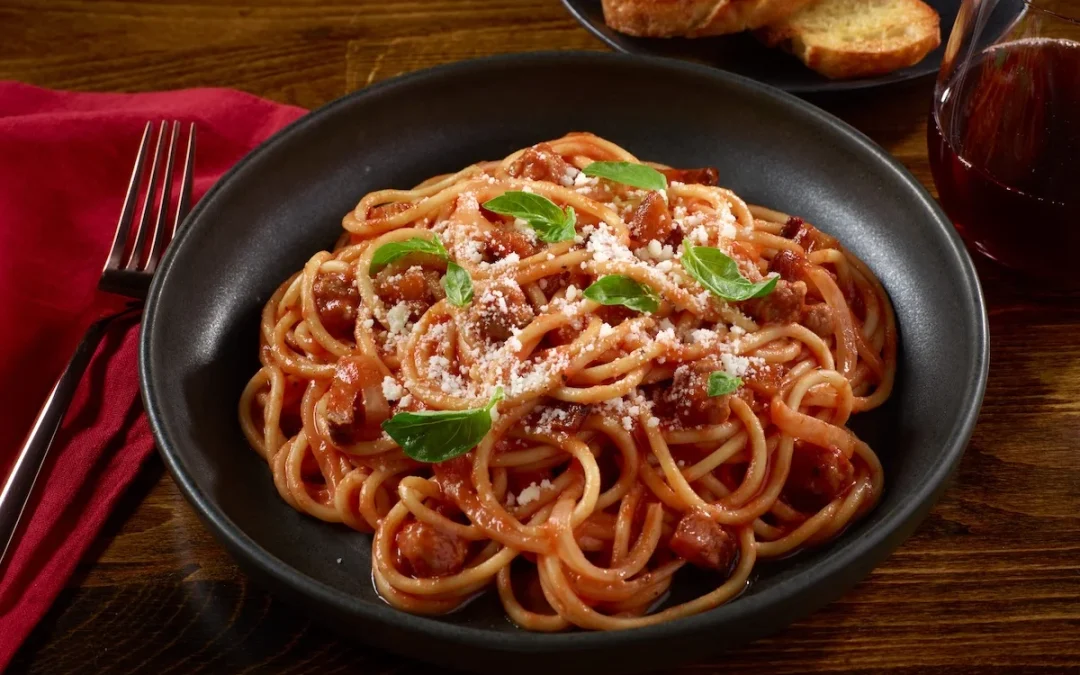
More Is More Alla Zozzona amplifies tradition into craveable indulgence
Flavor Trends, Strategies and Solutions for Menu Development[google_sidebar_ad adslug="2026-04-Surround-Barilla-320x50"...
Slow Craft Pasta alla Genovese channels time, memory and menu storytelling
Flavor Trends, Strategies and Solutions for Menu Development[google_sidebar_ad adslug="2026-04-Surround-Barilla-320x50"...
