
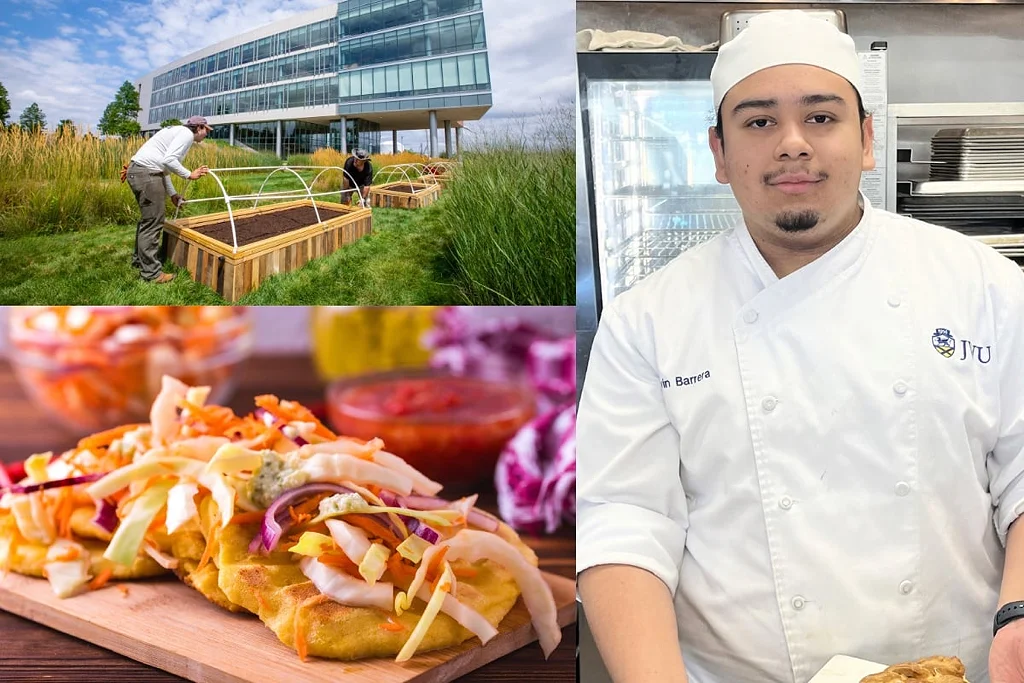
Ervin Barrera (class of 2027) has combined his passion for cooking and science at Johnson & Wales University, where he studies Culinary Science and Food Product Development.
Credit: Nica’ D. Joyner (headshot) | Johnson & Wales University (top left)
Generation Next: One Student’s Quest for the “Why” of Cooking
The future of food is evolving, one culinary student at a time
Within the culinary world, there are many stories of up-and-coming chefs from all sorts of backgrounds and cultures. We hear of their French bakeries, Mexican kitchens and hot, new restaurants featuring varying Asian cuisines that are ready for the world to enjoy. But how often do you hear about El Salvador’s culinary traditions and impact?
Ervin Barrera hopes to change that. With both Salvadoran and Nicaraguan heritage, he is a student from Mastic, N.Y., currently studying Culinary Science and Food Product Development at Johnson & Wales University (JWU) in Providence, R.I. This particular major called to him as a foundation for how he envisions his future. Barrera is very family-orientated and has long worked in a commercial kitchen alongside his mother, learning to make foods from his background as a way to connect with his own culture and others. He is also fulfilled by learning the “how” and “why” of cooking, and it was this curiosity that led to his major.
From the beginning, Barrera has been inquisitive about where food comes from and the systems that bring it from the farm to the fridge and onto the table. Still, like many young students, he wasn’t always certain of the route he wanted to pursue for his future career. In high school, he tried his hand at different subjects, including engineering and computer science, but didn’t find satisfaction in either. He had, however, always been fascinated by science. When asked what made him decide to pursue the culinary world, Barrera says he “basically broke it down to two things: science and cooking.”
Fortunately, his high school offered a culinary program that allowed him to experience the professional cooking scene. Around the same time, Barrera’s mom opened a Salvadoran food truck selling traditional dishes such as pupusas, pan con pavo (a pulled turkey sandwich, often garnished with cucumber, radish and tomato) and Salvadoran quesadillas. The latter, it should be noted, is a departure from the ubiquitous Mexican dish that shares the same name. The food truck was a deeply personal project for his family; it was not only a means of making an income, but also a love letter to their culture, and an attempt to expand people’s palates and expose them to a different cuisine. “As Salvadoran-Americans, it is embedded in our culture to have appreciation for every dish we consume and create,” Barrera explains.
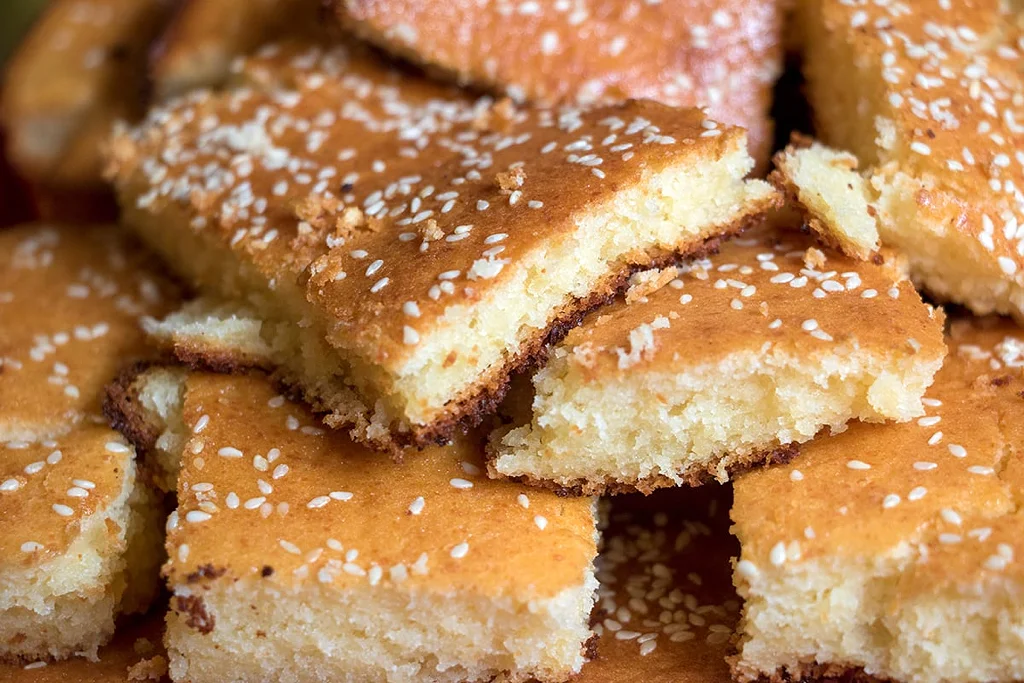
A far cry from its savory, Mexican counterpart, the quesadilla Salvadoreña is essentially a sweet cheese pound cake, made with mild, aged cheese (queso duro) and traditionally topped with sesame seeds.
By gaining experiences and making connections, Barrera learned JWU appealed to both his culinary and scientific interests and would help him to reach his goals of becoming either a food engineer or food chemist; he has also considered going into food research and development. And at JWU, he has met incredible faculty mentors. “Chefs Vanessa Ali and Valeria Molinelli co-advise the University’s Culinaria Latina club, which has deepened my respect for and knowledge of Central and South American flavors. These faculty and others have confirmed my suspicion that ‘food’ is where I belong.”
When asked about his role as a Gen Z culinarian, Barrera expresses both excitement and anticipation. He foresees this generation becoming more revolutionary in and out of the kitchen by exploring new approaches to food, as well as bringing awareness to challenges within the foodservice workplace. The rise in mental health awareness and proper work-life balance is something Gen Zers continue to strive for, together with reinvigorating the role of whole, natural ingredients and processes in the dishes we eat.
Barrera doesn’t get caught up in fleeting trends, as he believes in “putting yourself into the food rather than just copying and conforming to the expectations of the public,” a sentiment that matches the unique approach he has taken in pursuing culinary science rather than culinary arts. In the F&B world, most must work their way up the ladder to gain creative freedom, whereas a food chemist can experiment right away, exploring flavor possibilities down to the molecular level. At the same time, he will continue to bring together flavors from all over the world to increase awareness and appreciation and to spotlight the power of incorporating diverse foods and communities.
As the years progress and his knowledge grows, Barrera continues to home in on what dream career will become his reality, and every day he continues to work closer to those goals. “For me and so many other future food professionals, food offers endless possibilities for honoring the past while creating something entirely new,” he says.
About the Author

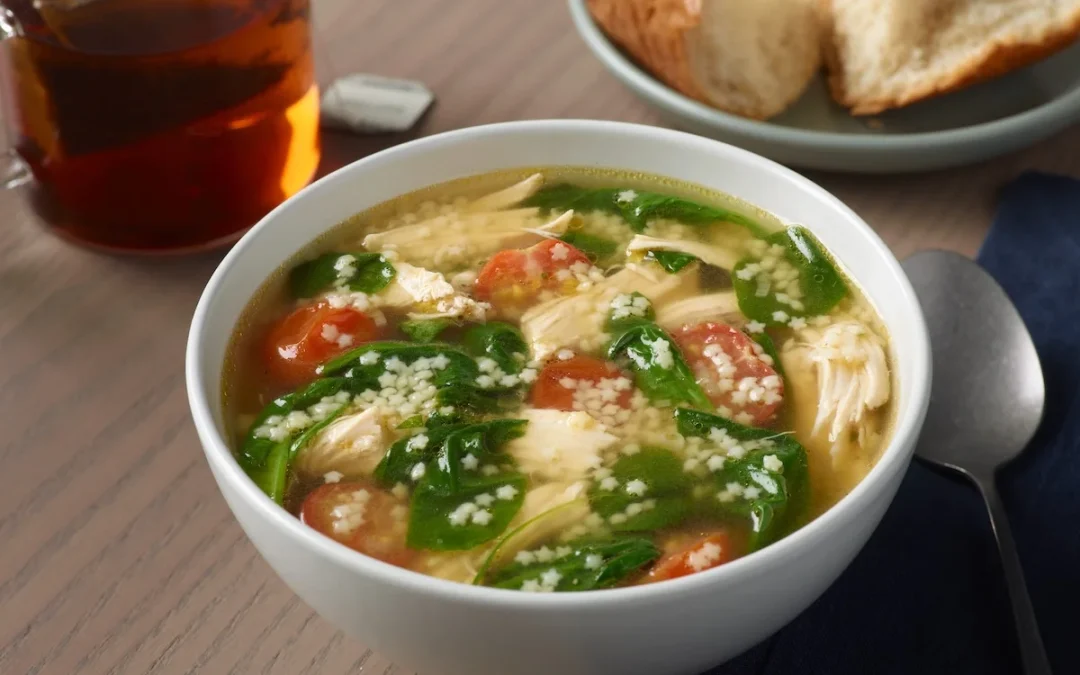
Simple Comfort Pastina proves that restraint still resonates
Flavor Trends, Strategies and Solutions for Menu Development[google_sidebar_ad adslug="2026-04-Surround-Barilla-320x50"...
More Is More Alla Zozzona amplifies tradition into craveable indulgence
Flavor Trends, Strategies and Solutions for Menu Development[google_sidebar_ad adslug="2026-04-Surround-Barilla-320x50"...
Slow Craft Pasta alla Genovese channels time, memory and menu storytelling
Flavor Trends, Strategies and Solutions for Menu Development[google_sidebar_ad adslug="2026-04-Surround-Barilla-320x50"...
