


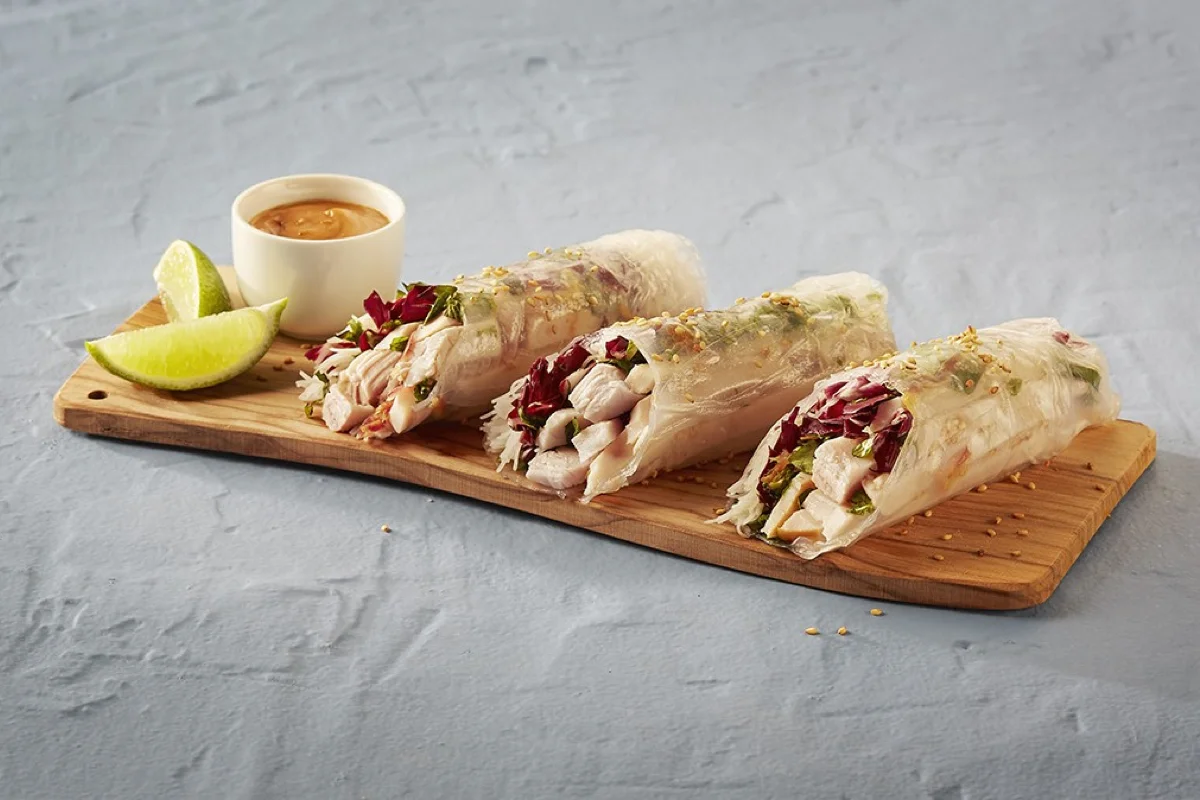
These Turkey Summer Rolls, featuring fully cooked Butterball Classic Smoked Turkey Breast, lean into Asian influences driving greater diner interest today. Serve with a sambal peanut dipping sauce for a shareable appetizer or side dish.
Credit: Butterball Foodservice
SPONSORED EDITORIAL
Let Turkey Take Flight on Global Menus
This protein can be your passport to a new world of flavors
Global flavors are setting the tone—and the table—for innovation in foodservice at every level. As consumer palates continue to gravitate to bold, cross-cultural flavor experiences, savvy chefs and menu developers are increasingly seeking ingredients that offer impressive versatility and that can be used as the protein anchor in a wide array of menu applications. Enter turkey: highly adaptable and ready to transcend its traditional associations.
With a mild profile that plays exceedingly well when paired with bold, complex flavors, turkey is well positioned to be reimagined through a global lens—fitting in beautifully with the vibrant, layered flavor systems that define regional cuisines around the world..
“There’s no doubt that American diners, especially younger ones, are more adventurous than ever. Social media has been a huge driver of global flavor curiosity, turning dishes from around the world into viral sensations overnight,” observes Chef Joe Urban, a Butterball chef consultant and CEO/founder, School Food Rocks. Foodservice operators eager to serve up the next globally inspired social media culinary star, should look to merge authentic flavor profiles in familiar formats, he advises. And they should start with turkey.
“Turkey is a blank canvas in the best way; it takes on the personality of whatever you pair it with,” says Urban. “Whether it’s simmered in tikka masala, stir-fried with gochujang and veggies or roasted with Middle Eastern spices, turkey adapts. It’s lean, nutritious and versatile enough to be grilled, roasted or shredded for handhelds, bowls or center-of-plate dishes.” And fully cooked turkey products, like many of those in the Butterball Foodservice portfolio, provide added incentive for operators ready to explore the opportunity.
To begin tapping into the breadth of opportunity for turkey-centric menu innovation, it pays to understand the global flavor landscape. What are the key ingredients, flavor profiles, preparation techniques and signature dishes that dominate different regions? Continuing to build awareness of these influences opens the door to using unexpected elements, like turkey, in fresh, boundary-pushing translations. Let’s take a closer look at the gastronomic highlights of six regions, along with a bonus menu inspiration for each.
PACIFIC RIM
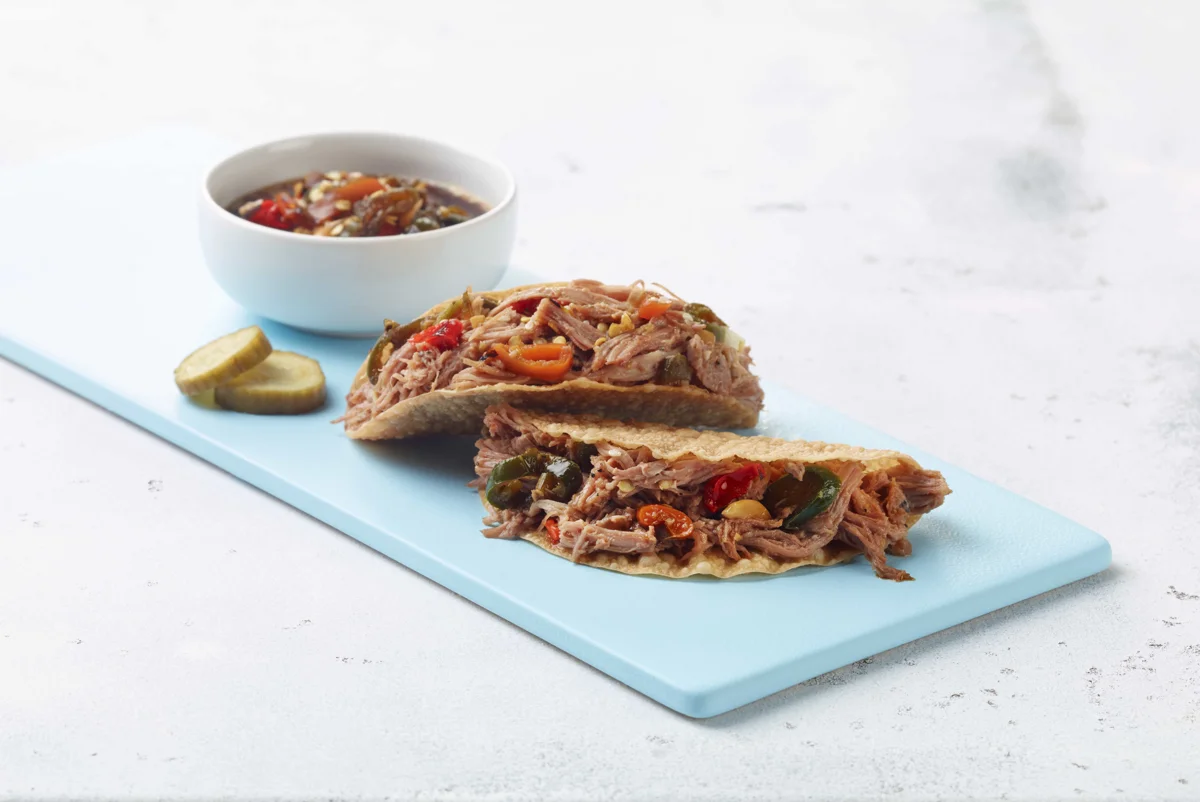
Korean BBQ Turkey Wonton Tacos
What are some of the predominant flavor trends gaining traction in the U.S. that hail from Pacific Rim countries like Korea, Japan and China? “Korean gochujang has become a staple pantry item in most trend-forward kitchens, and flavors like bulgogi and kimchi have been showing up for a while in everything from rice bowls to burgers,” says Urban. “Japan brings us craveable umami, with ingredients like miso, togarashi and yuzu. And Chinese flavors like Sichuan peppercorns, hoisin and black vinegar are being used more often, even in non-Asian dishes.”
The Korean BBQ Turkey Wonton Tacos pictured here are an on-point representation of how operators can imaginatively fuse flavors and formats. Crispy wontons stand in for tortillas to encase tender Butterball Fully Cooked Turkey Thigh Roast marinated in Asian-inspired ingredients like soy sauce, ginger, sake, Korean red pepper powder and sesame oil. Serve with roasted hot peppers and vinegar soy sauce on the side.
SOUTHEAST ASIA
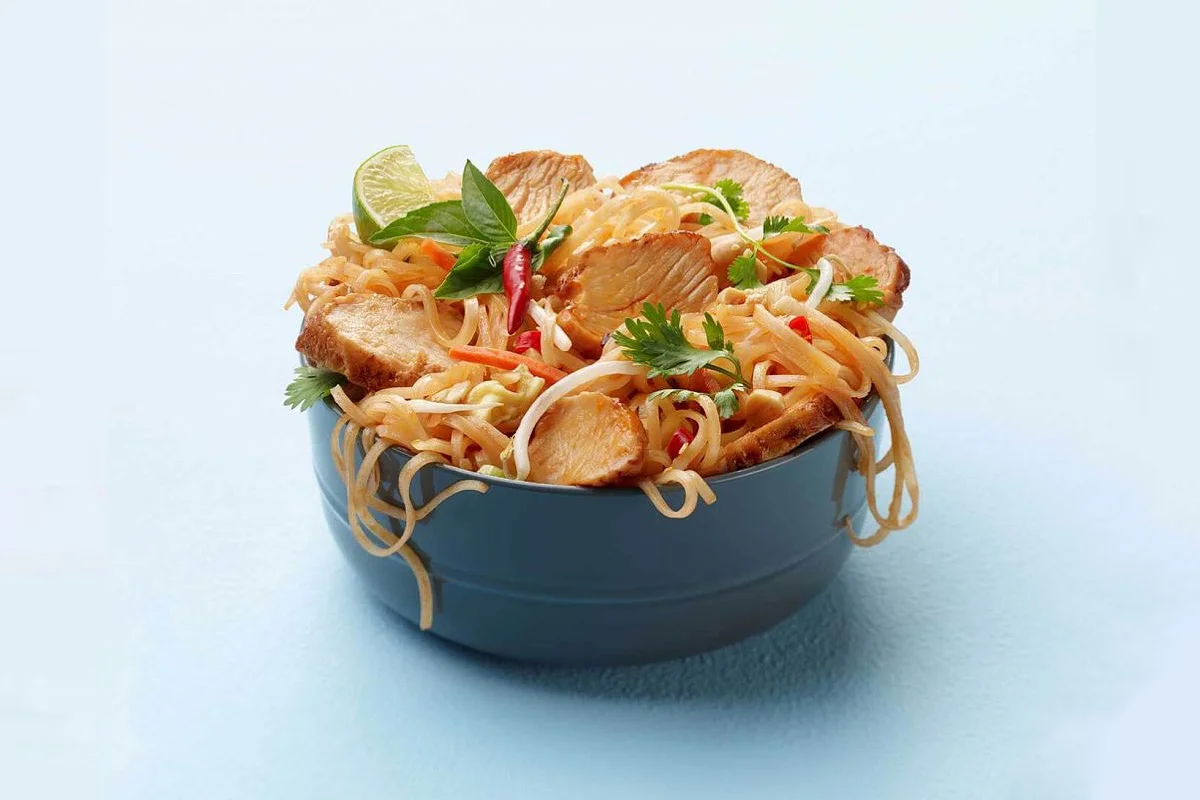
Turkey Pad Thai
Nations of Southeast Asia, including India, Thailand and Vietnam, share many flavor and ingredient commonalties. But they are also wildly distinct. But what flavors are proving most acceptable to American diners? According to Urban, “Dishes with bold flavor and balance are winning.” He cites such signature items as Thai curry bowls, Vietnamese banh mi and Indian butter chicken. “Sauces and marinades featuring lemongrass, coconut milk, fish sauce or tamarind also keep gaining traction, especially when paired with grilled meats or noodles.” Urban sees mainstream appeal linked to using these flavors in recognizable formats, like a curry chicken flatbread or a tikka masala mac and cheese..
Even dishes that have already gained wide acceptance can attract new interest when swapping in turkey and further pushing the ingredient envelope. Consider, for example, the Turkey Pad Thai shown here. Butterball Sliced Turkey Medallions, which are fully cooked, are quickly stir-fried with Thai peppers and added to a bowl of crunchy, aromatic veggies and herbs that have been tossed in a saucy blend of tamarind, fish sauce and soy sauce. Other classic pad thai elements—toasted peanuts, carrots, bean sprouts, egg and rice noodles—complete the flavor narrative.
MIDDLE EAST
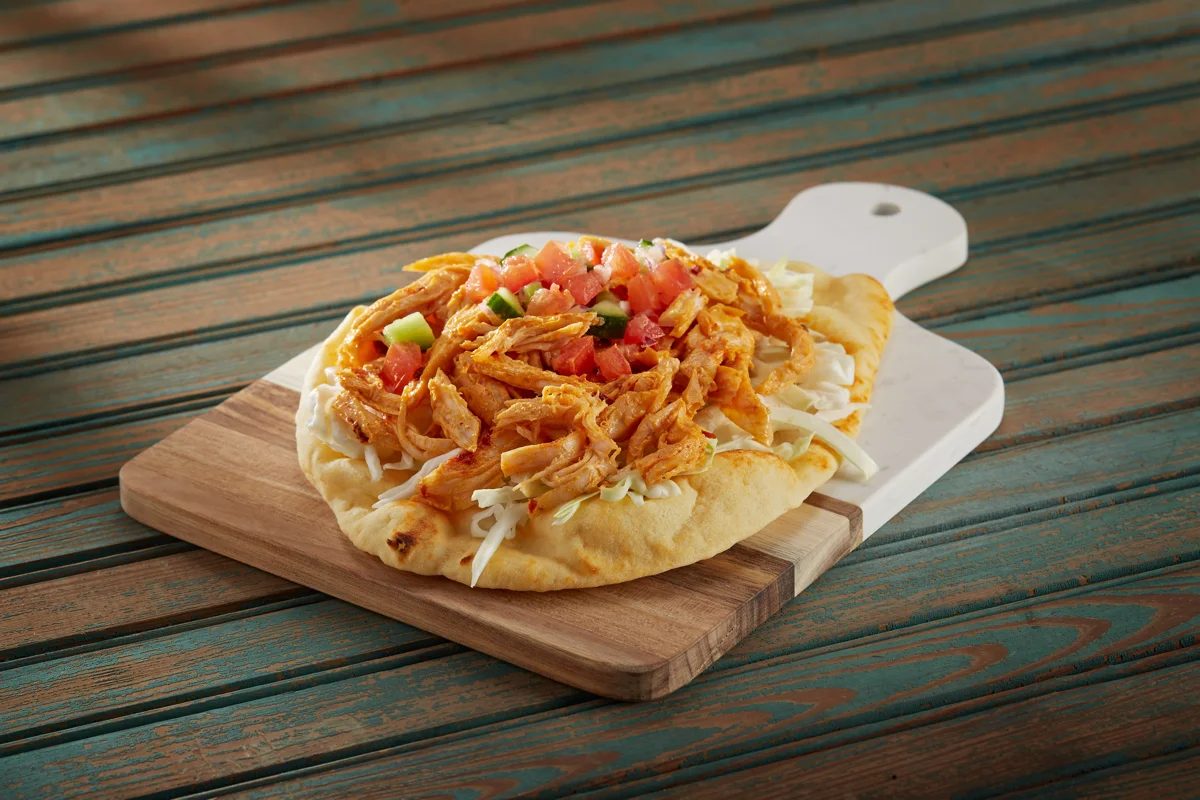
Turkey Flatbread with Rose Harissa and Tahini
Signature dishes from the Middle East like shawarma, hummus and flatbreads have enjoyed great success with American diners. Does Urban have a pick for the next dish from that region to break-through? “I think the next wave will be more about bold sauces, grilled meats and spice blends that add big flavor without being overpowering,” he forecasts. “We’re already seeing ingredients like garlic yogurt sauces, spiced rice dishes and grilled skewers gaining increased attention. These types of dishes are easy to adapt to a variety of menus. They’re flavorful, comforting and lend themselves well to such popular formats as bowls, wraps and platters.
Inspired by Tunisian and Israeli cuisines, the Turkey Flatbread with Rose Harissa and Tahini shown above takes the popular flatbread trend in a distinctive direction with a unique flavor profile that combines savory and floral notes. Flatbread is topped with a small nest of cabbage filled with both a classic Israeli salad and a turkey salad made with shredded, fully cooked Butterball Roast & Serve Skin-on Turkey Breast tossed in mayonnaise, lemon juice, tahini and rose harissa.
EUROPE
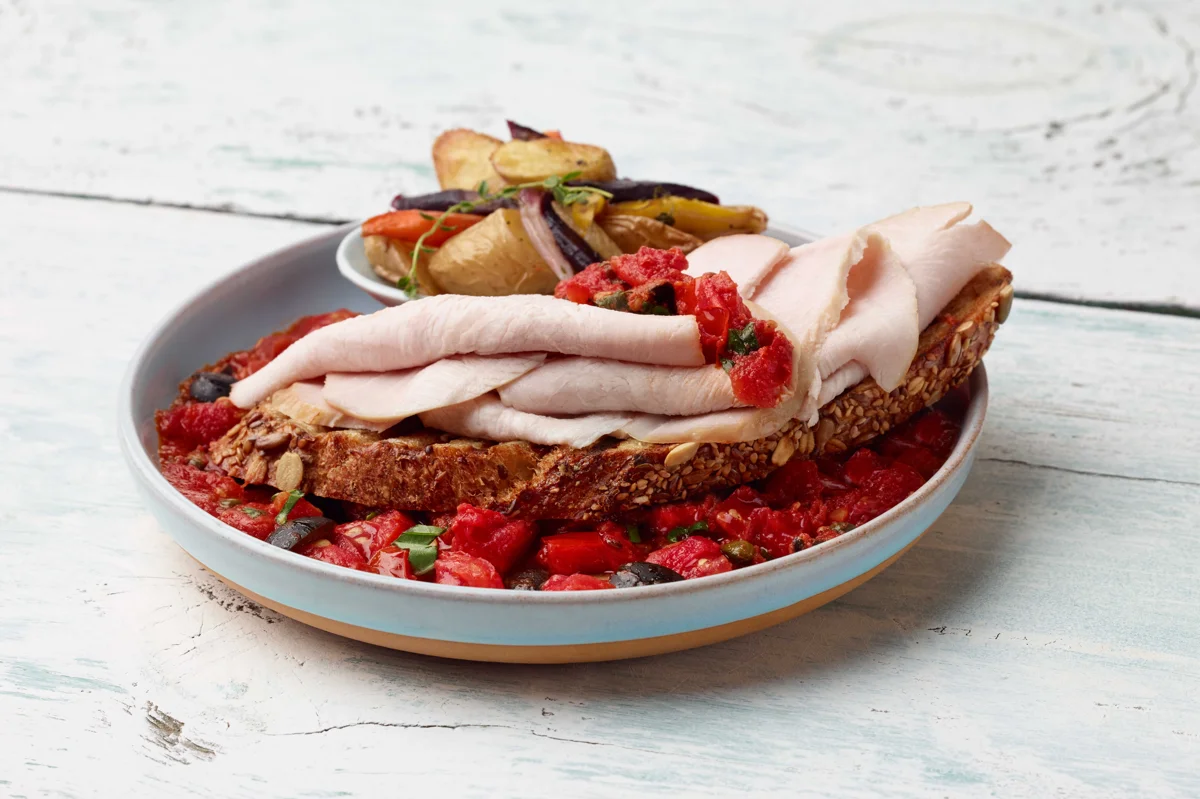
Tuscan Roast Turkey
Less-familiar global flavors may be on the rise, but European cuisines, particularly those from Italy, France and Spain, enjoy timeless appeal. “These cuisines have real staying power, and they continue to influence how we approach food, whether we’re sticking to tradition or putting a modern spin on it,” says Urban. Italian food is the very definition of comfort, he asserts. “It’s hearty pastas, slow-cooked sauces and great cheeses like mozzarella, ricotta and Parmesan. This cuisine sticks around because it’s built on tradition, solid technique and quality ingredients. It just never goes out of style.”
As with many of his peers, Urban believes French cuisine is the foundation for how chefs cook—and teach cooking—today. “Whether it’s the five mother sauces, proper knife skills or the structure of a multi-course meal, France produced the blueprint. Even if you’re not cooking French food, those techniques show up everywhere; from fine dining to fast casual.”
According to Urban, “There’s a lot of soul in Spanish cooking. Spain keeps things exciting with bold, vibrant flavors like chorizo, smoked paprika, saffron and all those deep, earthy spices.” He credits tapas with changing how we think about eating, emphasizing small, shareable plates that encourage variety and conversation. “Whether it’s patatas bravas, grilled seafood or a slow-cooked rice dish like paella, Spanish food brings a great balance of comfort and creativity. It’s a cuisine that’s both rustic and refined, and it continues to influence how we build menus today.”
As Italian was only recently supplanted by Mexican as the most popular global cuisine among American diners, there is still plenty of play in employing classic flavors in new dishes like the Tuscan Roast Turkey pictured above. A spicy pomodoro crudo sauce spiked with basil pesto provides a flavorful base that is topped with a slice of grilled French bread, warm Butterball Sliced Oven Roasted Turkey Breast and more sauce. Shredded ricotta salata provides the finishing touch.
WEST AFRICA
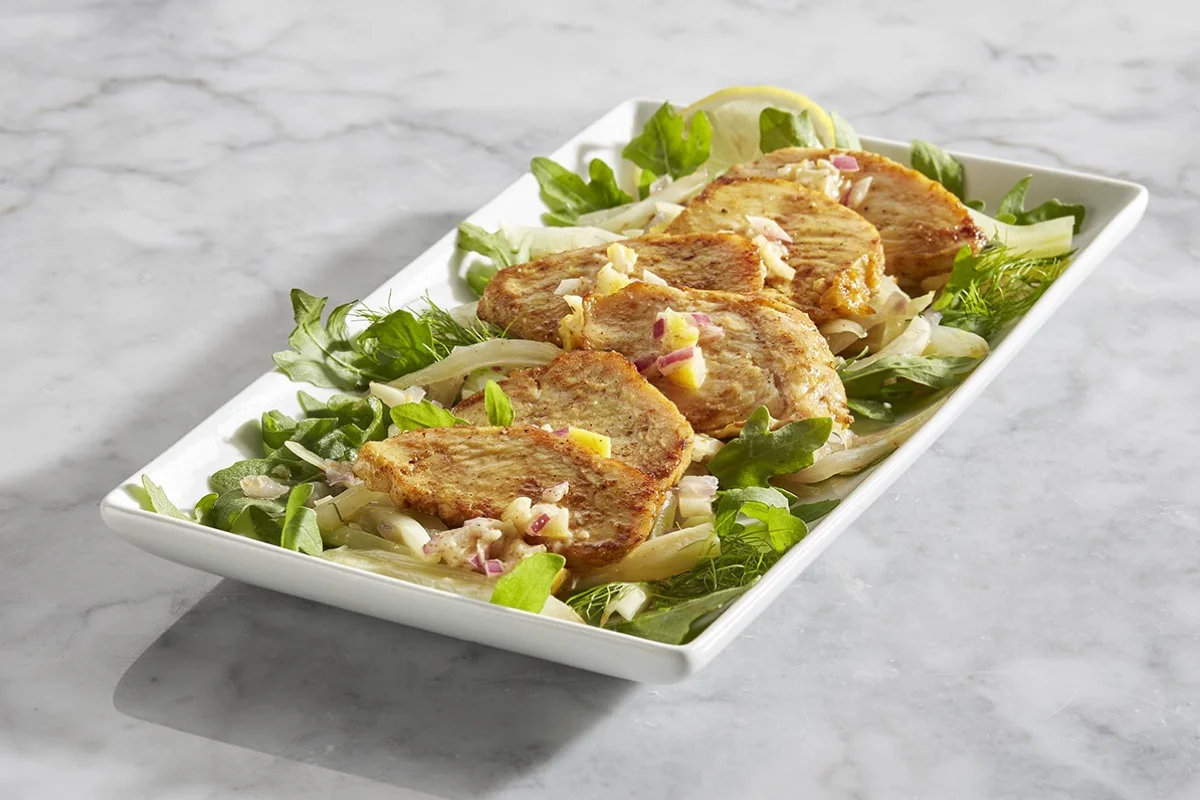
Moroccan Turkey Pavés
It’s probably safe to assert that most elemental dishes and flavors from African cuisines are still largely unfamiliar to American diners. One exception may be Moroccan foods and spices, but it’s likely to share the spotlight sooner rather than later. “West African flavors are bold, vibrant and starting to gain real momentum,” says Urban. “Dishes like peanut-based stews, jollof rice and grilled skewers with smoky, spicy marinades are incredibly approachable and packed with flavor, perfect for menus that want to tell a deeper story about African culinary traditions. I think these dishes will feel familiar enough to American diners, yet bring something new to the table, especially in bowls and wraps.
Authentic flavors are the key to the success of the Moroccan Turkey Pavés pictured above. Butterball Sliced Turkey Tenderloin Medallions are tossed in ras el hanout and then sautéed until very brown and crispy on the edges. The meat is arranged on a bed of sautéed fennel and onion and finished with preserved lemon relish.
LATIN AMERICA
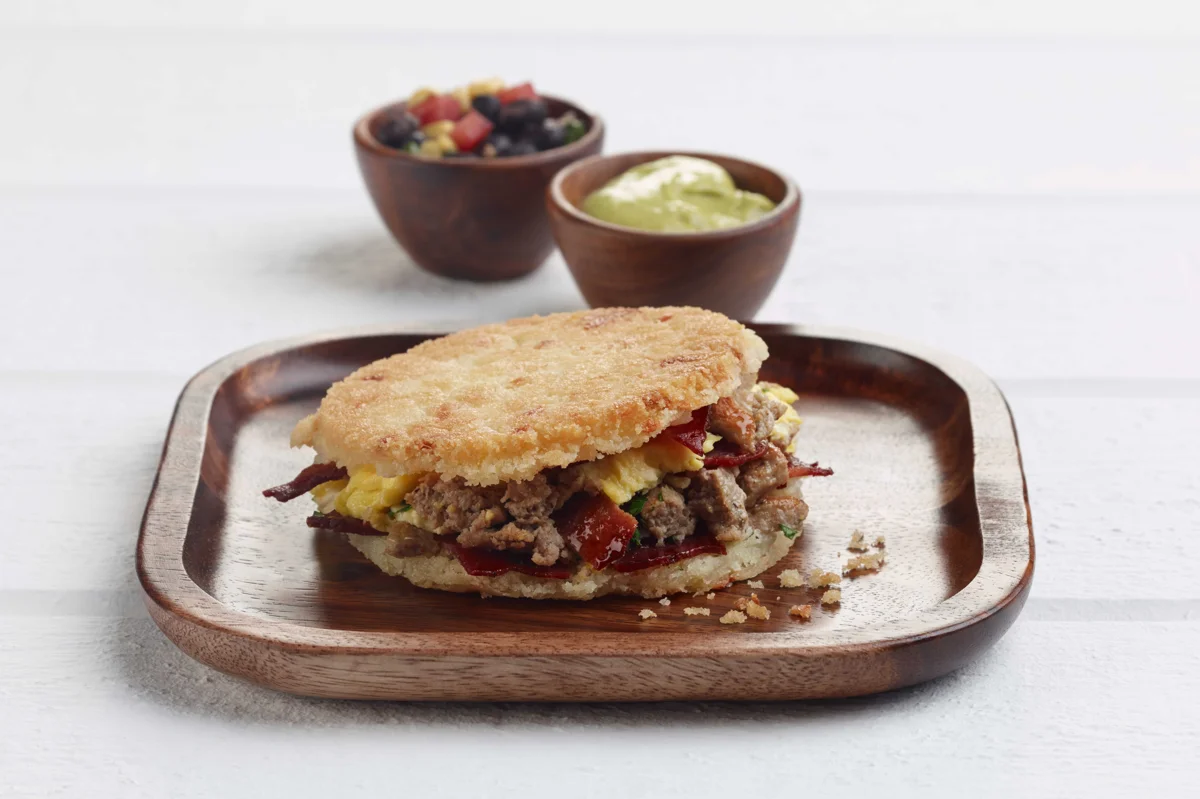
Venezuelan Breakfast Arepa
Mexican (and Tex Mex) are dominant forces in American cuisine today, and regional highlights like al pastor, barbacoa and birria have become full-fledged flavor systems that chefs are applying to familiar formats like pizza and handhelds. What’s next from Mexico, Central and South America? “I’m most excited about the growing appreciation for regional Mexican and Latin American cuisines,” says Urban. “They are, by far, my favorite. I am a huge fan of Salvadoran pupusas, Colombian arepas, Argentinian empanadas, Peruvian lomo saltado and Brazilian feijoada. They all have huge flavor and wide appeal.” In addition, he notes, sauces like aji amarillo or chimichurri can add bold flavor to everything from grilled meats to grain bowls.
Chefs can double down on turkey in the Venezuelan Breakfast Arepa shown above. It features both chopped Butterball Foodservice Turkey Bacon and crumbles of Butterball Fully Cooked Turkey Breakfast Sausage Patties stuffed into a warm white corn arepa along with scrambled egg, queso fresco and a roasted corn and black bean salsa. A drizzle of avocado/cilantro sauce delivers a nice kick.
THE TURKEY TRUST FACTOR
“When you’re building globally inspired dishes, choosing the right turkey product makes all the difference,” notes Urban. The Butterball Foodservice portfolio has an impressive range of options. “For lighter, fresh dishes like Mediterranean wraps, Vietnamese banh mi or Middle Eastern flatbreads, sliced turkey breast is perfect. It takes on marinades and sauces beautifully.”
Urban points to ground turkey as a good choice for global comfort foods like Asian dumplings, Latin-style tacos and spiced meatballs. “And when you’re diving into bolder, richer flavors like Indian curries, Caribbean stews or Mexican mole, turkey thigh meat brings the depth and juiciness those dishes need,” he says.
Partnering with a supplier that understands foodservice and offers consistent, high-quality products—along with videos, recipes, trend reports and more resources—can be a key differentiator. “Butterball has been a reliable go-to in that space,” reports Urban. “They offer a range of turkey products that work across all kinds of global flavor profiles and menu formats, which gives operators more freedom to get creative without worrying about performance or quality.”
When operators look past iconic uses—the club sandwich, the leaner sausage choice at brunch or the holiday roast—they will find turkey is ready to disrupt expectations and spark menu inspiration across dayparts and dining styles. Its compatibility with diverse formats—from handheld street fare to elevated fine dining plates—makes it a compelling choice for chefs seeking to bring global offerings to life with a protein that’s familiar yet primed for reinvention..
Ready to take turkey beyond tradition? Click here to explore how this versatile protein can unlock global flavor innovation on your menu.
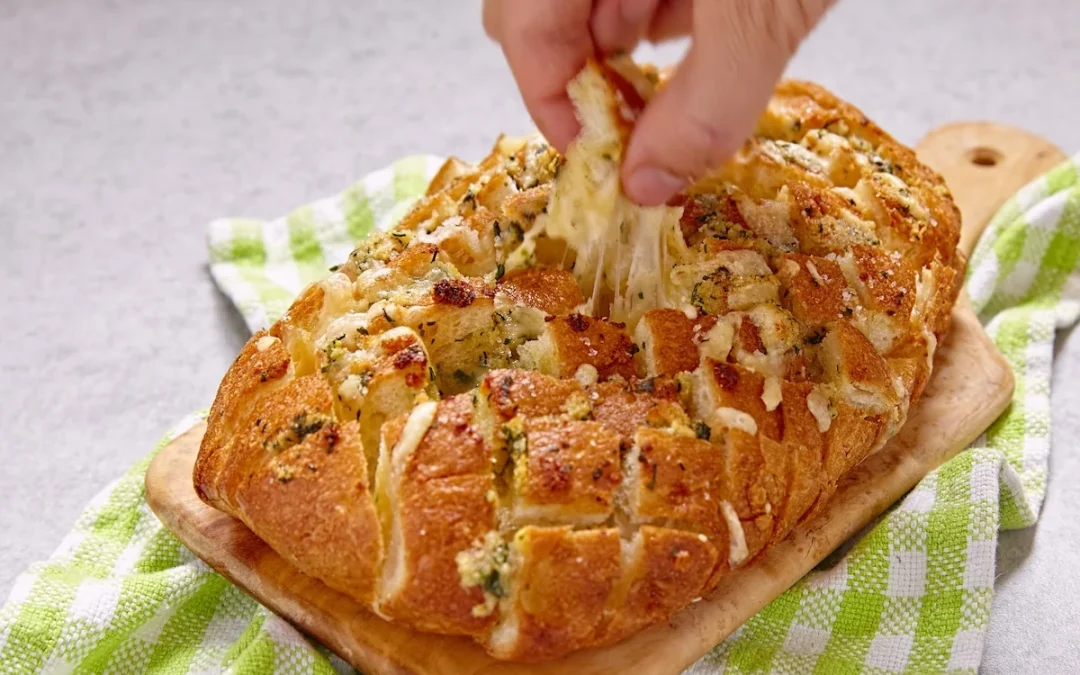
Rip, Tear and Pull-Apart Breads Menuing four fun, interactive styles
Flavor Trends, Strategies and Solutions for Menu Development[google_sidebar_ad adslug="2026-04-Surround-Kens-320x50"...
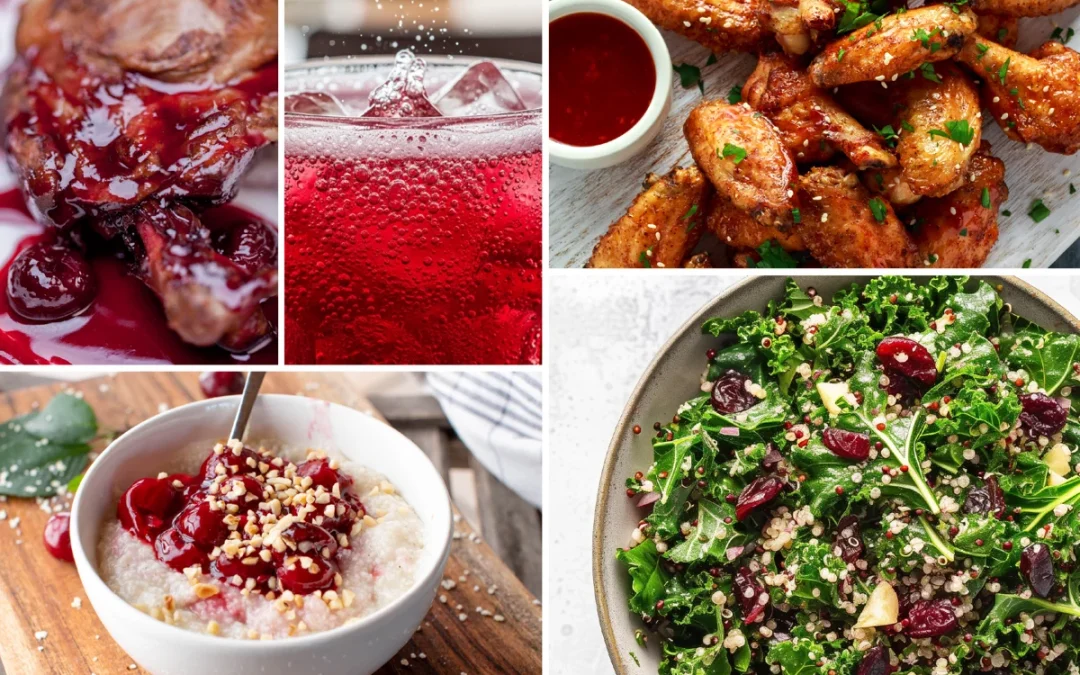
Tart Cherries Make Flavor Magic Reimagine ways to put their power of sour to work in modern menu development
Flavor Trends, Strategies and Solutions for Menu Development[google_sidebar_ad...
Spread a Little Indulgence Clean-label nut butters deliver dairy-free creaminess with a naturally premium read
Flavor Trends, Strategies and Solutions for Menu Development[google_sidebar_ad adslug="2026-05-Surround-Puratos-320x50"...
