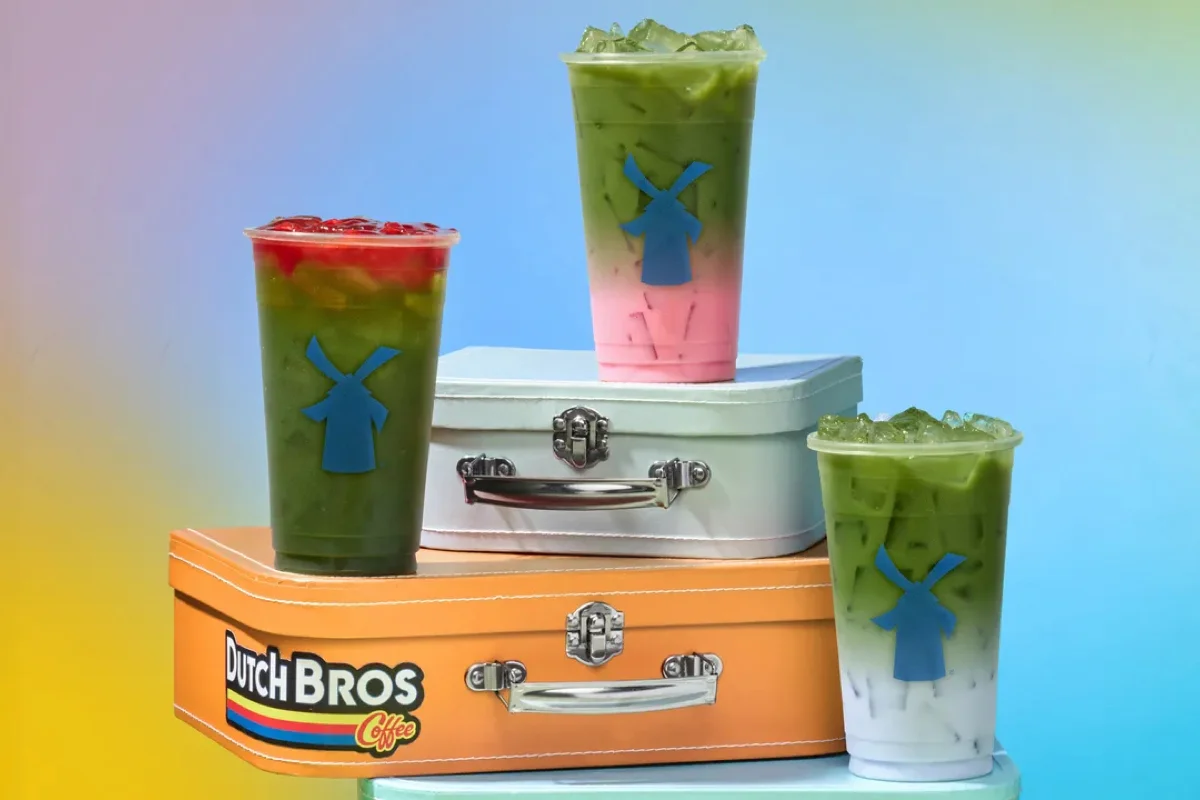
Matcha has officially infiltrated the coffee category with brands like Dutch Bros dreaming up new beverages with unexpected flavor pairings.
Credit: Dutch Bros
State of the Plate: The Menu Magic of Matcha
The green tea powder continues its high-speed proliferation
Prized for its healthfulness and relaxing qualities (it contains the anti-stress amino acid L-theanine), matcha has also become an unexpected starting point for innovation across F&B menus.
A Lotta of Lattes
Lattes have served as matcha’s transition point to the broader menu, with all the major coffee brands getting on board. Starbucks offers both hot and iced Matcha Lattes, as does Dunkin’, which also adds a frozen version. Caribou Coffee amps up the flavor with its Matcha Vanilla Tea Latte and Lavender Matcha Tea Lattes.
Next-gen coffee competitors have embraced the trend. In May, Dutch Bros rolled out Lavender and Raspberry Matcha Lattes, along with Paradise Matcha Lemonade, with 10 total matcha latte and lemonade flavors now available. Bluestone Lane, which hawks Aussie café culture at its 55-plus locations around the U.S., has featured matcha for nearly a decade, with outside-the-box flavors like White Chocolate Cheesecake, Banana Cream and Strawberry Cheesecake Matcha Lattes.
This summer has seen a profusion of matcha-based lattes mixed with a range of fruits, like the new Blueberry Matcha Latte at Hope Breakfast Bar locations throughout Minneapolis. Also in the Twin Cities, newcomer Moona Moono, a boutique/F&B concept dedicated to all things cool and Asian, rotating specials have included Mango and Pistachio Matcha Lattes.
Specialty matcha lattes have also found purchase in the smoothie category. This month, Brazilian smoothie-and-bowl concept Oakberry is introducing seven matcha-powered concoctions, including some that pair the antioxidant powder with other good-for-you ingredients. The Purple Iced Matcha features the brand’s star antioxidant (acai) and oat milk, while the Pink Iced Matcha taps beet powder and banana. The most brilliantly hued combo, however, is the Blue Iced Matcha: matcha, oat milk, banana and blue spirulina.
There are fruity non-latte quaffs, too. Pineapple Matcha is a returning seasonal favorite at Broken Yolk Cafe, while Peet’s Coffee brings the fizz with its limited-time Sparkling Peach Matcha.
Matcha’s Unlikely Bedfellows
 Credit: Tupelo Honey Southern Kitchen & Bar
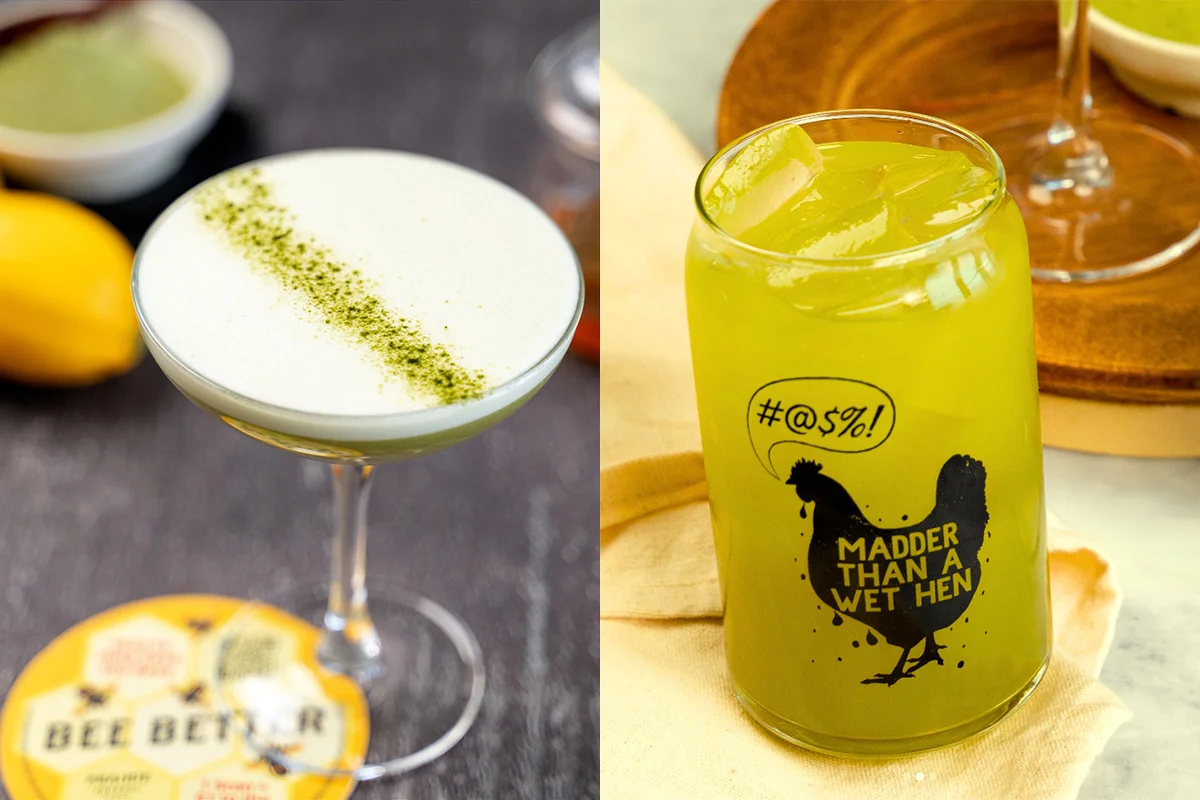
 Tupelo Honey demonstrated matcha’s cocktail compatibility in its Mindful Martini (left) while also introducing non-alc options like the Matcha Farmstand Lemonade (right).
Matcha is also matched with other prevailing beverage trends. Lavender, which has seen rising popularity of its own, thanks to its purported health benefits, is a preferred flavor partner at numerous operations, like French-Asian bakery chain Tous les Jours, which introduced a Honey Lavender Matcha Latte. Caribou takes the trend a step further, tapping into the boba craze with Frozen Lavender Matcha with bubbles. The Bubbles in this case are coconut-coffee jellies.
Paris Baguette, another player in the Asian bakery-café segment, thinks globally with a promotional Dubai Chocolate Matcha Latte, a liquid take on the worldwide chocolate-bar craze made with pistachio-flavored matcha and chocolate mousse soft cream, all topped with kataifi (shredded phyllo dough), chocolate drizzles and crushed pistachios. In contrast, True Food Kitchen looks south of the border for inspiration; its Iced Matcha Horchata is made with almond milk and vanilla.
Matcha is popping up on bar menus, as well. North Carolina-based Tupelo Honey Southern Kitchen & Bar recently launched the new Mindful Martini, made with gin and matcha. It’s also serving the nonalcoholic Matcha Farmstand Lemonade and Shaken Iced Matcha Latte for teetotalers.
Oh-So-Sweet Treats
 Credit: Matcha Café Maiko
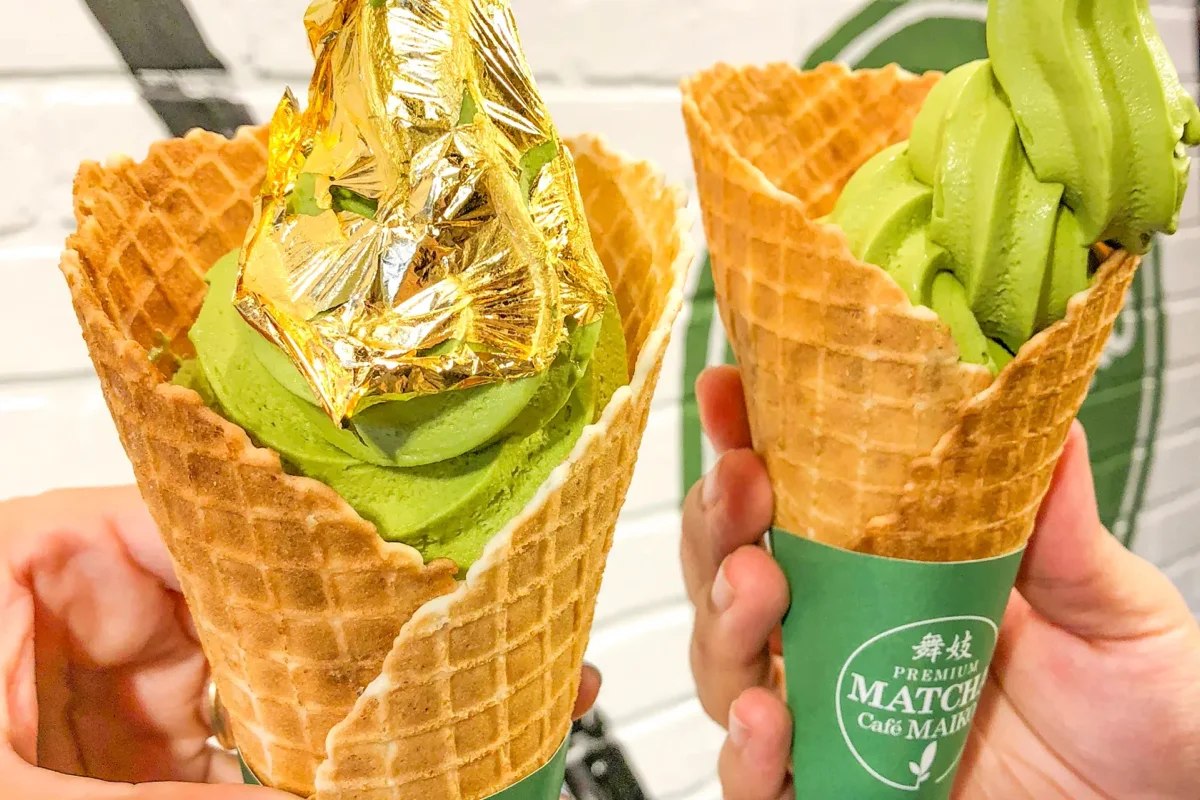
 Matcha Café Maiko goes for gold with its Golden Shogun Soft Serve (left), topping its signature matcha ice cream (right) with a 24-karat gold leaf.
Matcha has also been getting more play on food menus. It’s become a surprisingly popular tiramisu ingredient in the Los Angeles area, where numerous restaurants offer it. For example, monthly tasting concept DAG promotes a Thai-inspired dining experience and creates a version with pandan, coconut and matcha. In St. Paul, Minn., Thirty-Six Café, which specializes in Japanese-style soufflé pancakes, goes a different route; here, the Matcha Tiramisu Crème Soufflé layers the pancakes with matcha-infused lady fingers and housemade tiramisu cream, finished with espresso beans and a dusting of cocoa powder.
The dark green powder has turned up in another Italian dessert favorite, too. The opening menu at San Francisco’s Bar Shoji boasted Matcha Affogato, an update on the classic gelato-and-espresso combination. The permanent menu at Honeymee (with locations in California and Texas) includes its own spin on the Matcha Affogato, made with raw honey, along with a trio of soft-serve matcha treats like Matcha Honeymee, served with a 100 percent natural honeycomb chip.
Matcha’s affinity for frozen treats is on display at Pretty Cool, an ice cream emporium in Chicago, where the Matcha Ruby Ice Cream Sandwich is picture-perfect with its coating of ruby chocolate. Equally arresting is the gold fleck-dusted Golden Matcha Soft Serve from Matcha Café Maiko, which has been expanding throughout the mainland from its base in Hawaii. Even more of a head-turner is its signature Golden Shogun Soft Serve, which is topped with 24-karat gold. Competitor Midori Matcha in Los Angeles promises “grown in Japan, whisked in Los Angeles” to describe its robust menu of hot and cold beverages, pastries and soft serve, all showcasing the star ingredient.
Outlook and Opportunity
Growth of matcha will remain strong into the foreseeable future. Watch for its appearance in savory dishes, as well as a continuing flood of beverages. Technomic recently reported that Chinese mega-brand Mixue Ice Cream & Tea is now the world’s biggest chain operation by number of locations, closing out 2024 with 45,000 units. The website indicates that it plans to expand in the U.S. with a broad bill of fare that includes Matcha Milk Tea and Matcha Boba Latte.
But there may be a cloud on the matcha horizon: the specter of limited product availability. The Wall Street Journal, The Washington Post and other major news outlets recently reported that matcha’s soaring popularity in the U.S., Europe and Australia has led to a global shortage of the much-prized “ceremonial grade” variety and a steep rise in prices for all forms, exacerbated by U.S. tariffs on Japanese imports. The increased demand has also created a snarky online kerfuffle among matcha lovers, found at MatchaTok, where some users seek to police its use to promote responsible, sustainable consumption of a very finite resource.
About the Author
 Nancy Kruse is a recognized authority and widely quoted spokesperson on food and menu trends. She is president of The Kruse Company, which is dedicated to assessing trends and directions in food, menu and restaurant concepts; she has tackled these topics in the pages of leading industry publications and forums. Prior to founding her own company, Nancy served as Executive Vice President for Technomic, Inc., where she conducted a wide range of consulting assignments for Fortune 500 food and restaurant companies. She has served on several boards, and she has been an active member of the Women's Foodservice Forum and Las Dames d'Escoffier International.Read More Stories by Nancy Kruse
State of the Plate: The New Wave of Kids’ Meals Nearly 50 years in, these specialty menus continue to evolve
IHOP excels on the kids’ meals front, keeping...
State of the Plate: A New Frontier for Fusion Cuisine Vibrant mash-ups and third-culture cooking on the rise
True to its name, World Famous...
State of the Plate: Nashville Hot to Go Modern ways the regional flavor is packing heat
KFC is among many operators incorporating...
