


Six ways to rock modern menus with high-quality, labor-saving ingredients from SupHerb Farms.
Credit: otysonphoto.com
Where Smart Solutions Meet Culinary Craft
Showcasing six craveworthy dishes that cut prep, not quality
The pressures of budget constraints and limited skilled labor in an environment that demands consistent quality and scalability have driven many chefs to embrace speed-scratch solutions ranging from protein crumbles to pre-made doughs. But the benefits of ingredients like IQF herbs, puréed specialty vegetables and culinary pastes remain under-utilized. SupHerb Farms, a California-based supplier of premium, flavorful frozen ingredients, aims to raise awareness among chefs and menu developers of what they might be missing. The company recently partnered with a roster of chefs for a recipe development challenge using its products in chef-driven, flavor-forward culinary creations.
Meet the chefs who took on the SupHerb Farms recipe development challenge: J. Keith Morrison, Margaret Occhipinti, Brian Paquette, Kevin Rasberry, Alex Sadowsky and Carrie Welt. They produced a broad array of craveable concepts designed to take guests on a resonant flavor journey across the U.S. and around the globe. Descriptions of their dishes follow, along with links to the recipes. Click here to check out the complete recipe collection compiled by SupHerb Farms.
Discovering the capabilities and opportunities of new or unfamiliar products like SupHerb Farms’ portfolio of culinary ingredients is just one benefit these culinarians gain from activities like this recipe ideation project. “Without pushing myself, I feel like I get stuck in a smaller sandbox. And honestly, I roll a lot of these recipe projects back into whatever I’m working on, whether it’s an LTO, a component of a dish or even just to spark inspiration for the team,” says Sadowsky. His fellow participants agree, with Rasberry articulating the ultimate benefits: “At the end of the day, I just love creating food that tells a story—and challenges like this give me a chance to do that.”

J. Keith Morrison
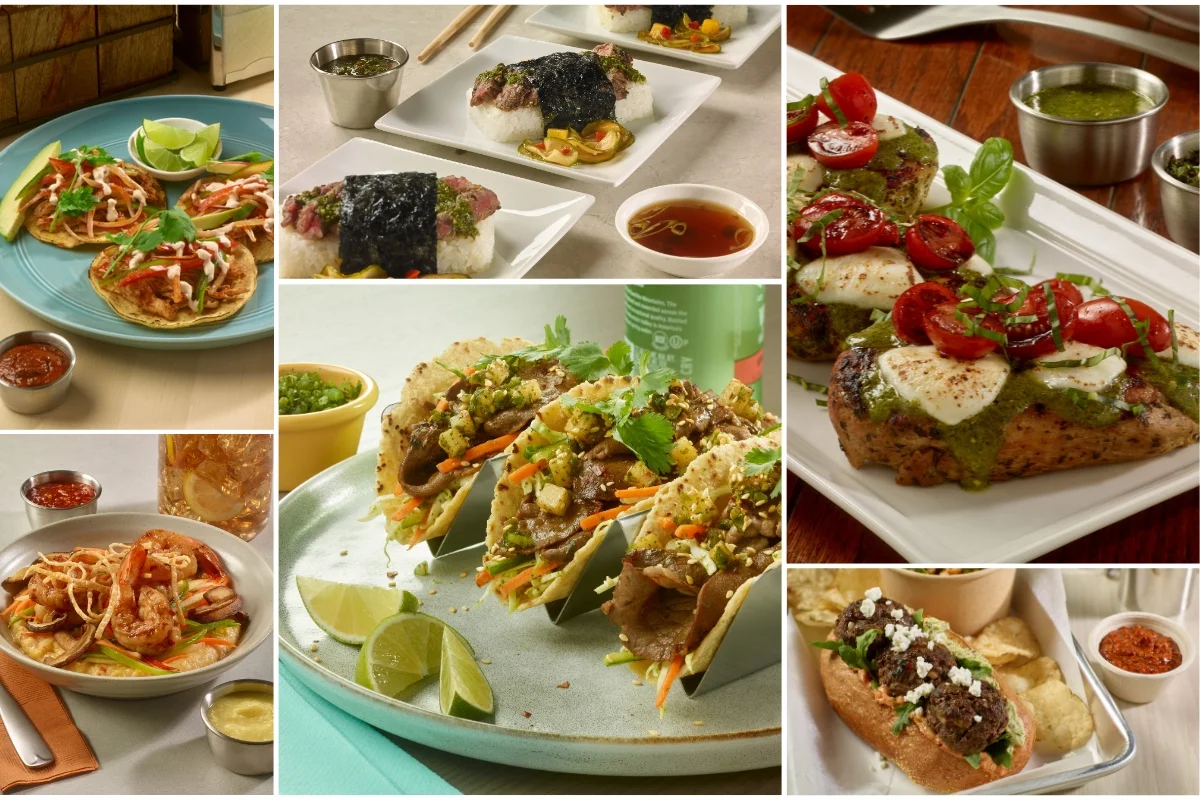
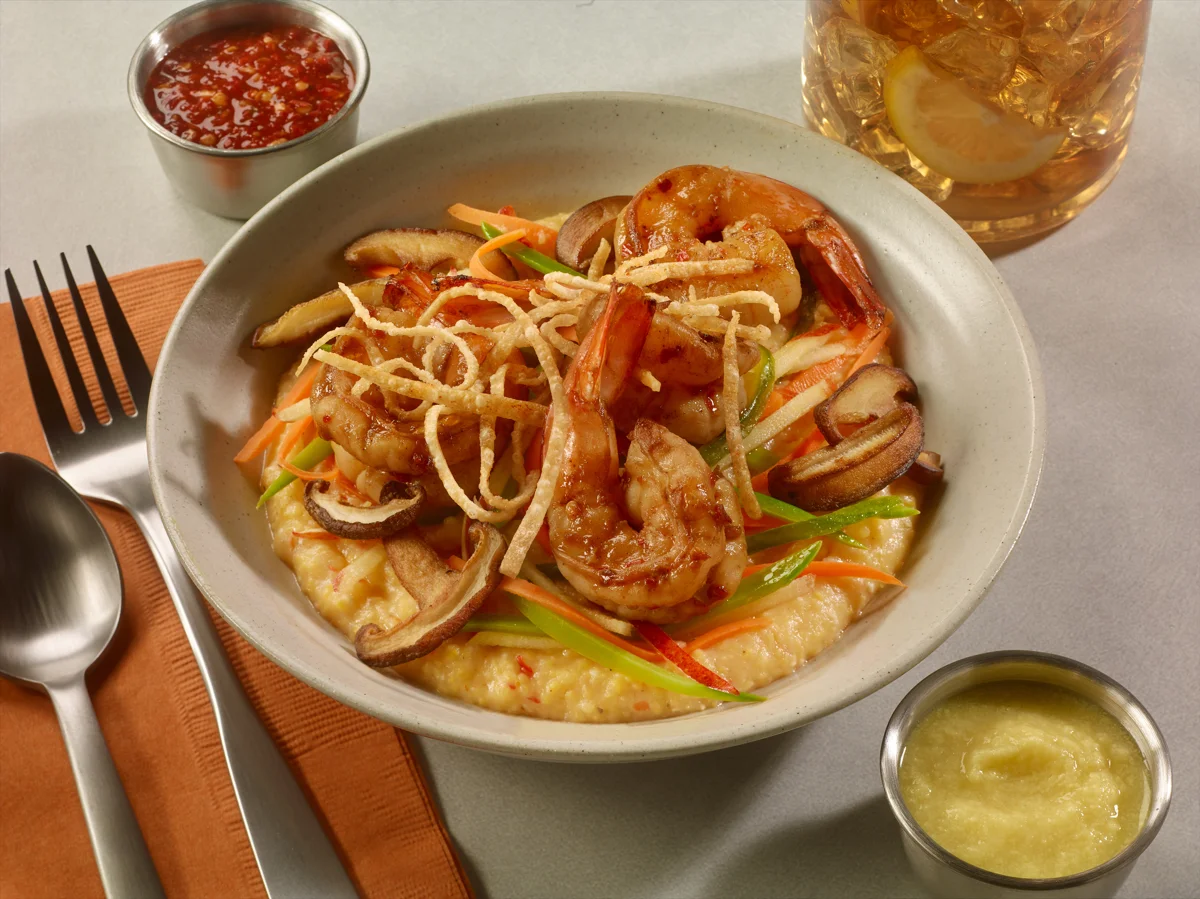
At the University of Texas at Austin, where he is director of culinary, J. Keith Morrison leads a team charged with developing menus for a diverse guest base. Global dishes are table stakes, making mash-ups the way to ante up. A marriage of culinary favorites from the Southeast U.S. and Southeast Asia, Morrison’s Thai Shrimp & Grits is a great representation of this trend.
“Congee has long been a staple on our menu,” the chef reports. “It’s a dish that speaks to both tradition and adaptability. That was my entry point. I saw an opportunity to bridge culinary cultures—taking grits, a deeply comforting, heritage-rich staple, and reimagining it through a different lens.”
“This dish emerged at the intersection of intention and inspiration,” he continues. For the first, his challenge from sponsor SupHerb Farms was to develop something “bold, unique and breakfast-forward.” For the second, “I’ve found myself drawn to the familiar comfort of regional Asian flavors and the soulfulness of Southern cooking.” He characterizes this mash-up as “familiar, yet new. Nostalgic, yet forward-thinking. It’s exactly the kind of plate I believe breakfast should offer.”
Morrison used four SupHerb Farms products to incorporate layers of flavor throughout the dish: Ginger Puree, Lemon Grass Puree, Sambal and IQF Garlic Minced. “Those components elevate the dish with a sharp, modern edge,” he notes.
The foundation of the dish is a bed of creamy, stone-ground grits, slow-cooked and finished with heavy cream. This is topped with shrimp marinated in a deeply savory blend of Asian pantry staples—oyster sauce, fish sauce, soy, sesame oil, brown sugar and rice wine vinegar—and the quartet of SupHerb Farms products. The dish is finished with vegetables and a punch of sambal. “The first bite delivers rich, umami-laden shrimp and crisp, sautéed vegetables, punctuated by the crunch of crispy wontons,” says Morrison. “Then comes the smooth, velvety grits—a grounding, comforting note—followed by a slow-building heat that lingers just long enough to bring you back for another bite.”
He admits that he wasn’t initially familiar with the SupHerb Farm products. “But their flavor profiles quickly won me over. They offer a level of freshness and depth that I can easily get behind, especially when looking to elevate or enrich a dish,” he says. “What really stands out is how their frozen format delivers bright, vibrant flavor with remarkable convenience.” Morrison lauds the advantage these products provide for working smarter in the kitchen without compromising quality and imagines a wide range of other menu inspirations, including a watermelon cocktail he made for his wife using the ginger and lemongrass purées, lemon vodka, Tajín and “a finishing squeeze of sambal.”
Steak Musubi with Chimichurri Sauce

Margaret Occhipinti
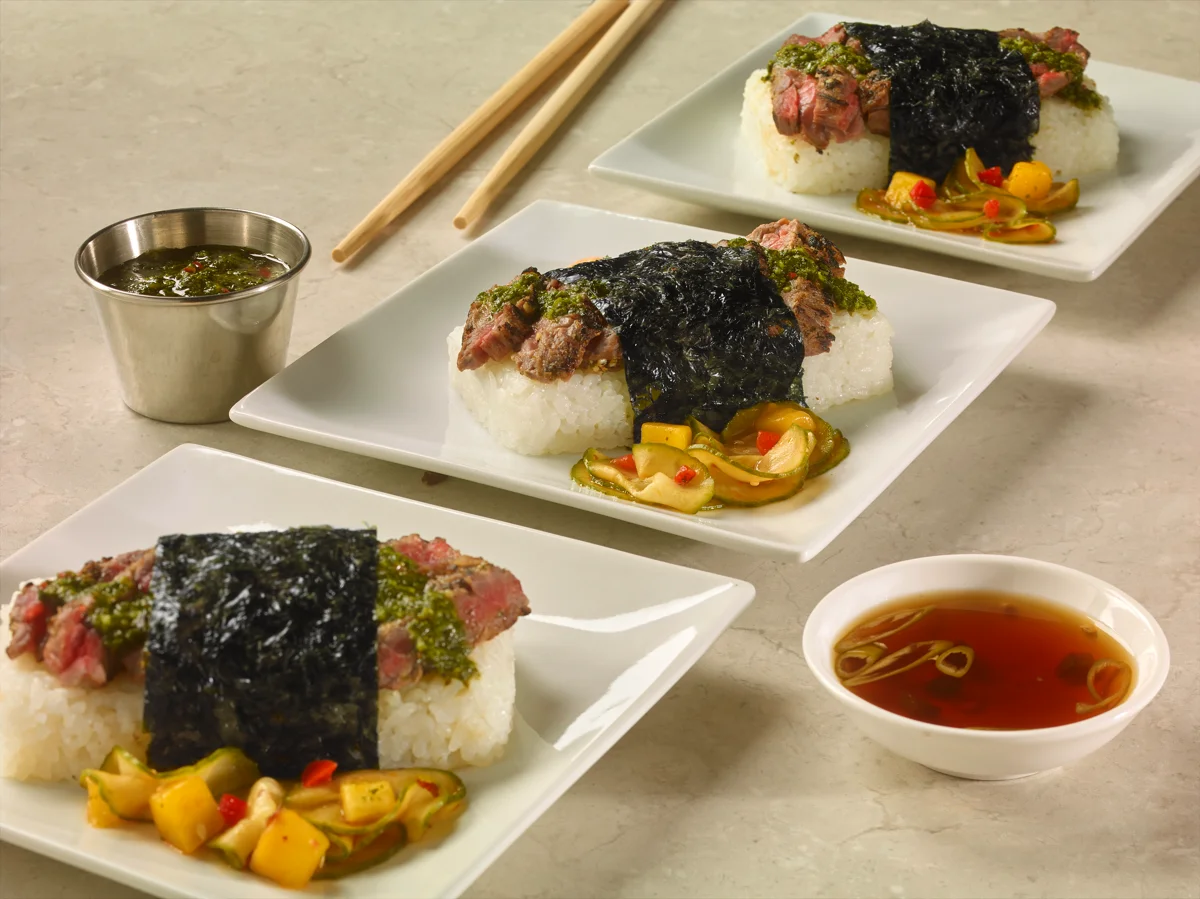
Earlier this fall, Flavor & The Menu declared musubi a Flavor on the Edge, seeing it stretch far beyond its Hawaiian comfort food roots as a versatile, customizable flavor carrier in bowl builds, baked goods and center-of-the-plate stunners alike. This comes as no surprise to Margaret Occhipinti, senior director of culinary, Lifeworks Restaurant Group. “I love musubi—it’s super on-trend,” she enthuses. At the locations she oversees, “We’ve been doing a variety of pop-ups featuring traditional and non-traditional musubi applications, and the guests line up for them!”
Presented with SupHerb Farms’ Chimichurri SRP, Occhipinti knew she wanted to do a fun fusion take with the classic herb-based sauce. Also receiving the company’s Citrus Garlic Herb (Mojo), Mango Salsa Blend, Green Jalapeño Chopped, IQF Garlic Puree and IQF Garlic Minced, “Of course, my mind immediately went to steak,” she recounts. “All of the SupHerb Farms products lent themselves to a great fusion musubi with lots of added condiments—which is a big thing for me. I love providing dipping sauces, relishes, plus fresh pickled and spicy-sweet items that guests can use to customize their dishes.”
Occhipinti’s Steak Musubi with Chimichurri Sauce sees skirt steak marinated overnight in the Citrus Garlic Herb sauce and Green Jalapeños. The musubi is built with nori sheets, seasoned rice, slices of steak and the Chimichurri SRP. It’s served with a mango cucumber salad (using the Mango Salsa Blend), along with yum yum and sweet-soy dipping sauces (made with the Garlic Minced, Green Jalapeños and Garlic Puree). The result? “Lots and lots of flavor,” says Occhipinti, ticking off umami, tang, sweetness, acid, sweet heat, brightness and herb-forward notes. “There are also varieties of textures in this dish—nothing boring here.”
The chef had only just become aware of SupHerb Farms when invited to participate in this recipe ideation challenge. She was delighted to officially make the company’s acquaintance. “I loved the products. They’re super-easy to use and their freshness and authentic flavors set them apart from the competition,” says Occhipinti. “I was very pleasantly surprised by the quality and see their use as a labor-saving convenience that won’t diminish our culinary program. In fact, they provide us the opportunity to focus our time elsewhere.”
Chicken Tostadas with Honey-Pepper Jicama Slaw

Brian Paquette
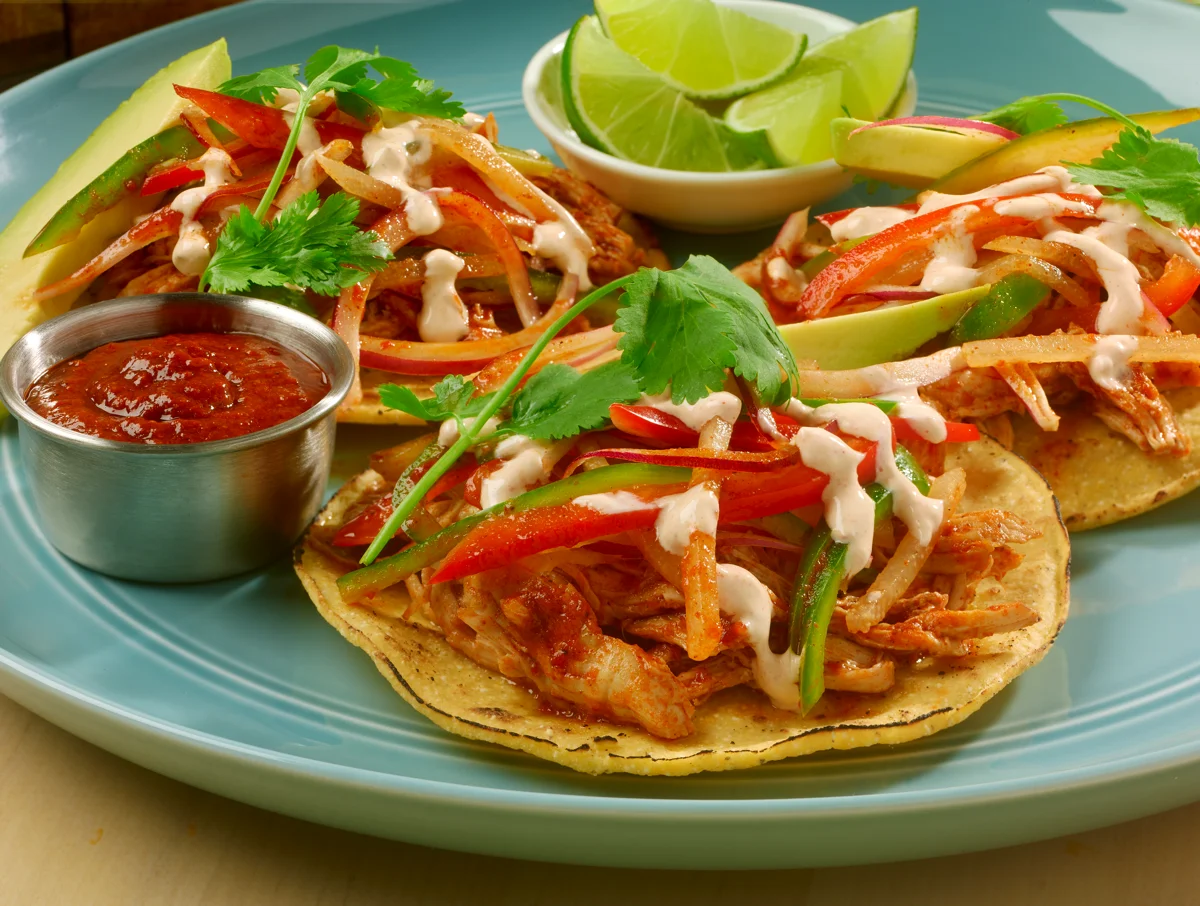
A self-declared fan of Mexican foods and flavors and director of culinary innovation, Chili’s Grill & Bar, Brian Paquette was poised to respond to the deep rich notes of chiles and smoke in SupHerb Farms’ Smoky Pepper Paste by creating a dish that played into his favorites. But it was another inspiration that sealed the deal for his approach to the Chicken Tostadas with Honey-Pepper Jicama Slaw: “I have recently been eating so many open-faced items after a trip to Portugal, where I had a delightful open-faced salt cod sandwich.” Thus, “The tostada was the direction my heart took me.”
The build features fresh-prepared chicken tinga, combining chicken breasts, chicken stock and the Smoky Pepper Paste. Tostada rounds are plated with the filling, along with a slaw featuring jicama, jalapeños, English cucumber, red bell pepper and red onion and dressed with a vinaigrette made with more Smoky Pepper Paste, rice vinegar and honey. At service, the dish is garnished with sliced avocado, a cilantro sprig and a drizzle of crema. The result is a burst of flavors and textures that both complement and contrast.
Paquette’s choice to double down on the Smoky Pepper Paste illustrated the product’s adaptability and highlighted its potential, he explains. “Prior to this challenge, I was not aware of the capabilities of SupHerb Farms, and this product was a delightful surprise.” He characterizes its flavors as rich, with medium-spice, affording chefs with coveted versatility.
The chef also lauds the back-of-house ease of using the Smoky Pepper Paste. “There’s no need to roast and toast, blend and purée. The paste has all the flavors needed to make it an easy plus-one for scratch sauces and dips or as a delicious cooking base like the tinga filling.” During his ideation process, Paquette also mused on the possibilities of using the paste with shawarma and shakshuka. “Spicy Philly steak or a smear on some salmon before grilling would also be fabulous.”
Kevin Rasberry
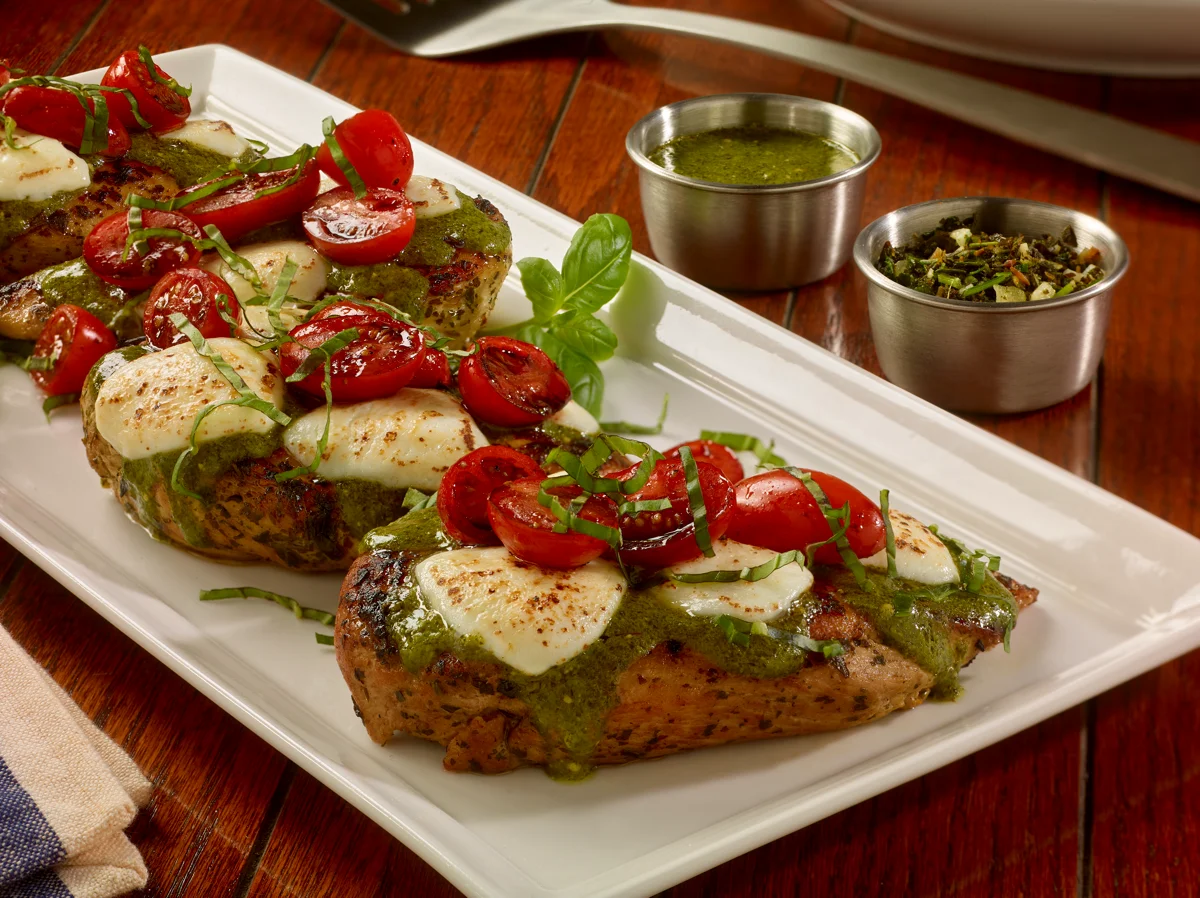
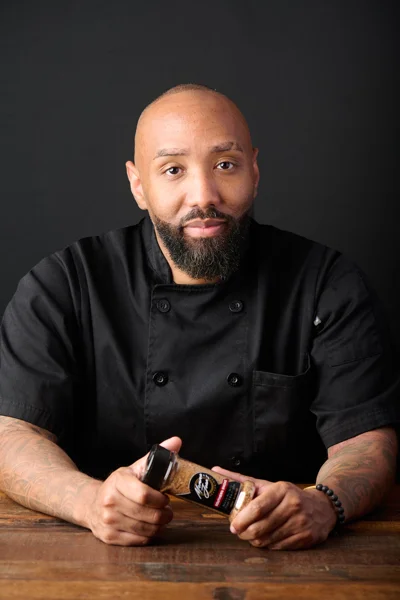
Taking up the challenge to use SupHerb Farms’ Italian Herb Blend and Creamy Basil Sauce, Kevin Rasberry, executive chef/culinary director, The Grove at Trelago, says, “My mind immediately went to comfort and freshness—the kind of flavor characteristics that make Italian food so timeless.” He was particularly inspired by Italy’s coastal regions, “with their lighter, fresher, more herb-forward dishes.”
Rasberry’s goal with his Grilled Caprese Chicken was to “keep things simple, but bold.” Boneless, skinless, pounded chicken breasts are seasoned well with salt and pepper before being infused with the flavors of a marinade made with the Italian Herb Blend and extra-virgin olive oil. After an initial grill, the chicken is topped with the Creamy Basil Sauce and mozzarella slices before a final cook to melt the cheese. At service, the dish is garnished with a topping of halved grape tomatoes mixed with balsamic vinegar, olive oil and freshly sliced basil leaves.
“The Creamy Basil Sauce reminded me of a bright pesto, so I used it to pull together the mozzarella, juicy tomatoes and balsamic. It’s basically a margherita pizza, but reimagined as a chicken entrée,” Rasberry explains. “Everything builds on each other. The Italian Herb Blend gives the chicken a really nice, earthy flavor right off the bat. The Creamy Basil Sauce brings a smooth, herby richness. Then, you get that balsamic-tomato topping, which is sweet, tangy and fresh, cutting through the richness perfectly. Every bite hits something different: savory, creamy, bright and balanced.”
Honestly impressed with these formerly unfamiliar products, Rasberry says the experience “gave me a ton of new ideas.” Both could be applied beyond Italian cuisine, he notes, seeing the Creamy Basil Sauce basted on a grilled shrimp skewer, used as a base for a flatbread or incorporated into a Mediterranean grain bowl. Meanwhile, he expects the Italian Herb Blend would be effective with roasted veggies, in soups or whipped into a compound butter for steaks and bread.
In addition to praising their fresh flavors, the chef lauded their performance. “The Italian Herb Blend gives you that perfect mix without having to measure out a dozen individual ingredients. And the Creamy Basil sauce didn’t break down under heat, which can happen with basil sauces, and it held its color beautifully,” he reports. “It’s definitely a step above a lot of the pre-made sauces I’ve used in the past.” Overall, “You get consistency, speed and all that fresh flavor, which makes it a lot easier for the team.”
Lamb Bulgogi Tacos with Soy Pickled Pear Salsa
Alex Sadowsky
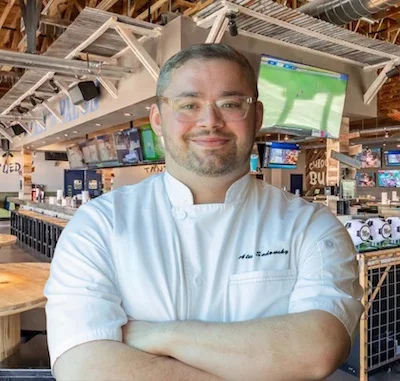
Alex Sadowsky, director of culinary and beverage for Ojos Locos Sports Cantina, was eager to put his own spin on Korean-Latin fusion, nodding to the model set by celebrated chef and author Roy Choi. Sadowsky also found inspiration in the steady rise of inventive taco applications served up at food trucks across Los Angeles, and he recently enjoyed a delicious lamb bulgogi at a Korean restaurant in his Dallas hometown.
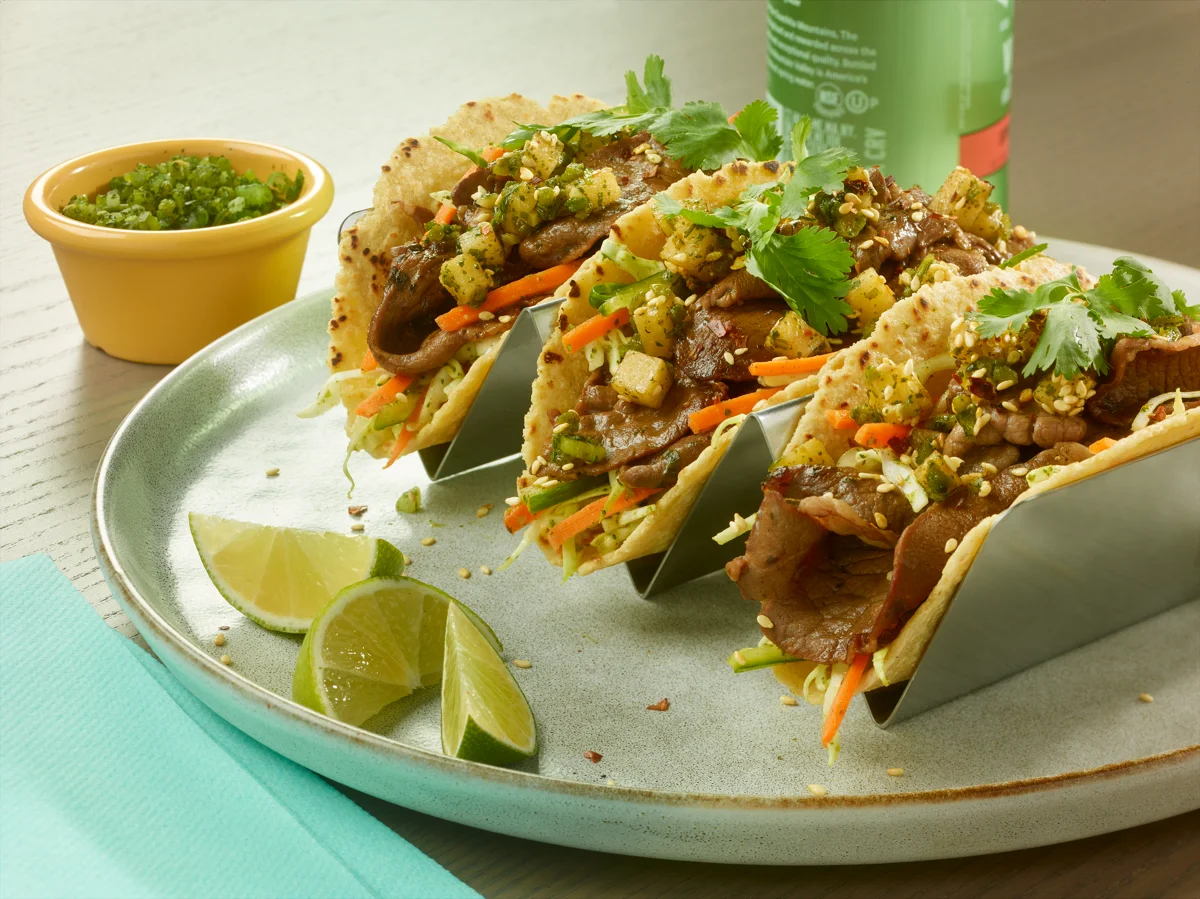
His take, Lamb Bulgogi Tacos with Soy Pickled Pear Salsa, features several flavor-forward components. To prepare the bulgogi, thinly sliced lamb is marinated in a mixture of rice vinegar, soy sauce, maple syrup, sesame oil, sesame seeds, onion and carrot, along with two SupHerb Farms products: Garlic Puree and Salsa Blend. The meat is seared on a flat top and paired with a green slaw (featuring cabbage, carrots, English cucumber and the Salsa Blend) that is tossed in a green taco sauce (made with the Garlic Puree and Salsa Blend, plus two other products: Ginger and IQF Cilantro) and served on corn tortillas. The dish is crowned with soy pickled pears mixed with the Salsa Blend. White sesame seeds, gochugaru pepper flakes, cilantro sprigs and lime wedges serve as finishing touches.
“There’s the bright slaw, the spicy and herby salsa, the crunchy pickled pears with a nice bite of ginger and garlic and then the deep umami flavor of the lamb,” Sadowsky reports of the bite. It’s one he thinks will have particular appeal with younger, more adventurous diners “who see cool fusion things on the internet every day.”
The chef credits the bulgogi marinade as an effective means of transforming the leg of lamb, a cut he believes gets an unjustified bad rap. “The soy pickled pears were mostly for texture and to absorb the flavor of the Salsa Blend. The green slaw helps lighten the entire experience—and I love using humble cabbage on a taco.”
Familiar with some of the SupHerb Farms products, but not all, “I was very impressed, especially with the softer herbs, in how well the IQF process held the flavor,” says Sadowsky. “The Salsa Blend was very easy to use in multiple applications, and it’s a great backbone in several recipes.” He also cites the Ginger and Garlic products as valuable labor savers. “All had bright and fresh flavor and, honestly, in recipes side by side, I would think it would be hard to tell which were entirely fresh versions.” Sadowsky is looking forward to trying these products in future Latin-inspired recipes.
Moroccan Meatball Sandwich with Creamy Harissa & Zesty Yogurt Sauce

Carrie Welt
“I love the flexibility and approachability of meatballs,” says Carrie Welt, senior culinary manager, Nando’s PERi-PERi Chicken, U.S. “Simply change the size and the type of protein, and you can flex between casual or upscale, healthy or indulgent, dine-in or to-go, appetizer or entrée or sandwich. Everyone knows what a meatball is, so it’s up to the chef to take the familiar and make it exciting.”
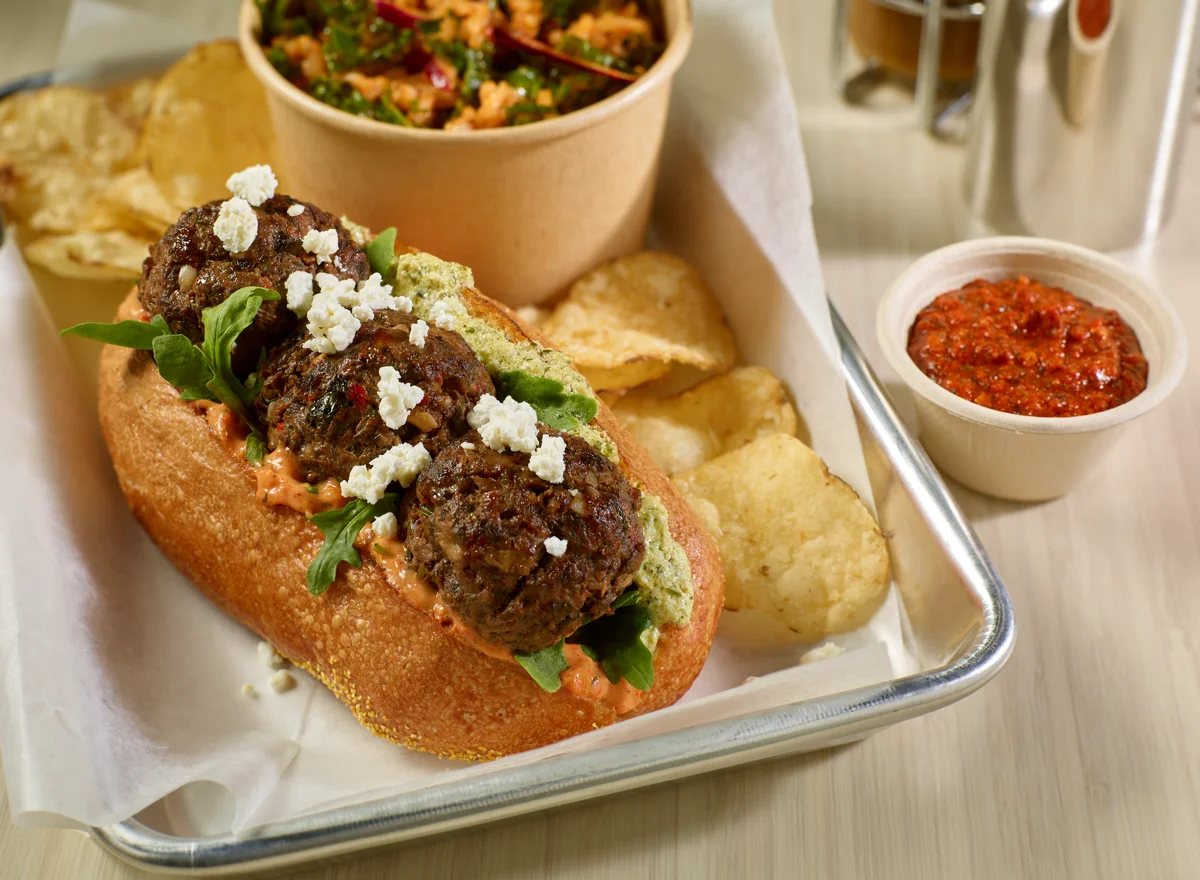
Welt masters that challenge with her Moroccan Meatball Sandwich with Creamy Harissa & Zesty Yogurt Sauce. While inspired by traditional Tunisian harissa lamb, she says the meatballs also can be made with pork or beef. The ground meat is mixed with button mushrooms, mayonnaise and three SupHerb Farms products: IQF Parsley, Minced Garlic and, of course, Moroccan Harissa. “I got so excited when I saw that SupHerb Farms had a harissa paste,” she exclaims. The meatballs are served on a split and toasted hoagie roll spread with a harissa aïoli (also featuring the paste) and then topped with a S’chug yogurt sauce (made with Jalapeño Pesto [S’chug]), arugula and crumbled feta.
“The build of this dish is simple, but every ingredient has a purpose,” explains Welt. “The protein and mushrooms create the base savory profile. The Moroccan Harissa is the primary flavor contributor, with its peppers, spices and heat. The Garlic adds texture, the Parsley gives a clean herbal finish, the mayonnaise keeps the protein moist—and that’s just the meatball!” She uses the harissa aïoli as “a flavor bridge, strengthening the spices and providing a little fat to cool things off.” Meanwhile, the S’chug-infused yogurt “packs its own flavor punch.”
Harissa, s’chug and other distinctive flavors from North Africa and the Middle East are growing in popularity, but are not yet common outside of niche concepts and “the foodie world,” says Welt. “They are great tools for flavor thrill-seekers, so there are big opportunities to create unique, craveable items with these ingredients.”
Although Welt has known about SupHerb Farms for years, she was unfamiliar with the Moroccan Harissa and the Jalapeño Pesto [S’chug]. “Now, I am in love,” she declares. “Both have a mild, pleasant, present heat and hold up really well in multiple applications.” In fact, she tried both products in a harissa carrot cake cupcake with s’chug cream cheese frosting. “It was delicious; the sweet, the heat, the mixture of baking and Maghreb spices was rapturous. I would absolutely love to rock these flavors in other savory applications like kebabs, tacos and burgers.”
Absent these products, Welt normally would have made the mixtures herself—“and generally in batches that I would have trouble scaling,” she admits. The chef places SupHerb Farms at the top of a very small group of suppliers that can make such products that rival scratch-prepared in quality and performance, while meeting food safety and quality assurance requirements.
Project Management: Summit F&B
Photography: otysonphoto.com // Food Styling: Peg Blackley
About the Author
 Patricia Fitzgerald serves different roles on the Flavor & The Menu team, including writing custom content, Kitchen Collaborative chef spotlights and digital editorial content, as well as acting as a contributing editor for the print magazine. As owner of PFitzCommunications, she specializes in various areas of foodservice and hospitality, while also maintaining clients in other industries and professions. She can be reached at pfitzcommunications@gmail.com.Read More Stories by Patricia Fitzgerald
Calvin Eng: Putting Heritage on the Menu Redefining expectations for Cantonese-American cuisine
Chef Calvin Eng’s Congee Arancini and Roast...
Bright, Bold and Bar-Ready Monin’s Yuzu serves up vibrant new flavor potential on beverage menus
A high-impact beverage with low lift, this Yuzu Cold Brew...
The New Ranch Playbook This comeback condiment boasts craveable credibility
Ken’s® Jalapeño Ranch Dressing adds heat to these West Texas...
