
At The Gwen in Chicago, Girl Dinner reflects the rise of personalization-driven dining. Guests curate their own experience—pairing a cocktail, wine or martini with a charcuterie for one, truffle fries and macarons—showing how customization today is about mood, autonomy and pleasure.
Credit: Upstairs at The Gwen
Getting Personal
Agency, identity and intention are reshaping experience
This shift is driven by two powerful currents: an identity-forward approach rooted in younger consumers’ personal narratives, and a wellness-driven strategy fueled by portion consciousness, protein prioritization and the rise of GLP-1 users. Both forces expand what personalization means, pushing operators to rethink how flexibility can be delivered without compromising brand clarity, operational sanity or culinary intention.
Chirag Nijjer, a marketing expert and cultural strategist based in New York, says this shift is happening because younger consumers are choosing brands that reflect something personally meaningful. “The brands that win aren’t going to be the ones that go, ‘Hey, we’re the cheapest’ or ‘We’re the fastest.’ That doesn’t tell me whether you’re going to be the best for me,” he says. “It’ll be brands that learn how to tell stories like, ‘Here are characteristics that speak to you. Here’s what we can do for you.’” His lens captures why customization has moved from a functional choice to an emotional one: Diners want to locate themselves in the experience.
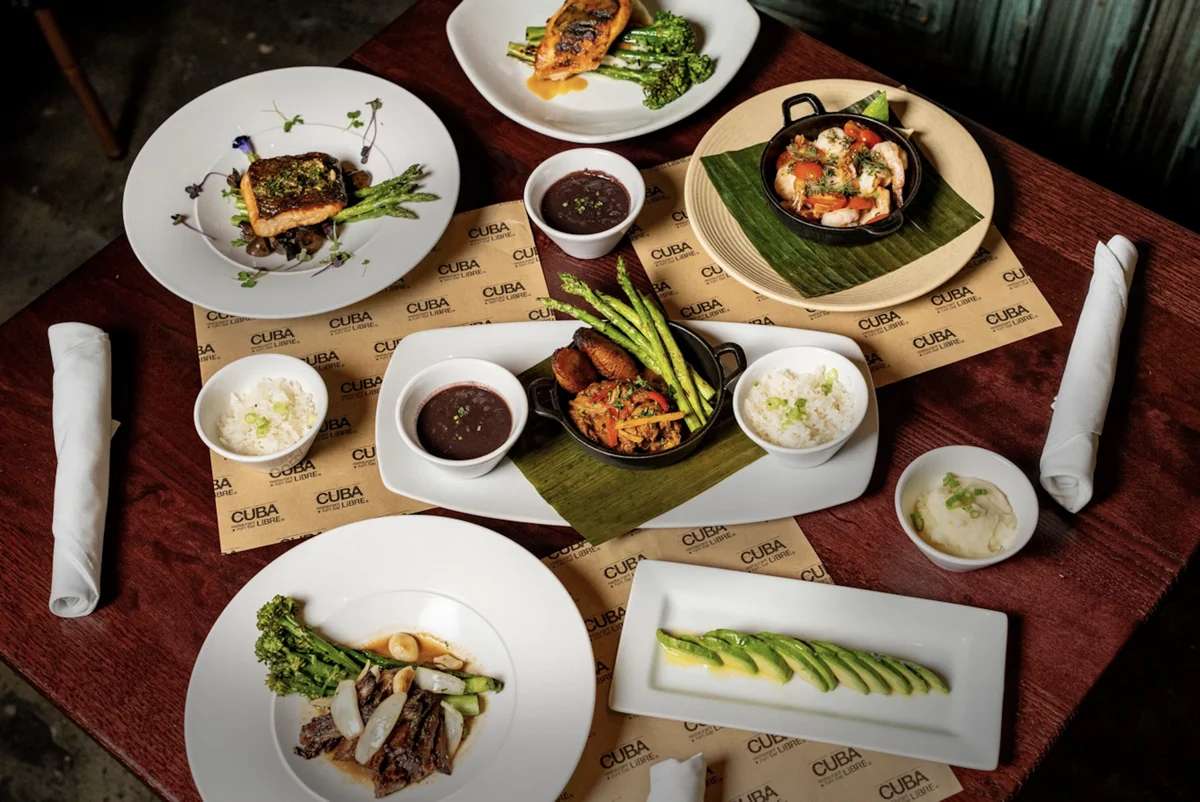 Credit: Cuba Libre
 Cuba Libre, with four locations in the U.S., offers a GLP-Wonderful menu that pairs bold Cuban flavor with protein-centric builds and clear macros, helping diners tailor a meal to their wellness goals.
IDENTITY, SELF-EXPRESSION & SNACKIFIED EATING
Few trends illustrate this concept better than “girl dinner.” What began as a TikTok wink at low-effort self-care has evolved into a hashtag that now enjoys more than 1.8 billion views and has developed into a restaurant-friendly format rooted in agency and pleasure. The original video, released in 2023, showed a woman cobbling together a dinner of bread, cheese, grapes and pickles. She dubbed the offering “girl dinner.” It immediately struck a chord with its spirit of empowerment: a meal unconcerned with rules, portions or structure. Restaurants took note. Bank + Vine, a bistro in Wilkes-Barre, Penn., introduced a girl dinner that pairs a Caesar salad with fries, honoring the signature aesthetic that countless diners have embraced at home. Happy Medium, a modern dive bar in San Diego, went playful with its version: kale Caesar salad, fries and a “Mini Tini,” leaning into the trend’s love of small portions and mix-and-match indulgence.
These offerings resonate because they affirm the personal meal narrative—snacky, nonlinear eating that serves mood over meal period. They also align with the way Gen Z uses food as a language of identity. Nijjer describes this as the rise of “shared language,” noting that brands must understand the myths, symbols and codes that signal belonging. Girl dinner became a shorthand for a kind of autonomy and playfulness, and restaurants that tap into it are signaling fluency in that language.
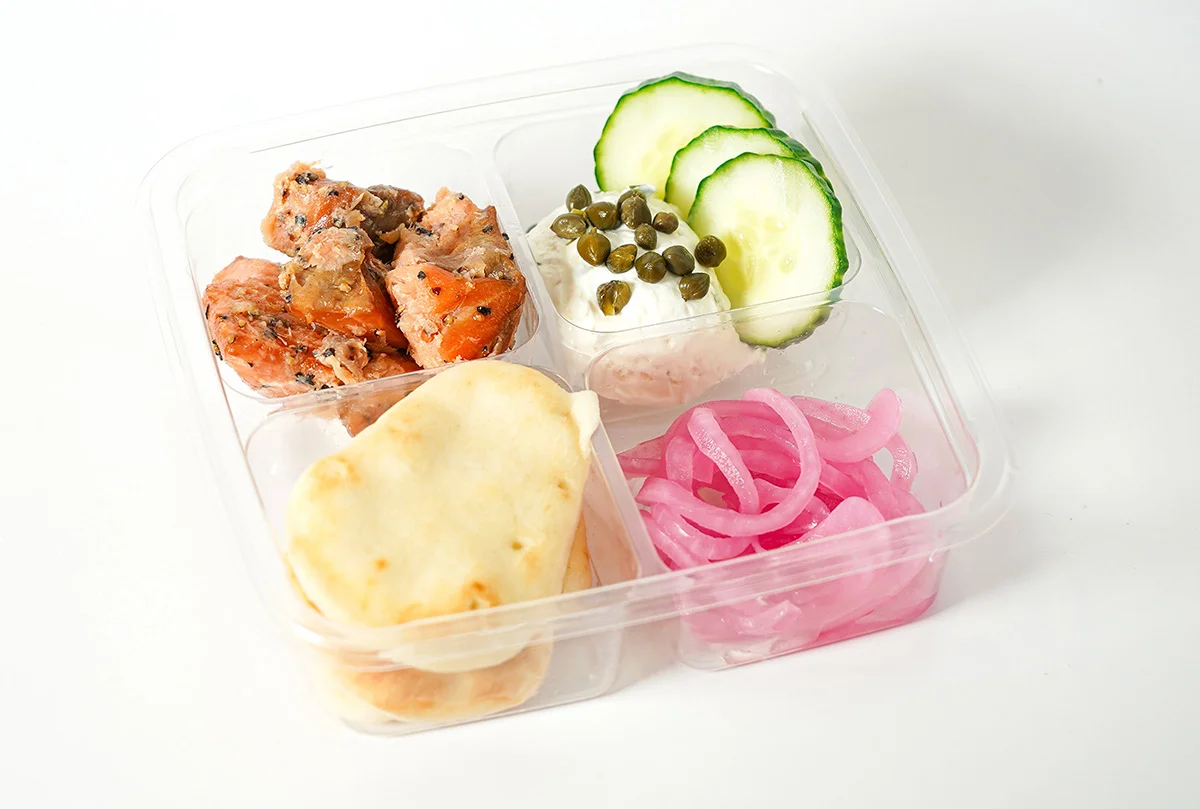 Credit: Kathy Casey Food Studios / Maya Alderman
 Dish D’Lish at the Sea-Tac Airport in Seattle menus an Alaska Smoked Salmon Snack Pack, pairing pepper-smoked sockeye salmon with a chèvre and chive cream cheese spread, capers, pickled red onions and mini naan, served deconstructed so travelers can build each bite their own way.
Liz Moskow, principal at consultancy Bread & Circus, sees significant opportunity here for high-volume brands. “It’s low risk, high reward: Let customers mix and match small portions of indulgent and healthy items without overhauling your menu,” she says. “A small side of fries paired with a salad bumps checks while keeping food costs low. The build-your-own model drives group orders and social buzz like Instagram-worthy girl dinner spreads.” Curated customization—guided but flexible—gives operators a chance to craft signature combinations that feel personal yet brand-forward.
Another expression of identity-led customization is the table pancake, a viral micro-trend built around the idea that breakfast doesn’t need to force a choice between sweet and savory. Instead, the dining party orders a single plate of pancakes to share with the table, just a taste of indulgence to complement a Benedict or breakfast hash. It’s a low-lift offering that satisfies a craving while building communal experience. These formats create moments diners want to share—not just at the table, but online—reinforcing the identity loop that drives this wave of personalization.
Miriam Aniel Oved, head of integrated marketing at Tastewise, sees this personalization arc extending far beyond social trends. “It’s hyper-personalization,” she says. “Gen Z is huge on it.” In this new dining culture driven by personal expression, operators are learning to strike a balance between thoughtful curation and giving guests room to shape the experience as their own.
THE RISE OF RIGHT-SIZED EATING
Alongside identity-driven customization, an equally strong force is reshaping the plate: personalized wellness, deeply influenced by portion mindfulness, protein prioritization and the growing population of GLP-1 medication users. Restaurateurs who once dismissed the GLP-1 effect as overhyped now acknowledge its relevance. This growing cohort of diners is eating away from home less frequently and eating less per sitting, but they still want to participate in restaurant culture. That means concepts must give them ways to do so—without splitting entrées, opting out or vetoing a venue altogether.
Michael Parlapiano, managing director of The Culinary Edge, believes the next challenge is ensuring that right-sized portions still deliver value, craveability and flavor impact. “We’re going to see product types or formats that answer GLP-1 needs, and that will likely be driven by smaller overall portions,” he says. “But they need to deliver on that same flavor promise and crave factor that consumers expect.”
Some restaurants have already adapted. Tucci, in New York, offers an appetizer of a single meatball—elevated with manchego cheese and Calabrian chile marinara—giving guests a high-impact, small portion that still feels indulgent. Clinton Hall, also in New York, introduced a “teeny weeny mini meal” built around two 1-oz. beef patties on tiny buns, with a playful disclaimer: “Get a shot of fun, no prescription needed.” These offerings are keying into growing demand; they’re about delivering satisfaction at a scale that aligns with a changing appetite landscape.
 Credit: Bardega
 With the Royal Wednesday, Bardega in Laguna Hills, Calif., lets guests choose their lane—full-ABV, low-ABV or zero-proof gin—while the bar team maintains the exact same flavor harmony in every pour.
Parlapiano notes that technology will accelerate this movement. “We’re in this world of hyper-personalization that allows a customer to fine-tune not only the choice of protein but also every individual macronutrient-driving component of a given dish,” he says. Nutrient calculators, kiosks and digital ordering platforms are essentially becoming nutritional editing tools, giving diners the ability to tailor portions and components to their needs. As technology evolves, personalization will only deepen, driven by data-informed consumers who rely on apps that track sleep, movement, macros and other nutrient needs, and then fold those insights directly into their dining decisions. For restaurant brands, the opportunity lies in meeting demands not just for allergens or ingredient preferences, but addressing elements like fiber, protein or iron with builds that feel intentional and signature rather than purely functional.
PERSONALIZATION AS PARTICIPATION
This new era in customization ultimately asks operators to embrace a more fluid definition of control—one shared between brand and guest. For younger consumers, patronizing a brand is a form of identity expression. For wellness-driven diners, customization eases psychological friction by helping them stay aligned with personal health goals. Nijjer says this shift requires brands to consider the broader picture, rather than individual menu items. “It forces menu developers to understand that you have to think beyond just the meal,” he says. “It’s no longer about individual menu items. Instead, it’s ‘What does this say about our collective story?’”
Oved poses the core strategic question: “How do we design menus for people who want to express individuality through their order, manage health and metabolism, and still share social eating moments? It’s about unlocking formats and portions that let them build their own experience—without breaking the operation.”
Next-level personalization is not about surrendering structure; it’s about curating choice with intention. Brands that succeed will give diners space to feel seen, supported and satisfied through any format that lets diners express who they are and how they want to eat right now.
About the Author
 Katie Ayoub serves as managing editor of Flavor & The Menu and content strategist for the Flavor Experience, an annual conference geared toward chain operators. She is president of Katie Ayoub & Associates, serving up menu trends expertise, content creation and food & beverage consultancy. Based in Chicago, Katie has been working in foodservice publishing for more than 20 years and part of the Flavor team since 2006. katie.ayoub@gmail.comRead More Stories by Katie Ayoub
Rip, Tear and Pull-Apart Breads Menuing four fun, interactive styles
Flavor Trends, Strategies and Solutions for Menu Development[google_sidebar_ad adslug="2026-04-Surround-Kens-320x50"...
Tart Cherries Make Flavor Magic Reimagine ways to put their power of sour to work in modern menu development
Flavor Trends, Strategies and Solutions for Menu Development[google_sidebar_ad...
Spread a Little Indulgence Clean-label nut butters deliver dairy-free creaminess with a naturally premium read
Flavor Trends, Strategies and Solutions for Menu Development[google_sidebar_ad adslug="2026-05-Surround-Puratos-320x50"...
