
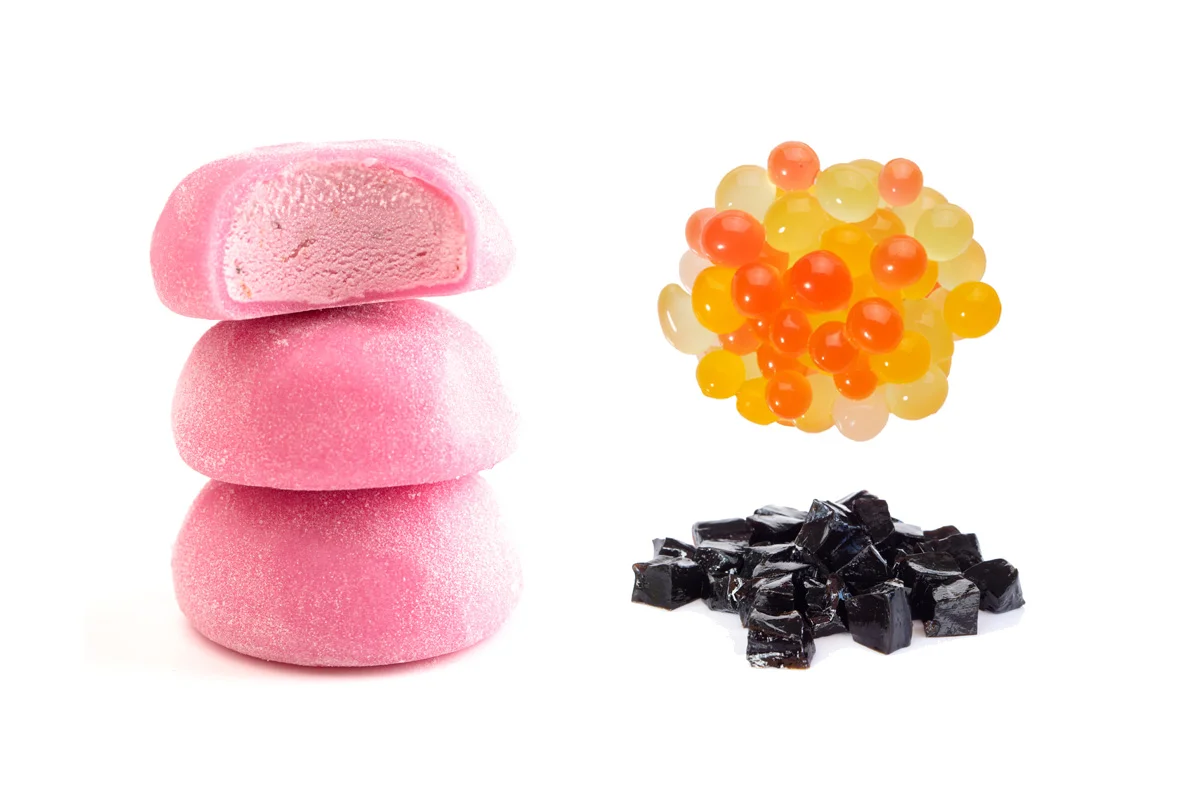
From bouncy and squishy to jiggly and stretchy, today’s texture revolution is redefining how flavor is experienced—pushing menu developers to think beyond taste and into the realm of modern sensory play.
The Next Texture Frontier
A new era of multisensory texture informs craveability
What’s happening now feels different. A new textural frontier—shaped most visibly by Asian sweets, modern café culture and viral beverage formats—is expanding the language of craveability in this country. Chewy, jiggly, stretchy, bouncy and slurpable textures are moving into the spotlight, capturing consumer imagination and creating unexpected opportunities across food and beverage. This shift is driven by global influence, visual impact and Gen Z’s affinity for these “new” sensations.
Claire Conaghan, trendologist and associate director of publications at Datassential, sees texture as a connective thread across several fast-moving trends, starting with beverages. “Beyond boba, we’re seeing popping pearls, grass jellies and even health-driven drinks like chia-seed or basil-seed lemonades that add tactile interest,” she says. “These create a thicker, more ‘chewable’ drink texture—something Gen Z loves.” Conaghan also points to renewed enthusiasm around layered desserts—tiramisu, banana pudding, seven-layer gelatin or fruit salads—where contrast reigns. “Even those nostalgic Jell-O and cookie salads are coming back in updated forms.” The resounding truth: Younger consumers are embracing textures that once would have been considered “weird,” from gooey to bouncy to chewy. “Gen Z grew up with diverse global foods,” says Conaghan. “They don’t need everything to make traditional sense; they enjoy playfulness.”
The rise of texture-led eating isn’t just novelty; it reflects a cultural turn toward multisensory experiences. According to Tastewise, consumers increasingly want to “feel” food as much as they want to taste it, rewarding products that deliver contrast and whimsy in new and surprising ways. Texture is no longer background—it’s the story.
 Credit: Lei
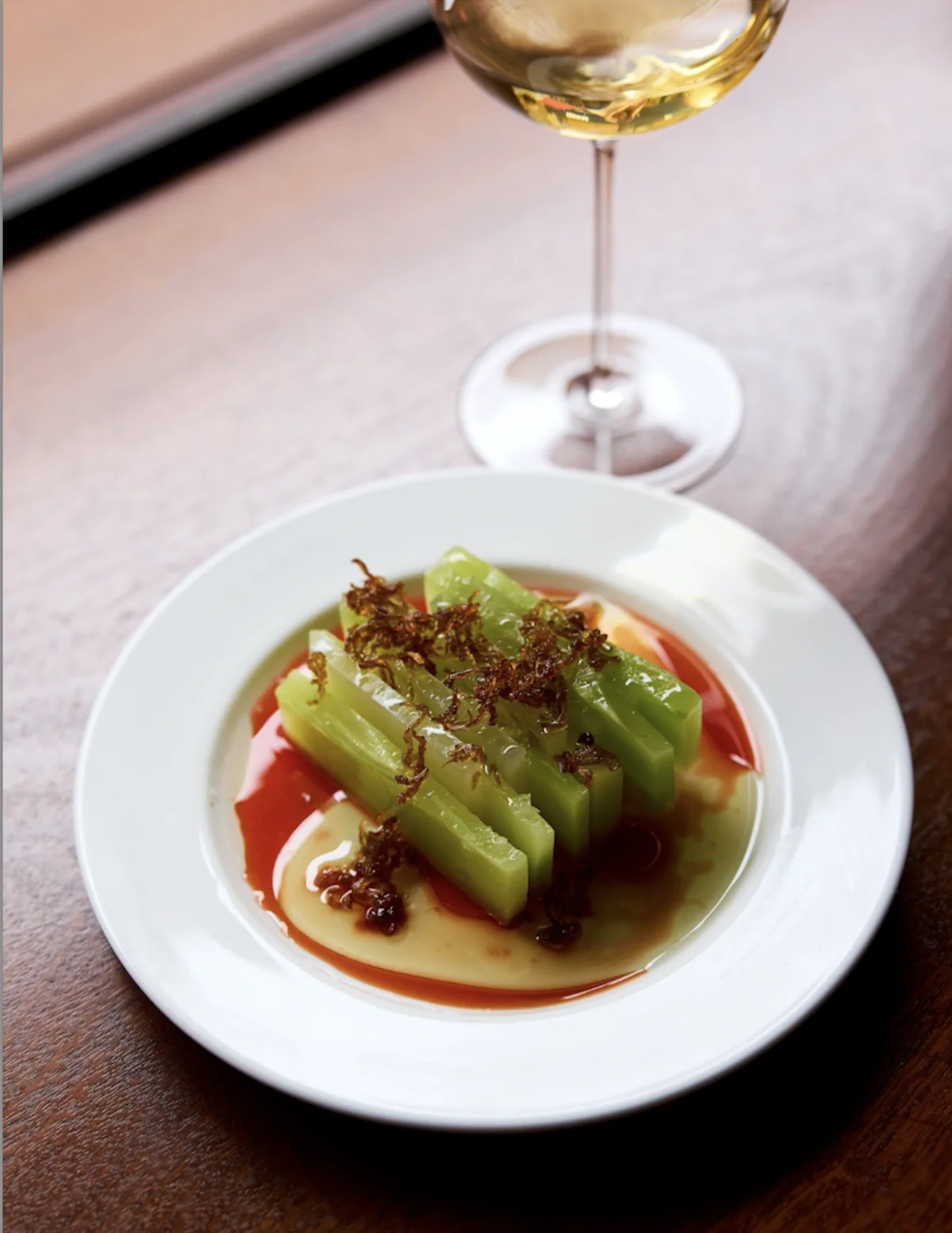
 Lei in New York includes kombu jelly in its chilled celtuce salad with fried shallots and red rice vinegar, demonstrating how bouncy, slippery texture is moving into sharper focus across the menu.
A NEW TEXTURAL LANGUAGE
Much of today’s momentum comes from Asian culinary traditions, where texture has always been a celebrated dimension of enjoyment. “Japan has hundreds of words describing food texture. China has roughly 150. That reveals just how central mouthfeel is to enjoyment in these cultures,” says Michael Parlapiano, managing director of The Culinary Edge. That influence is now coursing through American menus. Boba pearls taught a generation to expect chewiness in beverages; mochi became a gateway to bouncy, stretchy sweets; and grass jelly, basil seeds and other soft-gel formats are appearing in new contexts. These once-unfamiliar textures now carry a sense of discovery, and they deliver on experience. “Operators should be doubling down on those textures to deliver something that’s a little bit new and novel,” he says.
Desserts continue to lead the way on the texture front. At Mamie’s Yogurt in Flushing, N.Y., stretchy spirulina yogurt has become a social-media magnet. It wobbles, it pulls, it gleams, and it redefines how a yogurt parfait can behave. Soufflé pancakes and mochi doughnuts further reinforce the appeal of gentle bounce, offering a softness that feels new in an American context.
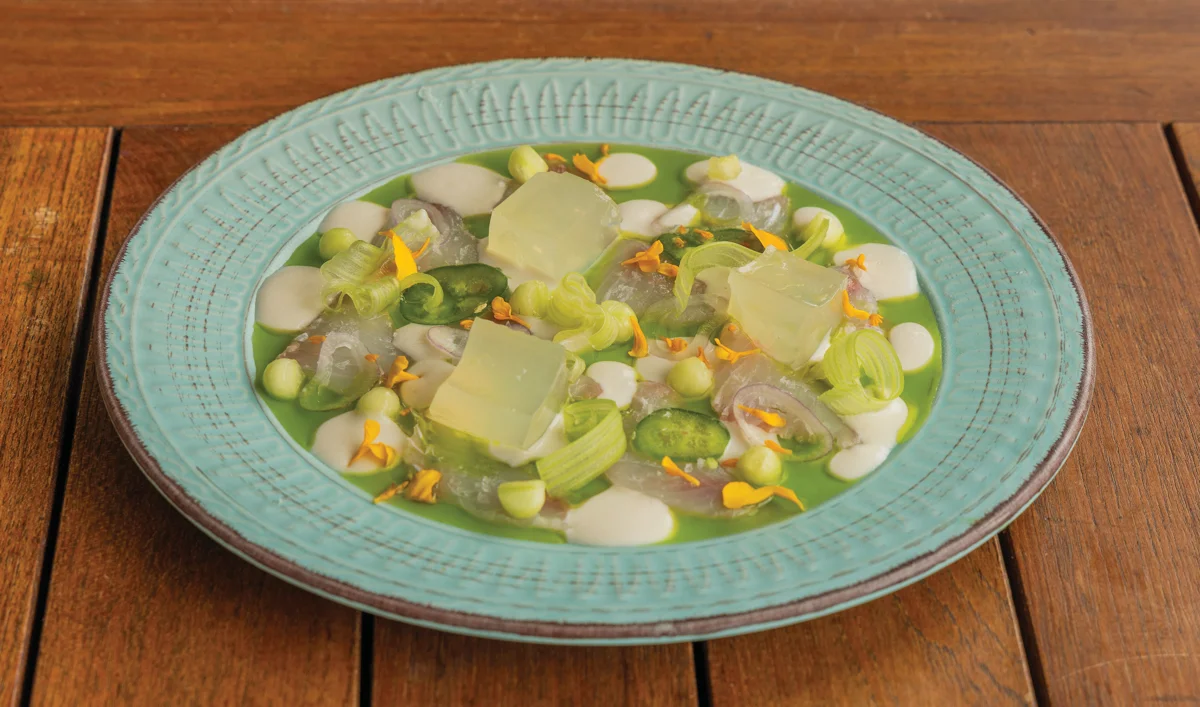
Operators are expanding these cues on the savory side of the menu, as well. At Lei, a Chinese-inspired wine bar in New York, a dish of chilled celtuce with shallots and red rice vinegar showcases how contrasting textures can create an entirely new experience. The thick stem of the lettuce is sliced into delicate rectangles—cold, crisp and crunchy—stacked tightly with slippery kombu jelly tucked between the layers, offering an interplay of snap and glide that feels modern and unexpected. At TAL Bistro & Bar, also in New York, the classic Korean acorn-starch jelly known as dotorimuk appears as a chilled starter. It’s soft, jiggly and earthy. And in Miami, Verde at the Pérez Art Museum menus its Mojito Cuban Tiradito, a mahi-mahi appetizer layered with mint oil, cucumber, jalapeño and a mojito Jell-O shot that adds an unexpected, cool, playful wobble.
 Credit: YSG Dessert Bar
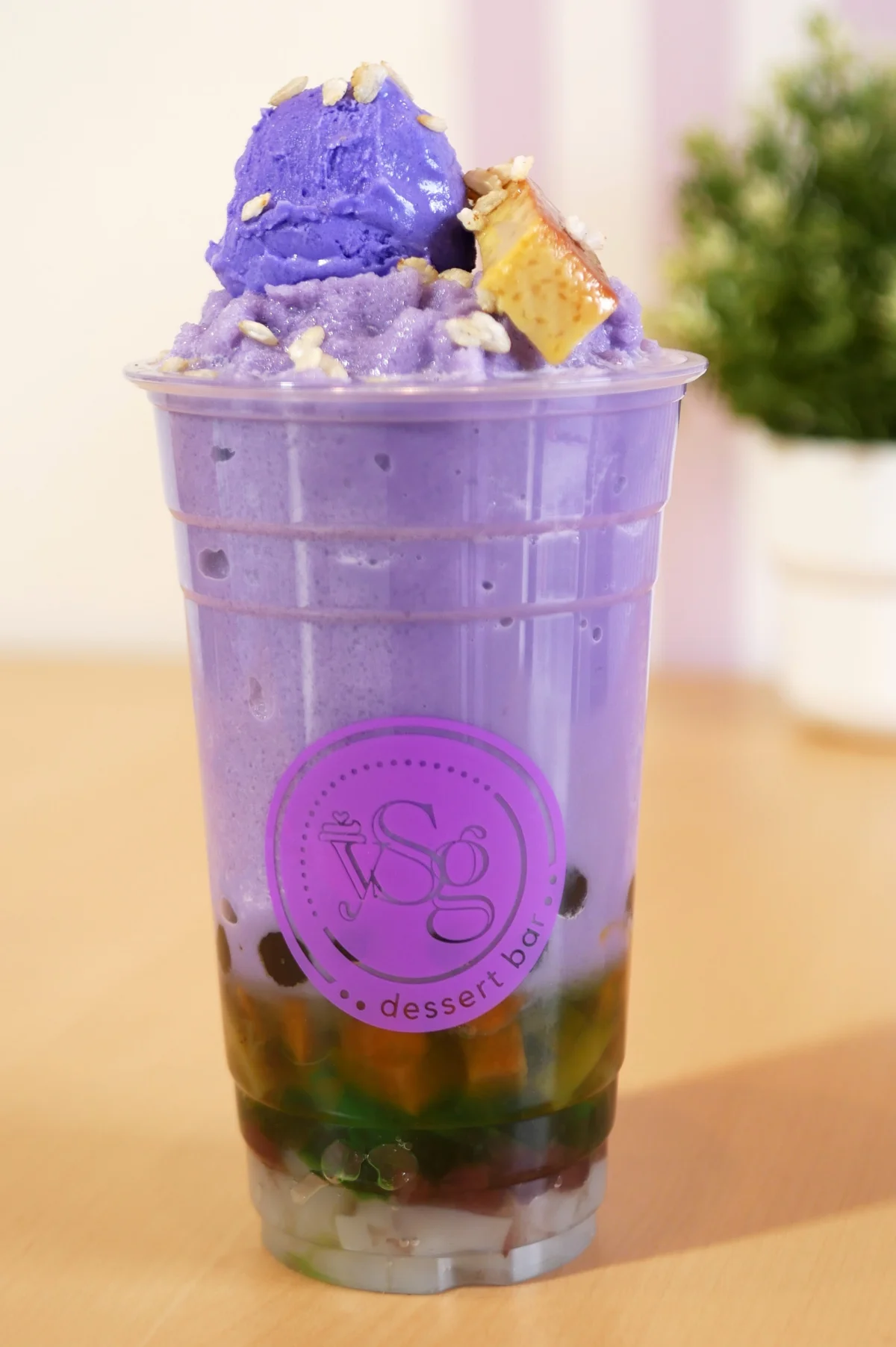
 A textural jackpot, the Ube Halo-Halo layers sweet potatoes, banana, red mung beans, coconut, jellies and tapioca pearls at the base, topped with ube ice cream, crispy pinipig (glutinous rice) and leche flan—served at YSG Dessert Bar in Worth, Ill.
Beverage innovation is riding this same wave. “Texture and experience go hand in hand,” says Kathy Casey, owner, chef and mixologist, Kathy Casey Food Studios-Liquid Kitchen. “Imagine a crisp, sparkling house soda, then add plumped basil seeds for a slippery, poppy mouthfeel, bits of fruit for a little something to chew, and finish with cold foam or frothy fluff. It becomes a layered, sensory journey.” Drinks today are engineered for dimensionality—chewy, bouncy, fizzy, fluffy—which is precisely why they dominate visual culture. Texture is moving from accent to engine, transforming beverages into multisensory, maximalist experiences.
WHERE TEXTURE IS HEADED
For younger consumers, texture is the gateway to novelty, identity and indulgence. A drink that jiggles or a dessert that stretches becomes media content the moment it hits the table. Texture also powers personalization. Extra boba, no ice, double foam or added gels allow diners to create a beverage that feels distinctly their own. And texture is becoming a tool for indulgence in snacking moments. Cold drinks and desserts are increasingly replacing afternoon or late-night bites, and adding a chewy or creamy textural finish delivers the emotional payoff consumers seek. Tastewise points to another driver: Sensory richness helps justify spend. Layered coffees, crackly-topped beverages and desserts with contrasting interiors feel more premium because they deliver a greater experience for the price. Maximalism becomes a value proposition.
 Credit: Verde
 In Miami, Verde’s Mojito Cuban Tiradito is a mahi-mahi appetizer layered with mint oil, cucumber, jalapeño and slices of a mojito Jell-O shot, delivering an unexpected, playful bounce.
The opportunity for operators lies in bringing globally inspired textures into more familiar formats. “I think the next wave is finding approachable, now-familiar formats where these textures can live,” says Parlapiano. “People are just now exploring the idea that you can add boba to a dessert platform. Halo-halo, the Filipino favorite, and similar formats have been around for a long time, but combining icy, frozen dessert platforms with newer textural elements is a smart next step. Grass jelly fits that space nicely, and mochi still feels largely untapped for mainstream brands.” These touches deliver novelty without alienation, and they give operators fresh avenues for seasonal LTOs or signature builds.
Texture is also quickly becoming a storytelling device in coffee and tea programs. Cold foam continues to evolve into a functional and indulgent canvas. Tastewise notes a growing consumer appetite for foams that pair pleasure with purpose—protein-enhanced blends, botanical foams for stress relief, even hormone-supportive formulations aimed at women’s wellness. These innovations sit comfortably within the Texture 3.0 movement: soft, fluffy layers that add visual theater and substantive value.
Across the menu, the most successful applications of modern texture balance novelty with comfort. A jiggly panna cotta infused with matcha. A mochi waffle that holds the structural integrity of a classic but surprises with bounce. A yogurt bowl designed around stretch instead of spoonable creaminess. A cold beverage with chew, fizz and foam in harmony. Consumers are open to these sensations—especially when the flavors are friendly and the formats familiar.
In an era when food and drink must work harder to stand out, the operators who win will be those who design with the entire sensory spectrum in mind. Texture creates anticipation. It sparks joy. It turns small moments into memorable ones. Texture has always driven craveability. What’s new is its starring role. As this movement accelerates, the dishes and drinks that resonate most will be the ones that snap, squish, wobble or bounce their way into the cultural conversation—inviting diners not only to eat and drink, but to experience.
About the Author
 Katie Ayoub serves as managing editor of Flavor & The Menu and content strategist for the Flavor Experience, an annual conference geared toward chain operators. She is president of Katie Ayoub & Associates, serving up menu trends expertise, content creation and food & beverage consultancy. Based in Chicago, Katie has been working in foodservice publishing for more than 20 years and part of the Flavor team since 2006. katie.ayoub@gmail.comRead More Stories by Katie Ayoub
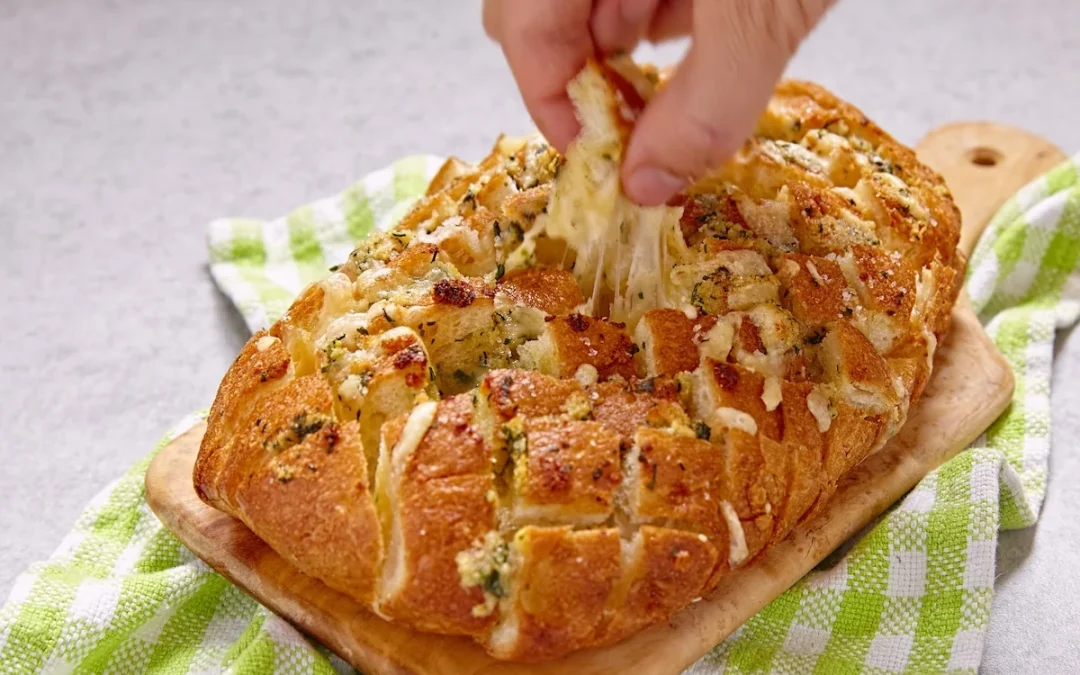
Rip, Tear and Pull-Apart Breads Menuing four fun, interactive styles
Flavor Trends, Strategies and Solutions for Menu Development[google_sidebar_ad adslug="2026-04-Surround-Kens-320x50"...
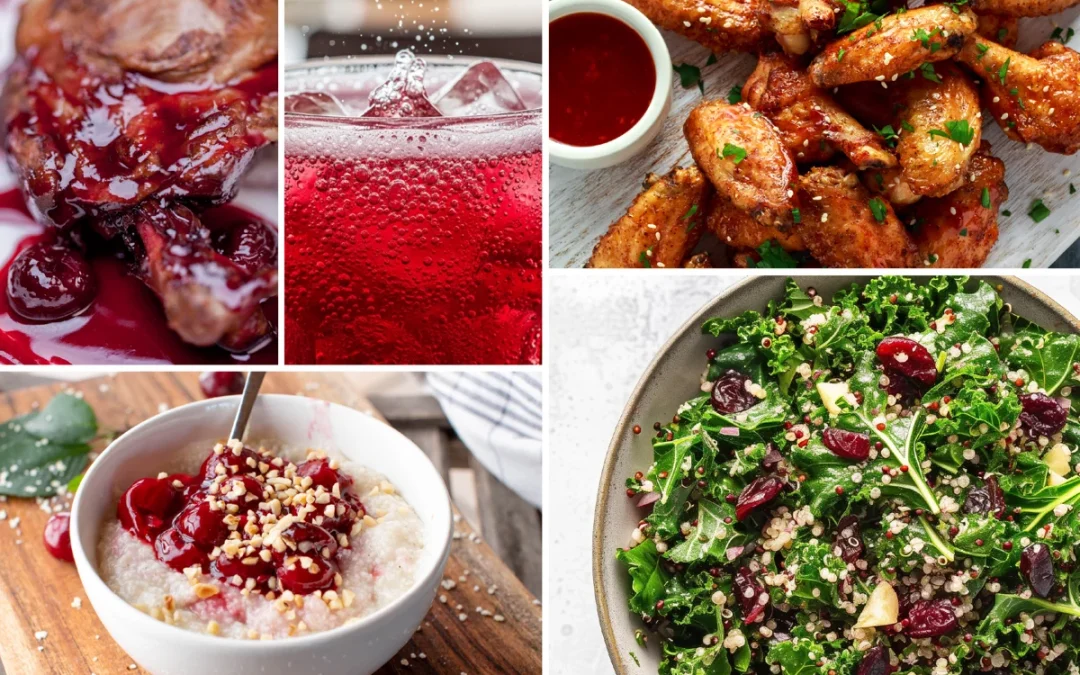
Tart Cherries Make Flavor Magic Reimagine ways to put their power of sour to work in modern menu development
Flavor Trends, Strategies and Solutions for Menu Development[google_sidebar_ad...
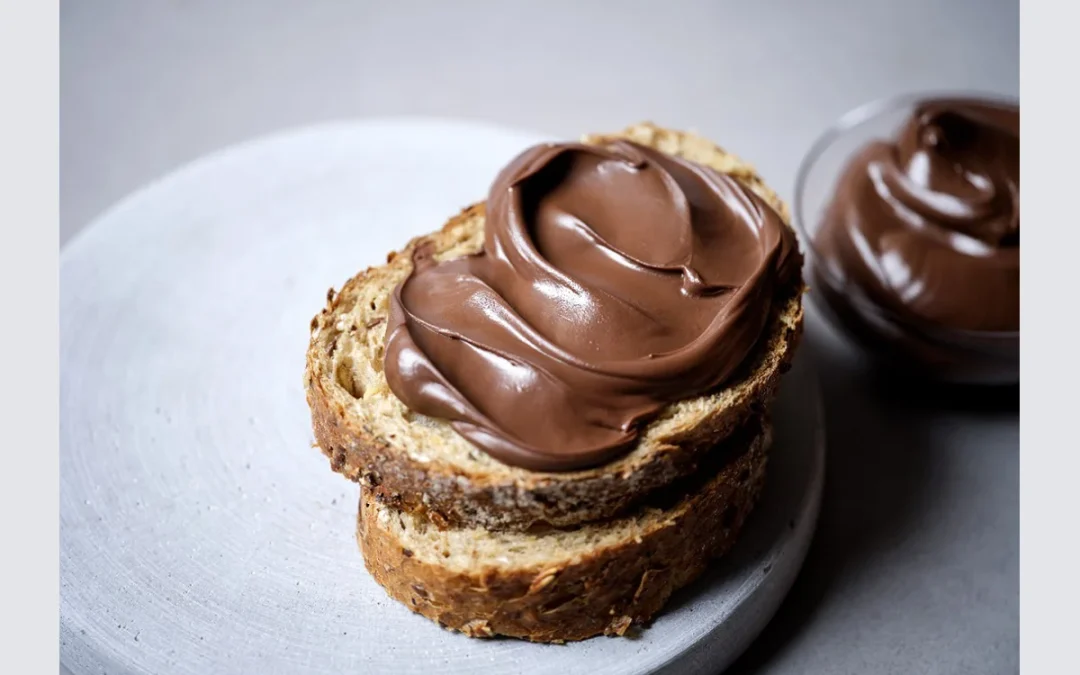
Spread a Little Indulgence Clean-label nut butters deliver dairy-free creaminess with a naturally premium read
Flavor Trends, Strategies and Solutions for Menu Development[google_sidebar_ad adslug="2026-05-Surround-Puratos-320x50"...
