

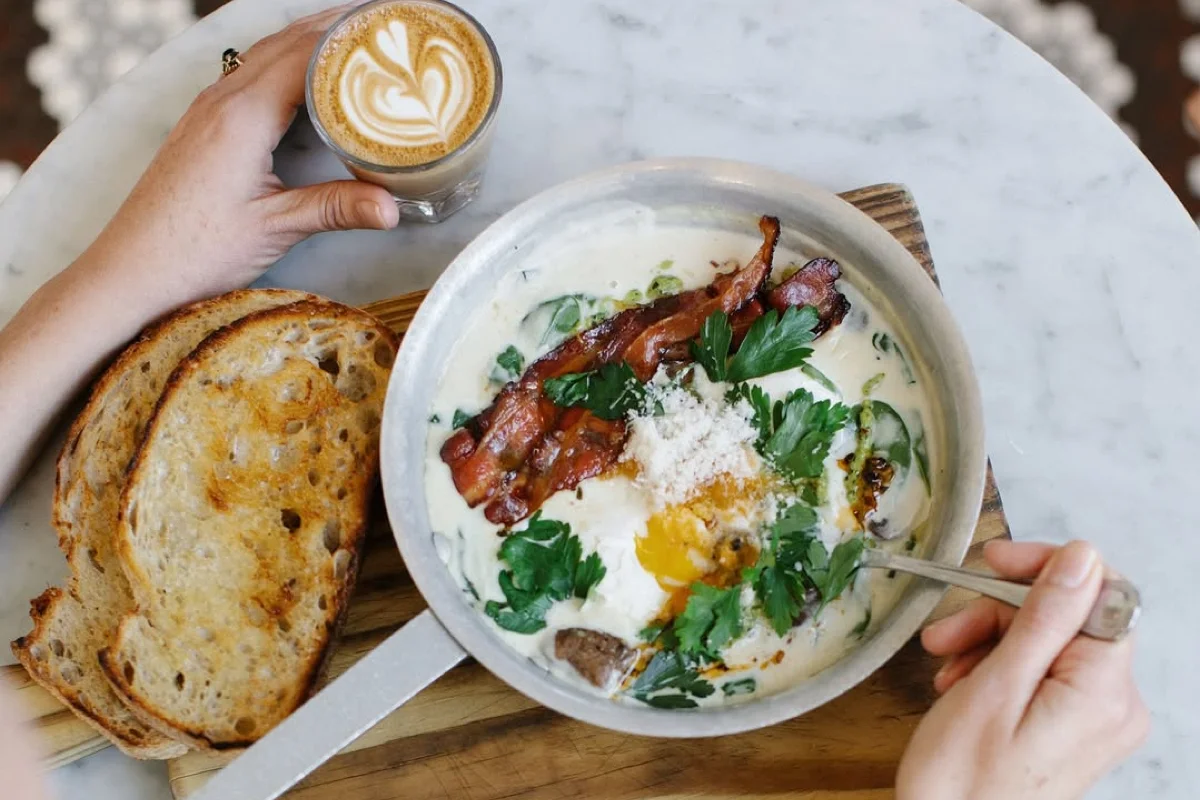
Boston-based Tatte Bakery & Café reveals the nuances of Mediterranean fare as well as its daypart flexibility through dishes like the popular Potato Mushroom & Bacon Shakshuka for brunch.
Credit: Tatte Bakery & Café
State of the Plate: “Mediterranean Cuisine” Is a Misnomer
Category-defying insights from the CIA’s Worlds of Flavor
“Mediterranean” fare comprises more than 20 national cuisines that have coexisted for millennia. The history of the region suggests that ancient Persia, modern-day Iran, played a leading role with the domestication of farm animals, the cultivation of crops and the codification of recipes. Subsequent wars and trade routes spread these innovations throughout the area and led to ongoing interchange that represents the original culinary melting pot.
It’s Cultured
 Credit: Dig Inn
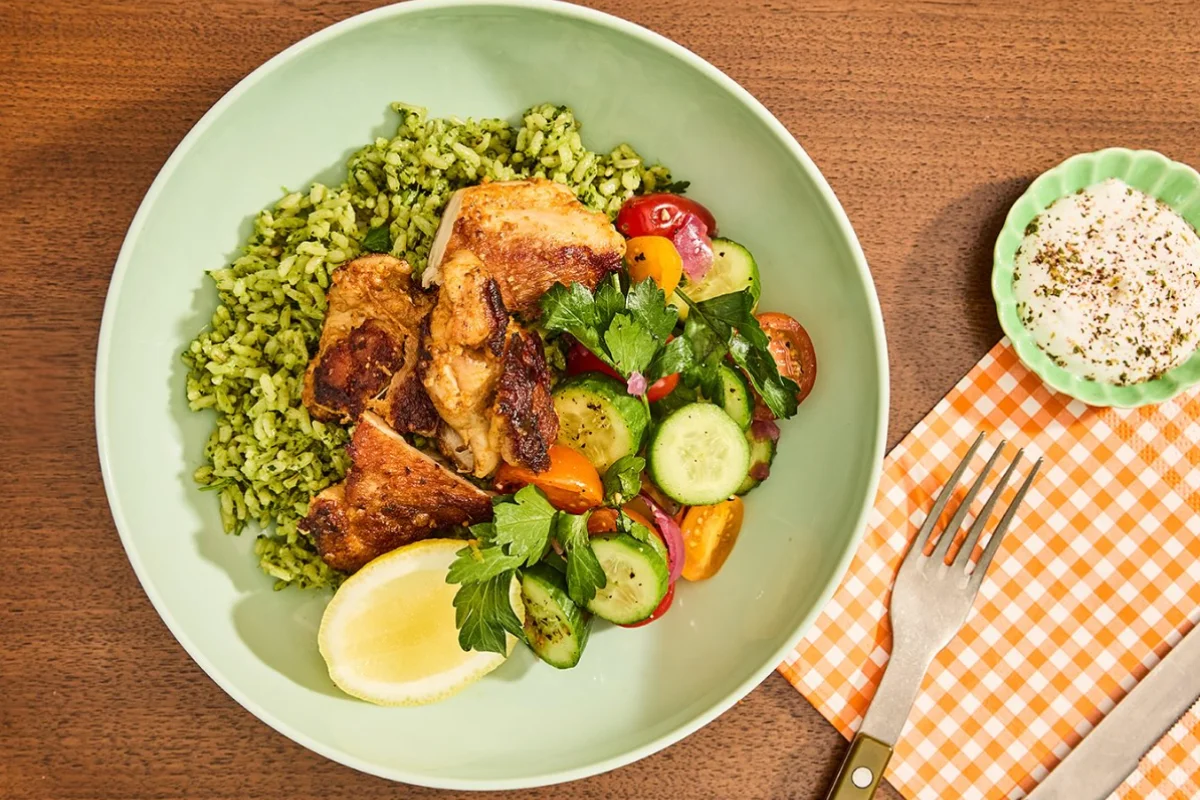
 Last year, Dig Inn spotlighted Persian cuisine with its limited-time Sumac Yogurt and Chicken Plate, featuring charred chicken, herb rice, tomato-cucumber salad and a sumac-lime-mint yogurt sauce.
At Worlds of Flavor, speakers noted the importance of ingredients as a unifying theme of kitchens throughout the region. The primacy of olives and olive oil is obvious, but many others also have traversed both time and borders.
Yogurt is a case in point. Tracing its roots to the Middle East, yogurt likely resulted from the accidental fermentation of milk, and it set the stage for the familiar cultured-dairy-product-in-a-cup that has achieved ubiquity in modern supermarkets. American chefs, however, have barely tapped its potential. Though largely underappreciated and underutilized here, savory yogurt is a Mediterranean mainstay that is slowly gaining presence on domestic menus.
It adds a pleasing tang to dishes at Chicago’s Aba, where yogurt zhoug appears in the Spinach and Feta Frittata, and Frozen Greek Yogurt with olive oil and sea salt headlines the dessert menu. In New York City, Dig Inn specializes in healthy, seasonal cuisine, like the recent limited-time Sumac Yogurt and Chicken Plate, while Boston-based Tatte Bakery & Café forgoes the standard mayo in its Tuna Salad Sandwich. Instead, it amps up flavor with a mixture of yogurt and dill.
It’s a Wrap
Dolma, which comes from the Arab word meaning “something stuffed,” gives its name to meze or mezze, finger foods that are popular throughout Greece, Lebanon and other Eastern Mediterranean countries. While savory fillings wrapped in neatly rolled grape leaves are familiar to many American diners, they barely scratch the surface of opportunity.
An engaging Worlds of Flavor session, “The Greek Table,” smartly demonstrated the dish’s small-plate potential with variations like Leek Dolma with shrimp; Cabbage Dolma with chopped onions, zucchini, carrots and red bell pepper; and Onion Dolma with raisins, pine nuts and rice. This versatility was on full display at the program’s opening-night reception, where clever and creative Southern cuisine-inspired dolmas were made with dirty rice wrapped in collard-green leaves. And fans of the Aegean-inspired foods of Western Turkey are in luck at Brooklyn’s Rana Fifteen, where Mussel Dolmas are filled with rice, currants and spices.
It’s Brunch-able
Brunch has maintained robust post-pandemic growth, and its embrace by Gen Z diners in particular augurs well for its future. Mediterranean-inspired items like shakshuka, a one-dish meal in which eggs are cooked in a spicy tomato sauce, address the trend and are ripe for menu crossover. Its simplicity makes it a perfect canvas for ingredient innovation, which is the order of the day at Aba, where Short Rib Shakshuka gets a flavor boost from harissa, Greek graviera cheese and roasted sweet potato. In Miami, Sesame Bakery dishes up both Red and Green Shakshuka; the former adds market salad, mozzarella and tahini to poached eggs, while the latter includes spinach, heavy cream, potato and hawaij, a ground spice typically featuring cumin, coriander, turmeric and cardamom.
The signature Shakshuka on the Early Risers menu at Butcher & Bee in Nashville, Tenn., is made with two soft-baked eggs, black-lime tomato stew, olive tapenade, labneh and grilled pita. The Potato Mushroom & Bacon Shakshuka at Tatte includes potato sauce and shiitake and button mushrooms, along with parsley relish, garlic-Aleppo oil, grated Parmesan and fresh parsley served with housemade sourdough.
It Talks Turkey
 Credit: Nicole Duncan
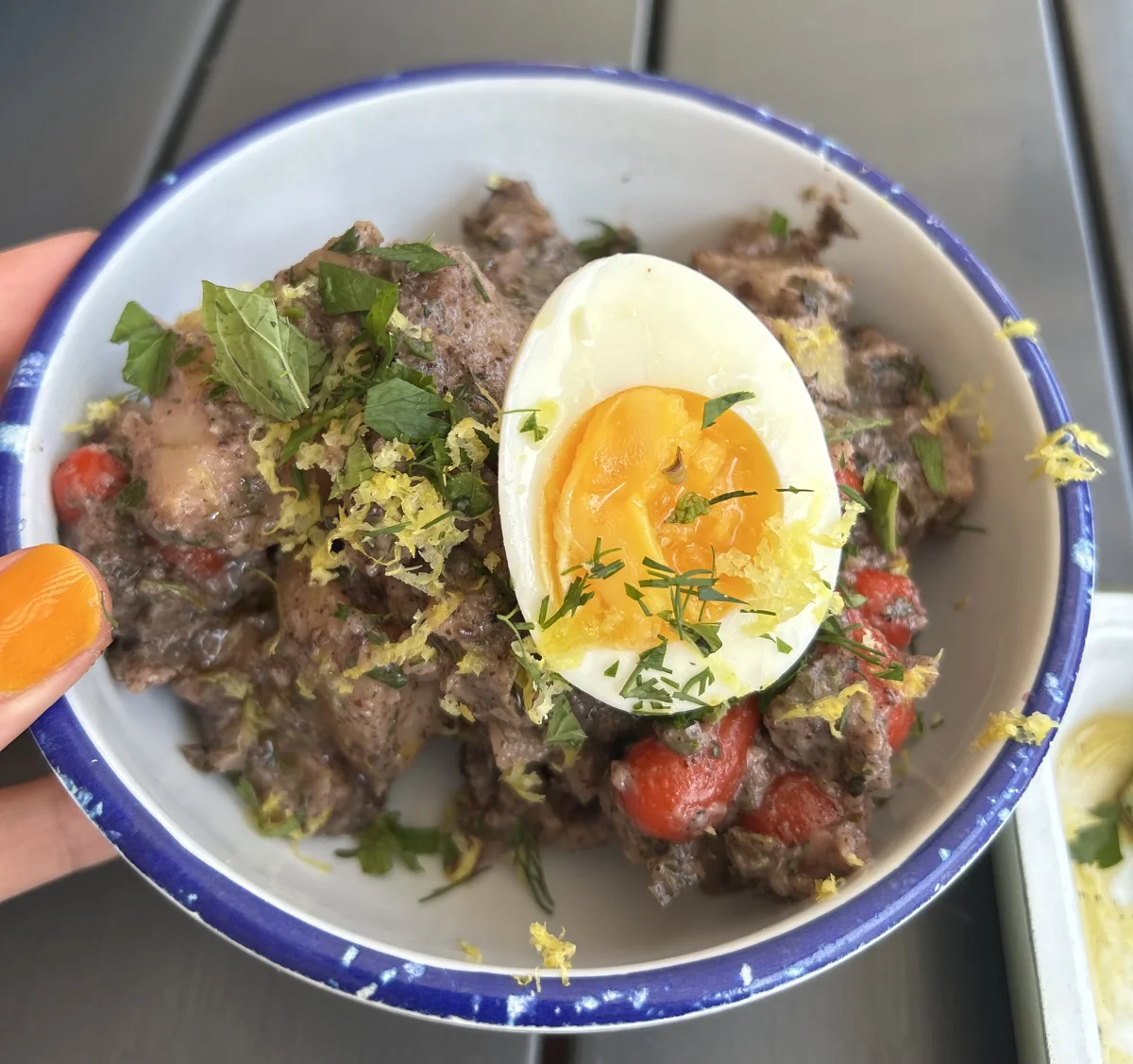
 Greek-inspired Bluto’s crosses the Adriatic with its Turkish Potato Salad, which incorporates sumac—an herb common in Turkey, as well as Lebanon and Syria.
Turkish cuisine may be ready for its closeup on American menus. Chef Musa Daǧdeviren, who owns internationally renowned restaurants in Istanbul, created appealing dishes that drove the point home. His Katikli Dolma, stuffed winter squash rolls with bulgur wheat drizzled with salted yogurt sauce, neatly encapsulated multiple Worlds of Flavor themes.
American operators have begun giving familiar items a Turkish twist. Taziki’s Mediterranean Cafe, a fast-casual chain based in Birmingham, Ala., recently introduced a limited-time Turkish trio, with each dish featuring Turkish meatballs made with lamb and chargrilled to order. The Turkish Meatball Gyro is wrapped in warm pita, the Turkish Meatball Salad Topper is paired with three signature entrée salads and the Turkish Meatball Feast is topped with rustic tomato sauce, crumbled feta and fresh basil. In Portland, Ore., Bluto’s, which bills itself as “wood fired and Greek inspired,” looked across the Aegean Sea for a promotional Turkish Potato Salad that got its personality from pickled greens, sumac onions, lemon zest and soft-boiled eggs.
In tune with daypart trends, Turkish eggs are making their mark on brunch menus. They are a fixture at The Copper Onion in Salt Lake City, where poached eggs are cooked with Greek yogurt, paprika butter, herbs and chile crisp. At San Francisco’s lauded Dalida, Chilbir Turkish Eggs sets poached eggs atop braised horta greens with garlic yogurt and mango amba, a tasty, chutney-like pickle.
Outlook and Opportunity
The influence of Mediterranean kitchens on American menus is likely to accelerate, driven by the time-tested appeal of their foods and flavors and ready compatibility with contemporary menus. Watch for beverage innovation, as at Flower Child, the chain that promotes “healthy food for a happy world.” Happiness here starts with Rose Petal and Pomegranate Lemonades that utilize classic Eastern Mediterranean ingredients. It represents a culinary win-win for operators and consumers alike that has been millennia in the making.
About the Author
 Nancy Kruse is a recognized authority and widely quoted spokesperson on food and menu trends. She is president of The Kruse Company, which is dedicated to assessing trends and directions in food, menu and restaurant concepts; she has tackled these topics in the pages of leading industry publications and forums. Prior to founding her own company, Nancy served as Executive Vice President for Technomic, Inc., where she conducted a wide range of consulting assignments for Fortune 500 food and restaurant companies. She has served on several boards, and she has been an active member of the Women's Foodservice Forum and Las Dames d'Escoffier International.Read More Stories by Nancy Kruse
Rip, Tear and Pull-Apart Breads Menuing four fun, interactive styles
Flavor Trends, Strategies and Solutions for Menu Development[google_sidebar_ad adslug="2026-04-Surround-Kens-320x50"...
Tart Cherries Make Flavor Magic Reimagine ways to put their power of sour to work in modern menu development
Flavor Trends, Strategies and Solutions for Menu Development[google_sidebar_ad...
Spread a Little Indulgence Clean-label nut butters deliver dairy-free creaminess with a naturally premium read
Flavor Trends, Strategies and Solutions for Menu Development[google_sidebar_ad adslug="2026-05-Surround-Puratos-320x50"...
