
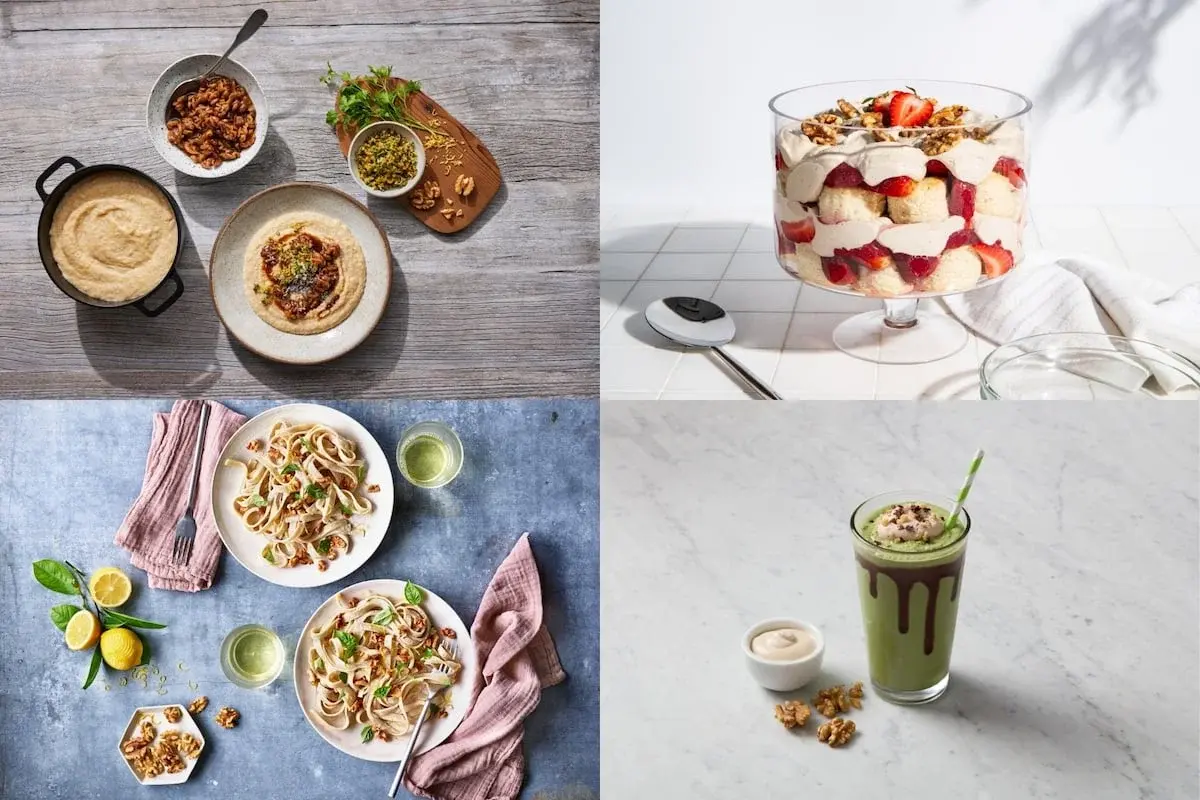
Invigorate menus with thoughtful application of California walnuts in cream, purees and plant-based meat alternatives.
Credit: California Walnuts
SPONSORED EDITORIAL
Culinary Versatility in a Nutshell
Crack open the many ways to get more from walnuts
The opportunity lies in a deft use of culinary technique, not only to maximize the different ways walnuts deliver flavor and texture but also to apply new functionality to recipes. This provides adaptability to different globally inspired flavor profiles—an especially valuable trait as diner interest in global cuisines shows no signs of slowing down. The versatility of walnut forms also can be leveraged across every area of the menu. “Make them a flavorful partner in menu innovation, not just recipe development,” advises Robert Danhi, chef-in-residence for the California Walnut Board.
To encourage culinary exploration with California walnuts, Chef Danhi details why and how walnuts can be used in unexpected applications in three categories: sauces, meat substitutes and butter/purées/creams. “In each of these formats, walnuts move beyond flavor accents, becoming the foundation that defines a dish’s structure and eating experience.”
1WHITE SAUCE WITH WALNUT CREAM
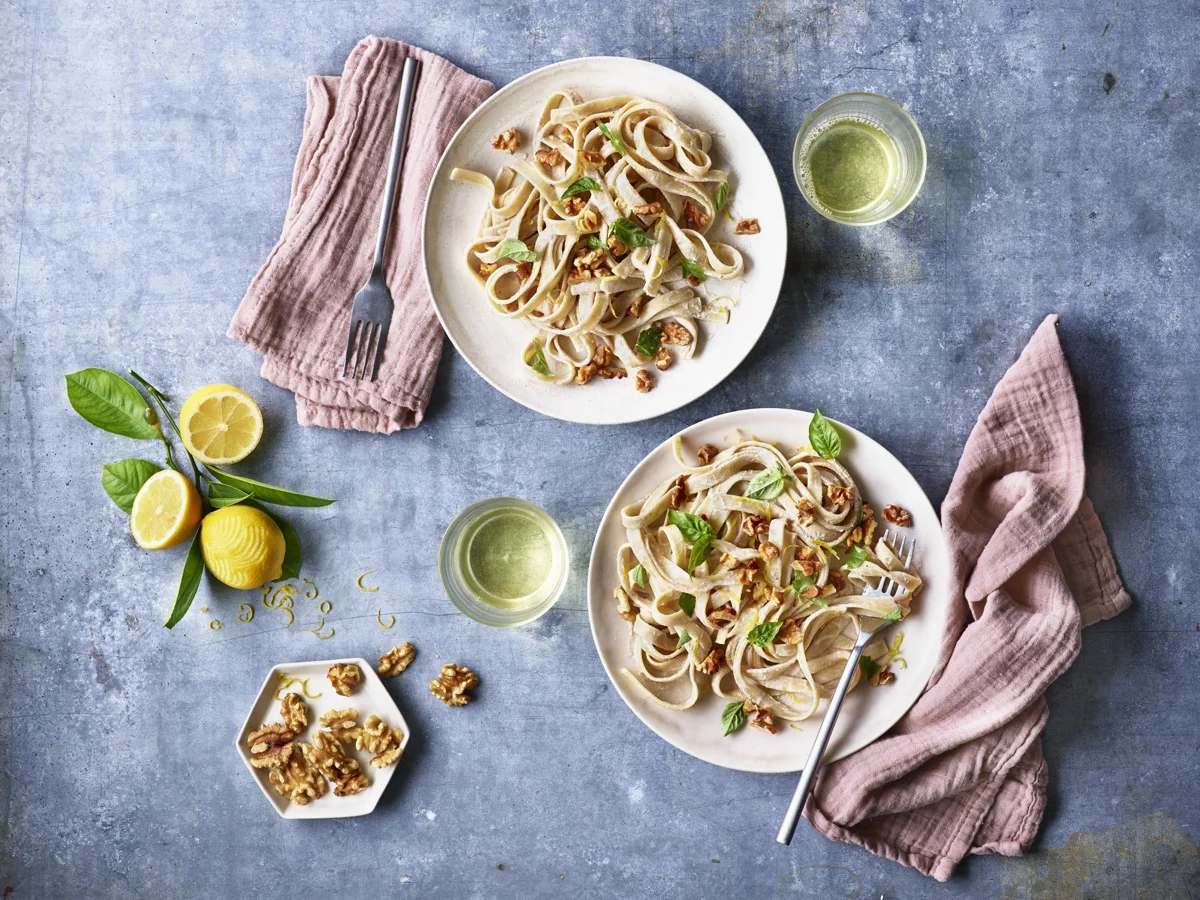
Walnut cream is an easy and ideal option for a delicious plant-based Alfredo sauce that can be served over fettucine, ravioli or any pasta choice.
Alfredo, arguably one of the most beloved white sauces, is prized for its rich, creamy comfort qualities. “California walnuts are uniquely suited to replicate that experience because of their natural fat content1 neutral color and mild flavor, one that supports rather than competes with other ingredients,” says Danhi. “Walnut cream provides the same luxurious canvas as dairy does, unlocking new opportunities for plant-based, globally inspired and health-forward menu innovation.”
California walnuts can be transformed into a functional walnut cream by blending them with water. “This creates a naturally white, emulsified base that mimics the viscosity and mouthfeel of heavy cream,” Danhi explains. “When heated and combined with aromatics—such as garlic, black pepper, Parmesan or nutritional yeast—walnut cream tastes and functions like a classic Alfredo, coating pasta evenly and carrying flavors without separating or becoming thin.”
There’s a significant advantage of this approach, says Danhi: “It replaces the primary fat and body [of the sauce] with a fine silky purée of walnuts, turning them from a garnish into the sauce’s structural foundation. It only takes one blender, two ingredients and less than three minutes.”
Transformed into a functional cream, “Walnuts become a platform to build on, a versatile component, enabling Alfredo and other white, creamy sauces to evolve without sacrificing indulgence, familiarity or culinary credibility,” he concludes.
2WHOLE AND GROUND WALNUT MEAT SUBSTITUTES
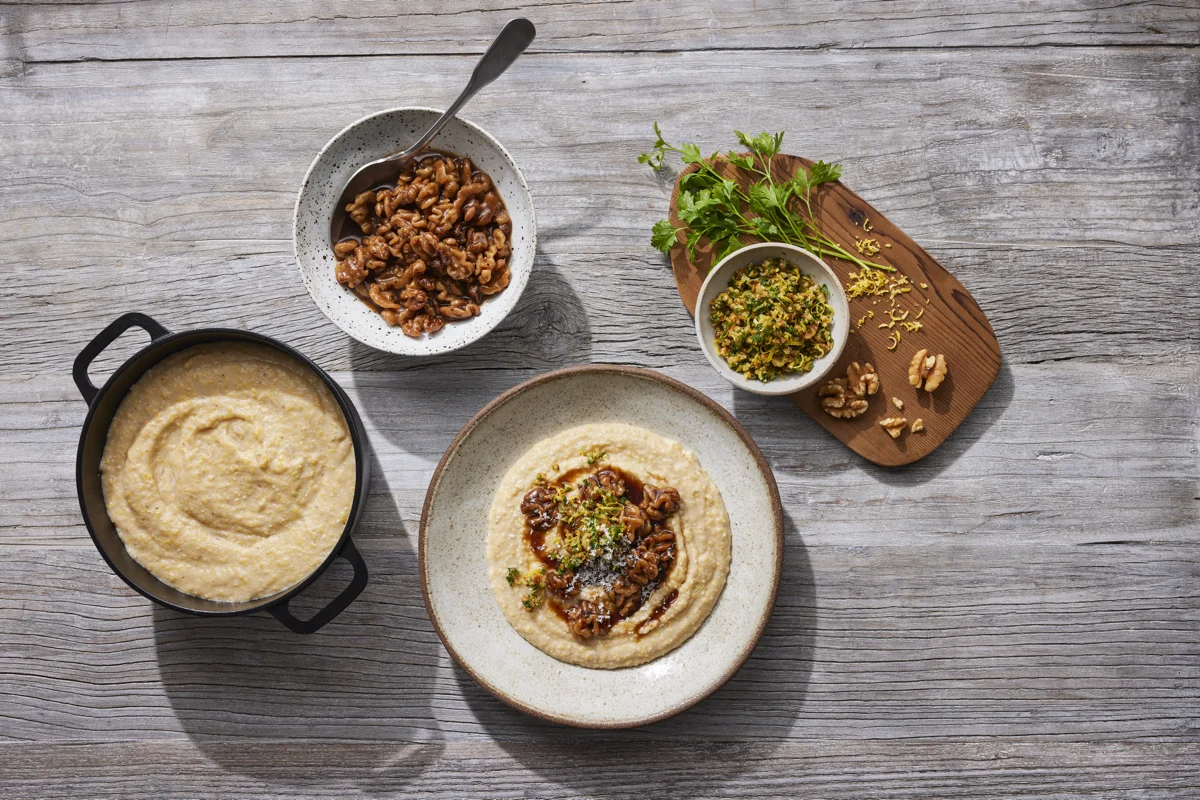
This savory dish features a creamy California walnut polenta base crowned with tender, brandy-braised walnuts infused with a savory demi-glace.
As chefs and menu developers continue to seek to offer more plant-based, flavor-forward menu options, dishes featuring cooked ground or whole walnuts represent a viable pathway. “Cooking walnuts—whole or ground—unlocks their full potential as a meat alternative because time and heat fundamentally change how they behave,” explains Danhi. “The cooking process softens their structure, builds savory complexity and enhances umami. This shifts walnuts from crunchy and raw to rich, satisfying and deeply flavored.”
Cooked walnuts become active carriers of seasoning and sauce, rather than passive fillers. “This makes walnut meat feel intentional and modern, giving chefs a flexible foundation to deliver comfort, familiarity and creativity, while supporting plant-forward and hybrid menu innovation,” says Danhi.
Rather than merely chopping and seasoning walnuts, ground walnut formats go a step further. “Walnuts are pulsed or chopped into a ground texture, then cooked on the stovetop with aromatics, vegetables, fats and seasonings,” the chef explains, noting they can also be prepared in an oven in tightly covered pans, vacuum-packed “sous vide” and cooked in a water-bath or in combi-ovens. “These methods soften the walnuts, darken their color and allow them to absorb flavor, creating cohesive crumbles that can behave like ground animal meat. Once cooked, the mixture holds together naturally, especially when combined with beans, and performs well in familiar formats, such as tacos, sloppy joes or hybrid burgers—all using techniques that chefs already understand.”
Applications using walnut halves and pieces follow the same preparation logic as whole cuts of meat. Keep them wholly intact or cut into large pieces. Simmer them on the stovetop or cook sous vide in flavorful broths, sauces—even meat-based preparations like a demi-glace, notes Danhi. “Through gentle heat and time, the walnuts become tender and richly seasoned, transforming into nugget-like components that carry substance and presence.” For example, cooked walnut halves can be used to top polenta, folded into braises or added into composed dishes to deliver texture and visual impact. “This can allow walnut meat to be expanded into the center of the plate.”
3WALNUT PASTES & PURÉES
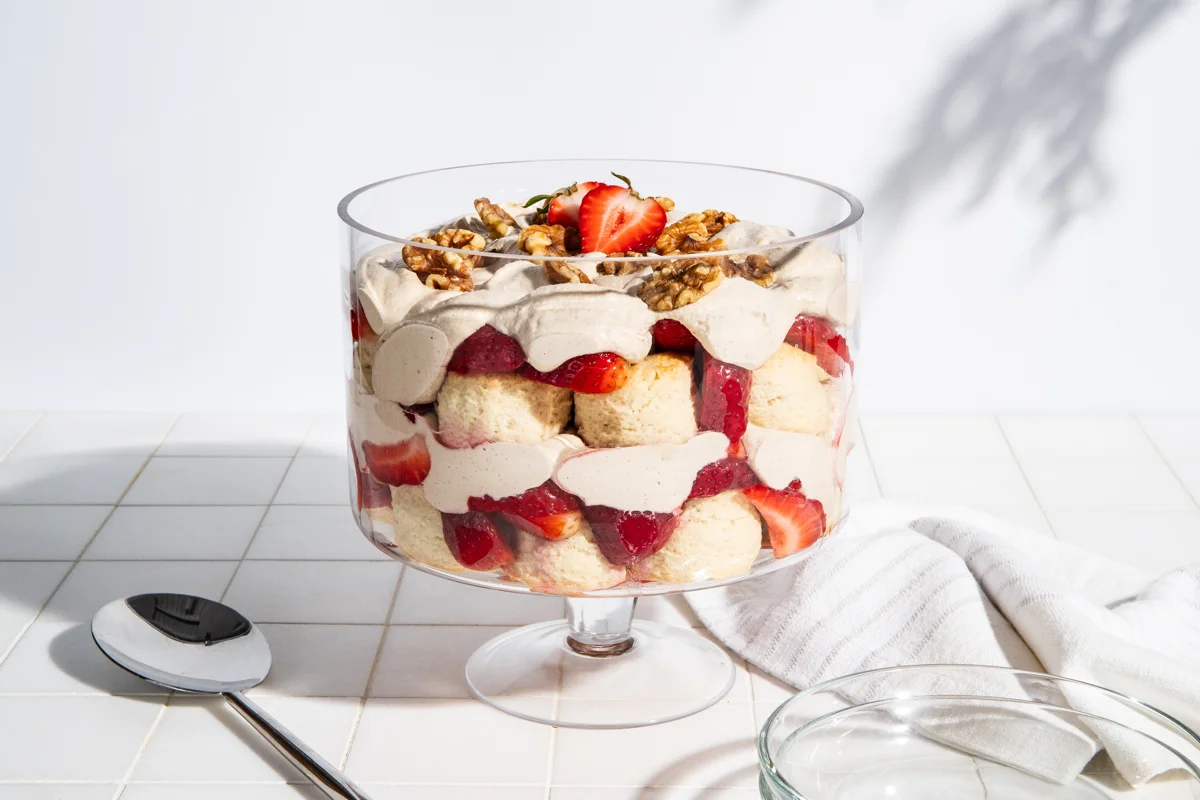
Savor the layers of a decadent Strawberry Shortcake Trifle, featuring a plant-based whipped walnut cream and topped with crunchy walnut pieces.
To envision the spectrum of menu opportunity for walnut purées and creams, chefs need to look no further than longstanding presence and use of walnut butter in various applications. “Ready-to-use forms of walnut butter are available roasted for deeper flavor and color or raw for a lighter profile,” says Danhi, noting they are often blended with other nuts and seeds and incorporated directly into smoothies, sauces and desserts.
Rather than procure a singular prepared product, chefs can use walnuts to create a range of delicious options. “A handful of walnuts added directly to a blender with liquid can be puréed into a fresh cream,” notes Danhi. Then, simple adjustments to the walnut-to-water ratio can produce everything from a thick paste to a pourable liquid. “This is much like using different dairy creams to layer texture and richness in both sweet and savory applications. There are infinite possibilities to deepen the flavor profile from a relatively neutral cream into a more complex and robust base. For example, the walnuts can be toasted first, or the water can be replaced with other flavorful liquids such as fruit juices or stocks,” he details.
Walnut cream is functional both hot and cold. “The structure changes predictably as ratios and temperatures shift,” Danhi explains. “Higher walnut concentrations create body and richness, while lighter ratios deliver smooth, drinkable textures.”
Once chilled, walnut creams set up in different ways, providing thickness, stability and mouthfeel without the addition of gums or starches. Their natural fat content supports flavor delivery with a rounded texture. “This makes walnut creams ideal for beverages and desserts, where texture is as important as taste, delivering indulgence, while remaining plant-forward and familiar,” says Danhi.
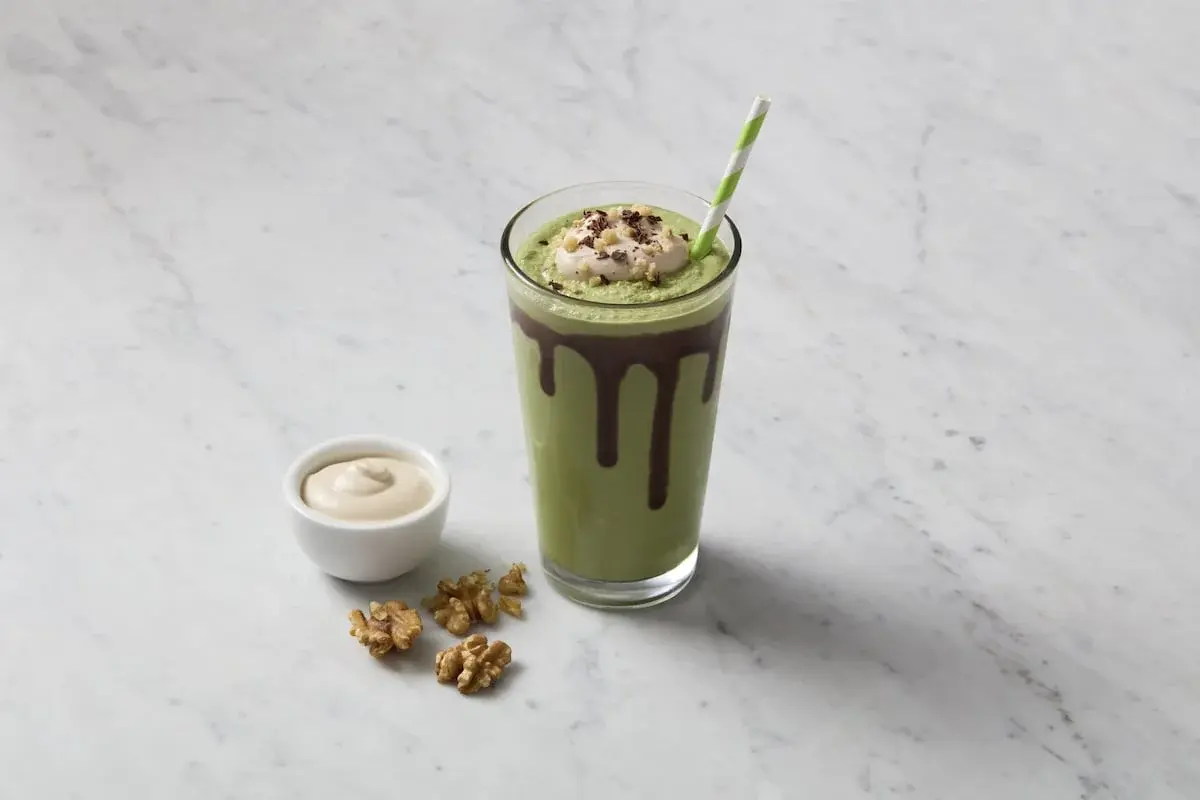
Creamy, rich and satisfying, this vegan walnut smoothie is a protein-packed, dairy-free treat that showcases California walnut cream in three delicious forms.
Chef Danhi offers a few innovative menu examples that demonstrate possibilities in action.
- Smoothies: Combine two textures of walnut cream and a walnut butter to create layered texture and flavor in a walnut-and-greens protein smoothie. Thin walnut cream forms the blended base; walnut butter adds depth and richness; and a medium-viscosity walnut cream finishes the drink with a spoonable topping. The result is a smoothie that feels creamy, substantial and indulgent. Toasted walnuts can replace a prepared walnut butter.
- French Toast: Use walnuts to create a creamy base similar to milk. When thin walnut cream is combined with eggs, it behaves like a traditional dairy-based custard and sets when baked or griddled, such as for French toast. The result is non-dairy but still structured by eggs, delivering richness, body and familiarity without sacrificing performance. (And the thin walnut cream could also be used as a finishing element on the plate, replacing a traditional whipped cream topping.) Reframing walnut cream as a true functional base opens up other custard-based applications, such as bread pudding, flan and brulee.
- Layered Desserts: Medium and thick viscosity versions of walnut cream can be seasoned and used as clean, structural layers in layered desserts, like trifles, parfaits and even tiramisu variations. Walnut cream or purée can function like pastry cream, mascarpone and whipped cream, holding its shape and delivering flavor and visual contrast.
WALNUT WISDOM
Walnuts from California provide the goodness of a natural whole food, while adding a sweet, mild taste and texture to a wide array of recipes across dayparts and cuisines. They make savory dishes a little sweeter, while giving sweet dishes a touch of savory flavor.
California walnuts are sold according to size, as well as color, ranging from light to amber, bringing even more menu versatility to the table. Light walnuts lend earthy notes and subtle tannins, while the light amber variety has more robust flavor, round tannins and a slightly sweet finish.
Whether exploring the opportunities found in color and size or stepping up your walnut game by applying different formats, operators can turn to California walnuts to amplify flavor, texture and functionality in next-level menu offerings.
1A 1-oz. serving provides 18 g of total fat, including 2.5 g of monounsaturated fat and 13 g of polyunsaturated fat (of which 2.5 grams is plant-based omega-3 ALA), as well as 1.5 g of saturated fat.
Click here to view other walnut recipes and learn more about leveraging their versatility on menus or email us at foodservice@walnuts.org.
Rip, Tear and Pull-Apart Breads Menuing four fun, interactive styles
Flavor Trends, Strategies and Solutions for Menu Development[google_sidebar_ad adslug="2026-04-Surround-Kens-320x50"...
Tart Cherries Make Flavor Magic Reimagine ways to put their power of sour to work in modern menu development
Flavor Trends, Strategies and Solutions for Menu Development[google_sidebar_ad...
Spread a Little Indulgence Clean-label nut butters deliver dairy-free creaminess with a naturally premium read
Flavor Trends, Strategies and Solutions for Menu Development[google_sidebar_ad adslug="2026-05-Surround-Puratos-320x50"...
