
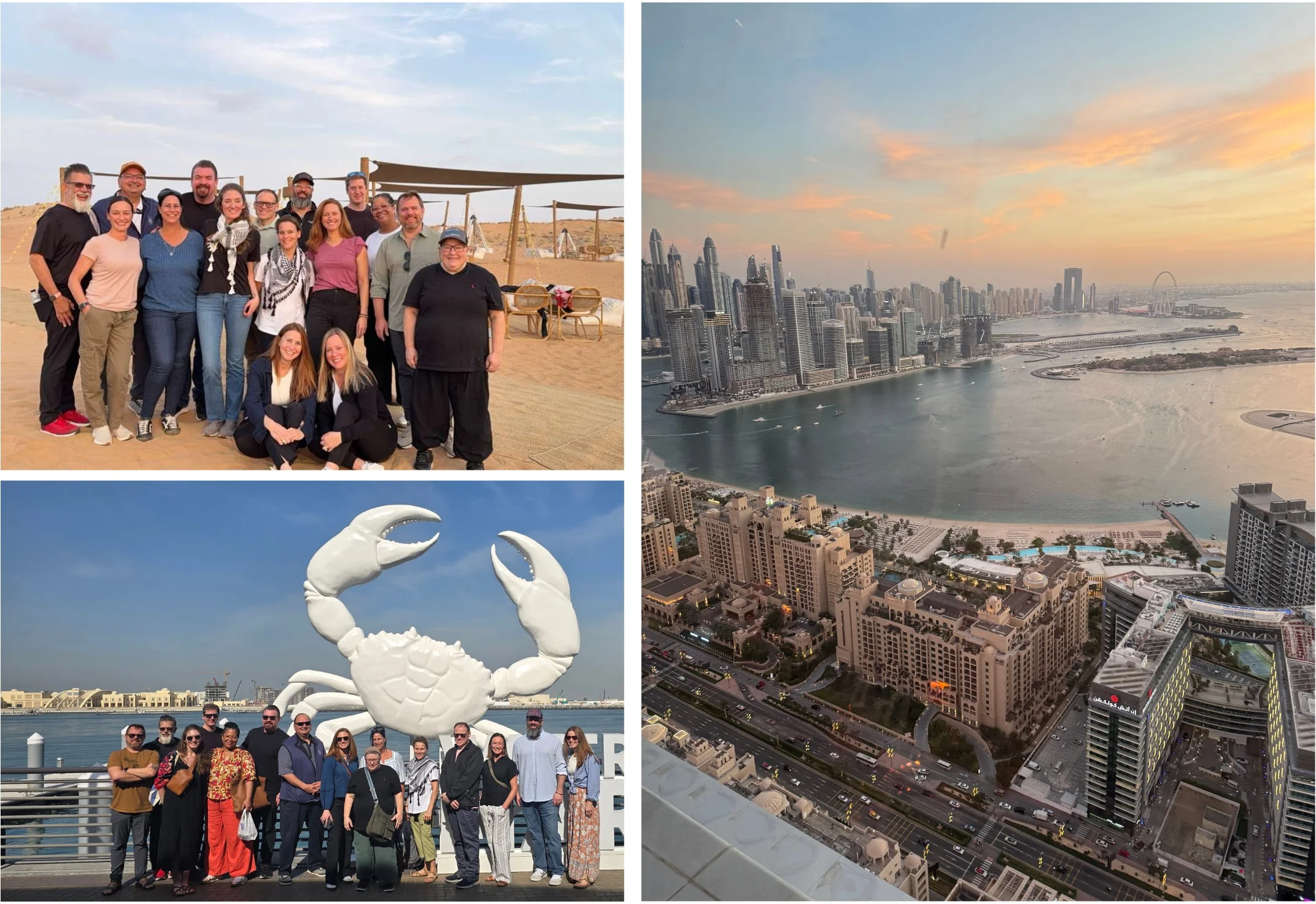
Winning chefs from Kitchen Collaborative 2025 were joined by sponsor representatives on a memorable flavor expedition to Dubai.
Credit: Jaclyn Oyola
Beyond the Skyline: Dubai’s Flavor Story
Kitchen Collaborative 2025 winners reflect on the markets, meals and moments that shaped their unforgettable trip
The chefs, along with several sponsor representatives, joined Flavor & The Menu publisher Cathy Holley and Summit F&B VP of client services Jaclyn Oyola on a unique expedition that showcased both culinary heritage and flavor innovation.
On the southeastern coast of the Persian Gulf in the United Arab Emirates, Dubai is a city defined by its dazzling skyline and a dining culture that never stops evolving. The Kitchen Collaborative trip featured a packed agenda, which included a trip to Gulfood, the renowned global food show. Winner Nathaniel Malone, corporate executive chef, Creative Dining Services, penned a Flavor Postcard, highlighting the group’s visits to restaurants, markets, a culinary school and the desert. Here, the other winning chefs share their own impressions of this singular travel experience.
 Credit: Christopher Delissio
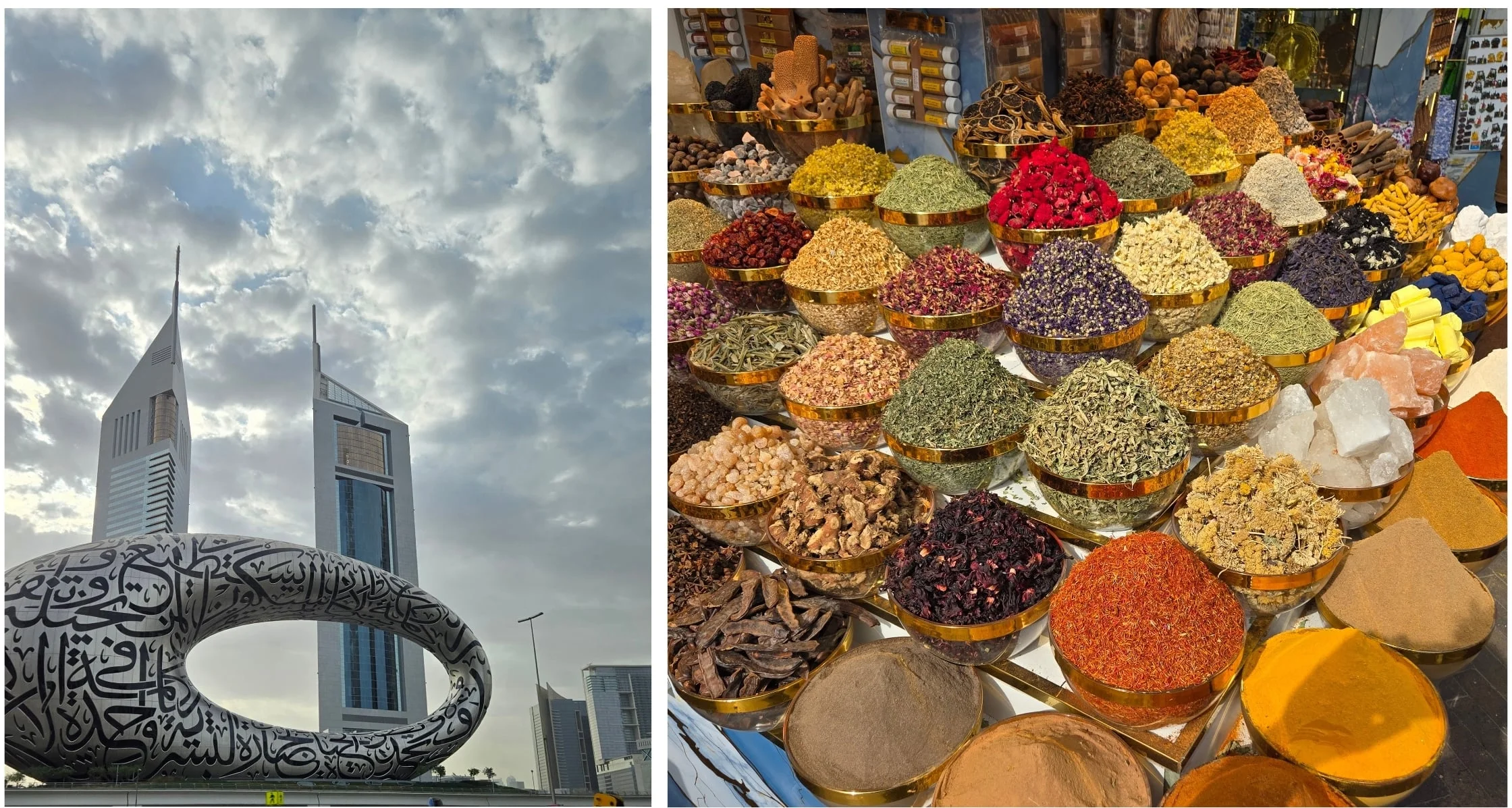
 Dubai’s stunning skyline and diverse flavors form a striking contrast that defines the city’s character.
GULF-BORN FLAIR
“Dubai has an interesting balance of respect for the past and an unwavering focus on the future,” says Claire Jessen, vice president, culinary innovation & menu, Nothing Bundt Cakes, describing the prevailing ethos as “How can Dubai be the first, the biggest and/or the most expensive?!”
Dubai’s food culture draws from across the globe, developing its own eclectic interpretations of third-culture cuisine with Emirati roots. The modern city is known for upscale restaurants helmed by internationally renowned star chefs, as well as approachable and often viral culinary outlets. That said, the nature of the bites and sips often surpassed preconceptions. “I expected Dubai’s food culture to be elevated, with bold and confident flavors, but it exceeded expectations in every way,” says Timothy Conklin, director of food and beverage, The Royal Sonesta Boston.
Christopher Delissio, a corporate executive chef in healthcare, agrees, impressed with “the masterful use of bold flavors and spices that never overwhelmed or became too chaotic.”
Melodie Beal Cary, head of sensory and culinary product development, Amazon Fresh Private Brands, found culinary satisfaction in “everything lamb,” along with “beautifully spiced meats and dips, and blistered flatbreads straight from the oven.”
Denise Covert, culinary innovations chef, Applebee’s, was particularly impressed by the level of innovation and presentation she witnessed. “Many restaurants blended tradition with modern techniques, creating food that felt both authentic and forward-thinking.”
Jessen also made note of “how impeccably clean, controlled and curated” the city was in every regard—including its approach to food. “That was perfectly displayed in the enormous Dubai Waterfront Market where hundreds of tons, fish, meat and produce are processed and sold.”
 Credit: Jaclyn Oyola
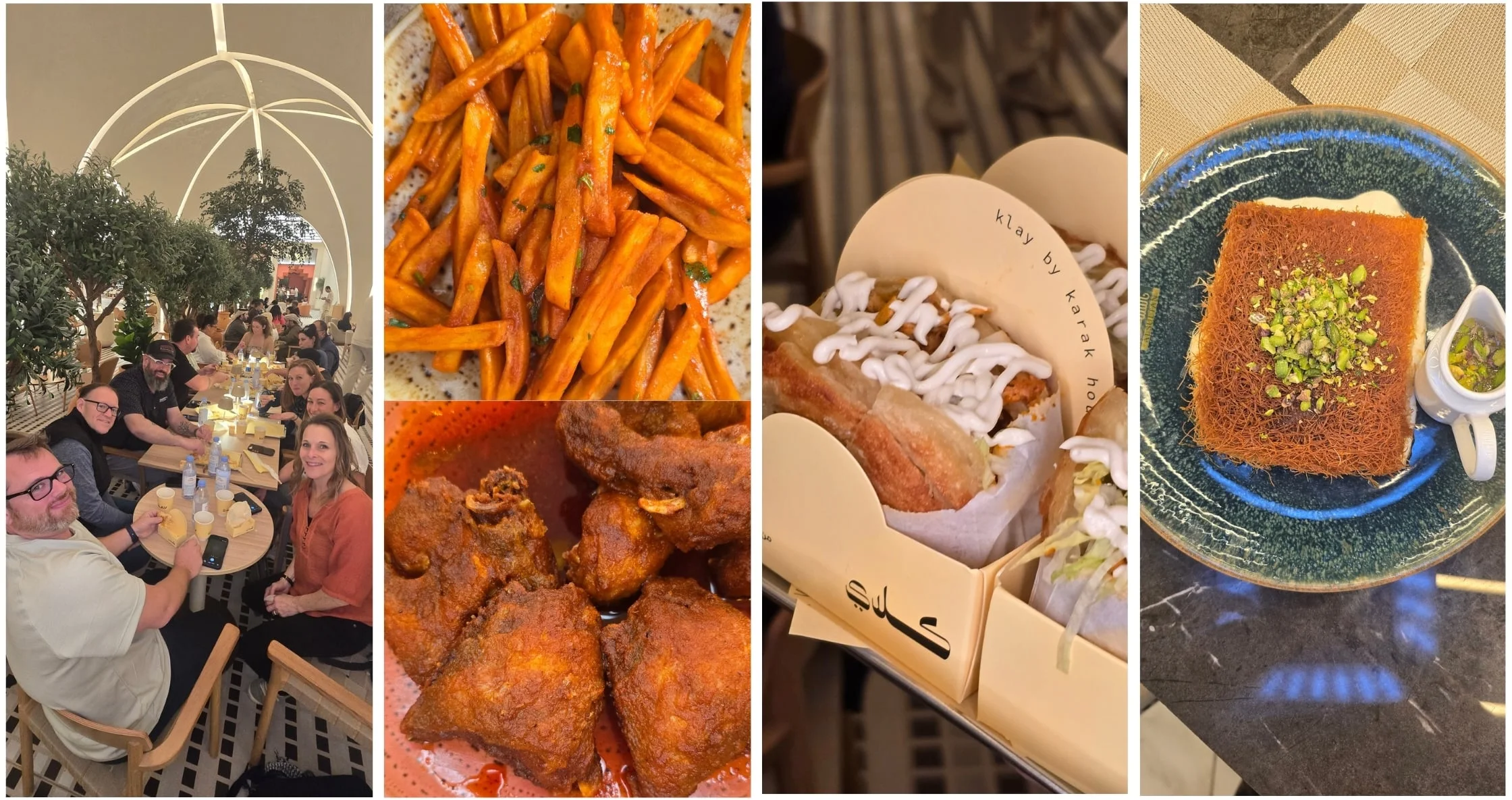
 From local hotspots to signature specialties, the group sampled standout bites such as chicken tikka and masala fries at Hashmi Barbeque, inventive handhelds in a pressed paratha bun at Klay by Karak House, and the region’s iconic crispy, cheese-filled knafeh with pistachio syrup from Sultan Sweets.
BOLD BITES, MAGIC MEMORIES
Sparks of gastronomic joy were found at official destinations and via independent explorations alike. A visit to Indian-Kenyan restaurant Hashmi Barbeque proved noteworthy for the group, delivering a true taste of Dubai’s signature mash-up culinary culture. “My most memorable bite of the trip was Hashmi’s chicken tikka, which was, perhaps, the most perfectly spiced, slightly smoky, delicately charred piece of poultry that I’ve eaten in recent memory,” says Lisa Feldman, senior director of culinary, menu systems & CSR at Sodexo. “When I took my first bite, I could not help but utter expletives.” She also praised the accompanying masala and pili pili fries. “I think the coolest thing is that the owners of the restaurant had emigrated from Kenya, so the dish was a mash-up of North African and Middle Eastern flavors with Indian techniques. That made it the most ‘of-place’ dish that I tried.”
Kevin Ripley, senior director of culinary, Maggiano’s Little Italy, declared Hashmi’s fish tikka his favorite of an “amazing” menu. “I loved how they used the three main spice mixes across the fries, the chicken and the fish, and it played out a little differently on each,” he recounts.
Joseph Antosiak, executive chef, OVG Hospitality, was reminded that some of the most meaningful food experiences happen off the itinerary. “While much of the group was exploring other standout bites nearby, I wandered into an experimental croissant-and-coffee house called Subko, driven by my own curiosity. There, I found two of the most compelling bites of the trip.”
Both were croissants—one sweet, the other savory. The honey crème croissant was, he says, beautifully laminated and deeply aromatic. “The honey wasn’t a garnish; it was integrated, warm, floral and balanced, allowing the craftsmanship of the pastry to remain the hero.” But it was the daal and chicken croissant—an “inspired intersection of technique and culture with French pastry structure wrapped around comforting, spice-forward Indian flavors”—that impressed him as a chef.
Cary and Jessen were part of a small group that counted themselves “fortunate” to get lost (twice!) before discovering Sufret Maryam, a Levantine restaurant with “lovely fermented sourdough flatbreads, small plates and mixology-worthy non-alc drinks. All of it felt both rooted in tradition and skillfully modern,” Cary recounts. One standout dish was tarsheeha—thin, crepe-like breads served with spring onions and radishes, with a finely chopped raw lamb tartar bathed in olive oil. “Our server, seeing that we didn’t quite know how to put it together, built one for each of us, handing them to us individually. It was a delightful gift of sharing.”
Both chefs also fell for the labneh crème brûlée topped with za’atar ice cream and sumac with a sesame brittle. “The creamy labneh had a little acidity and funk to contrast the caramelized sugar. Then there was the grassy za’atar and lemony sumac,” says Jessen. “It was an excellent example of taking savory flavors into a dessert application.”
Camel milk was applauded by more than one chef. In addition to the beverage, Tiffany Sawyer, founder and principal of Spicy Chef & Bev Consulting, enjoyed both camel milk ice cream and camel milk chocolate. “The ice cream was wonderful. It was dense and filling, with a smooth mouthfeel, lighter than cow’s milk. It had a very pleasant acidity, tang and a clean, mineral-like, nutty flavor.” Delissio also included a salted camel milk gelato among his favorite bites. And while Sawyer counts herself a dark-chocolate fan, she enjoyed camel milk’s lighter take on milk chocolate.
Other Standout Bites:
- Sawyer also cites fresh-made, warm, cheesy knafeh made with a thick dusting of za’atar at Sultan Sweets. “It was simple and delish.”
- A standout for Conklin was the Pumpkin Béchamel Pudding at Al Khayma Heritage Restaurant. A dessert of caramelized pumpkin topped with fresh cream and biscuit crumbs boasted “complexity and depth of flavor.”
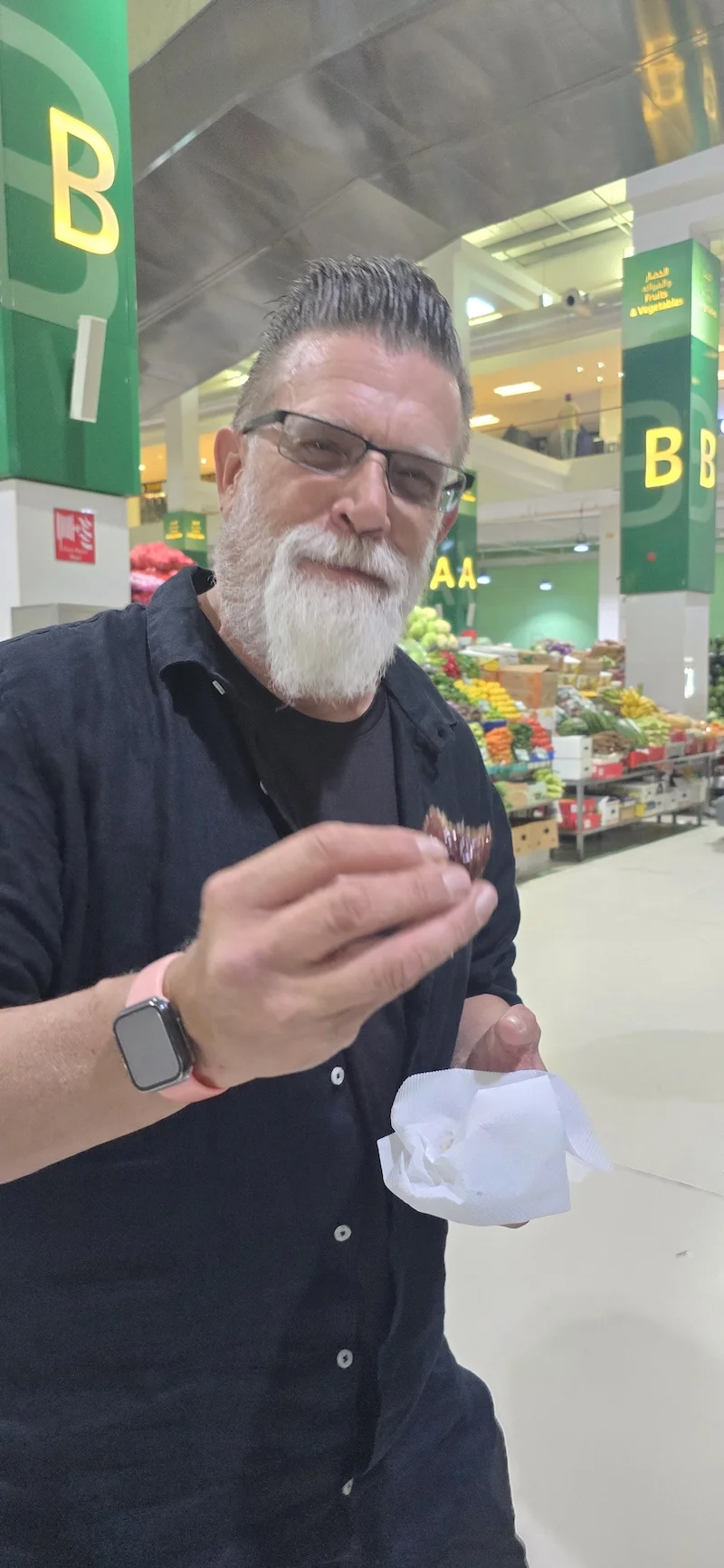
- “Taking a bite out of a fresh date and sampling several varieties at the Waterfront Market was a cool experience,” says Delissio. “I’ve always loved dates, but my prior knowledge was limited to the deglet noor and dried Medjool varieties.”
 Credit: Jaclyn Oyola
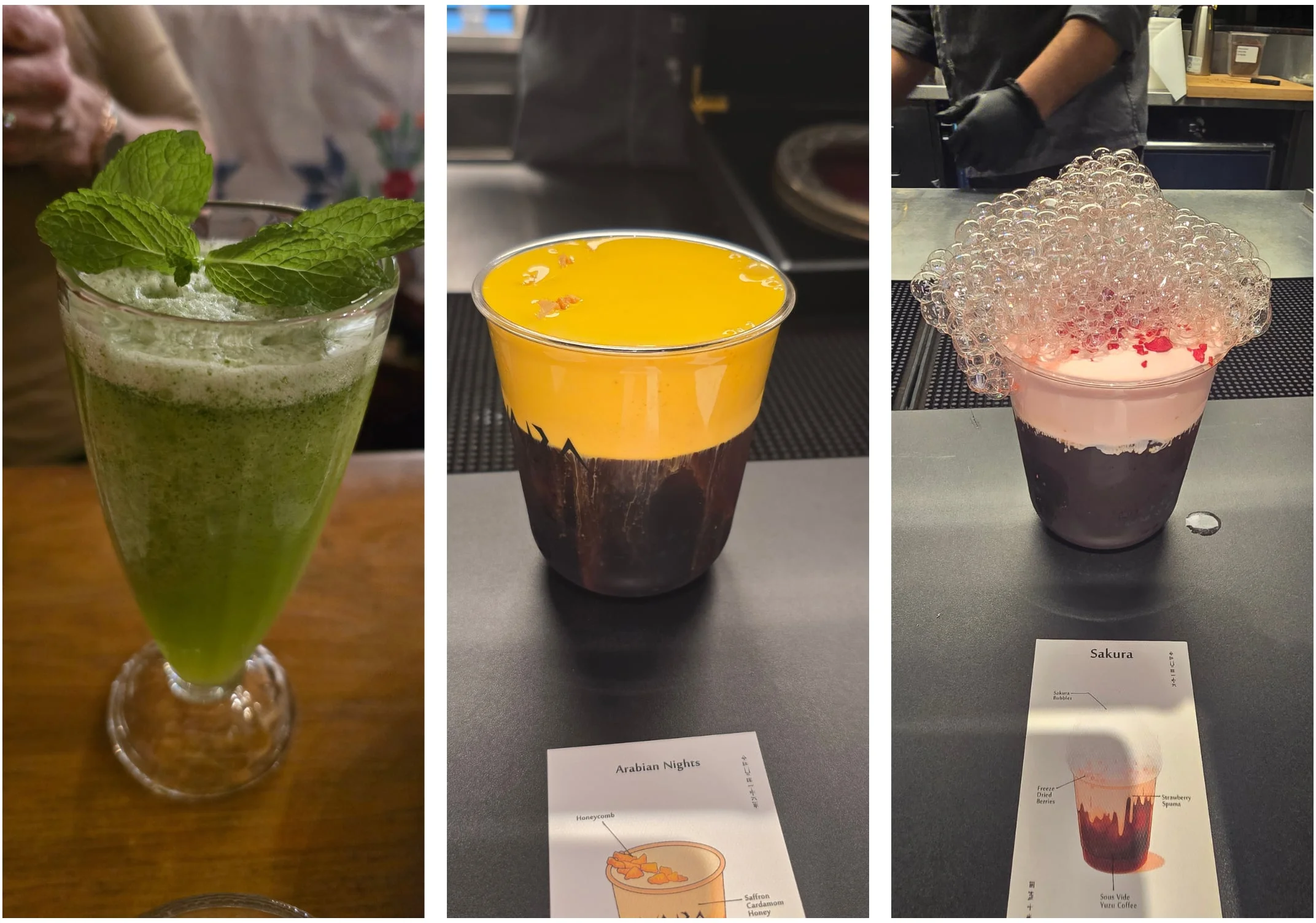
 Dubai is a rich source of non-alcoholic beverage inspiration. The Arabic mint lemonade (left) at Al Khyma Restaurant offered a refreshing accompaniment, while Yaba Coffee Lab showcased a menu of standout coffee creations built on a sous-vide coffee base—including the Arabian Nights, topped with saffron-cardamom-honey foam, and the Sakura, finished with sakura bubbles, freeze-dried berries and strawberry spuma over sous-vide yuzu coffee.
STANDOUT SIPS
Dubai’s beverage culture made an impression on the Kitchen Collaborative delegation, especially in regard to mocktails and specialty coffees that were crafted with as much intention as cocktails in other global cities. While alcoholic cocktails were available in hotel restaurants catering to tourists and business travelers, most restaurants offer beverage menus based on inventive coffee, tea and juice builds. “Most Dubai restaurants rely on sophisticated alcohol-free programs to enhance dining experiences,” says Sawyer.
A particular highlight was creative, chef-driven coffee concepts. “Yaba Coffee Lab featured coffee prepared sous vide with different flavored espuma on top and very creative garnishes, from freeze-dried coconut and dried honey brittle to vinegar-based bubbles of raspberry,” she recounts.
Cary concurs. “I was pleasantly surprised by how ‘cocktail culture’ manifested itself, both in high-end mixology and embracing that same creative, surprise-and-delight moment of celebration and innovation in non-alcoholic drinks. It is such a smart way to embrace your customer’s needs.”
Jessen sees this as an important signal for U.S. restaurants. “With the rise in demand for functional beverages and a population of sober-curious Gen Zers, Dubai offers great inspiration in the form of cold foams, housemade sodas and fresh juice combinations, such as grapefruit-passion fruit,” she reports.
The local specialty drink called karak, a cardamom-spiced black tea drink with milk, was a notable beverage among the group. Feldman describes it as similar to chai, but “not at all like chai, in that it uses evaporated milk and is mostly spiced with cardamom,” she explains. Versions also feature other spices like cinnamon, ginger, cloves and saffron.
“Cardamom in coffee tickled my taste buds,” recalls Delissio. “I have always been a bit of a purist, preferring my coffee black or with a light touch of cream and sugar, but the cardamom worked well and showed me that flavors in coffee is something worth further exploration.”
Covert applauds the way “drinks combined warm, sweet spices in a way that felt both comforting and new. The ingredients tasted incredibly fresh, and the seasoning was bold without being overwhelming.” The setting also added to the experience, she explains. “It made the drink feel tied to the culture and place.”
FLAVOR TAKEAWAYS
Foodservice chefs and menu developers are always on the hunt for trends, flavors, ingredients and products that will create next-level menu moments. The Kitchen Collaborative chefs amassed a collection of inspirations and observations both from their travels around the city and from wandering the expo halls of Gulfood. Following are some of their takeaways about opportunities for U.S. menus.
Culinary Chronicles: Melodie Beal Cary
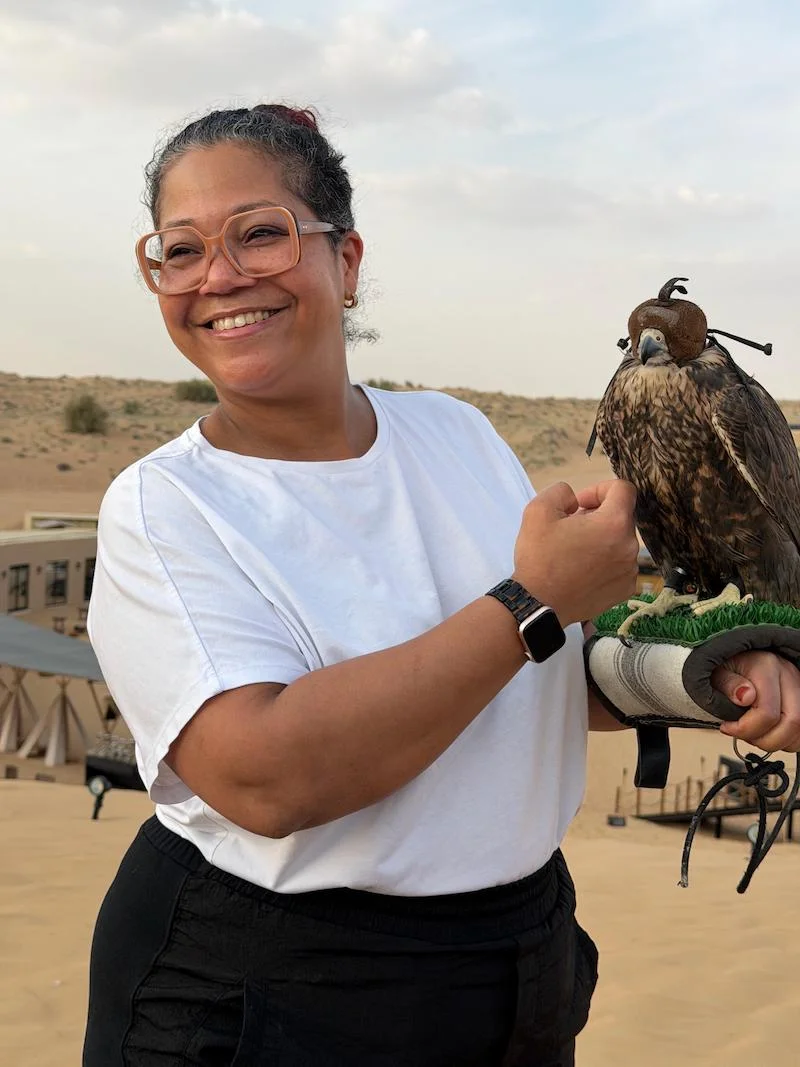 “Aseptic packaging technology has really come a long way, and it is being used more with dairy- and custard-based desserts. This could simplify the operational complexity of making a perfectly textured and delicately flavored crème brûlée or panna cotta—especially valuable for foodservice operations.”
Other observations:
- “Potatoes were everywhere at the show, from chips to air fryer-prepped, cheese-filled hash browns to ‘tot-chos.’”
- “Dairy—in numerous forms and types, including lightly salted camel milk—was king!”
- “Karak—I brought it back to the team to share.”
- “I’d love to see the U.S. import an expanded coffee culture that brings the same level of specialness as craft cocktails. I want all the sous-vide coffee beverages we saw at Yaba Coffee Lab, from blue matcha with blueberry cotton candy to sakura bubbles and strawberry espuma to an ajwa date garnish on the side of a black iced coffee.”
Culinary Chronicles: Joseph Antosiak
 “The luxury-meets-casual model that Dubai executes so well—elevated ingredients presented in relaxed social formats—is something that resonates strongly with today’s guests at home. I would love to see U.S. menus embrace a deeper exploration of modern Middle Eastern and global spice-driven cuisines beyond the familiar.”
Other observations:
- “The food show had remarkable global cheese and dairy offerings. Many exhibitors focused on flavor integrity, texture and versatility—products that could easily transition from a composed plate to pastry, sauce work or casual applications. Alongside these were alternative gelato bases and innovative toppings. These products open the door for creative dessert programs that don’t feel compromised or niche.”
- “The variety of ready-to-use luxury pastries and cookies was eye-opening. These were not convenience items in the traditional sense; they were artfully crafted, chef-driven products designed to meet the realities of labor, consistency and scale while offering a level of quality that allows chefs to maintain exact standards while operating efficiently.”
- “Elevated functional ingredients such as date-based sweeteners, syrups and fermented products offer clean labels, depth of flavor and cultural relevance. Dates are being reimagined far beyond dessert applications.”
- Antosiak would love to see U.S. menus boast “next-generation spice blends and extracts—not generic seasonings, but chef-caliber products with terroir, story and remarkable aromatic complexity.”
Culinary Chronicles: Claire Jessen
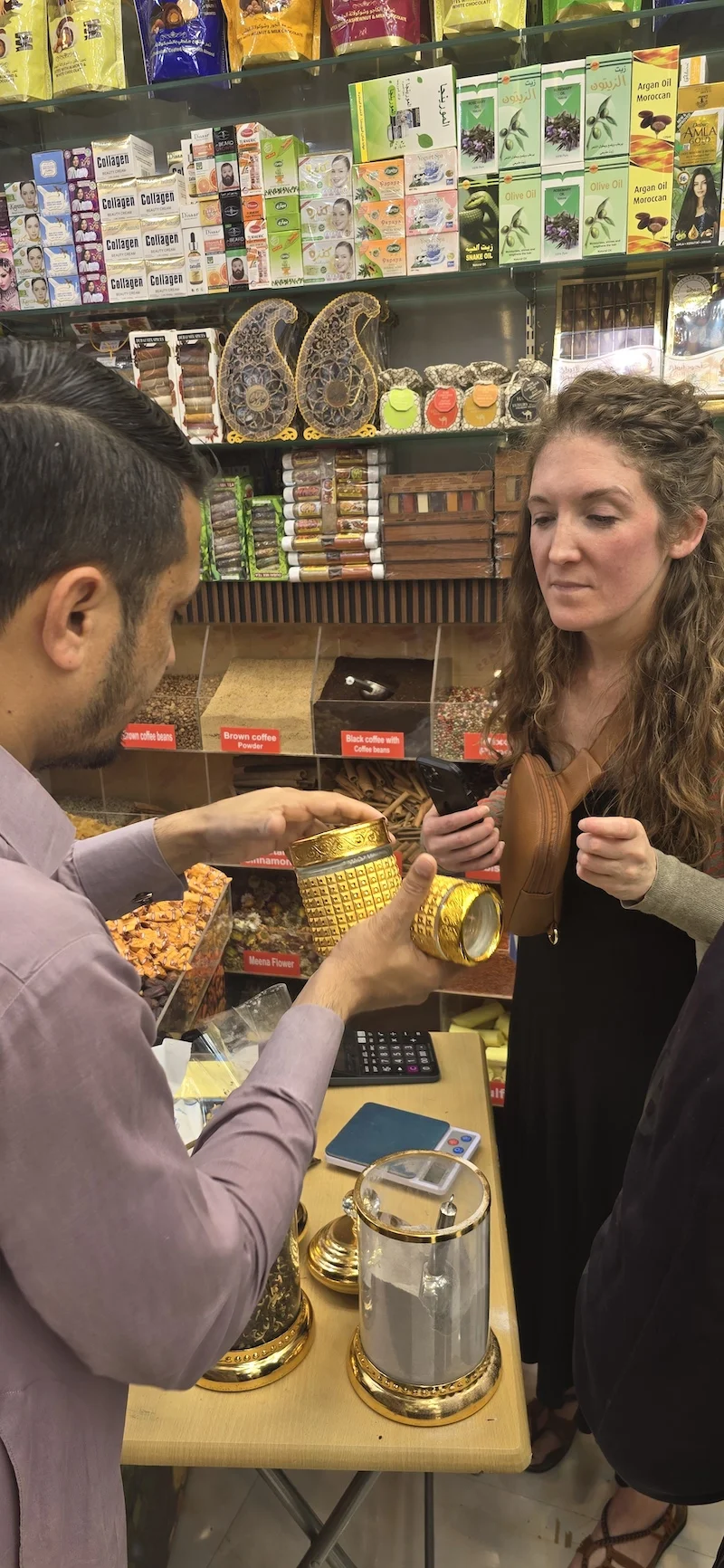 “Dubai offered many opportunities to enjoy Middle Eastern flavors in new ways that may be more approachable to the broader U.S. market.” She cites a few delicious examples:
- Iraqi Fusion Ice Cream (ice cream topped with black sesame, pomegranate molasses, date syrup, tahini)
- Fresh-baked flatbread (baked with za’atar, olive oil and served with labneh cream and tomato salsa)
- Saffron-cardamom-honey cold foam, with a honeycomb garnish
Some products and presentations at Gulfood that ticked off “mission-based” boxes also attracted Jessen’s notice. “It was interesting to see how the international stage is using different resources to achieve this,” she notes, citing the example of a panel of renowned pastry chefs discussing alternative sweeteners, such as date sugar, to leverage a lower glycemic index score and higher fiber content. “It seems there is more opportunity for operators and processors to discover new resources that could be healthier, clean and sustainable.”
Culinary Chronicles: Tiffany Sawyer
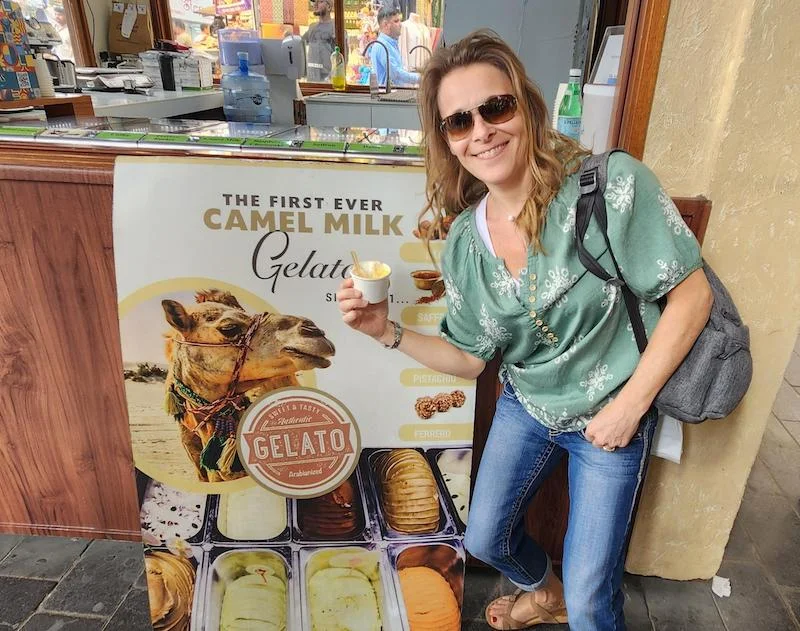 Among the products that Sawyer feels have the greatest potential in the U.S. were:
- Wagyu chile crisp and chips in inventive flavors such as mushroom risotto, black angus burger, vintage cheese and sweet chili and red peppers
- Cardamom-seasoned karak on coffee and beverage menus
Culinary Chronicles: Kevin Ripley
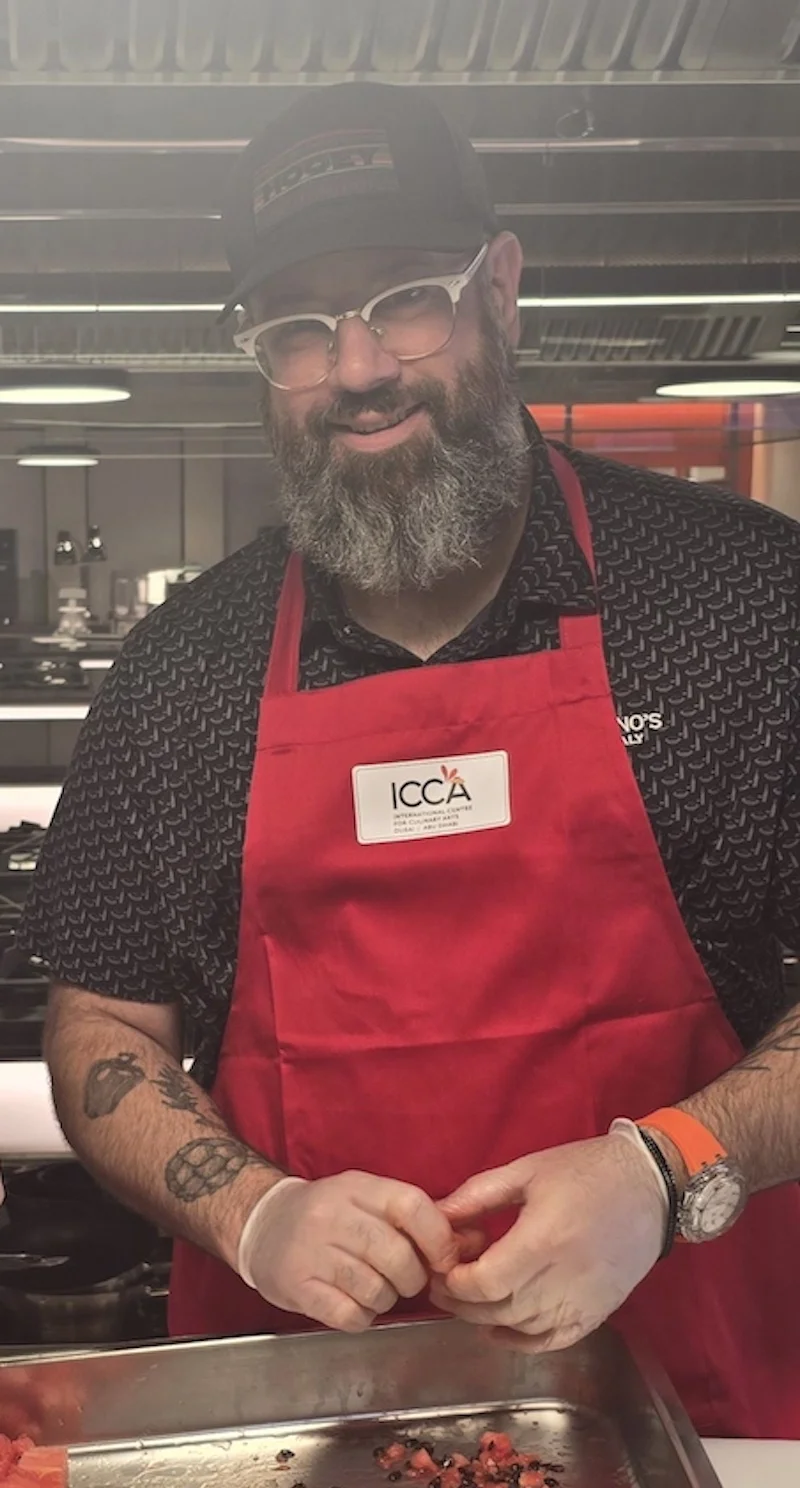 Ripley hopes to see the following flavors and concepts continue to influence U.S. menus, noting their potential to spark menu-development innovation:
- Continued interest in fermented foods, like different kimchis and fish sauces
- Next-generation spicy fusions, such as black garlic-chile crunch, infused fish sauces, and textured snacks like flavored popcorn
- Unique and unexpected matcha combinations
- Less-common fruits like mangosteen driving beverage innovation
Culinary Chronicles: Lisa Feldman
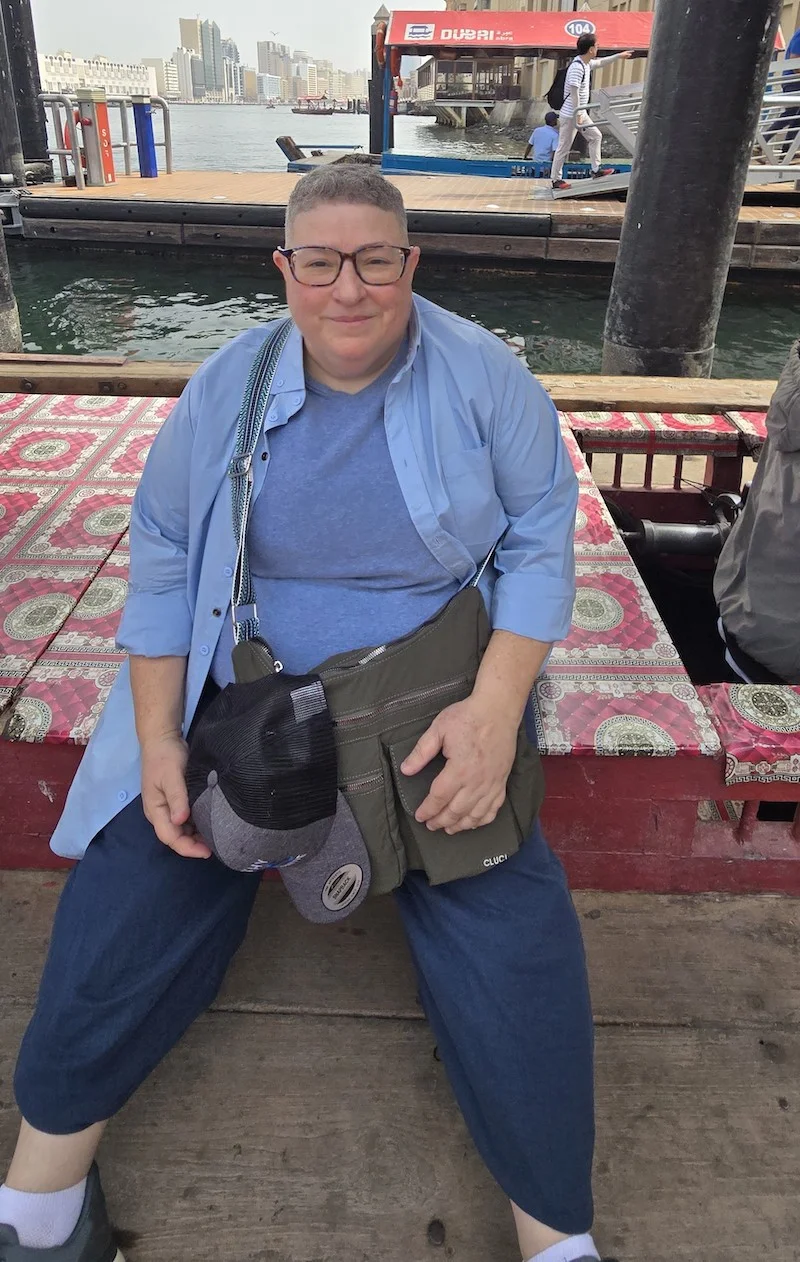 “Honey. And dates. And honey with dates. And honey with nuts. And honey with dates and nuts. Nuts like walnuts, pistachios and almonds. And more curated varietals of both dates and honey. And date molasses. Essentially, I want these ingredients to have a renaissance like apple varietals did.”
She’d also like to see:
- “More smoky eggplant things, including whipped baba ghanouj.”
- “Chicken with bones that isn’t dry. We didn’t encounter a single piece of dried-out chicken the entire time we were in Dubai, and yet at my first meal back home—at an Eater-recommended restaurant—the wok-fired chicken dish I ordered was dry.”
- “High pressure-processing dessert mixes for mousse, crème caramel, panna cotta and tiramisu. Use of this technology seemed to produce higher-quality results than most powdered mixes.”
- “Dirty karak—made with oatmilk and a shot of espresso—absolutely! Move over, matcha!”
Feldman was also intrigued by familiar forms featuring unfamiliar flavors, like pineapple salsa nacho tortilla chips or popcorn with peri peri seasoning. “These made me think of how I might excite our guests with new, exciting, fun flavors without taking it too far. It’s also a great technique to use as we evolve our internal brands to be more plant-forward.”
Culinary Chronicles: Christopher Delissio
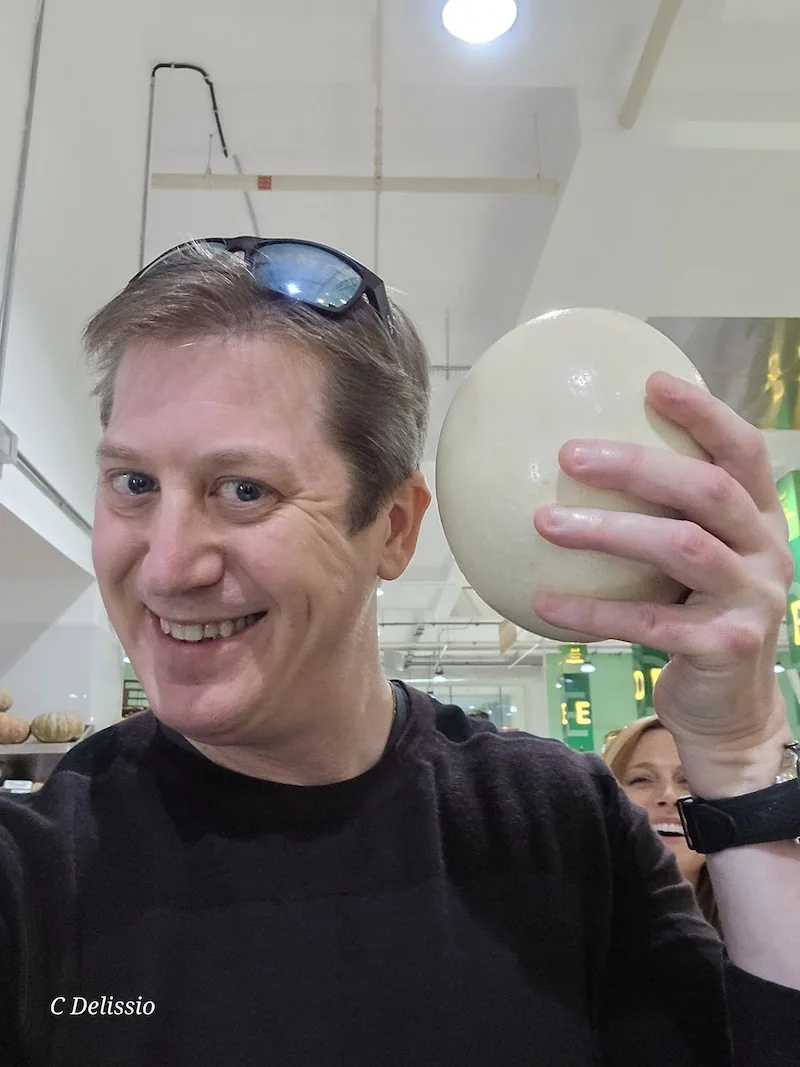 Delissio had his eye on a wireless, mobile, wheeled gelato machine at the Gulfood show. “Such a great way to bring the beloved dessert to the masses in a fast and easy fashion, at a good price, with a small footprint. It turned base into finished product in less than 10 minutes. It was very cool—pun intended.”
He’d also like to see the U.S. bring premium farm-raised cod to market. “There is a huge difference between basic farm-raised and premium farm-raised versions of any fish. It is wonderful to see a fish like cod—one that is often unjustly considered a plain and even low-end fish—enter this arena. The quality and flavor was superb, with a fat content and mouthfeel very similar to salmon.”
Culinary Chronicles: Denise Covert
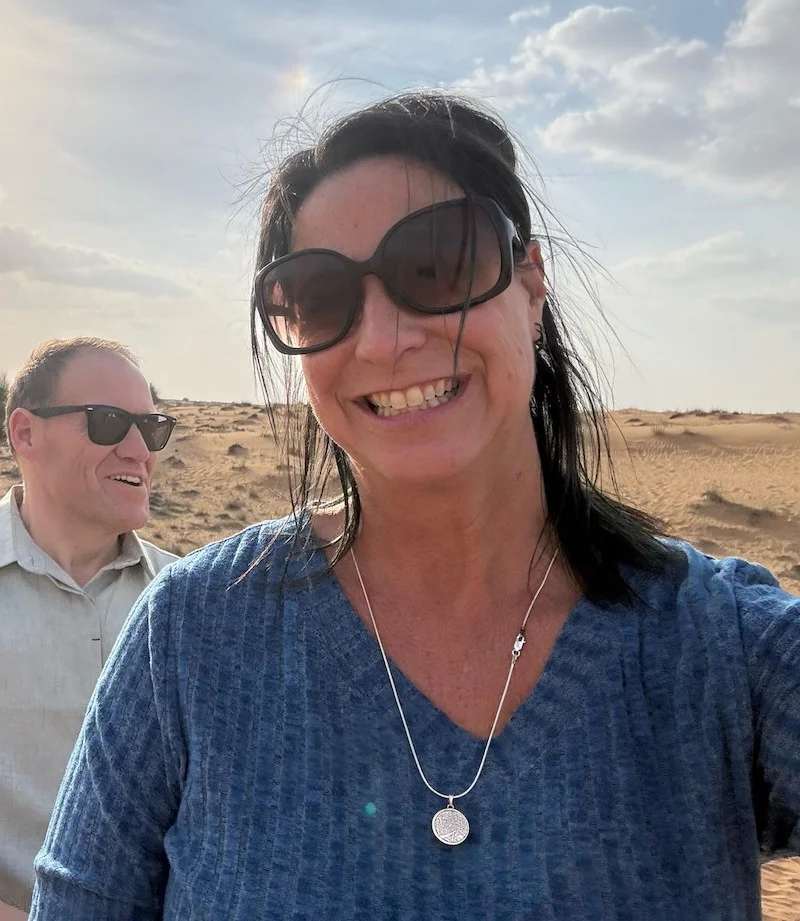 “Tahini-based sauces modernize a traditional Middle Eastern ingredient into a versatile, ready-to-use format. They offered rich, nutty flavor, while remaining plant-based and lighter than cream-based sauces. Their adaptability across dishes—and alignment with clean label and health-conscious trends—made them especially exciting and relevant for broader markets.”
Other observations:
- “Kimchi chips point the way to reimagining a traditional regional ingredient in a modern, exportable format.”
- “I’d love to see expansion of more Middle Eastern flavors like za’atar, sumac, rosewater and cardamom—all of which are approachable, yet distinctive. They could easily translate into sauces, desserts and beverages.”
- She also hopes for “more date-based dishes, as they offer natural sweetness and complexity without relying solely on refined sugar.”
Culinary Chronicles: Timothy Conklin
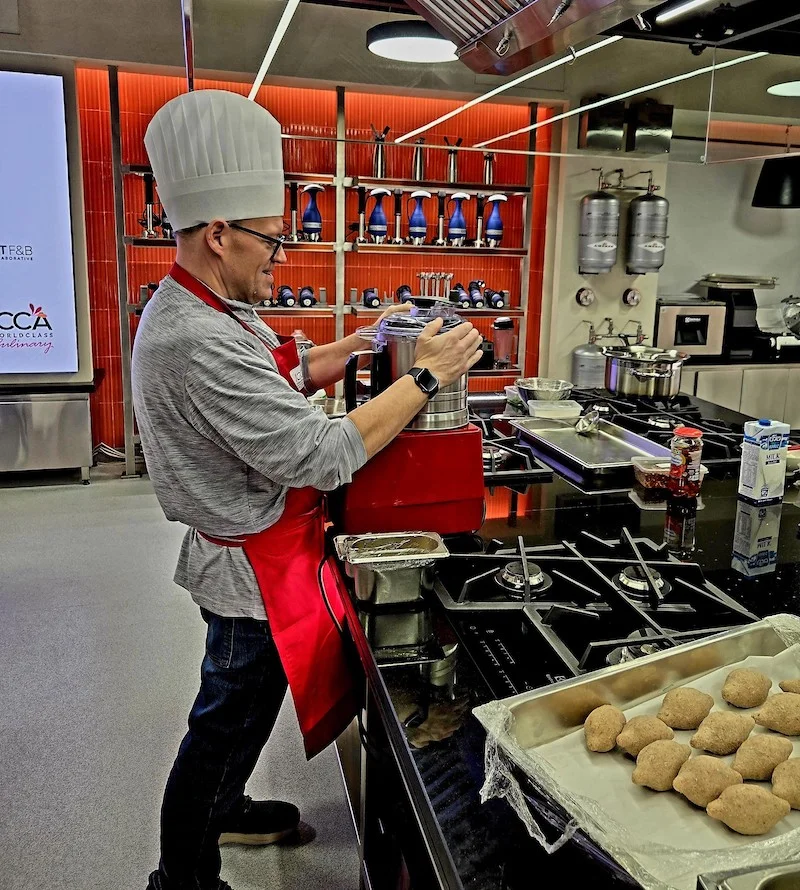 “I attended a croissant masterclass that was exceptional, and it left me particularly excited about a high-protein croissant flour. I plan to purchase that—and an accompanying chef’s book—and incorporate that into my work.” Also on Conklin’s list:
- “Paratha buns are something I plan to showcase at my upcoming food and beverage conference.”
- “Karak milk tea—that was a major highlight of the trip.”
AT JOURNEY’S END
Antosiak offers an eloquent summary of the immersive experience for the Kitchen Collaborative winners: “I expected luxury and global influence, but what stood out was the depth of culinary intention behind it all,” he notes. “The city’s F&B culture is not simply about spectacle—it’s about precision, ambition and storytelling. Chefs in Dubai are cooking with a global pantry, yet there is a strong respect for regional flavors, spices and traditions. What surprised me was how seamlessly innovation and heritage coexist: modern techniques, luxury ingredients and world-class presentation layered onto Middle Eastern foundations. Dubai felt less like a destination city and more like a live, evolving culinary laboratory.”
Coming Up: We’ll take a sneak peek at early menu concept submissions for Kitchen Collaborative 2026. Will one or more turn out to be winners selected to travel to Mendoza, Argentina? More flavor adventures await.
About the Author
 Patricia Fitzgerald serves different roles on the Flavor & The Menu team, including writing custom content, Kitchen Collaborative chef spotlights and digital editorial content, as well as acting as a contributing editor for the print magazine. As owner of PFitzCommunications, she specializes in various areas of foodservice and hospitality, while also maintaining clients in other industries and professions. She can be reached at pfitzcommunications@gmail.com.Read More Stories by Patricia Fitzgerald
Culinary Versatility in a Nutshell Crack open the many ways to get more from walnuts
Flavor Trends, Strategies and Solutions for Menu Development[google_sidebar_ad...
Generation Next: Across the World for a Sweeter Beginning The future of food is evolving, one culinary student at a time
Flavor Trends, Strategies and Solutions for Menu DevelopmentCaera Stone (right) profiled her friend...
Modernizing Five Classic Dips Easy upgrades to enhance the dipping experience
Flavor Trends, Strategies and Solutions for Menu Development[google_sidebar_ad adslug="2026-03-Surround-Kens-320x50"...
