
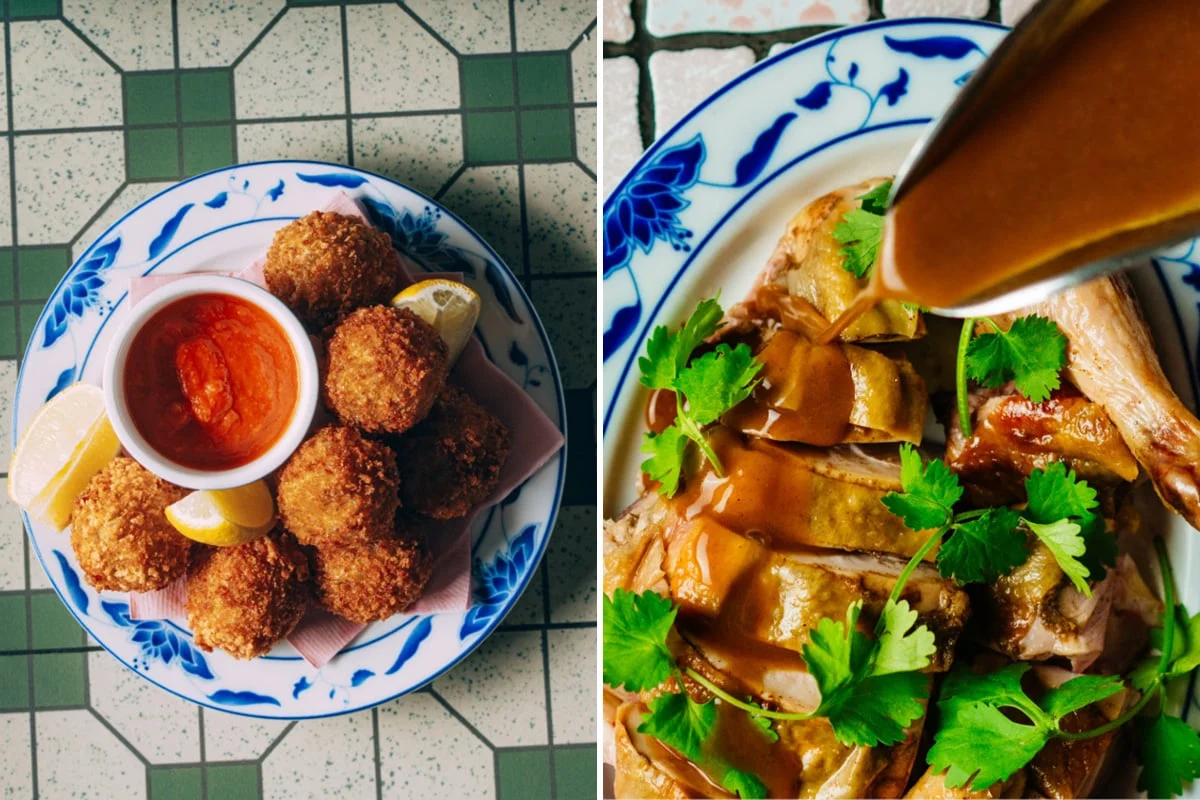
Chef Calvin Eng’s Congee Arancini and Roast Chicken with Hoisin Jus showcase how Kikkoman products—used throughout both recipes—help build layered flavor and texture in modern Cantonese-American cuisine.
Credit: Kikkoman Sales USA, Inc.
SPONSORED EDITORIAL
Calvin Eng: Putting Heritage on the Menu
Redefining expectations for Cantonese-American cuisine
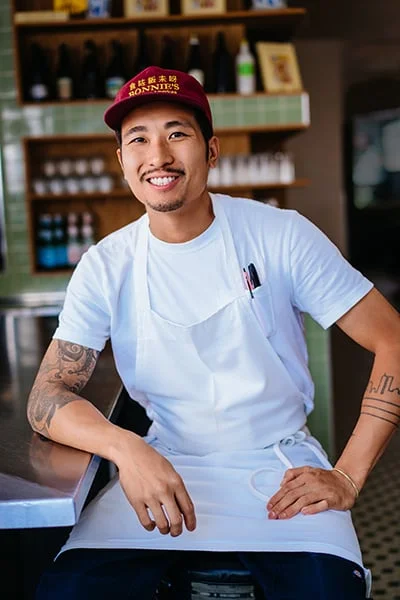
Calvin Eng
Diners craving classic Cantonese cuisine should take the “Cantonese-American” description of the menu at Bonnie’s in Brooklyn, N.Y., as fair warning that they’re unlikely to find iconic staples like char siu or roast duck. Instead, they’re invited to explore inventive, cross-cultural dishes such as Italian Combo Fried Rice (featuring fried bologna, hot capicola fried rice, lettuce, tomato, chips and pepperoncini mayo) or Tinned Dace Dip (a rich blend of Cantonese tinned dace, fermented black beans, cream cheese, sour cream and garlic chives with buttery Ritz crackers).
The restaurant’s Fuyu Cacio e Pepe Mein further underscores the boundless nature of the cacio e pepe flavor system, combining fermented bean curd with pecorino and black and white pepper in a playful nod to the Italian classic. At this Williamsburg neighborhood restaurant, every plate tells a story—a story rooted in the life and memories of Chef/Owner Calvin Eng and his mother Bonnie.
Since its opening in December 2021, Bonnie’s has drawn widespread acclaim from food critics, and Eng has earned multiple accolades, including recognition as a finalist for the James Beard Emerging Chef award. Today, he continues to impress with creative interpretations of dishes that reflect and celebrate his childhood experiences.
Eng’s approach exemplifies the spirit of third-culture cooking: a culinary movement that reframes global mash-ups by blending personal identity with inherited traditions. Like many of his peers, Eng draws on the foods of his American upbringing while honoring the culinary influences of his immigrant parents and grandparents, bringing fresh energy and perspective to menu development.
Eng is generous in crediting his mother, an immigrant from Hong Kong, and his upbringing for setting him on his distinctive culinary path. “I always had an interest in cooking after years of watching my mom make full feasts every night for dinner,” he says, recalling memories of shopping together for ingredients in Chinatown and helping prepare meals at home. He admits to feeling torn as a child, gravitating toward traditions while also longing for more typical American favorites like peanut butter sandwiches and McDonald’s.
By high school, unable to picture himself in a traditional college setting, Eng realized he wanted to pursue culinary school. That education led to stints at notable restaurants in New York’s Chinatown, where he eventually reconnected with the culinary touchstones of his youth. Embracing his dual cultural identity ultimately led to the opening of Bonnie’s—a restaurant that reflects his commitment to honoring and preserving Cantonese flavors and techniques, while, as Eng puts it, “showing what Cantonese food can be today.”
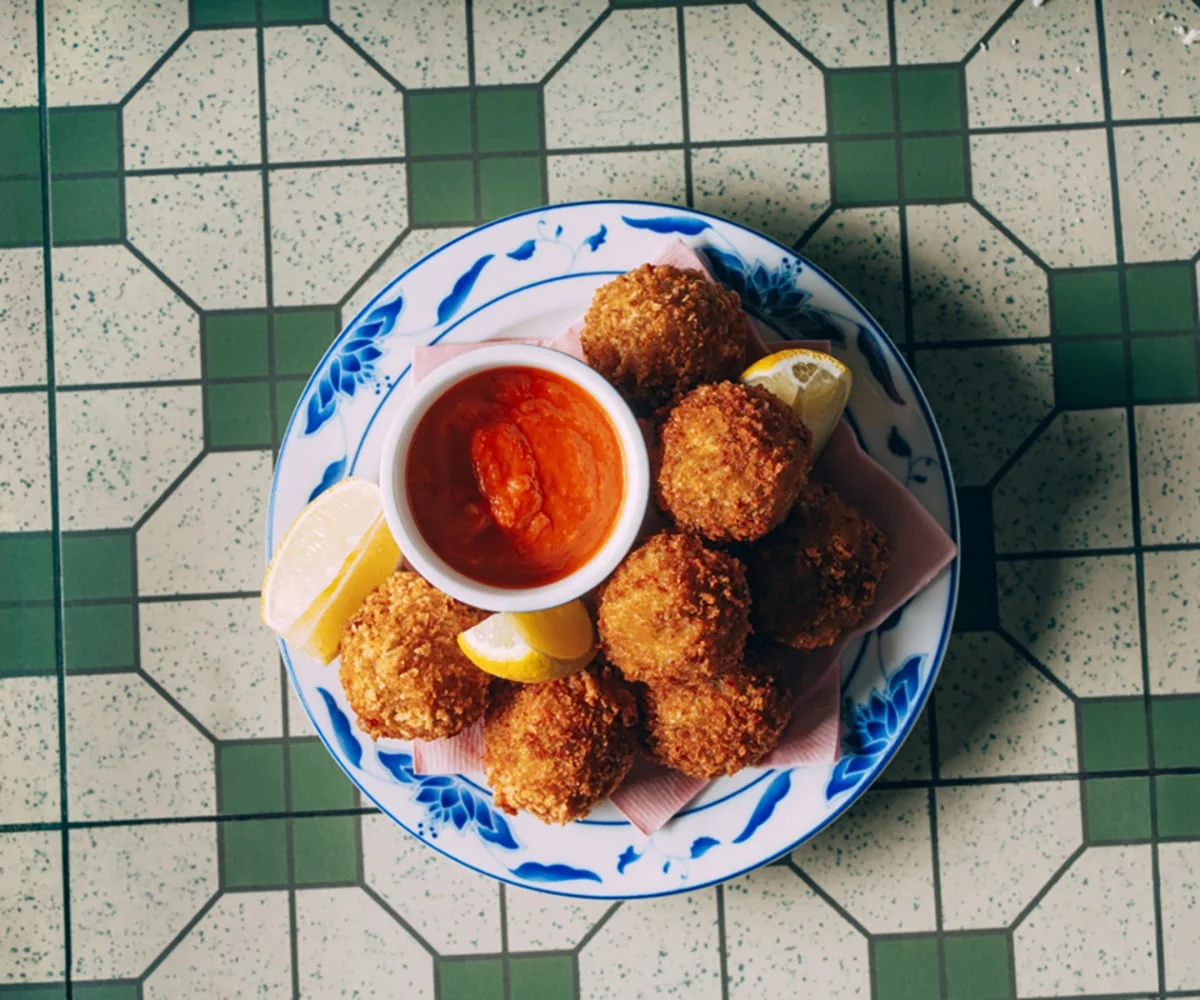
This Congee Arancini taps into the savory comfort of slow-cooked rice that is fundamental to both the Asian congee and Italian arancini.
MEMORY SETS THE TABLE
“I always say that I want a dish to taste Chinese first because, at its heart, that’s what my cooking is,” says Eng. “I was never trained in a traditional Chinese kitchen, so I often end up cooking in a slightly more Western way, with other ingredients tossed into the mix. But the end result will always be something similar to what I grew up eating.”
Eng defines classic Cantonese cuisine as relying on “super minimal ingredients so that the main product can shine, whether that’s seafood, meat or produce.” His list of signature pantry staples include umami-rich seasonings, ginger, garlic and scallions, along with salt, sugar and MSG. “There’s not a lot of heat or acid,” he says, “but I never find it lacking. It’s just really well-balanced food.”
Among the many lessons Eng learned in his mother’s kitchen, cooking by instinct stands out as one of the most important. “She’s an incredibly natural cook, constantly tasting and adjusting seasoning, using measurements and recipes she has stored in her mind rather than written down,” he says. While his mother taught him the foundational flavors and core ingredients of Cantonese cooking, she also showed him that “cooking can be freer than the constraints a lot of people put on themselves.”
Letting go of those constraints has led Eng to create crowd-pleasers like the BK Rib, a playful take on the McDonald’s McRib and one of the most popular dishes on Bonnie’s menu. “I think this dish really hits all the notes of the food I want to cook,” Eng says. “It’s got Cantonese flavors, from steamed cha siu rib to hot mustard slathered on a milk bun, but then it also has those Western bites, with pickles and raw onions.” For his guests, he adds, “It’s a deeply nostalgic dish that most people have either eaten or at least know about. It evokes a certain memory for people who grew up with McDonald’s.”
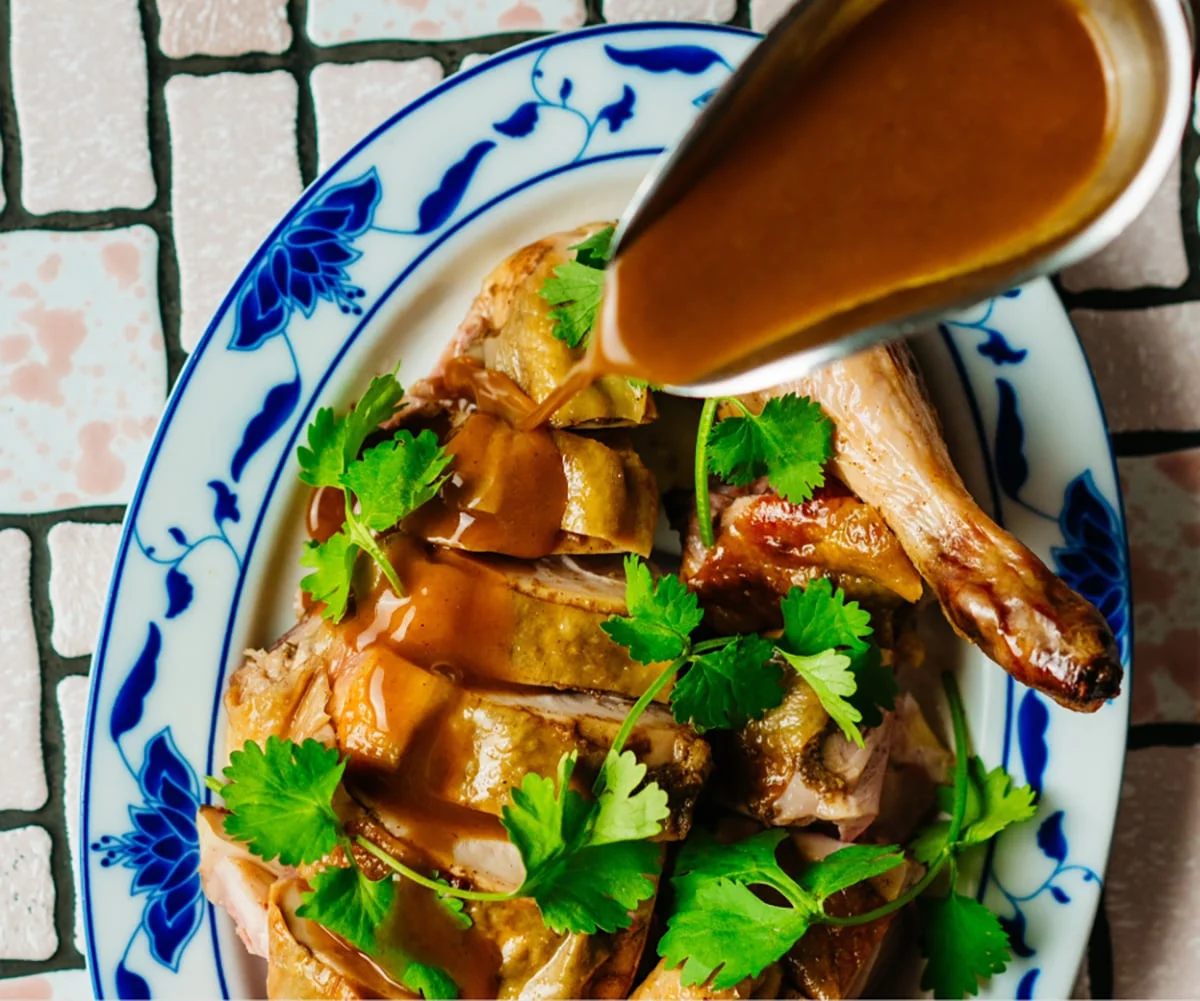
In this Roasted Chicken with Hoisin Jus, classic Cantonese duck is reimagined as a chicken dish finished with a rich, silky hoisin sauce for dressing or dipping.
INNOVATIVE INTERPRETATIONS
Eng is a recent inductee into the Kikkoman Kitchen Cabinet, an initiative launched in 2022 to collaborate with forward-thinking chefs on foodservice recipe development, industry outreach, trend forecasting, and more. He joins five other chefs in the 2026 class.
Among the dishes Eng highlights are two recipes adapted from his cookbook, Salt Sugar MSG: Recipes and Stories From a Cantonese American Home, co-authored with Phoebe Melnick. Both showcase Kikkoman products that were staples in his mother’s kitchen—and continue to play an essential role in his cooking today—including Kikkoman® Gluten-Free Panko Bread Crumbs, Kikkoman® Gluten-Free Hoisin Sauce, and Kikkoman® Oyster Flavored Sauce.
Congee Arancini
Congee, a savory rice porridge, is a comfort-food staple across many Asian cultures, commonly served for breakfast but equally suited as a hearty main meal. For Eng, the slow-cooked rice at the heart of classic Italian arancini offers a similar sense of warmth and familiarity.
For this inventive interpretation, Eng starts with a concentrated congee base enriched with mozzarella, country ham and Parmesan. The mixture is rolled into balls and coated in Kikkoman® Gluten-Free Panko Bread Crumbs, which deliver a light, crisp exterior while allowing the creamy, flavorful rice to remain the star.
“Kikkoman® Gluten-Free Panko Bread Crumbs is a phenomenal product,” says Eng. “It’s made from rice and gets super, super crunchy.”
Roast Chicken with Hoisin Jus
Among the flavors Eng returns to most often is the roast duck hanging in the windows of Cantonese roast meat shops. To capture that “insanely flavorful” profile with chicken—a more accessible protein for both professional and home cooks—Eng spatchcocks a chicken and spreads a blend of
The result is a dish that pays homage to traditional Cantonese roast, while building deep umami flavor and a glossy caramelized skin. It’s served with a silky hoisin jus, spooned generously over the meat or offered on the side for dipping. Or, as Eng puts it: “We drown it in the sauce!”
He points to the hoisin as key to the dish’s success. “Kikkoman® Gluten-Free Hoisin Sauce has this beautiful balance of sweet, acidic and umami flavors from plums and miso,” he says. “It’s bold, but incredibly versatile.”
As more chefs like Eng explore third-culture cooking through transformative mash-ups that draw from Asian and other global influences, they will continue to turn to Kikkoman’s product portfolio to support both tradition and innovation. Kikkoman offers chefs a broad range of solutions—from pantry essentials like Kikkoman® Soy Sauce and Kikkoman® Rice Vinegar to flavor-forward products such as Kikkoman® Gluten-Free Hoisin Sauce and Kikkoman® Katsu Sauce—that are designed to perform across cuisines and applications.
Ready to bring global inspiration to your menu? Click here to explore Kikkoman’s full portfolio and request complimentary product samples, while discovering more menu inspirations and professional resources.
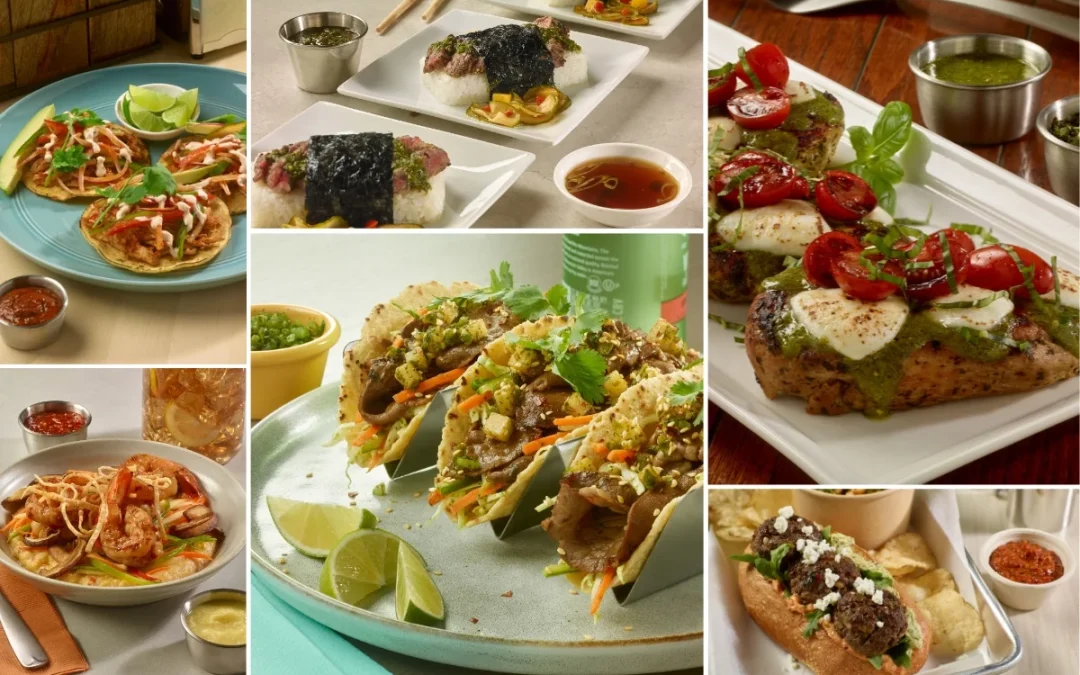
Where Smart Solutions Meet Culinary Craft Showcasing six craveworthy dishes that cut prep, not quality
Six ways to rock modern menus with...
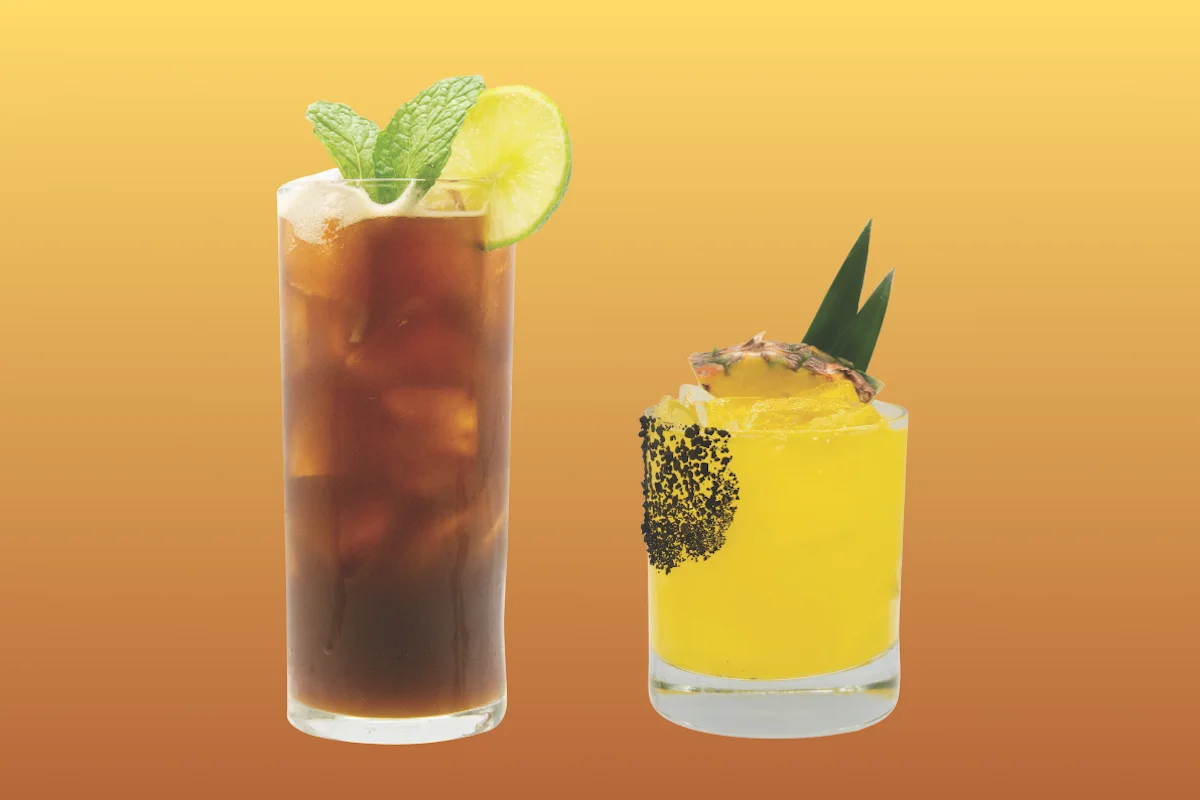
Bright, Bold and Bar-Ready Monin’s Yuzu serves up vibrant new flavor potential on beverage menus
A high-impact beverage with low lift, this Yuzu Cold Brew...
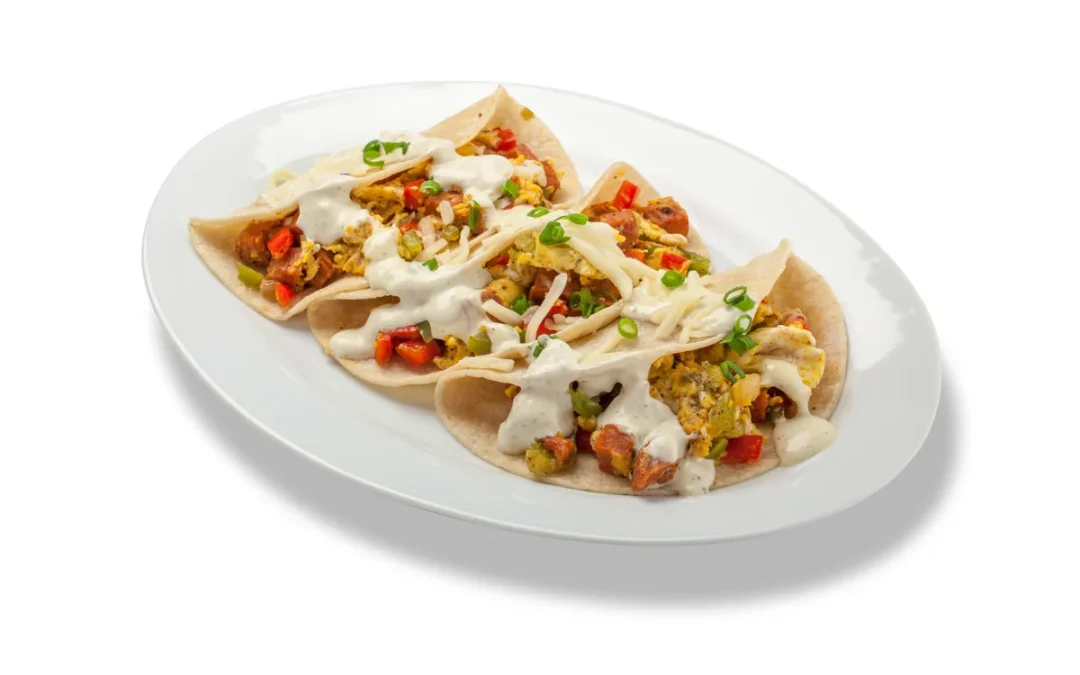
The New Ranch Playbook This comeback condiment boasts craveable credibility
Ken’s® Jalapeño Ranch Dressing adds heat to these West Texas...
