
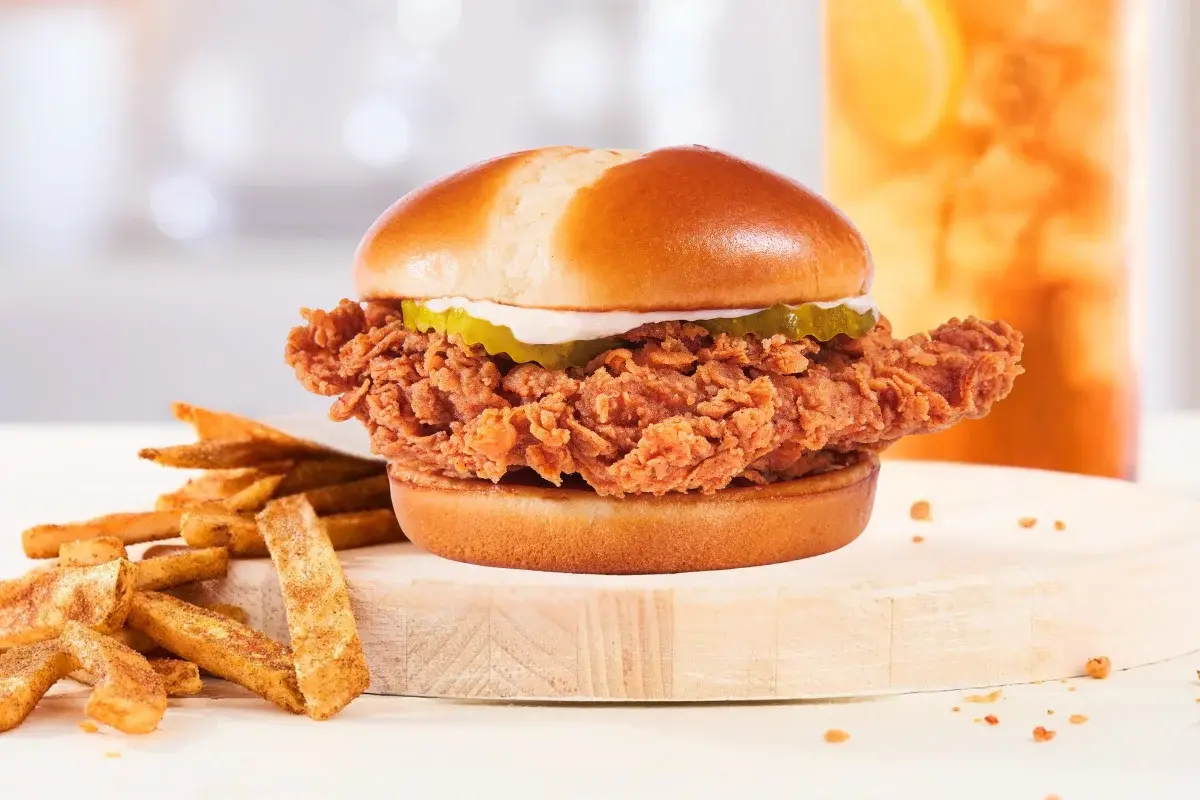
Taste, texture, temperature, scent and more all play a role in making Bojangles menu irresistible, from Seasoned Fries to a BLT twist on Bo’s Chicken Sandwich to its Legendary Iced Tea.
Credit: Bojangles
Cultivating Craveability
A culinary arts and sciences perspective to an age-old question
Marshall Scarborough, vice president of menu and culinary innovation at Bojangles, has a very specific litmus test for craveability.
“I always think about it as, ‘Am I gonna wake up at 3 a.m. thinking about it and have to go get it?’” he says. But while this may be a clear indicator of success, the formula behind craveable foods and drinks is a complicated culinary art and science. Scarborough explains that on a basic level, salt, sugar and fat are the ingredient trifecta in triggering cravings and even describes butter and heavy cream as “every chef’s crutch.”
But creative-minded chefs are hardly ones to lean on a crutch; Scarborough recalls that one of his favorite classes in culinary school focused on vegetarian cuisine because it forced students to rely less on animal protein for flavor hits.
“I love doing the research and doing the iterations to develop a food product that takes you down a path to find out what’s going to drive the ultimate craveability,” he says. “That is the No. 1 thing we’re trying to solve for anytime we put something out. Whether it’s for a limited-time offer or the core menu, we’re trying to crack the code.”
That code is a moving target, but it’s safe to say that Bojangles has a good handle on the concept of craveability; a number of its classic offerings have attained cult-like status. Among those most popular items are the Cajun Chicken Biscuit and the Seasoned Fries, both of which feature the brand’s proprietary spice blend. On the sweeter side, the Bo-Berry Biscuit is a powerful market differentiator with no other quick-service chain offering something quite like it.
A Multi-sensory Experience
Zeroing in on craveability requires a multidimensional approach, and taste, while a foundational element, is hardly the sole driver. Visual cues can enhance, or in some cases, belie, a dish’s taste or texture; a floral-fondant-dappled cake might appear lighter and sweeter than it actually is while a monochrome chicken wing may surprise diners with a more nuanced flavor and crispier crunch than its appearance suggests. Long before the crackle latte, Coca-Cola was leveraging pop-fizz-ahh sounds in movie theaters to drive concession sales. Now, online videos catering to the autonomous sensory meridian response (ASMR) and online videos catering to this sense are proving the power of sound.
As for scent, it goes hand-in-hand with taste to create flavor and is also the sense most closely tied to memory. In many ways, it can be a food’s (or a restaurant’s) calling card. “Smell is such a special sense; it evokes emotion and memory in a way few other experiences can,” says Jennifer Holwill, corporate executive chef of GoTo Brands, whose portfolio includes Auntie Anne’s. “Few scents are more recognizable than the aroma of freshly baked Auntie Anne’s pretzels. It’s truly become one of our most powerful brand assets.”
She adds that the brand’s iconic pretzel aroma, which is well-entrenched in malls and airports across the country, can drive guests to make impromptu visits “just because.” Once the smell brings customers in, the experience becomes richer. “You eat with all five senses. The multi-sensory nature of our pretzels creates an experience that’s both familiar and irresistible,” Halwill explains.
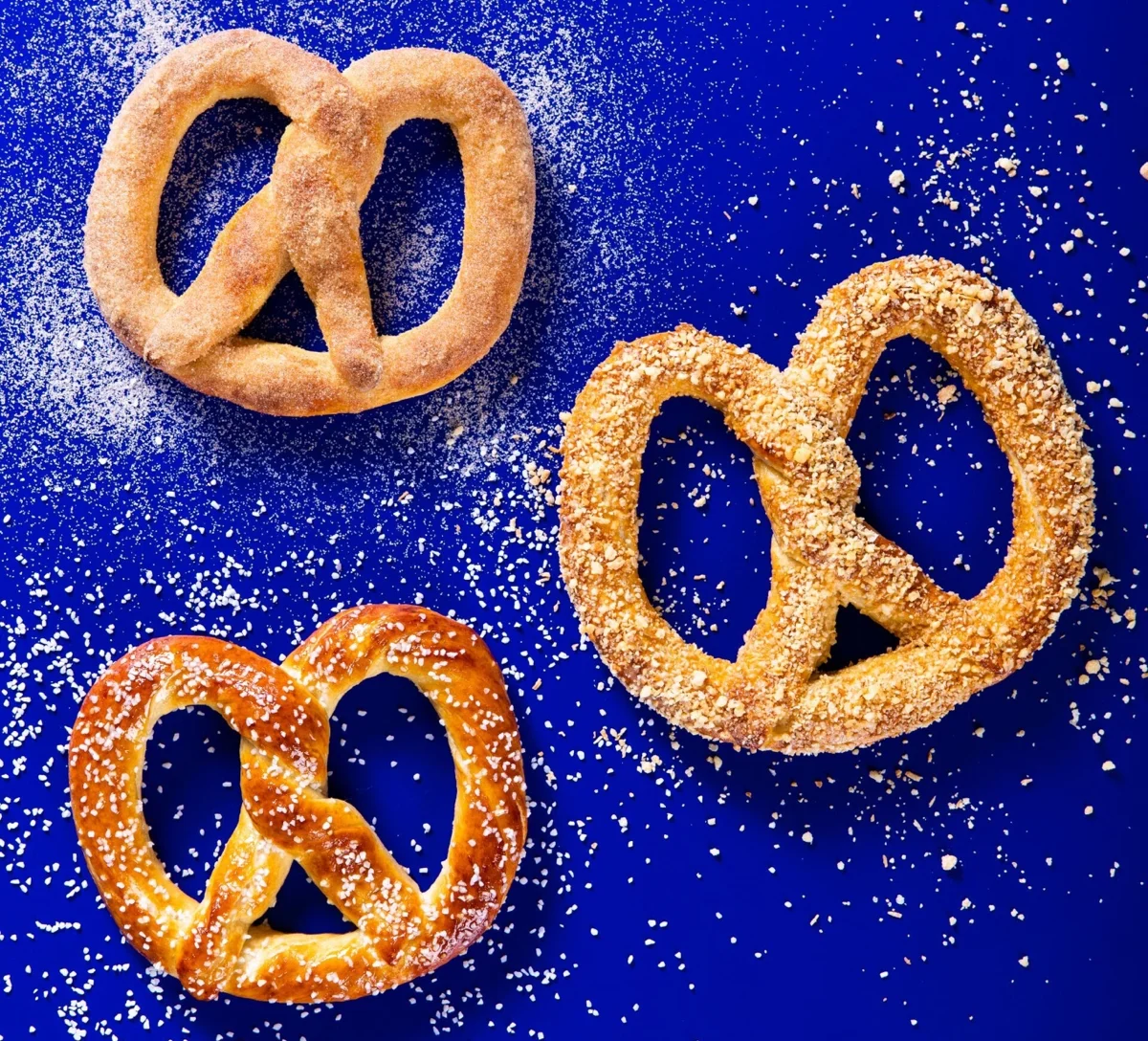 Credit: Auntie Anne’s
 Auntie Anne’s unmistakable aroma is one of the brand’s greatest assets, luring customers to make “just because” purchases.
Given the brand’s precise modulation, it sets a high bar when introducing new items, whether permanent or limited specials. Over the years, Auntie Anne’s has finely honed its menu, taking a quality-over-quantity approach, which reinforces the sensory signature of classics like the Original Pretzel and Cinnamon Sugar Pretzel to shine brightly. “From a development standpoint, innovation always starts with respect for that signature aroma,” Holwill reiterates. “It signals freshness, quality and indulgence before a guest even makes a purchase. Every new product must enhance that sensory experience.”
Texture is another important consideration in crafting craveability. And while chefs have always understood its importance, consumers seem to be paying extra attention in recent years, again thanks in part to ASMR and social media. Temperature, another variation of the feeling sense, remains more under the radar from a guest standpoint, but it figures prominently in Scarborough’s ideation process.
“For me, it’s the contrasting textures and temperatures, making sure you have a good contrast of crispy to tender,” he explains. “There’s a reason people love fried chicken and crave it. You get the tender, juicy meat with the crispy crunchy shell, and then when you introduce a cold buttermilk ranch dipping sauce that has a cooling effect. All of a sudden, you’re stimulating a different part of the brain.”
The Science of Craveability
For as subjective as the idea of craveability may be, hard science does play a role. At Virginia Tech University, the Sensory Evaluation Laboratory studies food from a different perspective, wherein people serve as the sensory “instruments” to evaluate various foods and beverages. Researchers use focus groups, automated facial expression analysis software and sensory data collection terminals to yield a more holistic perspective on human preferences and aversions, with findings helping to inform other researchers as well as industry partners.
“Overall, subjects tend to like sweet and salty tastes and dislike bitter ones, which is a well-established phenomenon,” says Jacob Lahne, associate professor and graduate program director in Virginia Tech’s Department of Food Science and Technology. Though he’s quick to point out a crucial caveat: “It is difficult to establish particular sensory stimuli that are overall rejected or accepted because the context is so important—different sensory stimuli are appropriate for different foods.”
Indeed, creamy, cold and sweet are ideal (and expected) characteristics of ice cream or cheesecake, but hardly desirable for, say, pizza or fries. Both sets of foods are, by and large, craveable foods but their sensory experiences are vastly different. Sometimes subverting expectations can be a boon to restaurants (see: corn-shaped cheesecake), but it requires a deft hand.
But as Lahne, as well as chefs and menu developers, can attest, people also crave foods that, in a black-and-white paradigm, they shouldn’t. The popularity of bitter or sour foods and beverages proves the point. “In general, bitter or sour tastes or “funky” aromas—like those from fermentation—are aversive when they’re unexpected or poorly integrated into the overall product flavor, but are clearly essential for creating complex, sophisticated, and I would say, ‘craveable’ flavors,” Lahne explains “I think we could characterize a Negroni—or its nonalcoholic cousins like Sanbitter or the recent “phony Negroni” products or their characteristic gentian flavor in general—as craveable, and bitterness is a key characteristic of that flavor profile.”
An individual’s tastes also evolve over their lifetime. Early exposure to certain foods and beverages (going back even before birth) can set the stage for foundational preferences, but they’re hardly static. “There is already evidence that flavor preferences change over time. We also see this in everyday life, as we learn to like and crave complex flavors like coffee, beer or radicchio as we grow up and have repeated exposure to these stimuli,” Lahne says.
But just as certain flavors and scents are near universally beloved, so too are some reviled. The Sensory Evaluation Lab has found that non-vegetable foods with vegetal flavor are widely rejected. Lahne offers soybeans as an example: Edamame, with its nutty, slightly sweet and fresh flavor is desirable, but cooked soybeans can have a “beany,” off-putting taste due to an enzymatic reaction in the cooking process.
Lahne also cites another lab out of Oxford University that has identified certain aromas that are near universally aversive across the world. “But still, we also see cultures that develop practices around some of those smells, such as fermented and decaying meat products,” he says.
Culture Is King
In terms of taste preferences changing at a global level over generations, Lahne defers to evolutionary biologists and psychologists. Still, he underscores the importance of culture in craveability. “Culture is a real force in determining this, and culture is of course not static,” he says, adding that findings from the Sensory Evaluation Lab support the claim that the U.S. is changing on this front.
Restaurant operators can attest to this shift, too. Fifty years ago, only major cities had restaurants serving sushi; at the turn of the century, hummus was isolated to mom-and-pop establishments serving customers of Mediterranean or Middle Eastern descent; and just five years ago, tinned fish was a niche ingredient for a small subset of diners. All of these are a testament how preferences, and in turn “craveability,” can evolve.
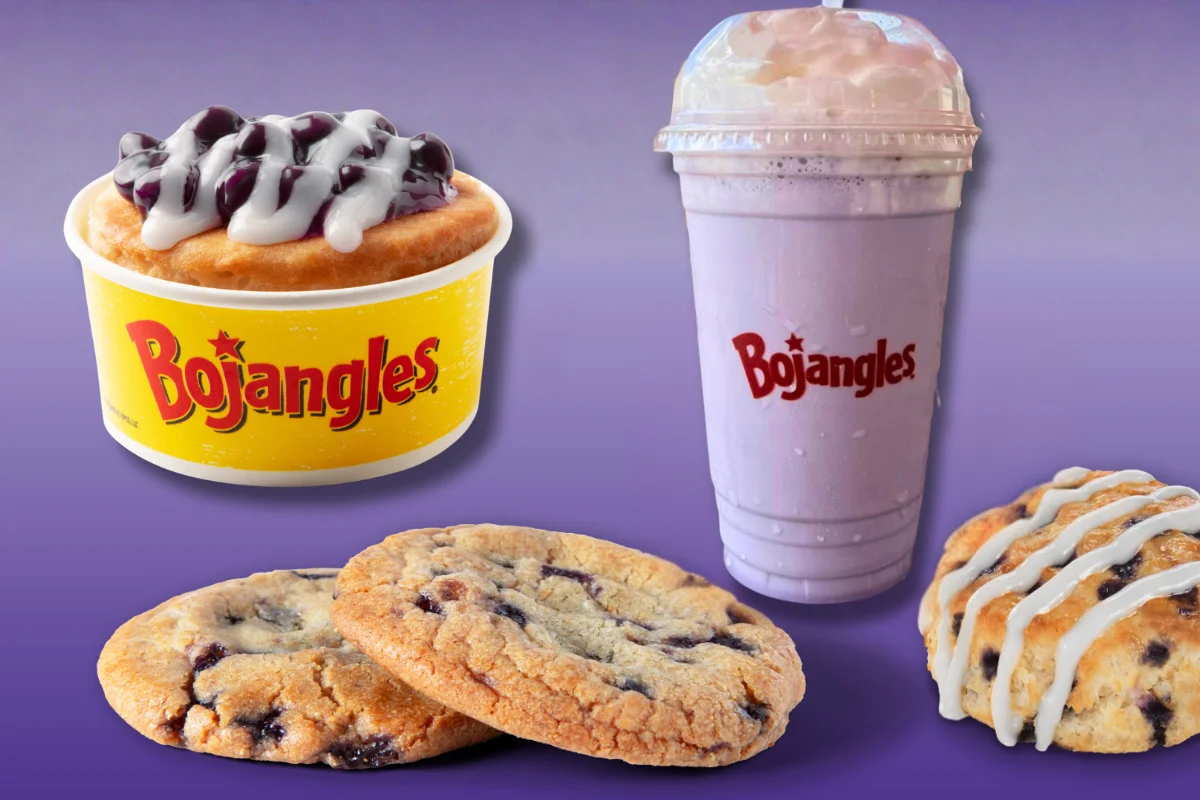 Credit: Bojangles
 The Bo-Berry Biscuit platform is a favored playground for innovation at Bojangles, with iterations ranging from cobblers to shakes to cookies.
As a chef, Scarborough relishes this broadening of the cultural palate, which he sees as being driven largely by younger customers. When consumers expose themselves to different cuisines or off-the-wall dining experiences—even if it’s at a different restaurant or cooking at home—it opens the door for R&D teams to push the envelope.
At the same time, it’s important to maintain those more classically craveable offerings. “We’re constantly trying to straddle that line where we keep our current customer—who tends to skew a little bit older—happy while drawing in the younger customers that are looking for something a little bit more exciting,” Scarborough explains “With our brand’s culinary north star being authentically Southern with a modern twist, it gives us a place that speaks to everybody regardless of age.”
To that end, Scarborough and his team have been playing around with fresh iterations of the Bo-Berry Biscuit with a slew of LTOs including the Bo-Berry Cobbler, Bo-Berry Cookie and, perhaps most daring, the Bo-Berry Milkshake. “It captures the essence of a Bo-Berry Biscuit. You get the toasted flour notes, that kind of cake-like flavor comes through, and then you get the sweetness of the icing—all in a milkshake,” he says.
Ultimately, keeping tabs on craveability is an ongoing process that requires a bit of science, a lot of culinary prowess and an ear to the ground. With more than 800 locations, Bojangles has a healthy sample size to gauge consumer desire and ensure its offerings are on the path to that coveted 3 a.m. craving status. “It’s so subjective in terms of how something delivers and how it resonates,” Scarborough says. “That’s why we try to feed as many people as we can and really pay attention to their feedback—hopefully we get it right.”
About the Author
 Nicole Duncan is the digital managing editor of Flavor & the Menu. She's reported on the restaurant industry for a decade, most recently as the editor of FSR magazine. In 2021, she won a Folio award for her feature on restaurant tycoon Tilman Ferttita. The following year, FSR was awarded Best Overall Issue for its May 2022 issue featuring Andrew Zimmern. She has profiled well-known chefs including Paola Velez, Fabio Viviani and Daniel Boulud, but also relishes the opportunity to spotlight under-the-radar trends and innovators.Read More Stories by Nicole Duncan
Culinary Versatility in a Nutshell Crack open the many ways to get more from walnuts
Flavor Trends, Strategies and Solutions for Menu Development[google_sidebar_ad...
Generation Next: Across the World for a Sweeter Beginning The future of food is evolving, one culinary student at a time
Flavor Trends, Strategies and Solutions for Menu DevelopmentCaera Stone (right) profiled her friend...
Modernizing Five Classic Dips Easy upgrades to enhance the dipping experience
Flavor Trends, Strategies and Solutions for Menu Development[google_sidebar_ad adslug="2026-03-Surround-Kens-320x50"...
