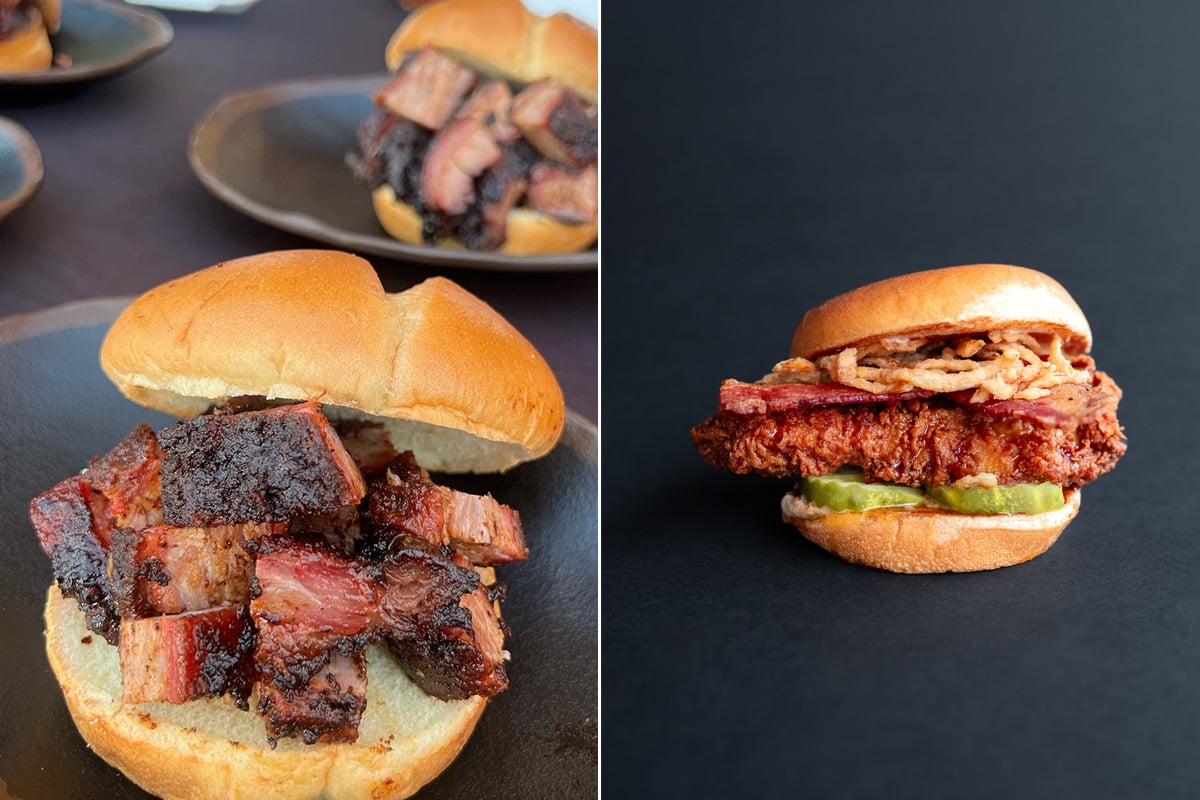
Photo Credit: Zarda Bar-B-Q | City Barbeque |
Five Strategies for Serving up Barbecue Bliss
Two veteran operators reflect on ways to ensure the meat favorite maintains a contemporary edge
Many such regionally defined conventions are starting to relax a bit (well, maybe not in Texas), as traditional prep techniques, flavors and signature ingredients crisscross state—and even international—borders. A burgeoning anything-goes consumer attitude toward barbecue certainly offers greater opportunity for menu expansion, but operators should beware of possible pitfalls. Here, two experienced fast-casual barbecue veterans reflect on meeting and exceeding customer expectations with new menu trends, enduring “legacy” items, innovative LTO strategies and community spirit.
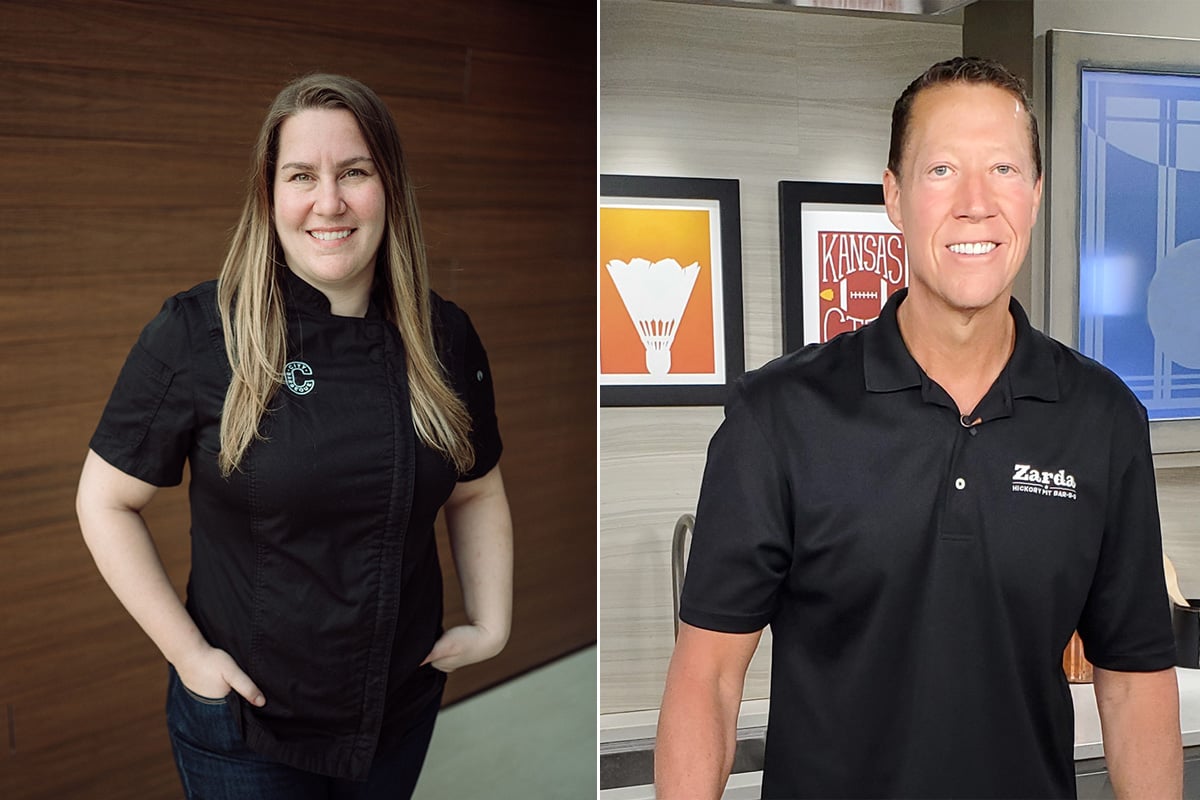
(left) Jessica Bograd, Senior Director of Culinary, City Barbeque
(right) Terry Hyer, COO, Zarda Bar-B-Q
It’s fair to declare that both Jess Bograd and Terry Hyer have barbecue in their blood. Bograd, senior director of culinary for City Barbeque, a Columbus, Ohio-based fast casual with 75 locations in 10 states, is an 18-year veteran of Texas circuit barbecue competitions. Hyer, COO for Zarda Bar-B-Q, with Kansas City locations on either side of the Missouri River, started working for the family-owned classic “Q” joint when he was just 15 and never stopped. Both characterize their zeal for the cuisine and for working in foodservice as passions that straddle the personal and the professional.
Know Your Guests
“Barbecue is the great equalizer,” declares Zarda’s Hyer. “Kansas City has so much barbecue, attracting every single demographic in the city. Wherever you go, you’ll be rubbing shoulders with bankers and utility workers. Yes, some restaurants may be more upscale, but good barbecue draws everyone in.” He believes that a community-focused culture is the differentiation factor that separates Zarda from other barbecue brands in a decidedly crowded market. It certainly drives Hyer’s own loyalty, as he begins his 45th year with the company.
The core audience for the larger City Barbecue skews male, blue collar and older millennials with families, says Bograd, acknowledging the influence they all play in new menu development, especially when it comes to unfamiliar flavors and formats. “But we have to be aware of who the next customer is,” she insists. As example, she points to the needs and interests of younger consumers.
“We did a deep dive into the consumer journey, looking at how and what they order,” says Bograd. “More than one-quarter of our locations have drive-throughs and our off-premises business is around 60 percent.” This meant viewing the menu through a new lens. “We looked at categories as platforms for menu development, such as shareables, tacos, new combos and redesigned sandwiches. We’re working to create new craveable items that are at a reasonable price point.”
Hyer agrees that the younger generations are more likely to try and embrace newer menu items: “They are craving something different than what’s standard. And they appreciate that we’re trying to do different things.” He plans to explore opportunities with birria and tacos to leverage the popularity of Mexican cuisine.
Expand Your Definition of Barbecue
City Barbeque recently completed an overhaul of its menu architecture. “We looked at performers and reorganized the structure to make it easier for guests to navigate, plus we added and subtracted items,” says Bograd. Some of these are a far cry from traditional barbecue preparations. For example, in the shareables category, for example, Pitmaster Nachos—tortilla chips piled high with hand-pulled pork, creamy queso, housemade chipotle ranch, pickled red onions and the brand’s original barbecue sauce and Swine Wine pico—is one new item finding early favor with customers. Chicken wings—pickle brined, smoked and fried—were introduced as a successful LTO in 2023 and will be officially added to the permanent menu in early 2025.
The Competition Cobb is only the brand’s second salad offering, as Bograd seeks to grow out the category. “It features seasoned smoked turkey—which is so underrated, in my opinion—plus classic Cobb elements in a premium romaine blends,” she says. The protein can be subbed for another alternative.
In the core sandwich menu, Bograd is excited about the new Dirty Bird: a crispy fried chicken breast, with a drizzle of a custom-made Sticky Honey glaze, double-smoked bacon, crispy onion straws, plus housemade chipotle ranch. “We also revamped an underperformer. The former Chipotle BBQ sandwich was transformed into the Not a Sloppy Joe, a “triple que” featuring pulled pork, pulled ribs and brisket tossed in a housemade spicy-sweet Chipotle-Peach barbecue sauce. Menu items that were nixed included a smoked chicken sandwich, as well as a few curated samplers, in favor of customized options.
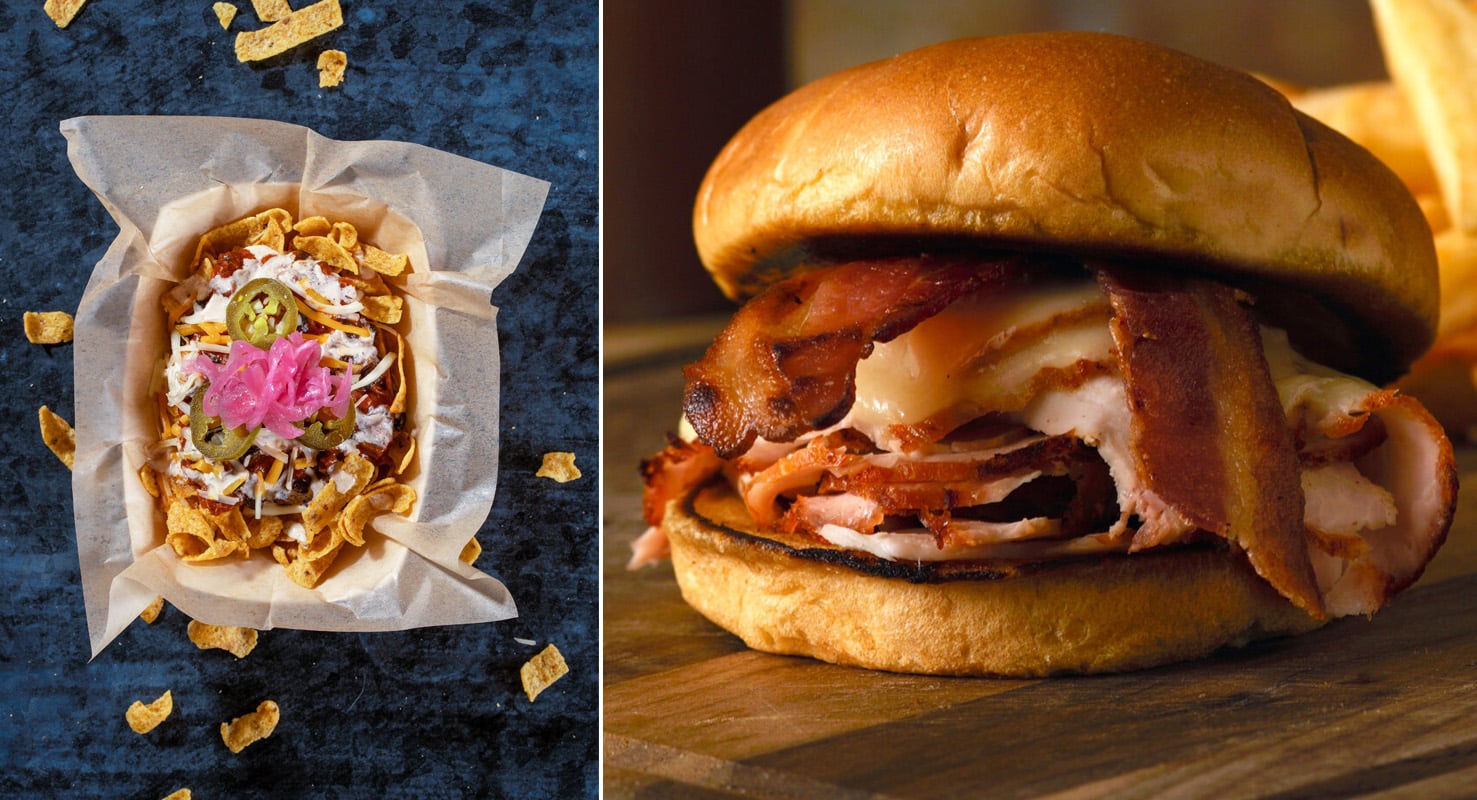 Photo Credit: City Barbeque | Zarda
 Left: The Brisket Chili Fritos® Pie LTO is a new format to showcase a brisket chili that has anchored popular past LTOs for City Barbeque. Right: Whether Zarda’s new Turkey Crunch Wrap is bona fide barbecue is immaterial to its success with customers.
Commit to Innovation
At City Barbeque, LTO development is built on three pillars: proteins, forms and flavor. “We have some killer proteins, but we’re always thinking about how technique and flavor could enhance that protein in new ways,” says Bograd. “Consider our Brisket Chili Fritos® Pie, which is part of our current fall/winter LTO. It features a housemade brisket chili served over corn chips and topped with shredded cheddar, chipotle ranch, pickled red onions and jalapeños. The brisket chili itself is a returning LTO staple, with five different chiles, black beans and a few secret ingredients. Knowing how well it works for us, we wanted to build a line extension around that, which led to the Frito Pie. In previous years, we’ve run a Brisket Chili Mac and Brisket Chili Fries. Walking tacos may be the next format,” she explains.
Next year, the LTO schedule is packed with some “heavy hitters around proteins and trending flavors,” says Bograd, previewing some upcoming trials around pastrami and pork belly burnt ends. Loaded bowls and tacos are other forms poised for more flavor play.
Looking further down the road, Bograd believes barbecue’s moment is far from over, excited by what she’s seeing in the independent space, such as Egyptian barbecue with pomegranate lamb ribs and various ethnic fusions. She’s also excited about exploring options around regional barbecue signatures. “What are the regional sauces, rubs and condiments that we could introduce to a new audience?” she muses, citing Carolina Gold barbecue as a style the brand is now putting front and center and noting that the addition of global flavors is not far off. “But we have to do it slowly. That’s why we’re adding tacos as a platform. We need to build trust with our guests that we know what we’re doing.”
She admits to some collective hesitancy in promoting regional favorites in new markets. “Our Carolina Gold held its own in the north, but it performed better in the Carolinas,” Bograd notes, saying that decisions about offering grits or fried okra outside of the south are hot topics of conversation and consideration.
Hyer agrees about the intractability of regional barbecue identity. “Kansas City is beef country. Pulled pork only recently came to the area. We have no snobbery and are trying to adopt other barbecue styles from around the country, but it’s not always easy to get people to try them,” he notes. “I always want them to experience something new, but they want what they want.”
Bograd admits to the occasional LTO fail. One was “Texas-size” cinnamon rolls, which performed well in consumer test panels, but simply didn’t “hit” when rolled out. “We actually ended that LTO early. The execution of the dish wasn’t meeting our competition-quality standard and consumers just didn’t want it,” she says. “It can be really difficult to disrupt the dessert category. But I’m still on the hunt!”
City Barbecue’s LTO program is “fast-moving,” describes Bograd. “We’re small enough to be nimble.” Menu candidates are vetted by an internal team, followed by a consumer test panel from the brand’s self-selecting loyalty group. “We’ll do a small market test in four to six locations in a few different markets for about six to eight weeks.” In addition to testing how it fares as a flavor experience, items are tested at different price points. The brand has five LTO windows scheduled in 2025, and Bograd expects to test at least one new protein in several formats, as well as a premium side dish and/or a salad.
The innovation pipeline at Zarda is much more informal. Hyer is the idea guy, often generating menu suggestions at such a fast and furious pace that his team requests he move some of these to a “parking lot” list for future exploration. “I’m the one who likes to stir that drink,” the self-described foodie says. “You have to stay curious!”
Zarda’s menu includes an eclectic mix of core items, daily specials and “Limited Reserve” items. Limited Reserve items might be LTOs, monthly promotions or offerings available in limited supply, such as the brand’s award-winning burnt ends. “The Limited Reserve menu was born of me combining ingredients and being goofy,” says Hyer, proudly admitting to putting potato salad in his baked beans. “We needed to have some fun with our menu.” Over time, some of the Limited Reserve items have become permanent but remain in that section of the menu. “There’s emotional trauma if you cycle it out,” he says.
The two Zarda site teams have a lot of autonomy in marketing new items to customers. “We want them to be engaged in offering samples and recommendations,” says Hyer. “We will incentivize staff with gift cards given to those who get the most trials of a particular dish. You just never know. We have one new item, the Turkey Crunch Wrap, which is an amazing sandwich, but is it even barbecue? That doesn’t seem to matter; it’s super popular.”
That said, Hyer has had his own share of less-successful trials. “We had a Memphis baby back rib with a Memphis-style rub. It was a fantastic product. Everyone on our team liked it, but it never made the connection with the consumers,” he recounts.
Hyer finds that consumer influence plays a significant role in Zarda’s barbecue sauce development. “There is the anti-sauce camp, and if that’s where you live, that’s okay. We love you. But Kansas City is a sauce town, and Zarda has more sauce flavors than anyone else in town.” Three flavors reside on each table, but the full complement of eight options is available upon request. Some of the more surprising flavors include Apple Harvest, Ghost and Lil’ Ghost. “Apple Harvest is apple pie in a bottle,” says Hyer. “Obviously sweet forward, it’s designed for chicken and pork. But I have customers who request it on burnt ends. No judgment!” The Ghost sauce “is not going to melt your face off,” he reassures. “It has a nice heat level to it. But the name scares some customers, so we developed Lil’ Ghost, which is more sweet than heat.” He’s looking forward to adding Korean sauce flavors to the lineup in the not-so-distant future.
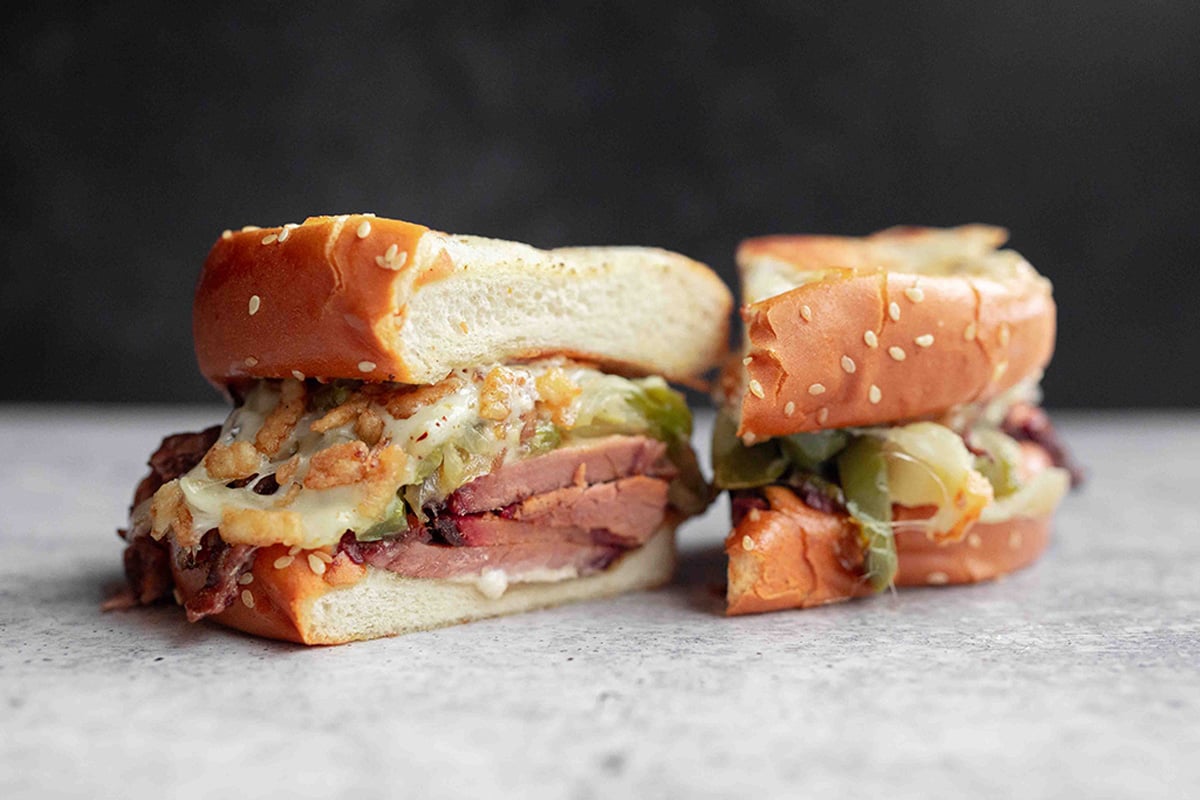 Photo Credit: City Barbeque
 City Barbeque’s More Cowbell sandwich is an original menu item with enduring popularity. Beef brisket, provolone, sautéed peppers and onions, crispy fried onions and horseradish are sandwiched between slices of Texas toast.
Leave Room for the “Legacies”
There are certain menu items that you simply don’t mess around with and you don’t shove them out of the way to make room for the newbies. These enduring customer favorites defy generational preferences and perform well year after year. “Brisket is king, no question,” says City Barbecue’s Bograd, citing the More Cowbell sandwich, featuring beef brisket, provolone, sautéed peppers and onions, crispy fried onions and horseradish sauce on Texas toast. “At some of our older locations, every time it gets ordered, an employee rings a cowbell and everyone calls out. It’s a tried and true favorite.”
At Zarda, there’s no replacing the slow-smoked brisket sandwich with the customer’s choice of signature sauces. Another staple is the brand’s “legendary” baked beans (a generations-old family recipe). “I’ll throw in steak-cut fries, too,” says Hyer. “I tried to change them once to a thin, skin-on style, and our customers had a melt-down.” While he concedes the Zarda menu is too big (“You need a Ph.D. to figure it out”), he can’t resist adding new items, while keeping many core favorites.
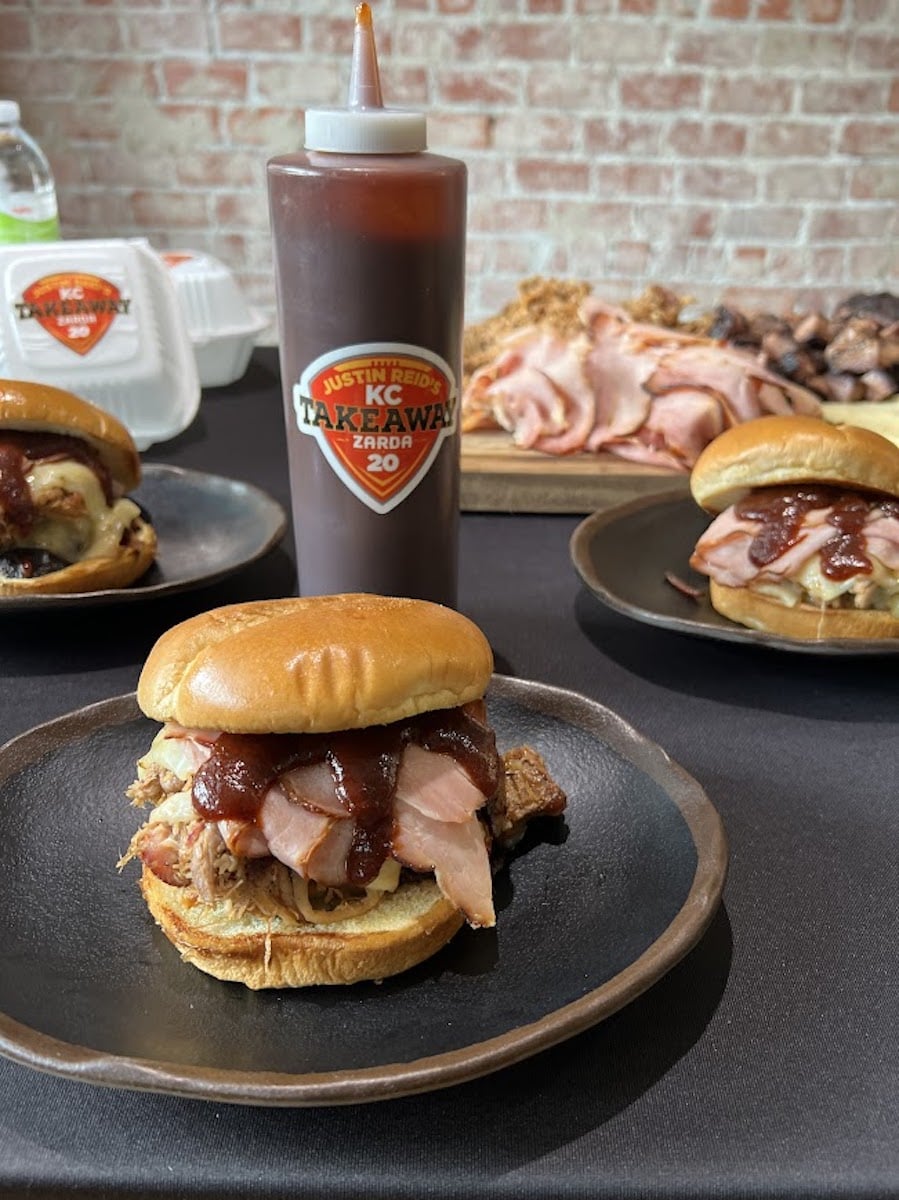 Photo Credit: Zarda Bar-B-Q
 Partnerships with high-profile professional athletes from the Kansas City Chiefs and Royals lead to popular LTO sandwiches, such as the Kansas City Takeaway.
Commit to Community
With just two locations, Zarda has really leaned into the community spirit the brand has nurtured since it began in the mid-Seventies. It’s a singular factor that drives the team. “You feel the community from our staff to our loyal, long-term customers,” says Hyer. “It’s what has made our brand relevant.”
Casting aside visions of barbecue-stained formal wear, Zarda—and City Barbeque, too—report that weddings are a significant percentage of their catering businesses. “People do life celebrations in our dining room,” says Hyer. “Birthdays, anniversaries, baptisms and funerals, too.”
Hyer also cites the city’s deep-seated passion for its professional sports teams, notably the Super Bowl-winning Kansas City Chiefs and baseballs Kansas City Royals. “We breathe the Chiefs, the Royals and barbecue,” he says.
To this end, Zarda has partnered with players on both teams to raise money for local charities. At the heart of these activities is the development of a special sandwich (or sauce) in which a portion of sales—at Zarda sites, as well as an area grocery chain’s inhouse restaurants, are donated to such organizations as Big Brothers Big Sisters. For example, this year, Chiefs’ player Justin Reid helped Hyer and the Zarda team develop a hickory-smoked sandwich “with a Louisiana kick.” The Justin Reid KC Takeaway featured Zarda’s Limited Reserve Burnt Ends, melted pepper jack, juicy pulled pork with savory Creole seasoning, thin-sliced ham and Reid’s pick of Zarda signature barbecue sauces on a Roma bun. The sandwich is available throughout the entire Kansas City Chiefs 2024-25 football season.
“We’ve done a sandwich with a player for the last four seasons,” notes Hyer. The KC Takeaway begins with a basic template each time, but it is personalized with input from the player partner. Not only do they get more buy-in for the menu item, “The players that take over these sandwiches enjoy being in the kitchen, having fun with the employees,” says Hyer.
While barbecue may have deep roots in special occasions and enthusiastic crowds of sports fans, both Hyer and Bograd keep their fingers on the pulse of consumer trends, striving to make barbecue an everyday choice.
About the Author
 Patricia Fitzgerald serves different roles on the Flavor & The Menu team, including writing custom content, Kitchen Collaborative chef spotlights and digital editorial content, as well as acting as a contributing editor for the print magazine. As owner of PFitzCommunications, she specializes in various areas of foodservice and hospitality, while also maintaining clients in other industries and professions. She can be reached at pfitzcommunications@gmail.com.Read More Stories by Patricia Fitzgerald
Day Four Markets and the Desert
Flavor Trends, Strategies and Solutions for Menu Development[google_sidebar_ad...
Day Three Gulfood, panoramic views and late-night libations
Flavor Trends, Strategies and Solutions for Menu Development[google_sidebar_ad...
Day Two Vertical farms, paratha buns and culinary school
Flavor Trends, Strategies and Solutions for Menu Development[google_sidebar_ad...
