





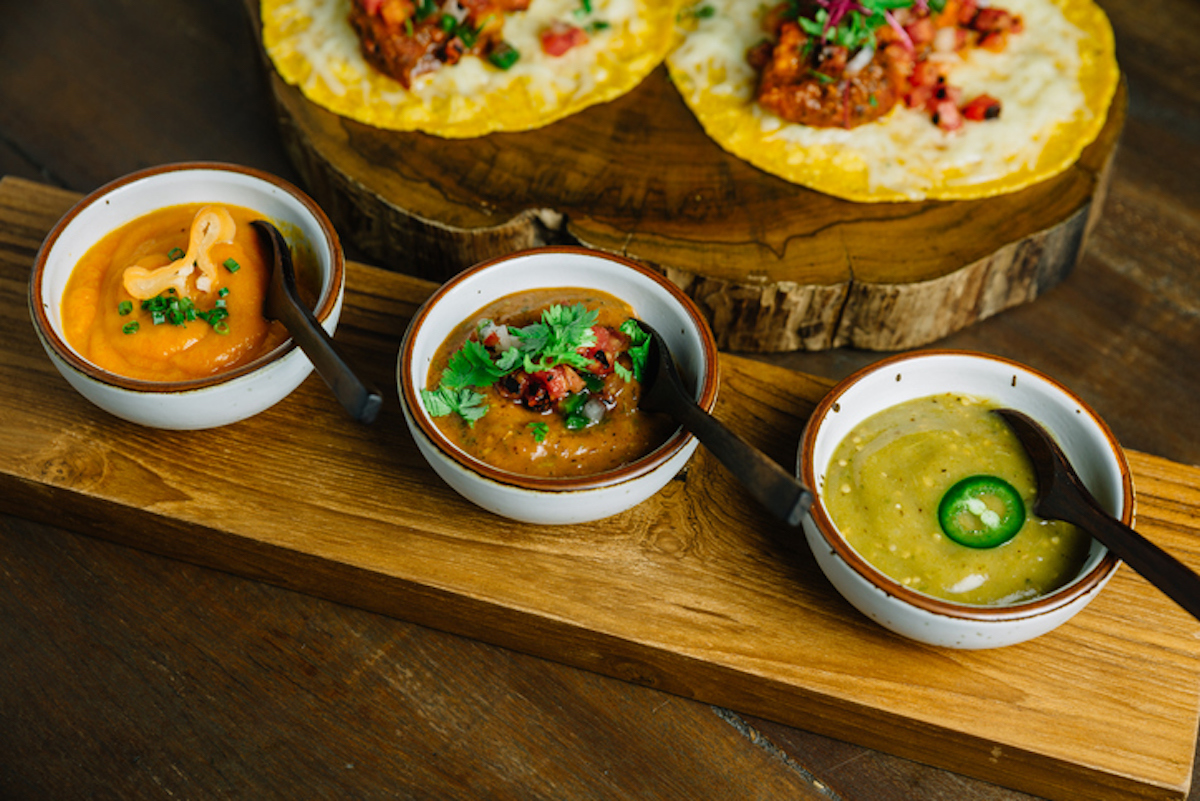
HERO CREDIT HERE
Inside Mexico’s Rich Selection of Salsas
Venture beyond the ubiquitous salsa roja and salsa verde
Today, Mexican cuisine is enjoying a bit of a renaissance in the stateside dining scene. While many restaurants still serve gratis salsa and corn chips combo, elevated options are also cropping up as made-fresh-to-order, standalone dishes, whether solo or part of a sampler plate. The rise of traditional Oaxacan cuisine has increased the prevalence of heirloom blue, yellow and white corn masa to make antojitos. Now, salsa varieties are enjoying a similar uptick since they are often used as a way to accentuate these tapas-style appetizers. After all, the word “salsa” has roots in the Latin word “sal,” meaning salt, an essential ingredient to level up any dish.
In the traditional Mexican kitchen, salsas can be divided into four categories: fire- and dry-roasted, boiled, fresh or fried. They can be further differentiated by their intended use: as a cooking ingredient or a finishing sauce or dipper. Among the most important considerations with salsas is determining whether a particular variety uses fresh or dried chiles and how those chiles and other ingredients are prepared before blending together.
Taking a closer look at some key salsa preparations within these categories can help chefs create their own recipes that push traditional boundaries. Here is a deeper dive into four quintessential salsa styles that define Mexican cuisine, as well some ideas to help restaurants merge global flavor profiles with authenticity.
1Fire- or Dry-Roasted: Smoky and Charred
This simple cooking technique is steeped in Mexico’s rich history of using volcanic clay and rock to make two traditional pieces of equipment: the comal and the molcajete. A comal is a flat griddle, traditionally of clay or ceramic, that is used to cook tortillas or char and roast ingredients. Although some modern comals are made of cast iron or carbon steel, many Mexican chefs will opt for the traditional materials to impart that quintessential fire-roasted flavors. The next step in this type of salsa preparation is grinding the ingredients together in a molcajete, or lava stone mortar and pestle. The molcajete can also be heated and used as a serving vessel for seafood, rice, vegetables and more for an impressive presentation that keeps the food warm at the same time.
Salsa roja is one of those traditional preparations that need not be altered in any way. This perfect-as-it-is salsa simply requires high-quality ingredients and a comal to char jalapeõ chiles and skin and garlic cloves. After blending with fresh tomato and seasoning, it is the perfect balance of umami and tanginess from the tomatoes and sweet, slightly earthy pungency from the dry-roasted jalapeño and garlic cloves. Dry-roasting to the point of almost charring the garlic cloves whole (with their skins on) is a very traditional way to leverage the ingredient. Garlic adds a tinge of bitterness to complete the flavor equation, bringing all five tastes into each bite of the salsa. As these ingredients match well with so many cuisines from around the world, it is one that chefs should take the time to perfect.
Salsa quemada takes salsa roja to the next level by dry-roasting five key ingredients: tomatoes, tomatillos, jalapeño or Serrano chiles, skin-on garlic cloves and onion. To perfectly char the juicy tomatoes and tomatillos without losing any of their delicious juices, the vegetables are charred on a foil-lined comal or cast-iron pan and then wrapped in the same foil to cool before blending them together in the molcajete. Quemada means “burnt” in Spanish, and while this salsa includes a charred appearance with small, blistered flecks of vegetable skins, it brings more smoky notes than bitter flavor. The charring technique remains key to making a great salsa quemada, but this variety is primed to fit any menu style. For a tropical flare, char wedges of pineapple or juice burnt limes for an extra layer of deliciousness.
2Boiled: Tangy and Briny
Salsa verde is famous for its simple use of tomatillos, garlic and green chiles, all of which are boiled and blended with fresh cilantro. Tomatillos lend a tangy flavor profile, making it an ideal companion for meat tacos, cheesy enchiladas or fried chilaquiles. Adding regional ingredients such as hoja santa leaf, commonly used in Mayan cuisine, or epazote, often considered the basil of Mexican cooking, can elevate this versatile sauce with a savory, herbaceous quality.
Salsa taquera is made with dried chiles de árbol that are boiled and then blended with tomatoes, onion, garlic and salt before being finished with fresh lime and chopped cilantro. It’s the typical spicy red salsa served as the hot salsa option in many establishments. But salsa taquera’s inherent simplicity makes it a choice candidate for global innovation by swapping in specialty chiles from around the world. Rehydrated dried chiles make great pepper pastes—an approach that not only saves time and space, but also offers another route to global additions. For example, Turkish pepper paste is often used in the preparation of muhammara, a Turkish “salsa,” made from sun-dried and fermented chiles. Its layered flavor—sweet, spicy, earthy and slightly smoky—could be incorporated into salsa taquera to pour over a dish, such as lamb tacos, or formatted as a dipping salsa for grilled eggplant-filled taquitos.
Salsa bruja is more of a pickle than a sauce. This combination of fresh jalapeños, onion, garlic and vegetables, such as carrots or nopales, are bathed in a boiling vinegar solution of bay leaves, black pepper and oregano and allowed to cool to room temperature. Sometimes called verduras en escabeche, a canned version of this salsa can usually be found in the supermarket. While the vegetables themselves are often eaten alongside many dishes, it’s also popular to pour just a spoonful of the pickling liquid over tacos, creating a mouthwatering effect that cuts through the richness of fillings like carnitas, lengua or carne asada. Salsa bruja is especially primed for innovation at restaurants that serve housemade pickles on a seasonal rotation. Try adding winter squash, green mangos or even black beans for creaminess and color contrast.
3Fresh: Bright and Crisp
Pico de gallois traditionally made from chopped tomato, onion and fresh Serrano peppers, with salt, lime juice and cilantro. This sauce is thought to have originally been eaten between the thumb and forefingers, which some say resembles a rooster’s beak, hence the name. It is not quite a salsa in the traditional sense as the ingredients are not blended but rather chopped and mixed together. Because other vegetables and peppers can be used to make pico de gallo, it’s worth taking a look at nearby seasonal produce to create exciting hyper-local iterations. Try including ingredients such as Asian pear and shisito peppers which can be mixed with chopped kimchi for a Korean flare.
Salsa de aguacate is an avocado-based salsa similar to guacamole but with key differences. This salsa begins with tomatillos, cilantro and fresh jalapeño; avocado isn’t incorporated until later, when it’s blended to create a creamy texture. Tomatillo is technically a type of gooseberry, which opens the door to swapping in other members of the same family, especially in late summer. For example, sweet ground cherries yield a similar texture but with a sweeter flavor profile.
4Fried: Crispy and Earthy
Salsa macha is a condiment king for today’s on-trend menus since it’s essentially a Mexican-style chile crisp. The preparation involves frying dried chiles, such as guajillo, ancho or chipotle varieties, in oil with garlic, oregano, sesame seeds and peanuts before vinegar is added to balance out the earthy, smoky flavor profile. Salsa macha can easily be made with a variety of other ingredients to match any style of cuisine. Try swapping out the peanuts for macadamia nuts and adding shredded nori for a Hawaiian twist. Or, incorporate pistachios and cinnamon for Middle Eastern flair.
Consumers are increasingly aware of global ingredients and flavor profiles; they’re also on the lookout for authenticity and novelty, meaning the two-party choice of salsa roja and salsa verde may no longer cut it. Experimenting with these four styles offers a fresh opportunity to set your menu apart and add a fun, interactive element to the dining experience. Restaurants can introduce their patrons to an expanded selection of these traditional salsas or use the recipes as a starting point to ideate new varieties that transcend—but still honor—their Mexican heritage.
About the Author
 Chef Rebecca Peizer is the owner of the culinary consultancy All Things Culinary LLC, as well as a professor, consulting partner, digital media talent and conference stage manager for the Culinary Institute of America at Copia in Napa Valley, Calif. She has worked for many esteemed wineries, restaurants, resorts and culinary schools in New York, Napa Valley and Las Vegas. She implemented the nation’s first farm-to-table culinary program at the Culinary School of the Rockies in Boulder, Colo., and does pro bono work for the Salvation Army and Gray Haven Health & Wellness. Rebecca is an active forager and herbalist and has earned certifications in cheesemaking, permaculture design, professional wine studies, CEC and CHE.Read More Stories by Rebecca Peizer

Day Four Markets and the Desert
Flavor Trends, Strategies and Solutions for Menu Development[google_sidebar_ad...

Day Three Gulfood, panoramic views and late-night libations
Flavor Trends, Strategies and Solutions for Menu Development[google_sidebar_ad...
Day Two Vertical farms, paratha buns and culinary school
Flavor Trends, Strategies and Solutions for Menu Development[google_sidebar_ad...
