


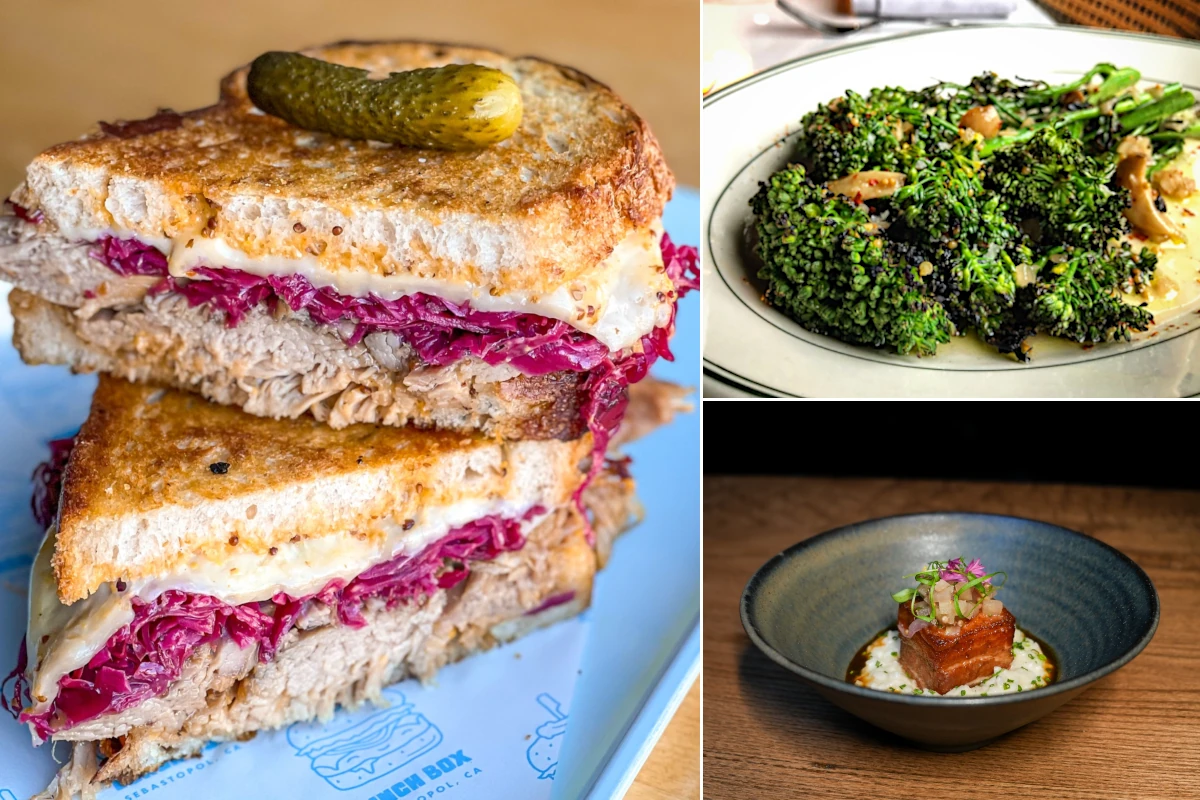
Slow-cooking ingredients in salt and fat transforms a dish, whether making poultry more flavorful, as in Lunch Box’s Confit Turkey Reuben (left), balancing bitter veggies, as in Vedge’s Charred Broccolini (top right) or enhancing richness in meats, as in Moody Tongue’s Confit Pork Belly (bottom right).
Credit: Lunch Box | Verde | Erin Byrne
Modernizing the Classic Confit Technique
With applications from veggies and meats to sweets
That historical throughline is part of what draws in today’s chefs. “I’ve always been a fan of the confit technique myself,” says James Bingham, executive chef at Chicago’s Michelin-starred Moody Tongue. “It’s a beautiful connection to Old World cooking methods.”
But for modern chefs, the preservation aspect is often less important than the texture and flavor punch that confit packs. “Confit is great for bringing out notes of spices and such,” says Paula Balderrama, executive chef at Verde in Costa Mesa, Calif. “It enhances the other ingredients used while cooking, like citrus, chiles, spices, etc.”
Duck confit, the classic Gascon dish, is the best-known utilization of the technique, but it’s far from its only application. In addition to duck, menu developers now confit turkey, goose, quail and other adjacent proteins. But they’re also finding flavorful applications beyond poultry. Here’s how today’s chefs are pushing boundaries and developing delicious and surprising confit dishes.
Very Flavorful Veggies
 Credit: Erin Byrne
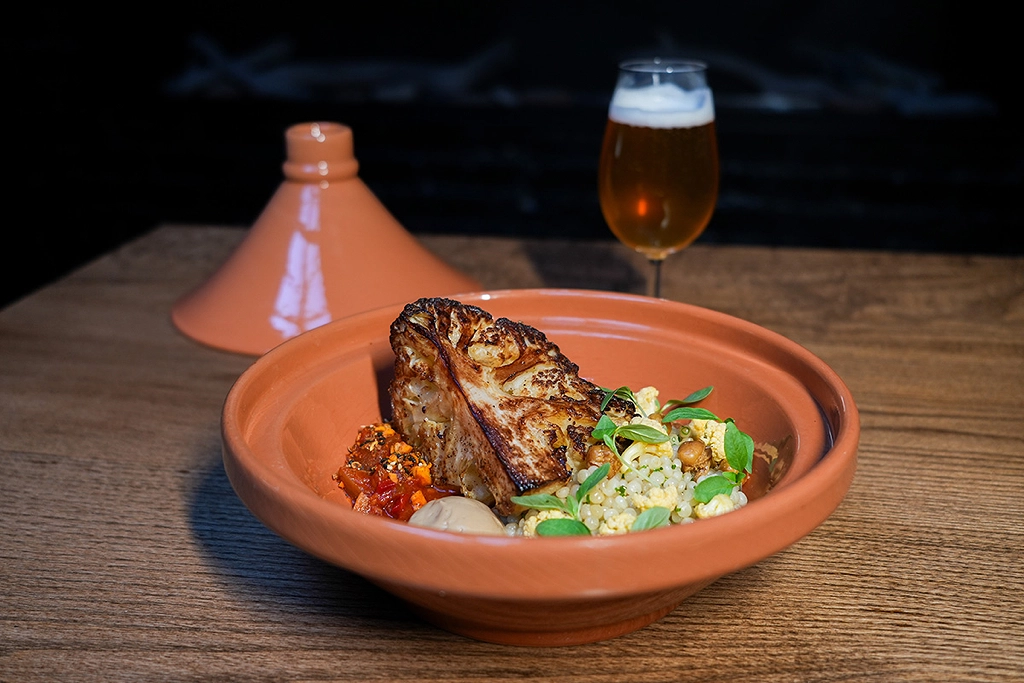
 When applying the confit technique to vegetables, oils are used to coax out richer flavors, as with Moody Tongue’s cauliflower entrée, which is cooked in coconut oil.
Nevertheless, the confit technique is equally impactful when used to liven up a veggie-centric dish. Bingham often deploys it to add depth to the restaurant’s vegetarian offerings, like the confit cauliflower entrée. Cauliflower, bay leaf and lemongrass are prepared sous vide in coconut oil for three hours. The crucifer is then charred with a blowtorch and served with dukkah-spiced couscous and a sweet-spicy matbucha. The fat used for the confit is part of what makes the dish so special, says Bingham. “The coconut oil adds a subtle floral note that complements the Moroccan flavors of the dish.”
Confit can also coax out the softer side of sharp vegetables. At Joe Flamm’s Rose Mary, a Croatian-Italian spot in Chicago, the seasonal stracciatella presentation juxtaposes bright, acidic winter citrus with a luxe fennel confit and fluffy lapinja, a Balkan flatbread. Like this fennel application, garlic confit, which took over TikTok a few years ago, is a tasty way to build balanced dishes. Balderrama uses it frequently at Verde. “I believe some sort of acid and a punch of garlic are necessary no matter the culture,” Balderrama explains. She cooks whole garlic cloves with lemon peel and chile de árbol in olive oil until tender. The melty cloves then stud Verde’s charred broccolini dish as a counterpoint to the veggie’s bitter edge, while the silky oil is added to the smoked trout dip.
Crossover Cuisines
Just because confit is a French technique doesn’t mean it’s reserved for French cuisine. In Chicago, cocktail lounge Lilac Tiger melds flavors from India, Japan, Korea and Southeast, as exemplified by its duck confit, with lemongrass-plum-hoisin achar, wheat berries and cured egg yolk. On a more casual note, Philadelphia’s Middle Child shakes things up using a quintessentially American bird: the turkey. The Gobbler, a Thanksgiving-inspired sandwich, stacks creamed spinach, sweet potatoes and cranberry sauce atop a tender confit turkey patty for a decadent lunch option. Turkey also gets the confit upgrade at Lunch Box in Sonoma, Calif., where bacon fat-confit turkey thigh is the star of the Confit Turkey Reuben special, layered with purple garlic dill kraut, Havarti and whole-grain mustard “fancy” sauce on toasted sourdough.
Colonization beginning in the 16th century spread confit beyond Europe, eventually leading to the iconic Mexican carnitas. Vedge’s Balderrama names it as her favorite confit dish, which she calls “culturally fantastic.” While carnitas are rarely called out as confit, the preparation method remains the same: Pork is simmered in its own fat, often with flavorful additions like oranges or Coca-Cola, and then shredded to fill tacos, tamales and more. The protein is a mainstay on many quick-service menus (just look to Chipotle), but fine-dining concepts are also experimenting with elevated twists. In Austin, Texas, Barley Swine’s Pig Face carnitas is served with sweet potato mole, honey fermented radish and preserved orange.
Sweet Treats
 Credit: Dirt Candy
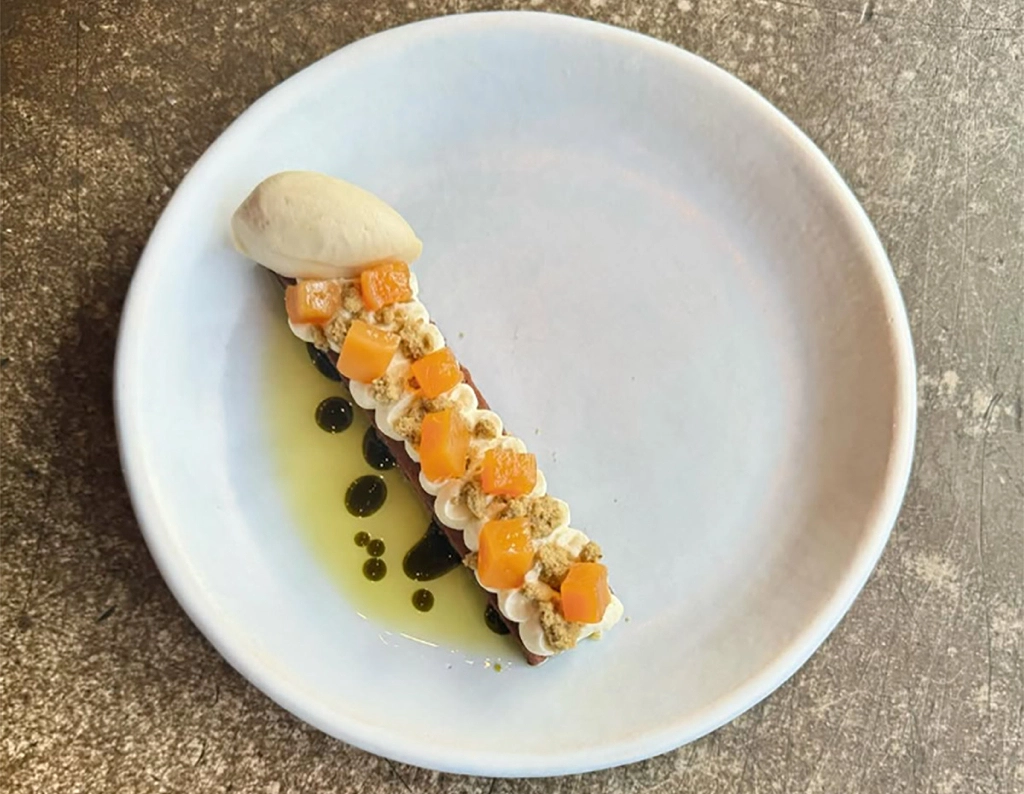
 Confit comes to the dessert menu at Dirt Candy, which tops a flourless chocolate olive oil cake with orange-confit turnips, whipped labneh and za’atar crumbles.
Dirt Candy in New York City is known for its creative vegetable dishes, and sweets are no exception. For her turnip dessert, pastry chef Rachel Bossett combines Middle Eastern flavors with French technique for something singular in its build and flavor profile. She tops a flourless chocolate olive oil cake with whipped labneh, za’atar crumbles and orange confit turnips for a dessert that’s described as “a little bit Creamsicle, a little bit candy bar.”
And at Elyse, outside Washington, D.C., chef Jonathan Krinn has been known to end the tasting menu with a confit sweet potato infused with warm, winter spices, topped with pomegranate sorbet and drizzled with bourbon caramel.
Confit’s strength is its versatility, particularly for chefs that want to experiment, says Moody Tongue’s Bingham. “Fats are excellent carriers of flavor. I encourage other chefs to explore using confit with a variety of ingredients and oils to create unique and exciting dishes.”
About the Author
 Leigh Kunkel is a freelance journalist with more than a decade of restaurant industry experience as a server, bartender and sommelier. She has written about restaurant operations for B2B publications, as well as foodservice brands, including Beam Suntory and Dawn Foods. She specializes in covering flavor, ingredient and cuisine trends. Leigh has also covered the food and beverage world for a wide range of consumer outlets such as The New York Times, Eater and Vinepair.Read More Stories by Leigh Kunkel
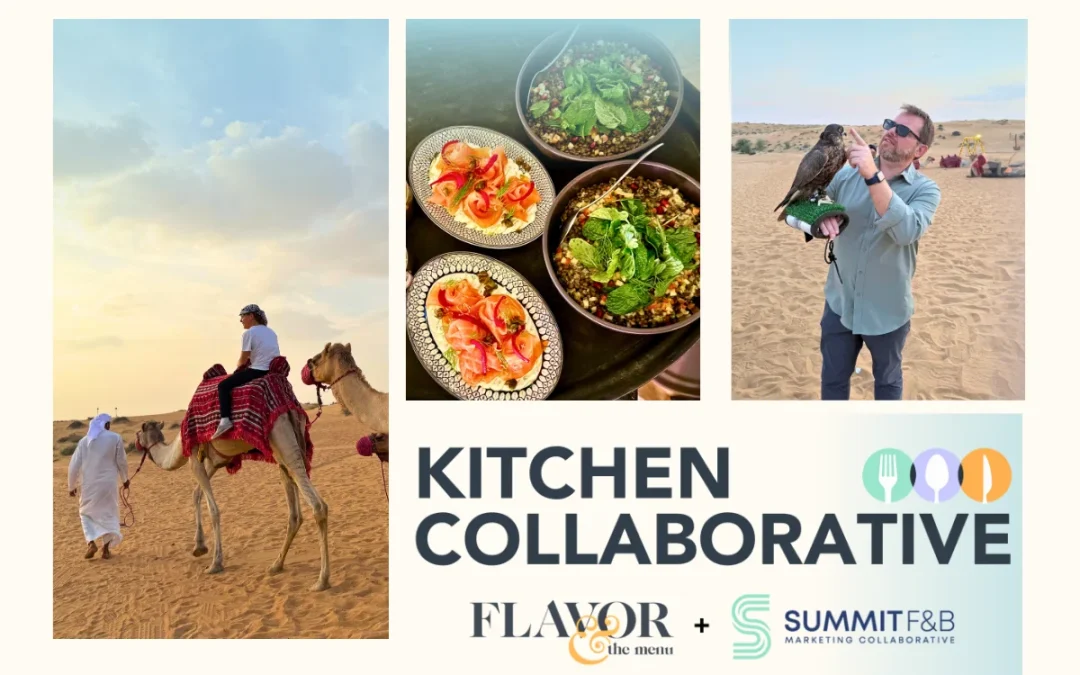
Day Four Markets and the Desert
Flavor Trends, Strategies and Solutions for Menu Development[google_sidebar_ad...

Day Three Gulfood, panoramic views and late-night libations
Flavor Trends, Strategies and Solutions for Menu Development[google_sidebar_ad...
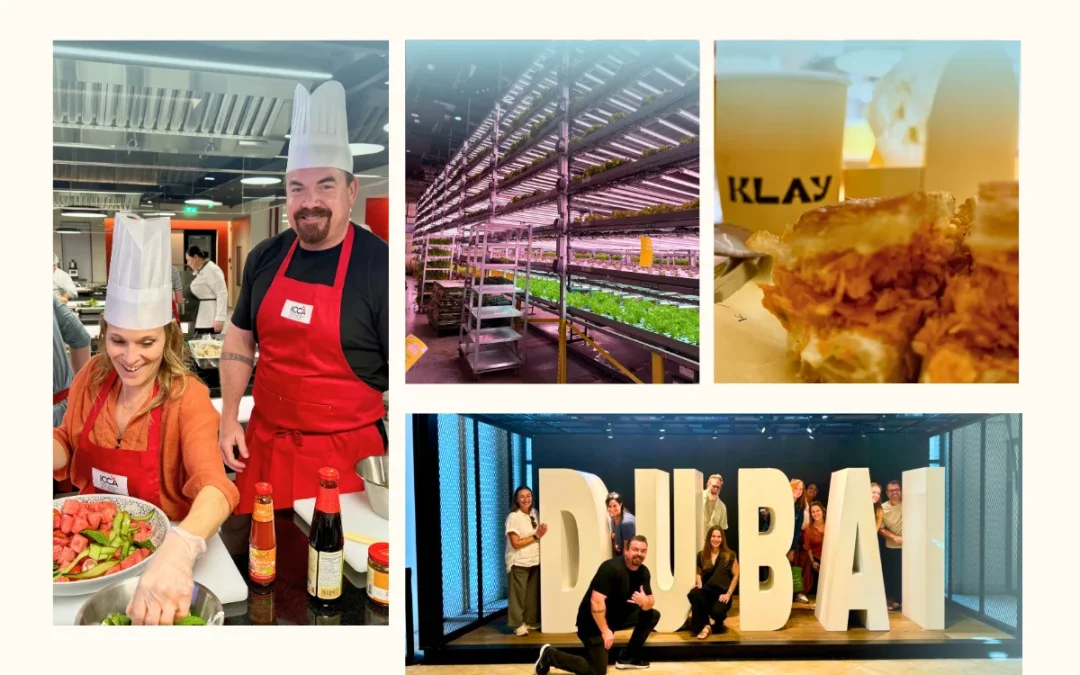
Day Two Vertical farms, paratha buns and culinary school
Flavor Trends, Strategies and Solutions for Menu Development[google_sidebar_ad...
