

True to its name, World Famous Egg Rolls puts an unconventional spin on the beloved Chinese bite, with offerings like the Texas-style BBQ Beef Brisket and Mac & Cheese Eggroll, which is served a golden wonton and finished with the brand’s signature barbecue sauce.
Credit: World Famous Egg Rolls
State of the Plate: A New Frontier for Fusion Cuisine
Vibrant mash-ups and third-culture cooking on the rise
That misfire aside, the concept of the combining foods and flavors of disparate cultures is thriving and remains foundational to America’s vibrant melting pot cuisine. In fact, recognition and celebration of third-culture cooking, which melds immigrant food traditions with American ingredients and practices, have fostered the creation of some of the most attractive and accessible dishes on menus today.
Familiar Formats, Unexpected Combinations
Popular handheld items are a common jumping-off point in the mash-up space. East meets West at concepts like Tacos Del Cartel in New Orleans, which styles itself as a “fusion haven” and features a sushi bar with items like the Morita Dragon Roll. Composed of tempura shrimp, chives, spicy sauce and avocado, it’s finished with a combination of both Mexican morita chile and Japanese eel sauce. Similarly, La Choza MN food truck in Minneapolis mixes it up with the Mexicano Sushi Roll stuffed with tuna, salmon, avocado, jalapeño, spicy mayo and yuzu ponzu. In Kansas City, Mo., Muni takes a slightly different tack with a fun update of an old standby. Here, the Chorizo Rangoon Fried Wontons are filled with chorizo, cream cheese and scallions, all topped with sweet-and-sour sauce.
East meets East, too, as at Divya’s Kitchen in New York City, where pan-Asian elements combine in the Paneer Nori Roll. A vegetarian version of fish sticks, paneer cheese is wrapped in nori, coated with a spiced batter of oat and chickpea flours and then pan fried in cultured ghee.
Other menus are truly borderless. That’s the case at World Famous Egg Rolls in South Florida. Known for its popular international egg rolls, the concept has built a booming business that includes four restaurants and five food trucks. The brand dishes up features like All Birria Taco Egg Rolls, which tap into the current craze by putting slow-braised beef in corn-tortilla wontons; All Soul Food Egg Rolls, which tinker with tradition with a filling of barbecue chicken, collard greens and mac and cheese; and All Italian Sausage Egg Rolls with Italian sausage, peppers, onions and Alfredo pasta.
Veering Into Comfort Food Territory
Noodle soup is a universal favorite that easily lends itself to reinterpretation, as at Ramen by Ra in New York City. Slurpable specialties combine the titular noodles with American classics in bowls like Bacon Lettuce and Tomato Ramen with tomato shoyu and Gravlax Ramen with salmon and cream-cheese foam.
Hapa Pizza in Portland, Ore., has won rave reviews with its Asian fusion-Neapolitan pies such as Banh Mi Pizza with lemongrass barbecue pork, mozzarella, pickled vegetables, cucumber aïoli and Sriracha aïoli. Down the coast in San Francisco, Movida melds Mexican and Persian flavors with options like Pomegranate Chicken Tinga Tacos and Jalapeño Beef & Lamb Koobideh Tacos, featuring meatballs made of the two proteins.
Independents Lead the Trend
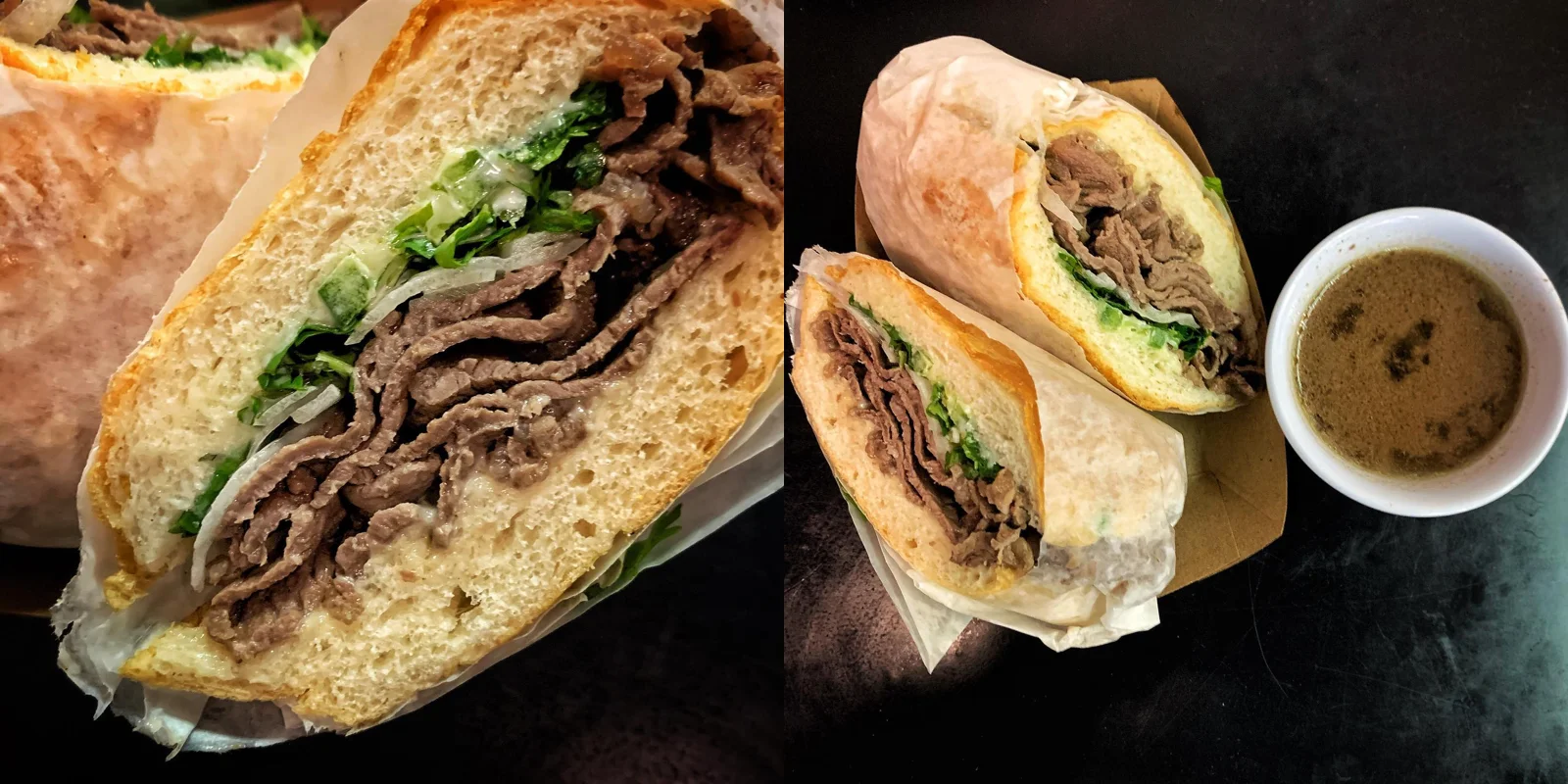 Credit: Phodega
 In Chicago, Phodega transforms a classic sandwich into a mash-up marvel with the Viet Dip, featuring ribeye, aïoli, onions, jalapeños and cilantro plus a side of pho jus.
Cities with strong immigrant-concentrated neighborhoods are rich in mash-up cuisine, with only-in-America menus that reflect their changing immigrant populations. Chicago is particularly emblematic, with restaurants like Kimski that marries Korean and Polish street foods or Sarima Café that combines “two cultures into one flavor” with its Filipino-Indian pastries. Mirra’s Indian-Mexican menu swaps out the tortilla in Rasul’s Roti Quesadillas, in which the roti, traditional Indian flatbread, is topped with roasted mushroom, Amul cheese and Chettinad masala. Dal Enfrijoladas are cheesy spiced potato tortillas with poblano rajas; they receive an unexpected boost from creamy white dal lentils.
Superkhana International gained Michelin recognition with tasty Indian-Italian dishes like the Butter Chicken Calzone with slow-cooked chicken thighs, mozzarella and Amul cheese, and the Ranch & Gruyère Pizza with beef keema (ground beef), pickles and dill. And Phodega, an Asian-American noodle and snack shop that bills itself as “Chicago born, bred and fed,” combines a grocery store with a restaurant that also offers sandwiches like the Viet Dip. A play on the iconic French dip, thinly sliced ribeye, aïoli, onions, jalapeños and cilantro are piled on crispy French bread and plated with a side of pho jus for dipping.
Turning Culinary “Authenticity” on Its Head
For decades, American diners have insisted on authenticity as their ultimate gauge of global foods and beverages. Recent research by Technomic reveals that the No. 1 consumer demand of global cuisine is that it tastes authentic, with 47 percent of diners citing this as their primary criterion, a number that jumped substantially from 30 percent in a similar study in 2020.
But attitudes, expectations and definitions are changing rapidly. The Culinary Institute of America themed its 2023 Worlds of Flavor event as “Authenticity, Flavor and the Future.” Chefs like Filipina-American baker and author Abi Balingit spoke of an evolving culinary landscape that reflects an American food community where there are no ethnic silos, but rather interaction and interchange. A James Beard Award winner, Balingit stated that her goal was to create dishes that are “authentically me,” with the critical judgment being simply “does it taste good.”
Outlook and Opportunity
 Credit: Jaji
 Afghan cuisine adopts American cues at Jaji, where Smash’d Chapli Sliders opt for sumac-spiced lamb over the typical beef patty and are speared like kebabs.
Hyphenate menus will encompass a widening circle of international influences. In Arlington, Texas, Smoke’N Ash BBQ won a Michelin star with its Tex-Ethiopian barbecue that features side dishes like Loaded Injera Nachos and Berbere Mac & Cheese. Oakland, Calif., boasts a red-hot restaurant market fueled by concepts like Jaji, which reimagines Afghan cuisine through items like Smash’d Chapli Sliders. Made with sumac-spiced lamb chapli kabob, pickled Persian cucumber and fennel, and a dollop of creamy tzatziki, the dish unites disparate elements of the global pantry on a single plate that is firmly rooted in flavor, not outdated culinary orthodoxy.
About the Author
 Nancy Kruse is a recognized authority and widely quoted spokesperson on food and menu trends. She is president of The Kruse Company, which is dedicated to assessing trends and directions in food, menu and restaurant concepts; she has tackled these topics in the pages of leading industry publications and forums. Prior to founding her own company, Nancy served as Executive Vice President for Technomic, Inc., where she conducted a wide range of consulting assignments for Fortune 500 food and restaurant companies. She has served on several boards, and she has been an active member of the Women's Foodservice Forum and Las Dames d'Escoffier International.Read More Stories by Nancy Kruse
State of the Plate: The New Wave of Kids’ Meals Nearly 50 years in, these specialty menus continue to evolve
IHOP excels on the kids’ meals front, keeping...
State of the Plate: The Menu Magic of Matcha The green tea powder continues its high-speed proliferation
Matcha has officially infiltrated the coffee category with...
State of the Plate: Nashville Hot to Go Modern ways the regional flavor is packing heat
KFC is among many operators incorporating...
