
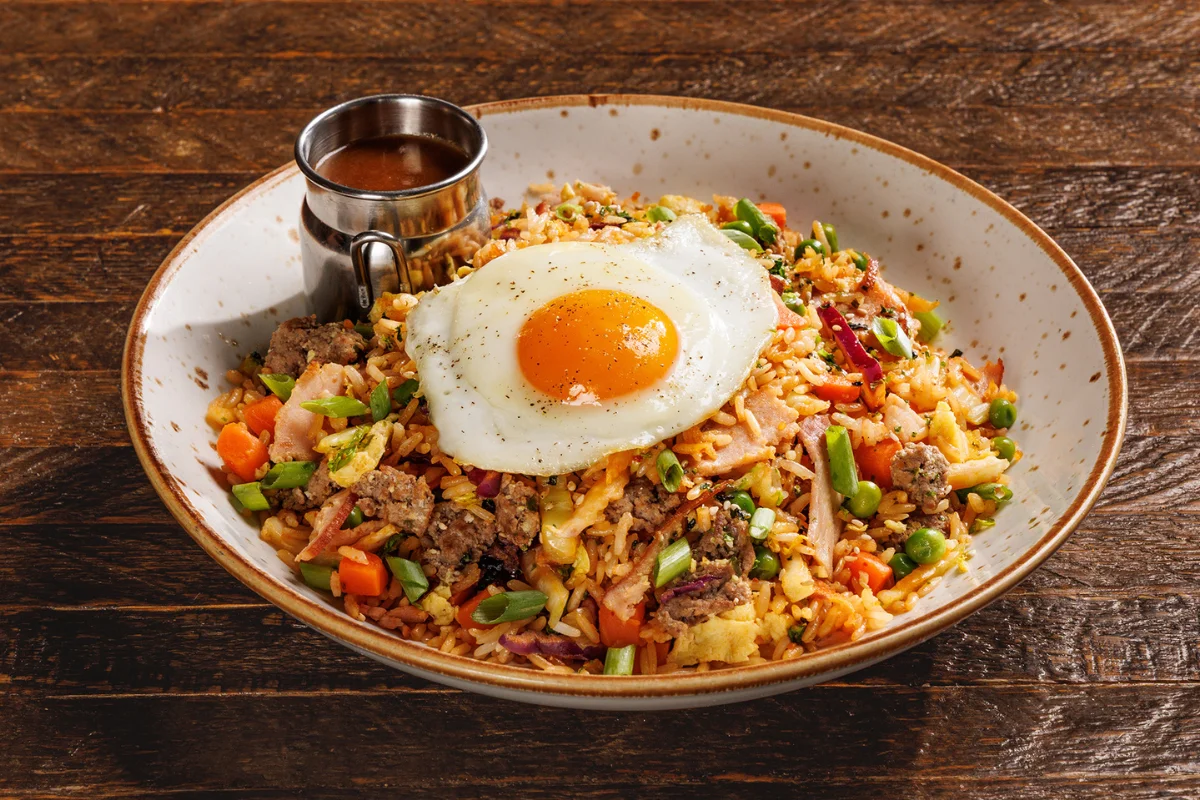
Hawaiian cuisine’s time could soon be at hand, with specialty fast casuals expanding, more residents moving to the mainland and existing brands offering island classics, like Lazy Dog’s Loco Moco Fried Rice Bowl.
Credit: Lazy Dog
State of the Plate: Hawaii’s Ticket to the Mainland
Three island staples plus a familiar offshoot primed for menu innovation
That taste represents a unique melting pot of flavors, with influences of China, Japan, Korea and the Philippines mingling with Western influences, notably Portuguese, all filtered through the native Polynesian lens. This melding creates a unique, regional gastronomy that for many diners conjures images of sandy beaches, endless sunshine and the promise of affordable, year-round escape.
Hawaiian Cuisine I: Barbecue
 Credit: L&L Hawaiian Barbecue
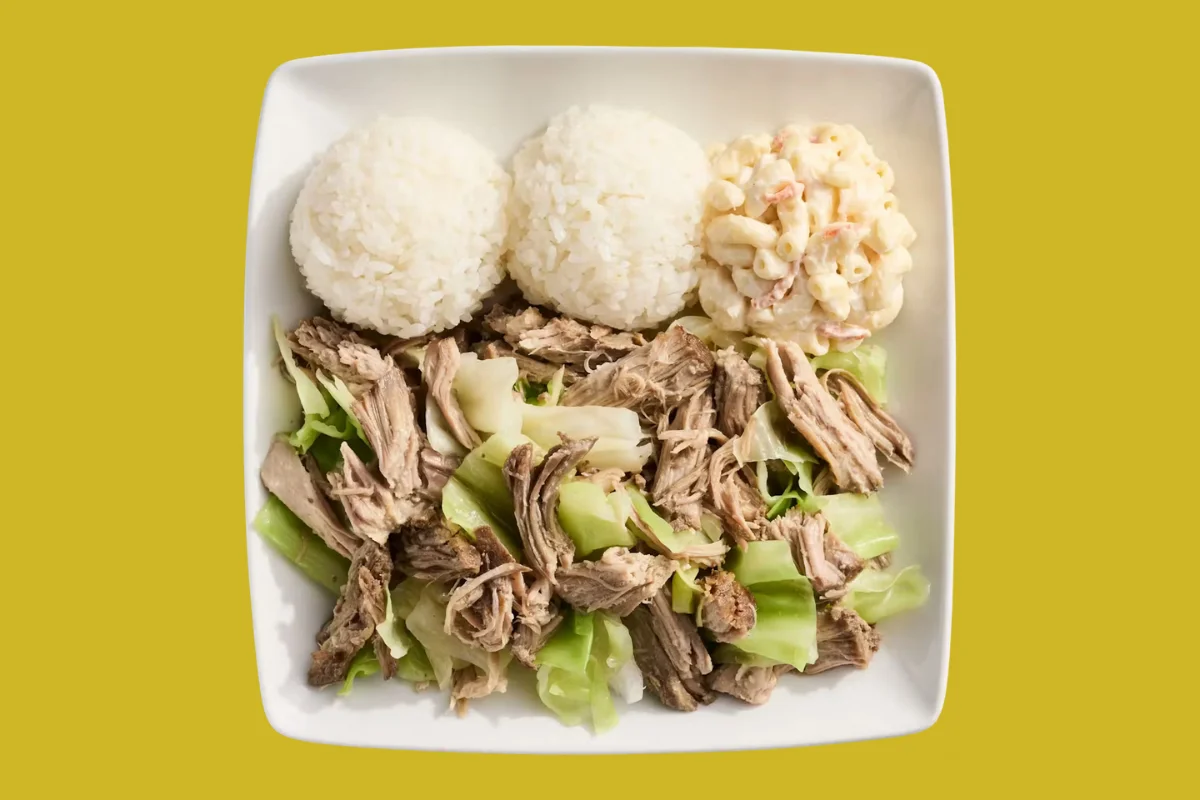
 The Kalua Pig plate lunch at L&L Hawaiian Barbecue showcases the islands’ affinity for grilled meats and meals that combine multiple dishes.
In island practice, barbecue is a style of cooking that typically includes grilled meats, like huli-huli chicken spiked with a sweet-and-sour pineapple glaze, or slow-roasted meats like kalua pork finished with sea salt. The proteins typically sit on the center of a plate lunch where they are surrounded by scoops of both rice and macaroni salad. Historically lunch fare for plantation workers, the plate lunch is a comfort- and value-forward island classic; it’s also the core menu at specialists like L&L Hawaiian Barbecue, Ono Hawaiian BBQ and Mo’ Bettahs. At L&L, the Honolulu-headquartered category leader whose 240 stores stretch all the way to New York City, the Kalua Pig option is made with smoke-flavored, shredded pork combined with fresh cabbage.
While plate lunches have not crossed over to the mainstream, elements are appearing in limited-time offers, like Velvet Taco’s Huli Huli Chicken Taco with soy-pineapple barbecue sauce. Last year, the “Logan’s Luau” menu at Logan’s Roadhouse featured Hawaiian Strip Steak with sweet Hawaiian sauce and grilled pineapple.
Hawaiian Cuisine II: Loco Moco
 Credit: Polly’s Pies
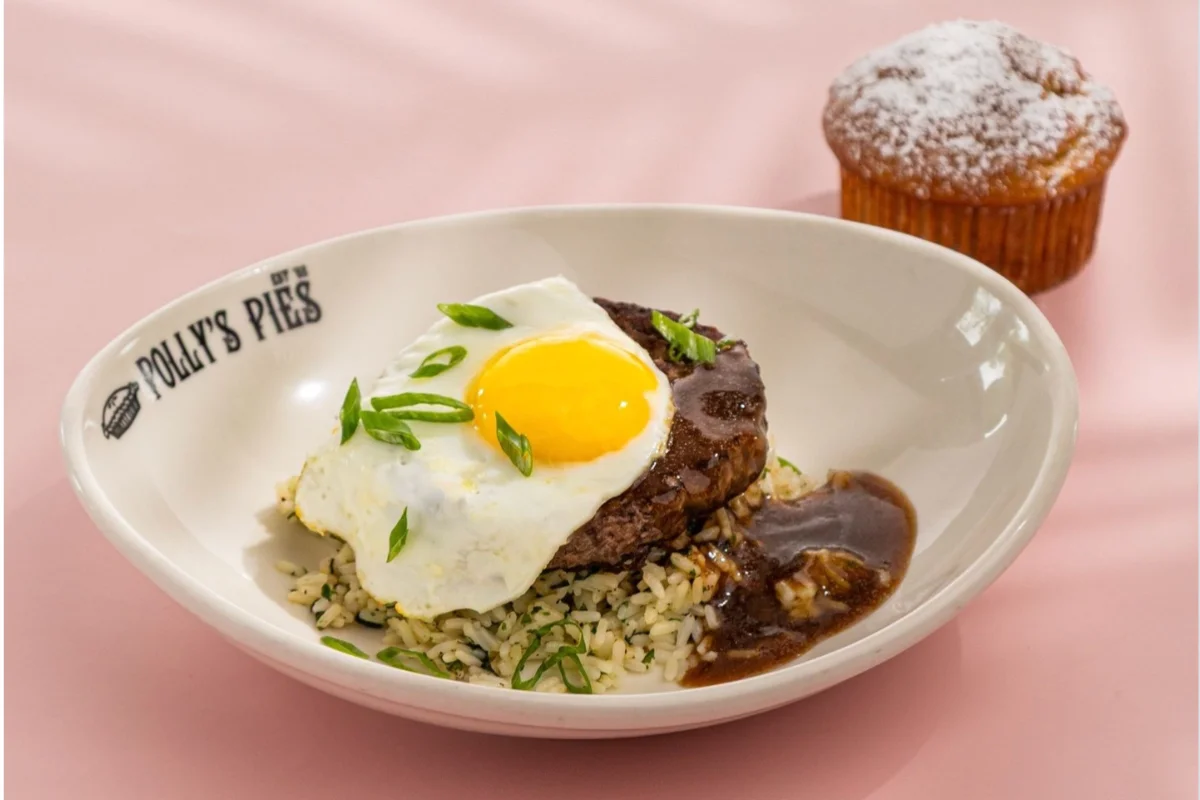
 The limited-time Loco Moco at Polly’s Pies featured herbed rice, burger patty, brown gravy and sunny-side-up egg—plus a banana muffin on the side for even more tropical vibes.
Another traditional homestyle dish that appears frequently on lunch plates, loco moco consists of a hamburger patty topped with fried eggs and doused in gravy with a green onion garnish.
Variations on the standard have been cropping up, as at King’s Hawaiian Bakery & Restaurant in Torrance, Calif., where the Pork Belly Loco Moco is finished with a trendy gochujang chile sauce. At Itsumono, a Japanese gastropub in Seattle, it’s the unexpected star of Loco Moco Scotch Egg served with mac salad and rice. Denver micro-chain HashTag offers inventive twists on brunch with specials like Hawaiian Meatloaf “Loco Moco” consisting of two over-easy eggs, kimchi fried rice and brown-mushroom gravy.
Chains are getting on board the loco moco gravy train as well. Last summer, 13-unit Southern-California based Polly’s Pies’ promotional Aloha Menu included Loco Moco over herbed rice with a fun, freshly baked banana muffin for an extra taste of the islands. Lazy Dog’s Loco Moco Fried Rice Bowl is filled with wok-fired rice, shaved hickory-smoked ham, seasoned ground beef, ginger, spices and vegetables. Topped with furikake, green onions and a sunny-side up egg, the dish is served with a side of housemade teriyaki gravy.
Hawaiian Cuisine III: Poke
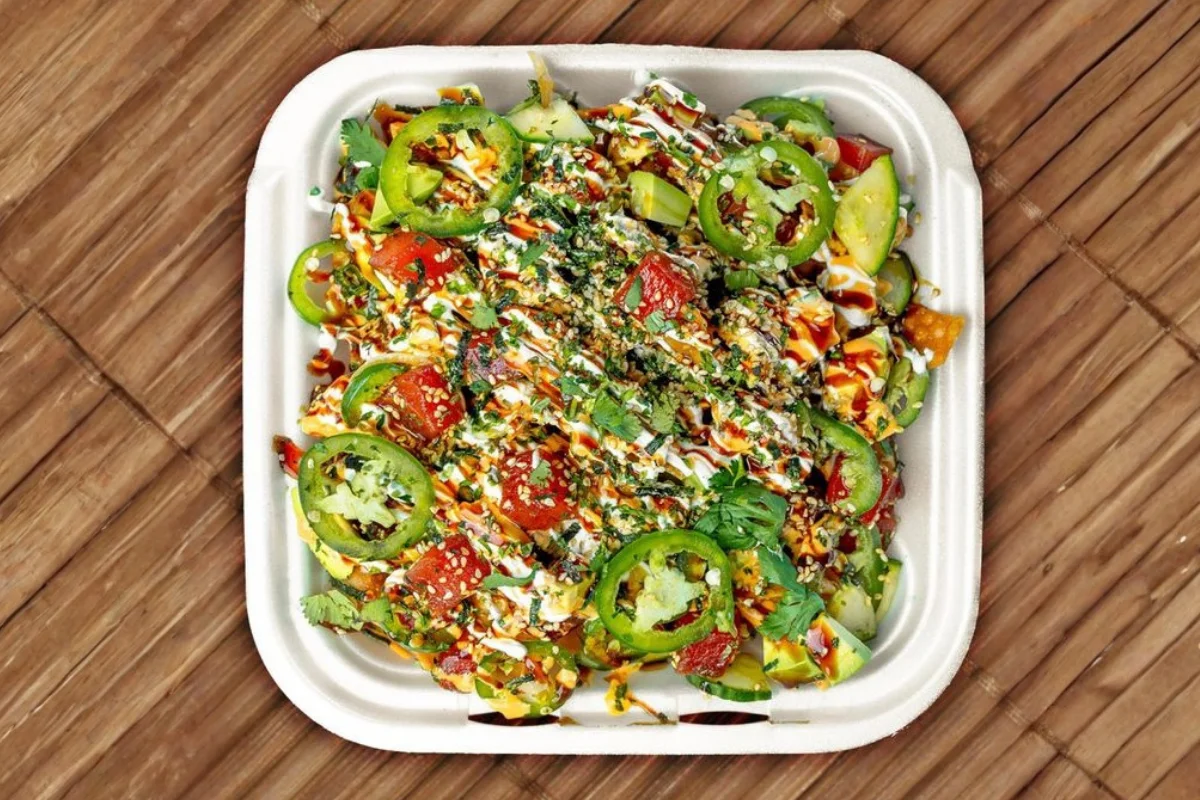 Credit: Da Local Boy Cafe
 Poke moves beyond the bowl at Da Local Boy Cafe, which substitutes wontons in for tortilla chips and adds furikake and shoyu sauce.
A first cousin to Japanese sushi with deep roots in the Hawaiian kitchen, poke is a combination of raw fish and sea salt, often finished with seaweed garnish. Zion Market Research predicts that the global market for poke will jump from $7.8 billion in 2023 to $12.8 billion in 2032, driven by demand for fresh, healthy options. Pokeworks, the leading chain specialist with 70-plus stores, features poke burritos and bowls with ingredients like ahi tuna, chile-crisp tofu, spicy shrimp, seaweed salad, edamame and masago.
Other operators are stepping up with poke mash-ups, like Jinya Ramen Bar’s Salmon Poke Mini Tacos or Velvet Taco’s limited-time Hawaiian Poke Tacos. The latter was made with ahi tuna, Napa slaw, cilantro rice, grilled pineapple, avocado, pickled Fresno chiles and sesame-soy vinaigrette, all stuffed into a corn taco. Independent Da Local Boy Cafe in suburban Chicago is dishing up Poke Nachos with shoyu, triple signature sauces and furikake over crispy wonton chips.
Hawaiian Cuisine IV: Pizza?
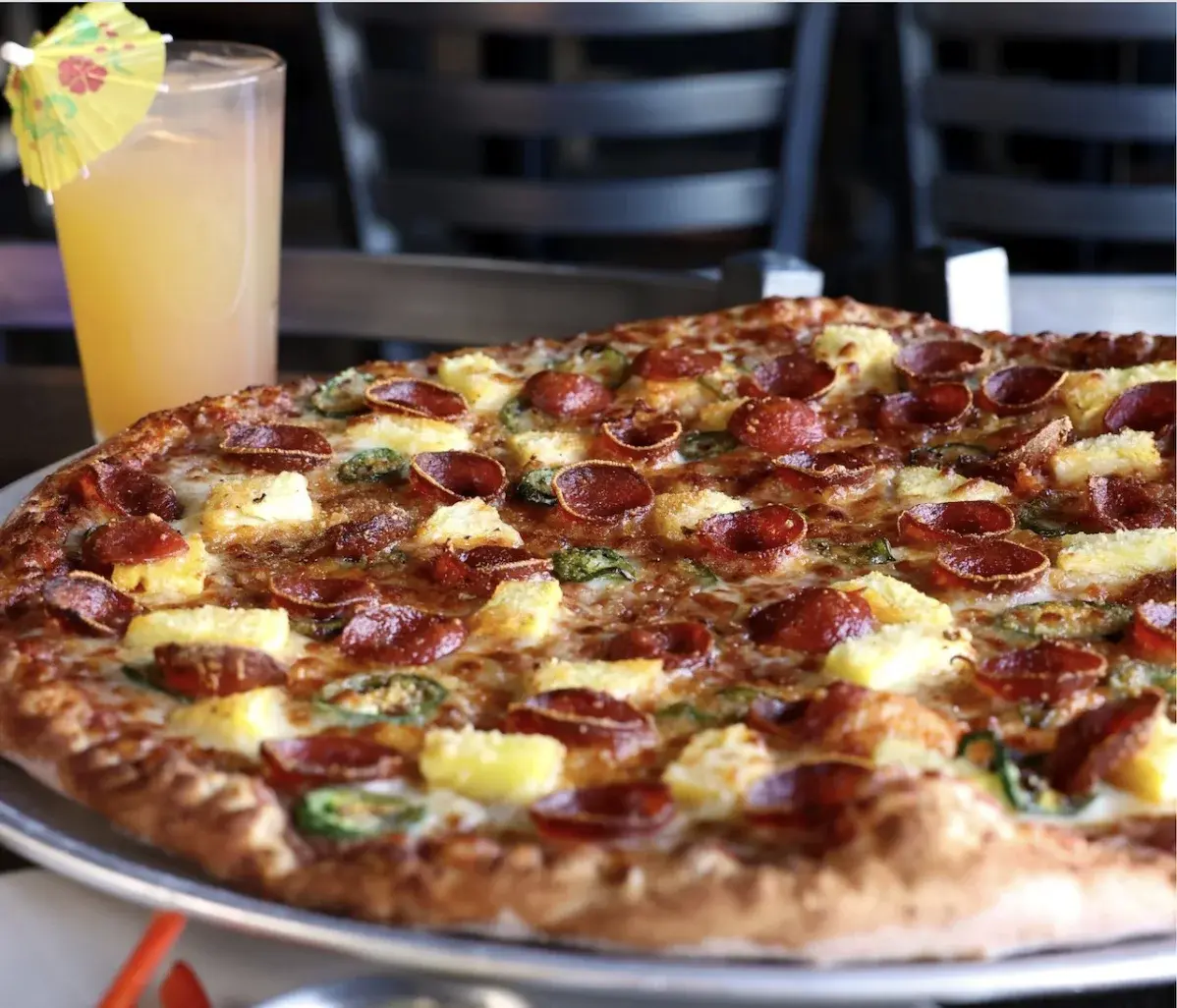 Credit: Pizza Lucé
 The Hulapeño at Pizza Lucé brings heat to the Hawaiian-inspired flavor combo, with pineapple, pepperoni (in place of sliced ham) and jalapeño.
The origin story of what has become a pizza-menu staple has its roots in an unlikely melting-pot-within-a-melting-pot saga, when Sam Panopoulos, a Greek immigrant to Canada, experimented in the early 1960s with pizza toppings that included pineapple and ham. The resulting Hawaiian pizza, which took its name not from the islands but from the canned pineapple brand he used, eventually gained traction with pie lovers, especially those in the U.K. and Australia, where it remains a top seller.
American diners are polarized on the product. A survey from YouGov reported that 12 percent of American pizza eaters list pineapple as one of their top three toppings, while 24 percent list it as one of their most disliked. Trying to hit the sweet spot, pizza specialists offer variations on the theme, like Mountain Mike’s Aloha Summer Menu last year that pulled a tropical fruit switch: The Zesty Aloha Pizza with Mango swapped juicy mango for the typical pineapple. In the Twin Cities, Pizza Lucé pumps up the sweet heat in the Hulapeño that combines fresh sliced jalapeño with juicy chunks of fresh pineapple. Served with a side of hot garlic honey, the menu puns that “this pizza won’t last long; here today, gone to Maui.”
Outlook and Opportunity
Menu R&D chefs will continue to create a steady stream of island-inspired specials, like Hot Head Burritos’ recent Hawaiian Burritos and Bowls that included grilled chicken, pineapple and the brand’s signature sweet habañero sauce. Musubi, the popular seaweed-and-Spam snack, is ripe for crossover, as at Loop Neighborhood Markets in Northern California, where it’s reportedly been a hit with on-the-go patrons.
Other island items also offer untapped opportunities for mainstream menus, such as easy-to-like saimin. A noodle soup that is a comforting pairing of soft wheat noodles with dashi-based broth, it has appeared on menus at McDonald’s units in Hawaii. At King’s Hawaiian Bakery & Restaurant, saimin noodles made freshly on the premises are added to seafood broth with barbecue pork char siu, green onions, egg and kamaboko (Japanese fish cakes).
And the time is right for Hawaiian POG, a classic beverage blend of passionfruit, orange and guava. It’s on the mimosa menu at HashTag, and given the runaway creativity in the beverage category, it is ripe for the picking in the broader marketplace.
About the Author
 Nancy Kruse is a recognized authority and widely quoted spokesperson on food and menu trends. She is president of The Kruse Company, which is dedicated to assessing trends and directions in food, menu and restaurant concepts; she has tackled these topics in the pages of leading industry publications and forums. Prior to founding her own company, Nancy served as Executive Vice President for Technomic, Inc., where she conducted a wide range of consulting assignments for Fortune 500 food and restaurant companies. She has served on several boards, and she has been an active member of the Women's Foodservice Forum and Las Dames d'Escoffier International.Read More Stories by Nancy Kruse
Culinary Versatility in a Nutshell Crack open the many ways to get more from walnuts
Flavor Trends, Strategies and Solutions for Menu Development[google_sidebar_ad...
Generation Next: Across the World for a Sweeter Beginning The future of food is evolving, one culinary student at a time
Flavor Trends, Strategies and Solutions for Menu DevelopmentCaera Stone (right) profiled her friend...
Modernizing Five Classic Dips Easy upgrades to enhance the dipping experience
Flavor Trends, Strategies and Solutions for Menu Development[google_sidebar_ad adslug="2026-03-Surround-Kens-320x50"...
