


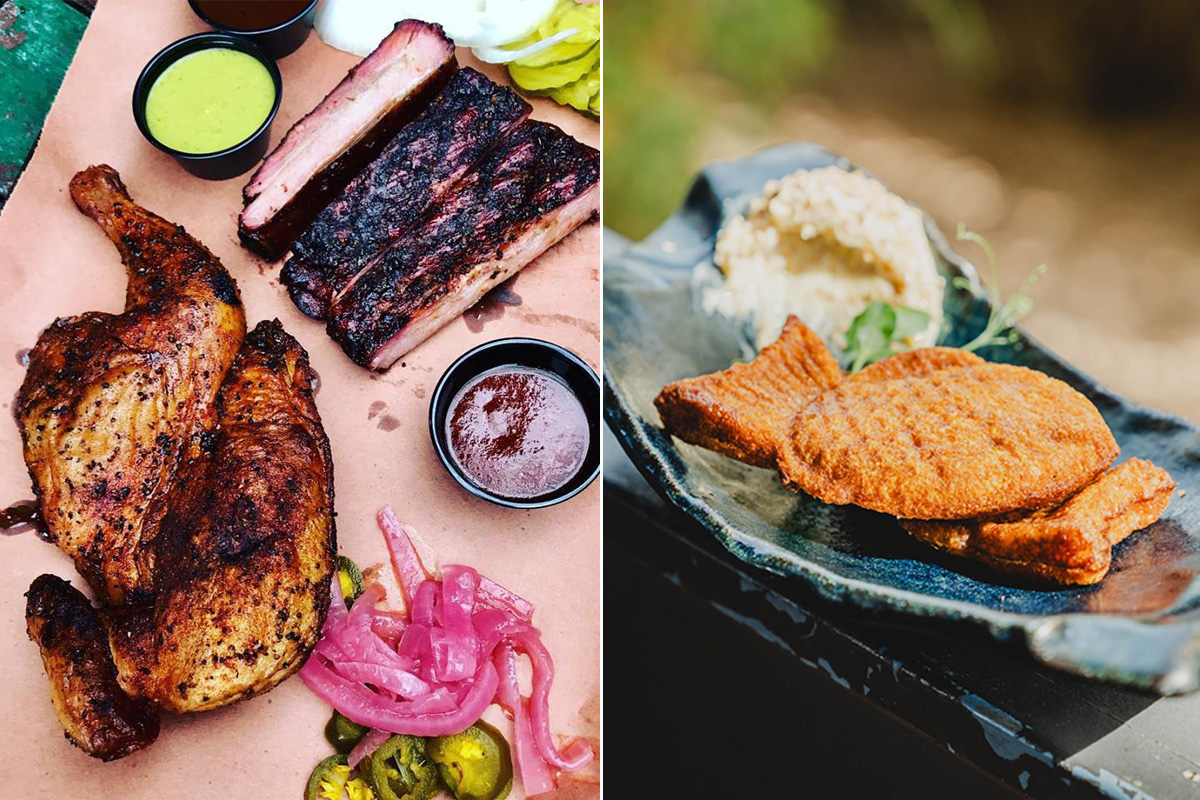
Photo Credit: Tejas Chocolate + Barbecue | Kemuri Tatsu-ya
Supercharged Sauces and Sides
Exploring barbecue’s flavor MVPs
The four major slow-smoked styles of American barbecue—Memphis, Texas, Kansas, and Carolina—are quite meat-centric, and served with very regional-style sauces, either tomato- or vinegar-based, sweet or tangy, and thick or thin. All these varieties pair perfectly with the most belly-satisfying sides you can think of, such as macaroni and cheese, baked beans, Texas toast and coleslaw. There are also the micro-barbecue styles such as Alabama barbecue that differentiates itself even further with a white mayonnaise-based sauce that can be used instead of blue cheese dressing for a twist on the classic wedge and cobb salads.
For some other side inspiration, one need only to look towards the sword-skewered meats of the Brazilian churrasco with its noteworthy selection of sides, such as salads, buttered Brazilian rice, the famed black bean dish, feijoada, deep fried bananas and chewy cheesy bread, pão de queijo. Sides play such a pivotal role in Korean barbecue that they’re essentially a category unto themselves. These small plates (banchan) include kimchi, other fermented vegetables, tiny fish and scallion pancakes—just to name a few—and can almost be eaten as a meal in and of itself.
Modern chefs have respectfully loosened the grip on time honored traditions, embracing the global pantry and modern cooking methods now available to them. And it shows, as a growing number of restaurants serve inventive twists on traditional barbecue fare.
In Tomball, Texas, Tejas Chocolate + Barbecue specializes in both barbecue and chocolate confections. On the savory side of the operation, the brand serves smoked meats and house-ground sausages, along with three signature sauces. In addition to a classic red sauce, Tejas Chocolate leans into Mexican cuisine: Salsa verde meets smoky barbecue thanks to the tomatillos in the green sauce, while the mole sauce is prepared with the brand’s own chocolate in a traditional cazuela. The selection of sides includes staples like mac salad, green beans and cornbread salad, as well as a carrot soufflé. And with the chocolate operation housed in the same building, guests can also grab bonbons and sipping chocolate for a most unusual barbecue accompaniment.
Kemuri Tatsu-ya in Austin, Texas, takes Asian-style barbecue to the next level, with an umami-packed miso barbecue sauce cropping up in dishes past and present, including a smoked salmon collar and a brisket. But in terms of visual cues, the cornbread is the showstopper. The whimsical cornmeal Taiyaki is a fish-shaped cornbread filled with sweet bean paste that is served with a honey sesame butter.
Also in Austin—and equally exciting—is KG BBQ’s Egyptian Cowboy, which transforms one of the most iconic barbecue sides into a rich entrée. Creamy mac and cheese is topped with pulled lamb shoulder, sumac-pickled onions, pomegranate-barbecue sauce and za’atar spice. In similar fashion, Brisket and Rice in Houston turns a side into a bowl base, albeit with a less common barbecue accompaniment—one that hardly crops up beyond Louisiana joints with dirty rice. The namesake dish features one-third pound of brisket atop fluffy jasmine rice, while the BBQ Fried Rice serves cubed brisket, eggs, and onion over wok-fried rice with Chinese sausage.
Far from barbecue country in Napa, Calif., newly opened Stateline Road Smokehouse can trace its brick-and-mortar origins back to a sauce. A decade ago, when chef and co-owner Darryl Bell was still working in Michelin starred-restaurants, he created 816 BBQ Sauce—inspired in flavor and name by Kansas City. Now, the sauce can be found in the restaurant’s pulled pork, while a dry-rub version, along with chive aïoli and bacon, seasons the curly fries crispy. Other sides at Stateline Road enjoy similar upgrades: the mac and cheese features aged cheddar Mornay, kale crisp and parsnip crumbles, while jicama makes an unlikely, but most welcome, appearance in the coleslaw.
As just these handful of examples demonstrate, the American barbecue scene is in the midst of a renaissance. As the lines between regional and even global styles reced, chefs have an unprecedented opportunity to explore different ingredients, cooking techniques and more. In terms of low risk and potentially high returns, sauces and sides are a good place to begin. Both are crucial to the flavor and presentation of barbecue offerings and can be easily adapted as menu developers explore new culinary horizons. After all, what modern barbecue seems to showcase most of all is the growing need to stir America’s proverbial melting pot.
About the Author
 Chef Rebecca Peizer is the owner of the culinary consultancy All Things Culinary LLC, as well as a professor, consulting partner, digital media talent and conference stage manager for the Culinary Institute of America at Copia in Napa Valley, Calif. She has worked for many esteemed wineries, restaurants, resorts and culinary schools in New York, Napa Valley and Las Vegas. She implemented the nation’s first farm-to-table culinary program at the Culinary School of the Rockies in Boulder, Colo., and does pro bono work for the Salvation Army and Gray Haven Health & Wellness. Rebecca is an active forager and herbalist and has earned certifications in cheesemaking, permaculture design, professional wine studies, CEC and CHE.Read More Stories by Rebecca Peizer

Day Four Markets and the Desert
Flavor Trends, Strategies and Solutions for Menu Development[google_sidebar_ad...
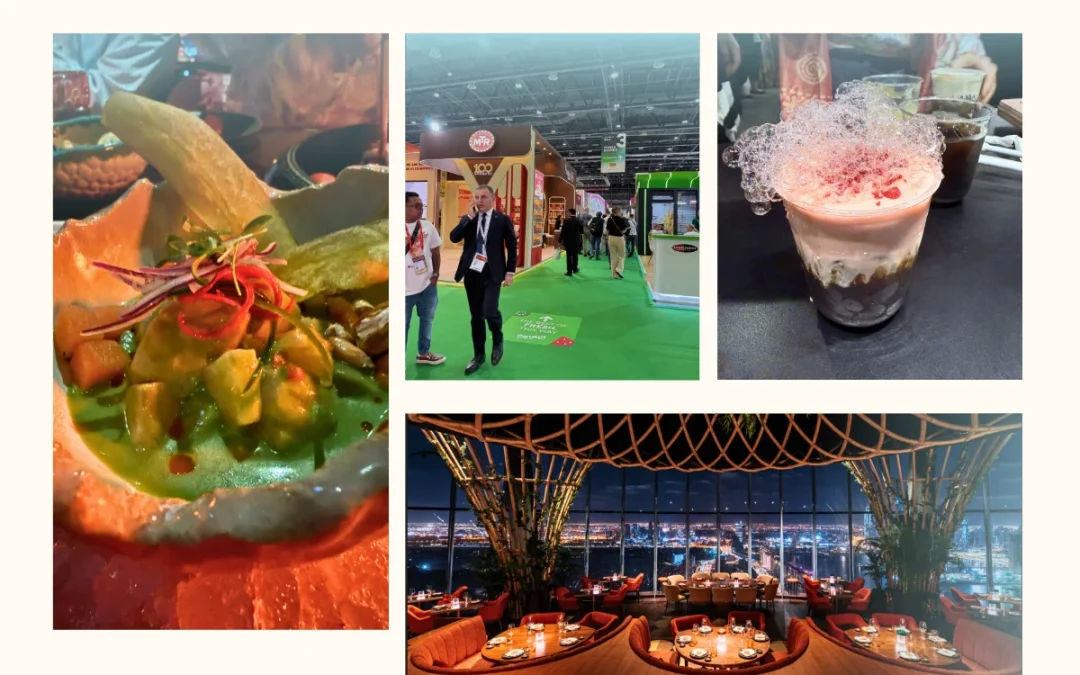
Day Three Gulfood, panoramic views and late-night libations
Flavor Trends, Strategies and Solutions for Menu Development[google_sidebar_ad...
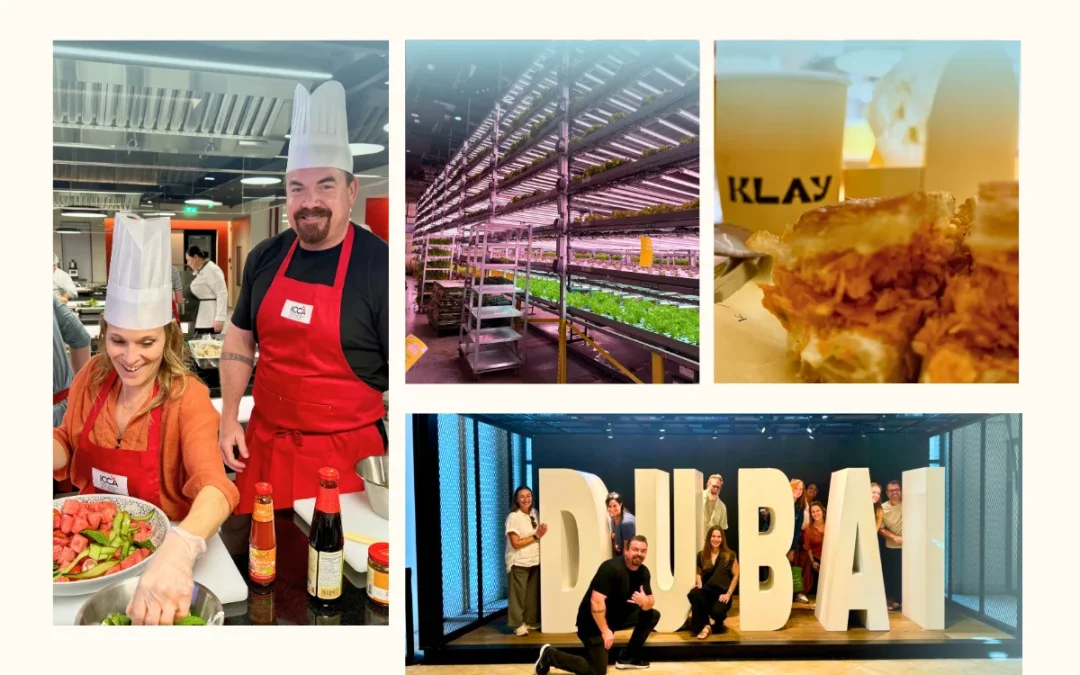
Day Two Vertical farms, paratha buns and culinary school
Flavor Trends, Strategies and Solutions for Menu Development[google_sidebar_ad...
