


At Fontana di Vino, tableside activations, such as the Polenta Pour and Porchetta Chop, bring an interactive element to the dining experience. The light and airy interior embodies the upscale casual atmosphere that has become synonymous with the Italian-American category, but flourishes like red-velvet accent walls and moody murals inject a bit of luxe drama.
The Makings of an Italian-American All-Star
Scott Leibfried’s new restaurant showcases corporate smarts and menu savvy
But for restaurants hoping to court both the adventurous and more judicious, the path forward requires balance—and the willingness to tumble and get back up.
After 120 in operation (and 62 menu iterations), Fontana di Vino in Charlotte, N.C., has found that sweet spot—for the most part.
“We’ve finally landed,” says Scott Leibfried, VP of development and culinary director. “We’ve had many versions of the menu, but I feel like we have the right balance and now we need to establish patterns and consistency from a guest point of view. They can’t come in here every week and everything’s different.”
Perhaps best known to the everyday diner for his 10-season run as Gordon Ramsey’s sous chef on “Hell’s Kitchen,” Leibfried is a lifelong “restaurant guy,” with a career spanning the kitchen, business and consulting areas of the restaurant industry including stints at the Four Seasons, Napa Valley Grill, Soleil @K and a number of Ramsey’s Michelin-starred restaurants. Over the years, he’s opened original concepts including, but Fontana di Vino, was a departure in multiple ways.
The project is a brainchild between Leibfried and Robert Maynard, CEO of Won Life Brands, whose portfolio includes better-breakfast brand Famous Toastery. Featuring a precise blend of familiar favorites, experience-driven activations and regional specialties, Fontana di Vino’s menu reflects a melding of, as Leibfried puts it, “corporate smart and restaurant smart.” This adage is especially crucial in Charlotte, a rapidly expanding and evolving market of dyed-in-the-wool Southerners, big city transplants, young adults, growing families and retirees.
“The way the menu is laid out is a great mix of traditional, respected favorites that I think we’re doing exceptionally well,” Leibfried explains, offering the Ricotta Cavatelli, served in a pink sauce with housemade noodles, and Rigatoni Sugo, with slow-cooked pork, red wine and red sauce, as examples. “But then you have the Cacio e Pepe Tartufo, which is a little bit more complex from a flavor point of view, and we source black truffles from Malé, Italy, as an add-on which appeals to the more adventurous guests,” he adds.
But hewing close to the corporate-smart/restaurant-smart mentality necessitated some thoughtful debates among leadership, and Leibfried admits they struggled with the “Chicken Parm Theory.” The question hinged around whether Fontana di Vino should serve the beloved dish—it wanted to differentiate itself and being an Italian-American concept that did not serve the staple would send a clear message.
“Don’t get me wrong—I love chicken Parm. But any Italian restaurant, whether it be in Philly, L.A. or Charleston, S.C., is going to have chicken Parm on the menu. So my thought was let’s be the people that don’t. Let’s be the people that do something different,” says general manager Christina Rittmiller. With a laugh, she recalls how the comment was met with incredulous stares from her team.
Like Leibfried, Rittmiller is a multi-hyphenate in the restaurant world, equally at home in the back of house as executive chef as she is in the front, directing the whole production. Ultimately, she decided chicken Parm, in theory, would work well at Fontana di Vino, and vowed, “I was going to find a way to give guests the best chicken they’ve ever had if that’s what they want,” she says. “We all have visions and ideas of things that we want to do, but until people know who we are, some of those ideas have to sit. And as we get bigger and flourish, then we’ll really wow them.”
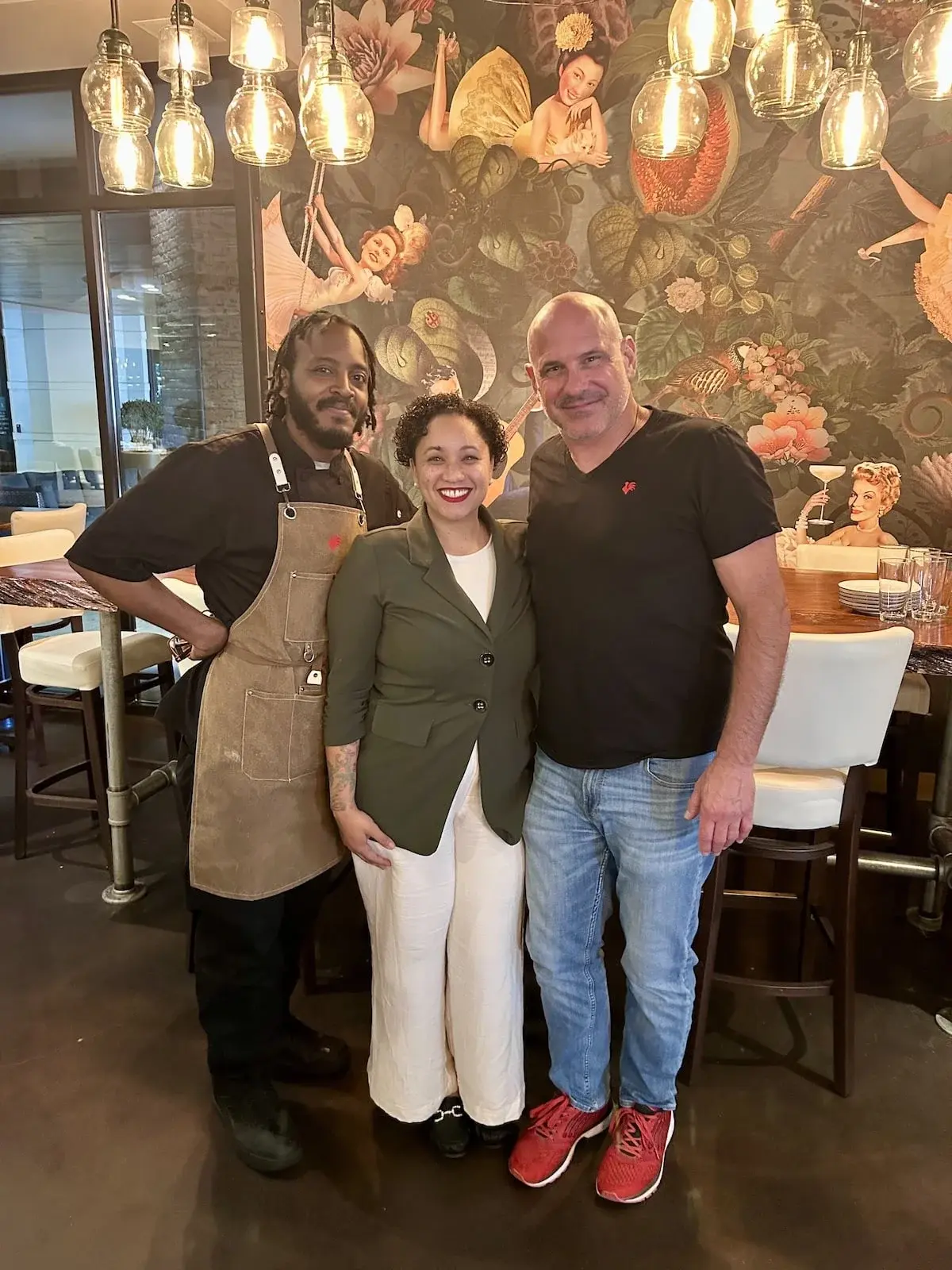
The dream team behind Fontana di Vino includes (left to right) Chef Teddy Mitchell, general manager Christina Lawrence and chef/cofounder Scott Leibfried, as well as cofounder Robert Maynard.
One early offering that’s since been rolled back is the live mozzarella bar, wherein guests could view more than 34 varieties of mozzarella and watch as staff shaped and plated the cheeses to order. While this bit of culinary theater proved overwhelming for guests, other live, interactive elements have yielded top-sellers, namely the Polenta Pour, Veal Chop Parm and Porchetta Chop. All three are presented tableside with the server walking guests through the details as they pour, serve and carve.
Part of the antipasti section of the menu, the Polenta Pour is based on polenta alla spianatoia, a lesser known Tuscan dish meant to be shared. Capitalizing on the popularity of charcuterie and cheese boards, the multi-component offering begins with a server pouring warm, creamy polenta blended with Parmigiano-Reggiano and extra olive oil and spreading it across a long wooden board. As with mixed boards, any ingredient can be incorporated; Fontana di Vino’s selection includes traditional meatballs, broiled sausage, garlic-sautéed spinach, rapini, roasted mushrooms and a final topping of freshly grated Parmesan.
“The whole board is put on the table with the spoons and everybody just helps themselves,” Leibfried says, who’s served the dish at home for family and friends. “It’s very popular in Tuscany in the fall. It’s sort of this come-together family celebratory occasion. It’s the whole meal all in one.”
Aside from the visual spectacle and fun flavor pairings, the dish is business savvy, too. For one the relatively low price point ($26) makes it a low-risk item, whether shared between two as a light entrée or among several as a group appetizer. Secondly, the tableside presentation allows the server to educate guests when necessary, especially if they’re unfamiliar with, say, rapini. “People are willing to take the chance,” Leibfried adds.
The Veal Chop Parm and Porchetta Chop are more familiar to guests, but the activation brings a sense of novelty plus another education opportunity. Servers can describe the flavor profile and preparation techniques, point out the various cuts as they carve and let guests know which are leaner, fattier and in between. The Veal Chop Parm ties with the Polenta Pour in terms of orders, even though it’s one of the pricier items on the menu (second only to the filet mignon). Simple but succulent, the bone-in veal is topped with red sauce and mozzarella.
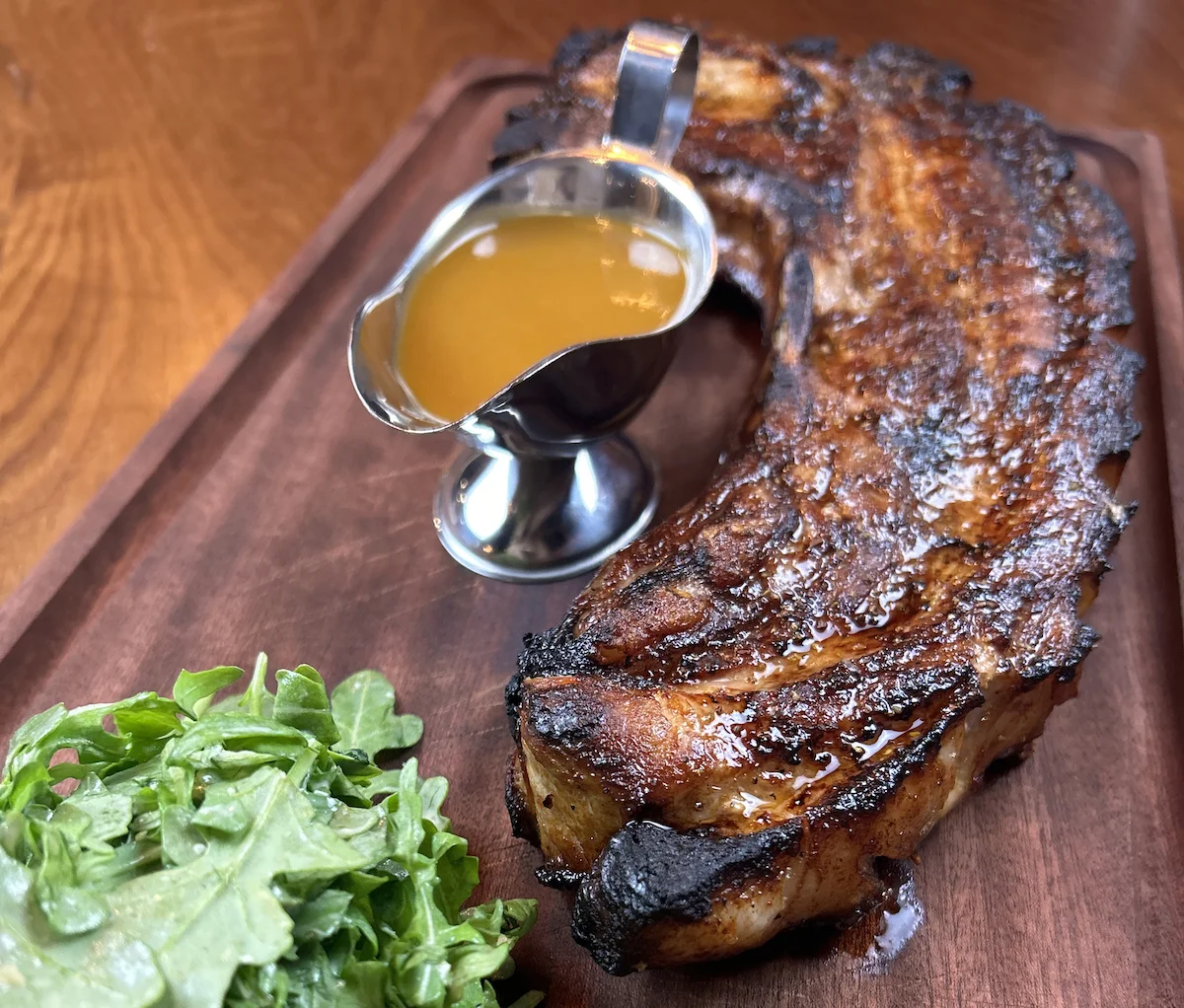
When presenting the Porchetta Chop, servers will educate diners on the preparation and highlight the various cuts while carving.
At roughly 2 lb., the Porchetta Chop is “basically a tomahawk of pork,” Leibfried says. “The flavors of porchetta are really fascinating: the fennel, the black pepper, the garlic, the parsley. It’s sort of a mash-up of all of that done in the style of this broiled chop.” The meat is brined for three days, then dry-aged for 21. Afterward, it’s brushed with herbs and seasoning and broiled at 1,000 degrees and finished with finely ground fennel. “You have all these really aromatic, fatty, moist, chewy, tender textures and flavors running through the whole thing. Then we finish it with a really rich apricot reduction, which is like this explosion of flavor at the end,” he adds.
In addition to the more elaborate activations, Fontana di Vino staff also perform smaller flourishes that enhance the overall dining experience. In addition to the Cacio e Pepe Tartufo, the Mixed Greens salad and Tartufo Pinsa also offer a truffle upgrade option, which servers bring out whole and freshly shave before guests. With the Affogato dessert, the espresso is poured tableside—a dynamic that’s inverted for the less traditional Affogato Martini. “It’s like an affogato in reverse. So you’ve got your espresso and your fior de latte gelato, and then the alcohol is poured over it at the table,” Leibfried says.
While the spectacle nature of these dishes make for a memorable bite (or sip), Leibfried and Rittmiller agree that other menu sections do heavy-lifting, too. “What I’m most proud of are tableside activations—they’re something that we get a lot of credit for. Even on our slower nights, you still see two or three of them; it’s never zero,” Leibfried says. “We’re proud of all of it, but if we’re really looking for where we want people to recognize and trust us, it’s definitely the pasta and the pinsa selection. It’s not that everything else isn’t equally as good or held to the same standard, but a bowl of pasta with a glass of wine is a pretty easy point of entry.”
More than any other section of the menu, the pinsa category strikes a winning balance between familiarity and intrigue. A rustic, airier cousin to pizza, pinsa crust is fermented for longer, lending it a distinctive texture. Leibfriend was first introduced to this Roman specialty a little over a year ago during a trip to Italy. Similarly, Rittmiller discovered it while researching honeymoon venues in the country.
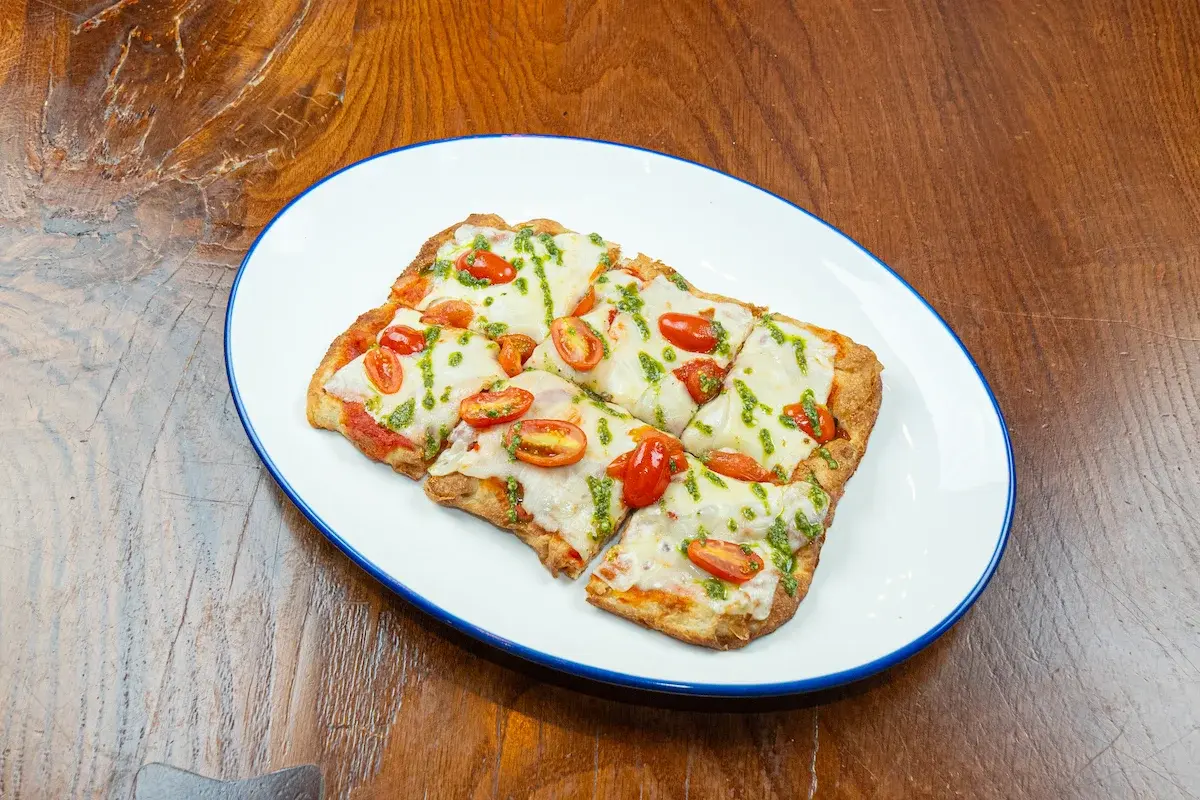
Pinsa, a Roman variation of pizza, is a top-performer, striking the perfect balance between familiar and novel.
“The majority of my career has been in some type of pizza,” says Rittmiller, whose resume includes heavy-hitters like Firebirds Wood Fired Grill, BJ’s Restaurant & Brewery, Old Chicago Pizza + Taproom. “I’m someone who’s made and eaten every dough you can possibly imagine. Pinsa is light and crisp and airy, and I can eat two of them and not feel full. I broke up with pizza instantly and turned to pinsa.”
Permanent iterations include the classics—Caprese, Pepperoni, Bianco—as familiar anchor points for pinsa novices, while aforementioned Tartufo variety, with roasted mushrooms, ricotta, mozzarella, garlic-spinach and the optional truffle, offers a less conventional flavor profile. Another dish that reflects the restaurant’s familiar-with-a-twist ethos is the Spaghetti O’s, which Rittmiller says might be her favorite item on the menu. Leibfried was attending a benefit dinner in L.A., where one of the chefs created an adult spin on the childhood classic. He called Rittmiller to float the idea, a little nervous that it was too juvenile, but to his delight, she was immediately onboard.
“We got off the phone and I went over and started cutting rigatoni and playing with sauces, and chef Teddy comes up and he’s like, ‘Boss, what are you doing?’ And I told him: Adult SpaghettiOs, and he started tasting things. It was one of those ‘aha!’ moments, like how did we not think of this?” Ritmiller recalls. Creating a craveable but grown-up version required a good deal of research; the end result marries a creamy red sauce with “some secret ingredients” and housemade rigatoni noodles that are thinly sliced into Os. It’s finished with a generous dollop of stracciatella.
“We try not to take ourselves too seriously, but we do take what we do seriously—there is a difference between the two,” Leibfried says. “We can have high standards, and we can also have fun.”
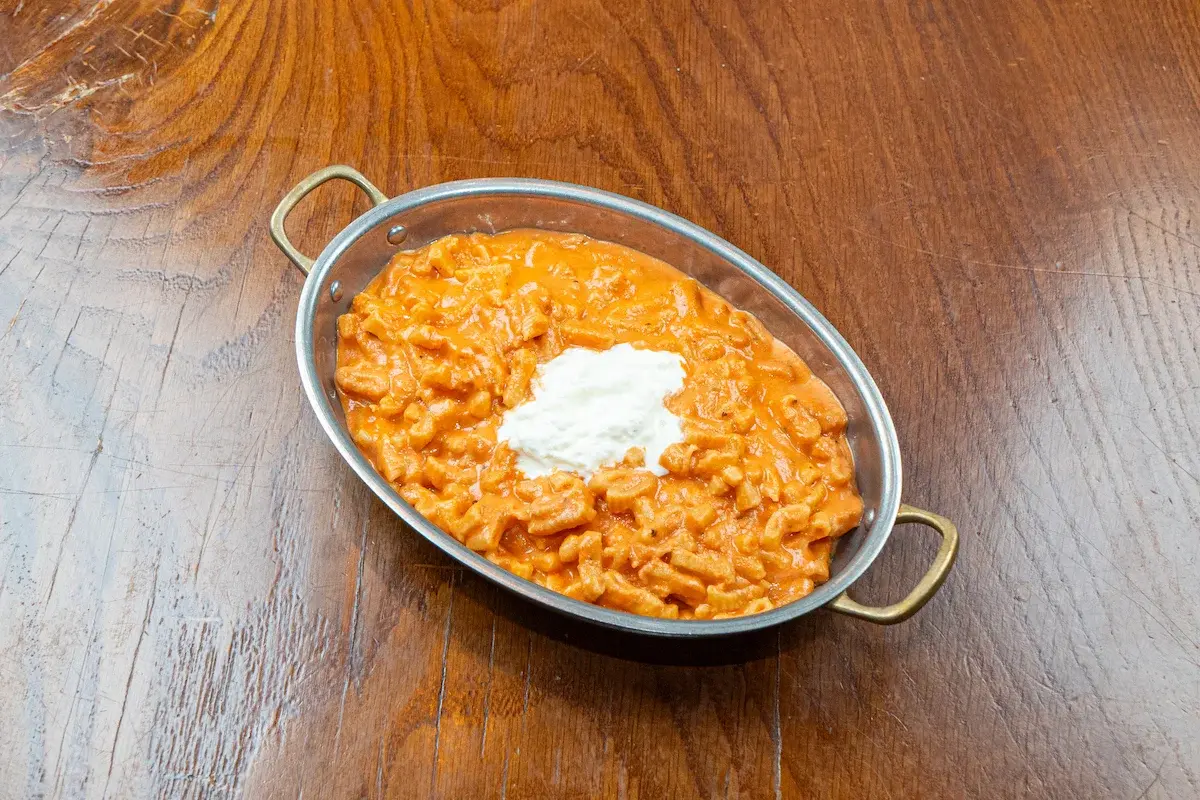
Fontana di Vino’s elevated take on Spaghetti O’s features scratchmade ingredients and a luscious dollop of stracciatella.
Interestingly enough, Charlotte was not the target market for the first Fontana di Vino; it was supposed to follow another location in Davidson, N.C., a college town on Lake Norman, about 45 minutes from the South Park area of Charlotte. Located in an old ice house, the property is a historic building and as such, comes with more red tape but also extra character. While it will sport a similar design to the original (red paint, velvet wallpaper, the same lush mural of frolicking diners and imbibers), the team also unearthed photographs and pictures of bygone days, which were framed and hung as a “tribute to the ghost that floats around in the building at night when we’re not there,” Leibfried says.
It’s a smaller venue—about 3,400 square feet compared to Charlotte’s 6,000—but seats about the same thanks to an expansive back patio, which Leibfried hopes will be the ideal spot to try relaunching the mozzarella bar. The idea would be to showcase different styles of bruschetta beyond the typical tomato iteration, with various types of mozzarella plus fresh toppings like butternut squash purée, braised escarole, smoked bacon and more.
Opening two locations of a new restaurant within a single calendar year typically signals that leadership already has scalability in mind. Plus, Won Life Brands’ restaurants are all multi-unit, with Famous Toastery at about 30 units. But when asked directly, Leibfried politely demurs, saying, “It’s too soon to tell, but we’re an energized group that’s still looking for opportunities.”
For now the focus is on locking in consistency at the South Park location and introducing the concept to Davidson. “We’re going to do everything wrong,” Leibfried laughs. “We’re going to open up the Saturday after Thanksgiving.”
About the Author
 Nicole Duncan is the digital managing editor of Flavor & the Menu. She's reported on the restaurant industry for a decade, most recently as the editor of FSR magazine. In 2021, she won a Folio award for her feature on restaurant tycoon Tilman Ferttita. The following year, FSR was awarded Best Overall Issue for its May 2022 issue featuring Andrew Zimmern. She has profiled well-known chefs including Paola Velez, Fabio Viviani and Daniel Boulud, but also relishes the opportunity to spotlight under-the-radar trends and innovators.Read More Stories by Nicole Duncan
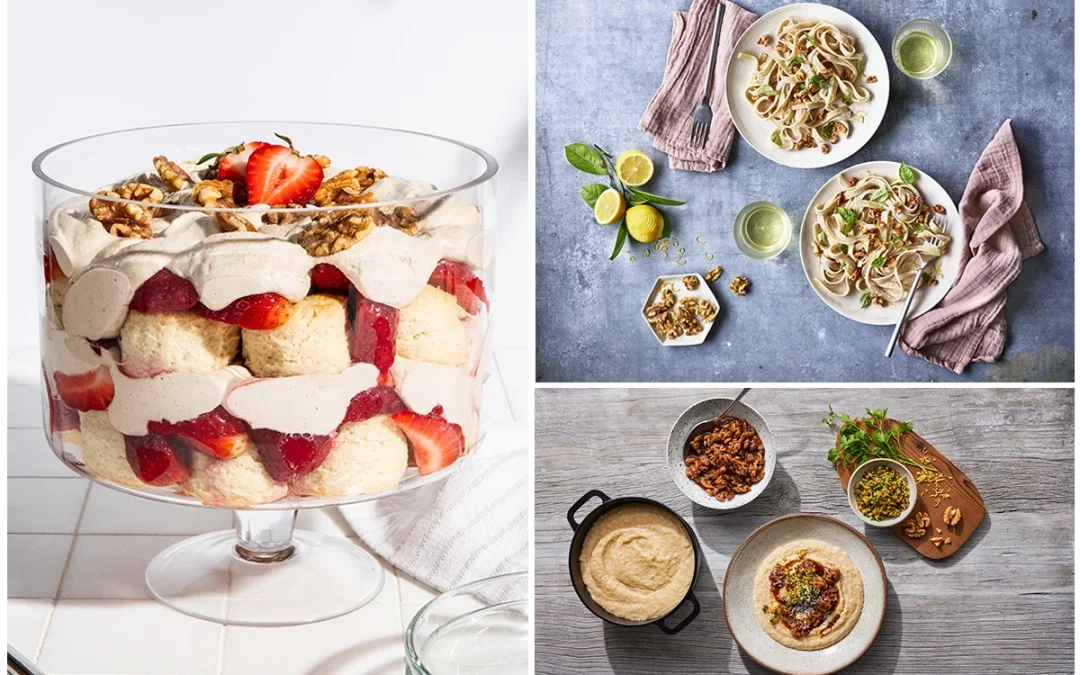
Culinary Versatility in a Nutshell Crack open the many ways to get more from walnuts
Flavor Trends, Strategies and Solutions for Menu Development[google_sidebar_ad...
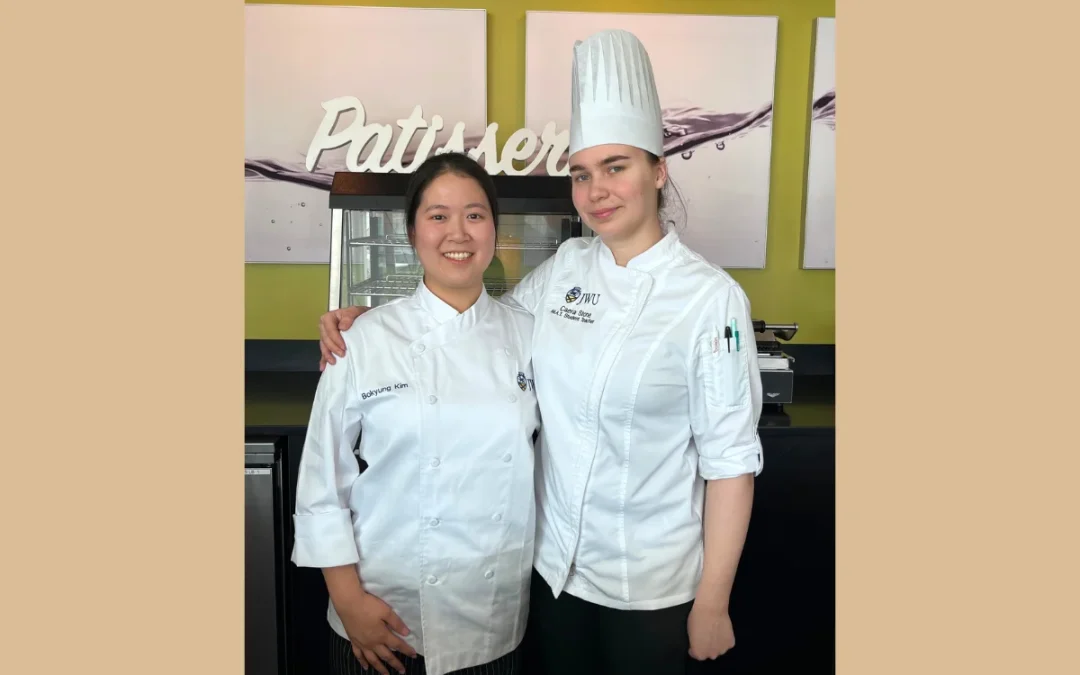
Generation Next: Across the World for a Sweeter Beginning The future of food is evolving, one culinary student at a time
Flavor Trends, Strategies and Solutions for Menu DevelopmentCaera Stone (right) profiled her friend...
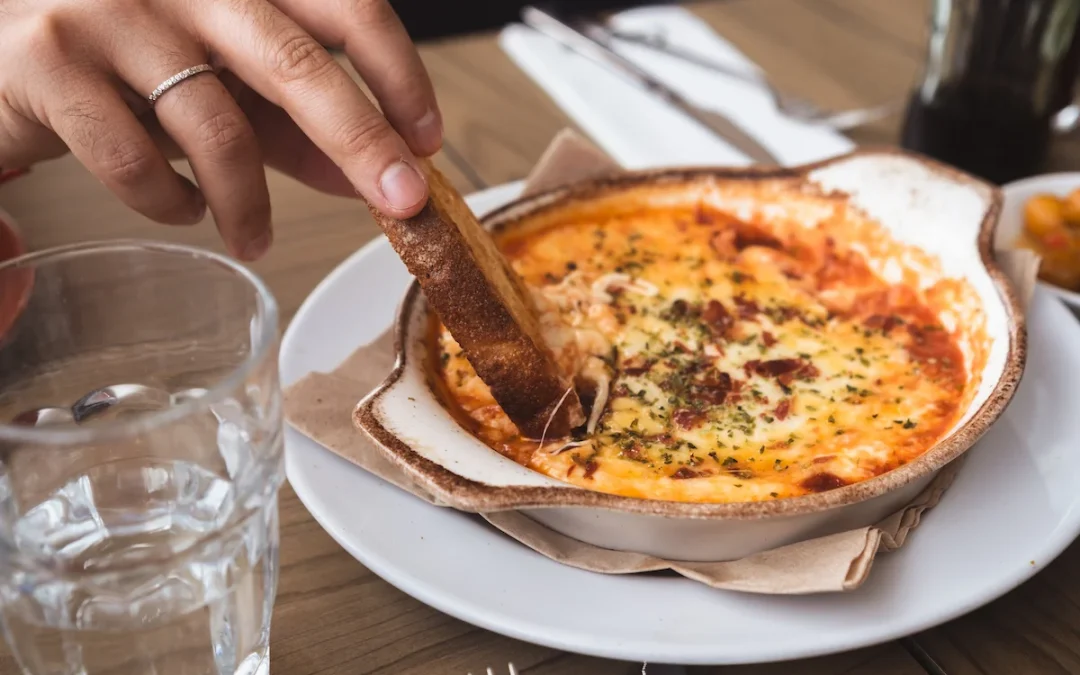
Modernizing Five Classic Dips Easy upgrades to enhance the dipping experience
Flavor Trends, Strategies and Solutions for Menu Development[google_sidebar_ad adslug="2026-03-Surround-Kens-320x50"...
