
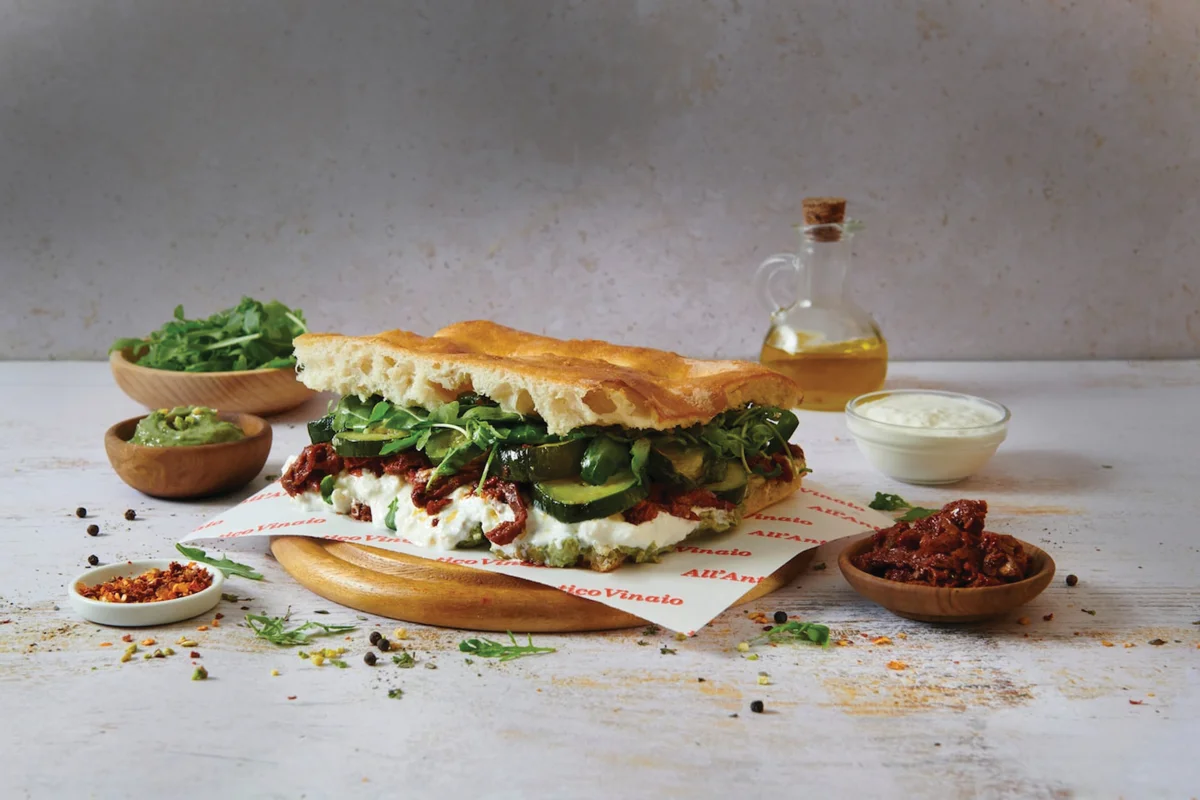
All’Antico Vinaio — the Florentine shop behind the viral schiacciata sandwiches — has become the catalyst for the Tuscan sandwich movement, proving how a simple, premium build can ignite modern innovation in the sandwich space.
Credit: All’Antico Vinaio
Tuscan Sandwich Sensation
Premium sandwich craft enjoys fresh momentum
Unlike many other contemporary sandwiches, the schiacciata is not heavily sauced, stacked to unwieldy heights or dependent on novelty fillings. Its power lies in restraint. Fresh, daily-made schiacciata bread—boasting a texture somewhere between focaccia and a crisp-edged flatbread—provides both structural integrity and a soft, chewy bite. Meats are sliced paper thin. Premium cheeses are chosen for melt and mouthfeel.
Sandwich “creams” have emerged as power players of this trend, and the terminology itself is a strategic move. It’s an intentional upgrade in nomenclature that signals premium positioning. These aren’t just condiments; they’re the defining architecture of the build, establishing both flavor direction and textural identity. In the Tuscan playbook, sandwich creams function as silky—often dairy-based—components that layer richness without the weight. Pistachio, porcini, artichoke, Parmesan, Gorgonzola and truffle creams lead the charge, but the momentum extends to weightier spreads, such as pestos, rémoulades and roasted vegetable blends, that echo the same luxurious intent. These creams serve as both flavor engine and structural cohesion, elevating premium meats and cheeses while delivering the indulgent mouthfeel that defines the modern schiacciata experience. The origin of “sandwich creams” may be Italian, but the idea—lush, rich sauces that carry premium flavors—is ripe for global translation.
 Credit: Fortuna
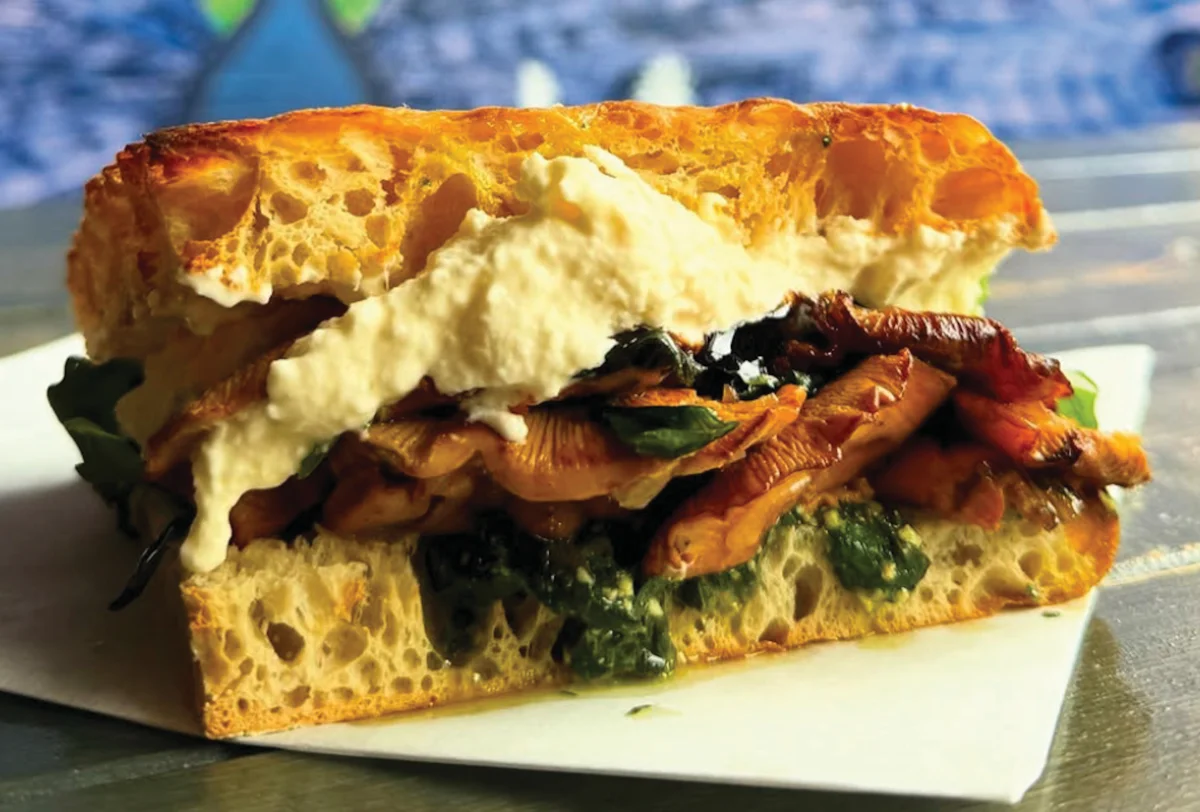
 At Fortuna in Seattle, premium ingredients like pesto, stracciatella cheese and marinated mushrooms find a happy home layered between slices of schiacciata bread.
Liz Moskow, principal of Bread & Circus consultancy, calls this moment a cultural reset. “Diners are craving a moment to relish, not just refuel. The schiacciata captures this slowdown—it’s a feeling served as a sandwich, turning it into a craft experience,” she says. “Razor-thin prosciutto, stracciatella that melts into the crumb, a drizzle of lemon oil—each component is handled with intention.”
THE RISE OF THE SLOW SANDO
All’Antico Vinaio, the legendary Florentine sandwich shop, remains the anchor for this trend. Its steamy, olive-oil-bathed schiacciata bread is the foundation of this “slow sando” movement. Its U.S. outposts—close to 20 and climbing—underscore how compelling the format is, with curated variations that keep the momentum strong. Sandwiches like the Dolcezze D’Autunno—layering rich lardo with Gorgonzola cream and truffle honey—or La Paradiso—paper-thin mortadella, creamy stracciatella, pistachio cream and chopped pistachios—demonstrate just how indulgent yet balanced these builds can be. The artisan bread is thin but sturdy, with a crisp exterior and soft, chewy interior—a combination that keeps every ingredient in focus.
That model has sparked creativity nationwide. At Mamie, an Italian café in Los Angeles, schiacciata bread is fermented for 72 hours, achieving a tender crumb that supports premium fillings like prosciutto, burrata, roasted zucchini and truffled cream. Its Di Parma sandwich features 18-month prosciutto di Parma, Italian burrata, fresh pesto, truffled cream, chopped pistachio and baby arugula. The Vespa sports prosciutto cotto, artichoke cream, truffled cream, roasted zucchini and baby arugula. Seattle’s Fortuna brings its own personality to this trend with creative offerings—all built on the famed schiacciata. The Fortuna sandwich sports porchetta, truffle Gorgonzola, marinated olives, lemon olive oil, onion and arugula. The Caprese features stracciatella, tomato, pesto and arugula, then surprises with black garlic balsamic.
 Credit: Mamie
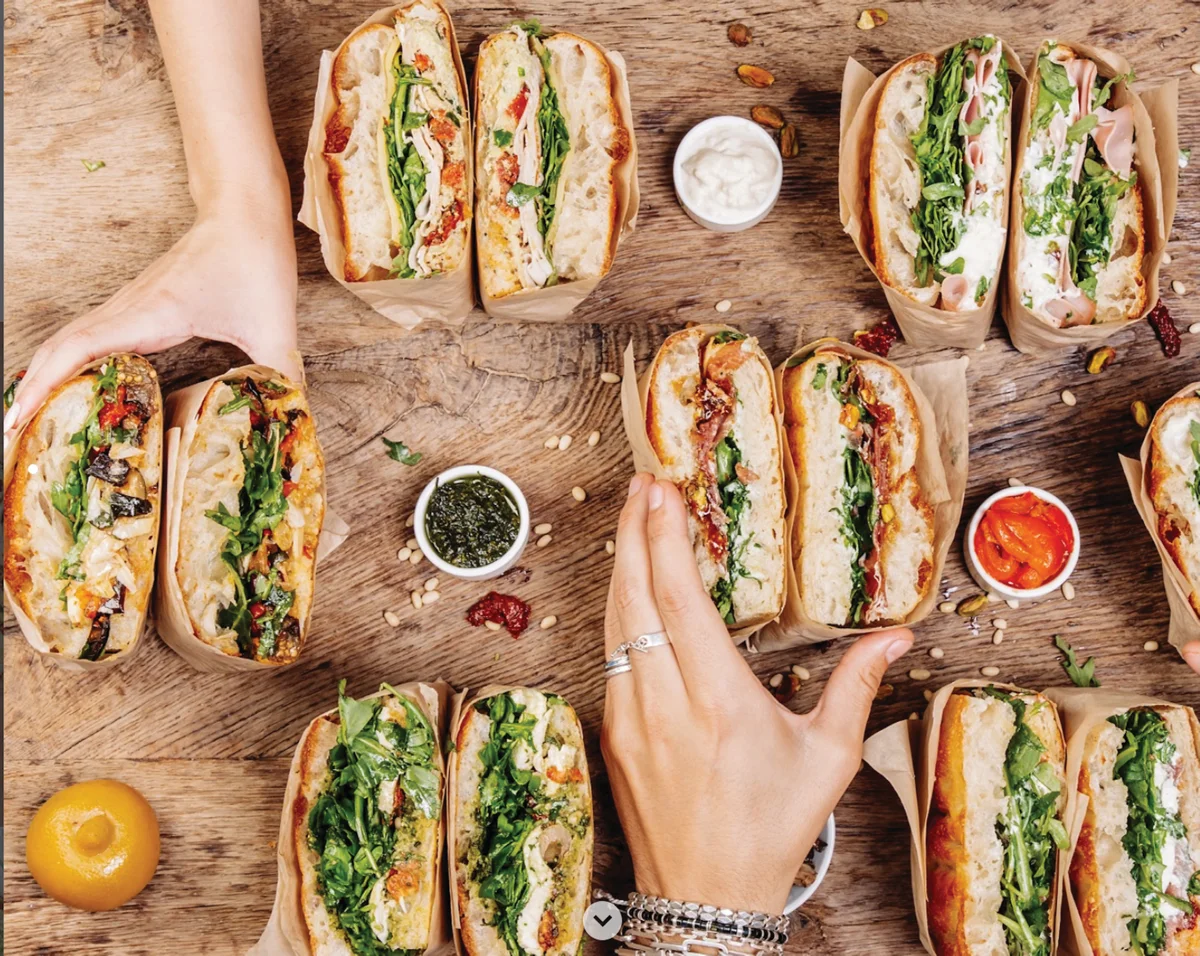
 Mamie in Los Angeles elevates the Tuscan sandwich tradition. Standouts include the Capriccio, layering Italian burrata, sun-dried tomato, roasted bell pepper, fresh pesto, pistachios and arugula, and the Monaco, with Italian tuna conserva, Calabrian chile, artichoke cream, preserved lemon, roasted tomato and olives.
Pronto Italian Sandwiches, with three suburban Chicago locations, serves builds inspired by Italian-American combinations with a Midwestern sensibility, like the Loren, with fried eggplant, roasted red pepper and artichoke spread, mozzarella, pesto, arugula, tomatoes and giardiniera, all on signature schiacciata. It also highlights the potential in the breakfast/brunch space, running a morning menu that includes the Tucci, featuring egg, turkey, avocado, mozzarella and a pecorino spread.
These examples highlight a core opportunity: Schiacciata isn’t just a bread; it’s an invitation to slow down, savor texture and temperature and appreciate premium elements. As Moskow notes, “Nothing about this sandwich says ‘Scarf me down fast.’ It celebrates quality and precision—every bite feels like a deliberate, indulgent pause.”
Ian Ramirez, chef and founder of Mad Honey Culinary Studio, echoes that sentiment. “These operations are realizing that bread’s the most important part of their program. The right amount of chew, the perfect sea salt finish. It creates a sandwich that feels satisfying without weighing you down. Even though schiacciata is ancient, it’s new to much of the American sandwich world, and diners are responding.”
FOCACCIA’S FLEXIBILITY
While schiacciata is the hero of this moment, the broader movement is anchored in focaccia, schiacciata’s more familiar cousin. Focaccia offers a sound sandwich format with a structure that’s primed for carrying premium ingredients without collapse or sogginess, providing cues of craftsmanship and provenance.
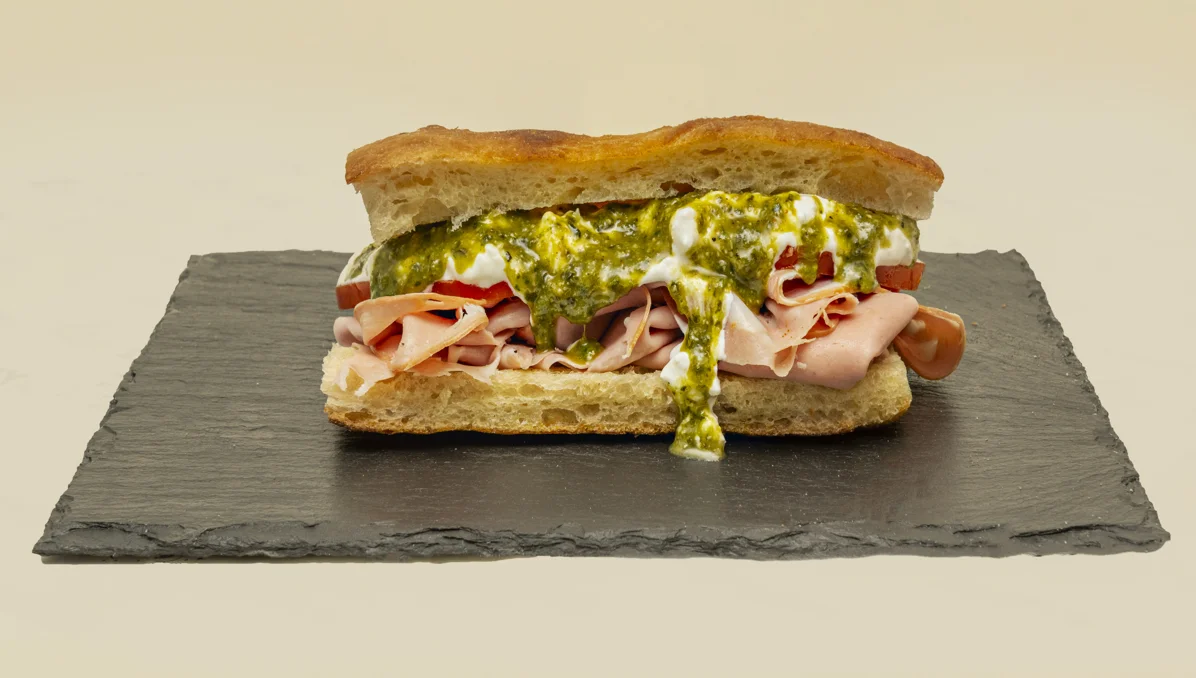 Credit: Tomas Llamas Quintas
 Parallel to the schiacciata wave, focaccia sandwiches are carving out their own moment—anchored in texture, structure and premium simplicity.
Denver’s Gino Panino, serving sandwiches and salads as the “Deli Counter” of Rebel Bread bakery, aptly demonstrates how focaccia carries today’s modern flavor combinations. Built on sourdough focaccia, its Giada features pancetta, egg soufflé, pecorino spread and tomato butter, while the Loretta brings together mortadella, mozzarella, red pesto and arugula. Both showcase the way focaccia can elevate breakfast and lunch builds alike, providing the right chew and structure while housing trend-forward, high-impact ingredients.
In Seattle, Hushy’s has become emblematic of the city’s current love affair with focaccia. The café’s crisp, sea-salted focaccia supports fillings ranging from spicy pepper rémoulade to a Milanese with breaded pork glazed in red wine and honey, paired with kimchi-Kewpie slaw for a modern twist. It’s Italian in foundation but not bound by tradition—exactly the kind of hybrid creativity today’s consumers seek.
At Pane Bianco in Phoenix and Los Angeles, Chris Bianco’s spinoff from his famed Pizzeria Bianco, wood-fired focaccia sandwiches show how effortlessly the bread accommodates rustic, premium builds. Menu items include the Porchetta sandwich with smoked pork belly, Italian salsa verde, greens and lemon mayo, and the Albacore Tuna Salad sandwich with celery, raisins, olives, parsley and local greens. These offerings reflect a growing opportunity in expressive sandwich builds. “This movement isn’t only about a specific bread. It’s about a new expectation for what a premium sandwich can feel like,” says Moskow.
That expectation centers on three pillars: fresh bread, premium ingredients and thoughtful condiments and sandwich “creams.”
As sandwiches evolve, schiacciata and its focaccia cousin offer a blueprint for a new generation of builds: artisan-forward, ingredient-intentional and deeply textural. These formats balance indulgence with restraint and comfort with sophistication. They also tap into broader consumer drivers: the hunger for authenticity, the thrill of craft, the satisfaction of high-quality ingredients served simply and beautifully. In an era where speed dominates dining habits, these sandwiches reintroduce the pleasure of taking one’s time.
About the Author
 Katie Ayoub serves as managing editor of Flavor & The Menu and content strategist for the Flavor Experience, an annual conference geared toward chain operators. She is president of Katie Ayoub & Associates, serving up menu trends expertise, content creation and food & beverage consultancy. Based in Chicago, Katie has been working in foodservice publishing for more than 20 years and part of the Flavor team since 2006. katie.ayoub@gmail.comRead More Stories by Katie Ayoub
Culinary Versatility in a Nutshell Crack open the many ways to get more from walnuts
Flavor Trends, Strategies and Solutions for Menu Development[google_sidebar_ad...
Generation Next: Across the World for a Sweeter Beginning The future of food is evolving, one culinary student at a time
Flavor Trends, Strategies and Solutions for Menu DevelopmentCaera Stone (right) profiled her friend...
Modernizing Five Classic Dips Easy upgrades to enhance the dipping experience
Flavor Trends, Strategies and Solutions for Menu Development[google_sidebar_ad adslug="2026-03-Surround-Kens-320x50"...
