
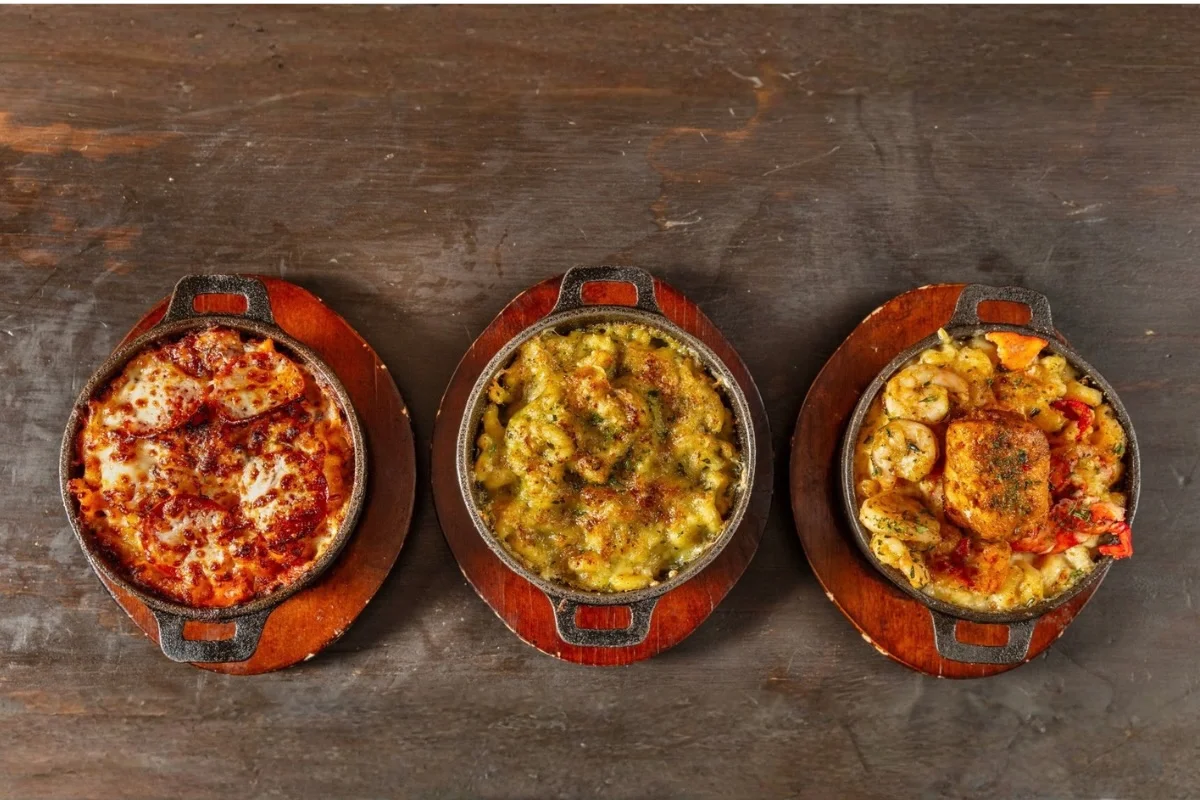
Concepts like Mac Shack prove the craveable comfort food is meant for reinvention, with specialty macs featuring everything from pizza to curry to seafood.
Credit: Mac Shack
Why Mac and Cheese Is Ready for Reinvention
Tapping new noodles, flavor-packed sauces and global ingredients
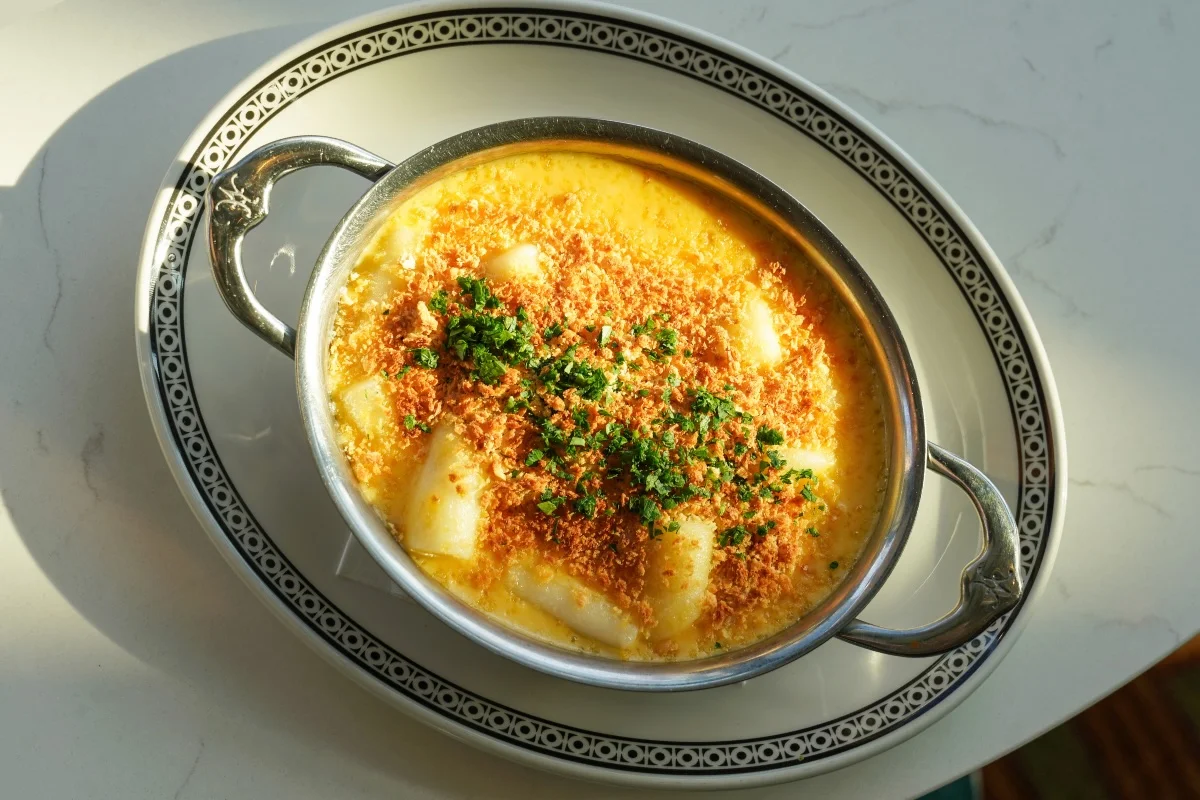
Soo Ahn says he was going through “a little bit of a tteokbokki phase” when he created the mac and cheese at Adalina Prime, a new steakhouse in Chicago, where Ahn serves as chef and partner. He knew the restaurant needed to include the shareable staple on the “friends” portion of the menu, but wanted to give it a Korean twist. He swapped macaroni for tteokbokki and went with a blend of more neutral, less “funky” mix of Velveeta, mozzarella, Parmesan, provolone and Gruyère for the sauce.
“The texture of tteokbokki isn’t something people are really used to,” says Ahn of the spongy, cylindrical rice flour cakes. “They’re soft, yet have a little bit of springiness, but it’s not a melt-in-your-mouth texture. It’s like this weird oxymoron of a texture.” To achieve the perfect mac and cheese mouthfeel, he boils the rice cakes, like pasta, in a basket for 2-3 minutes until tender, then sautées them in the cheese sauce and finally tops the made-to-order dish with crunchy panko breadcrumbs.
At first, Ahn had to explain to guests that it wasn’t gnocchi. But seven months after opening, the dish has become a signature offering that he can’t take it off the menu. “Everyone’s like, ‘Oh my god, what is that texture? I don’t know how to say ‘tteokbokki,’ but I love it,’” he says.
 Credit: Adam Sokolowski
 Sporting a novel texture and shape, tteokbokki offers a fresh base for mac and cheese at Adalina Prime in Chicago.
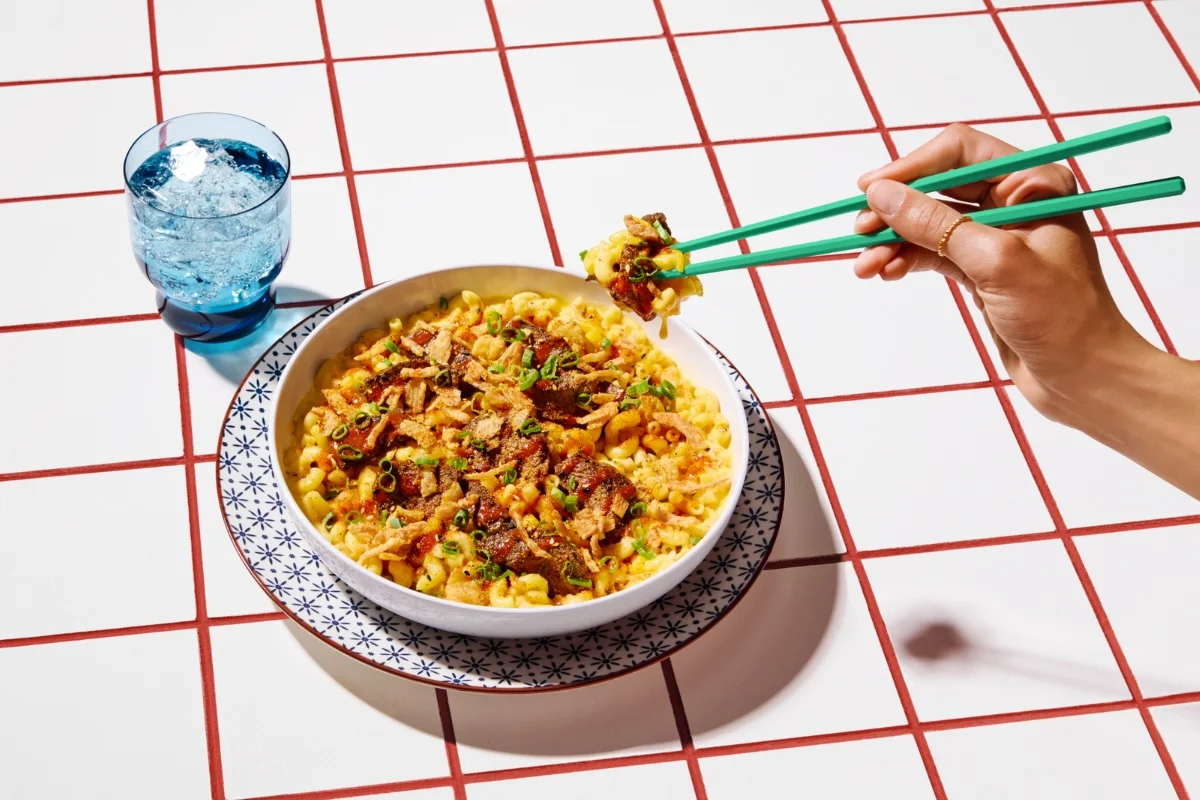
It wasn’t tteokbokki but bulgogi that made an appearance for National Mac and Cheese Day at Noodles & Company last summer, when the fast-casual chain created a Bulgogi Steak Mac & Cheese. The LTO married a cheddar-Jack base, bulgogi, a sweet-and-spicy Korean-style gochujang sauce created by Roy Choi, scallions and crispy onions. “Mac and cheese is an amazing blank palette because it’s the perfect comfort food. It’s basically umami in a bowl,” says Tina Massey, director of culinary R&D. “Cheese goes with almost everything, even things you wouldn’t think of, like Asian cuisine. You’re just pivoting those umami flavors against something very different, like an acid, or something sweet, like barbecue sauce.”
Mac and cheese has always been a part of the Noodles & Company platform, with core varieties including barbecue Pulled Pork BBQ, Buffalo Chicken Ranch and Garlic Bacon Crunch. But one of the sleeper hits is the classic mac—also made with cheddar-Jack—with the addition of Korean meatballs, a secret menu item at Noodles. “They’re kind of spicy and sweet, and when you put them on the mac and cheese, they play off each other so well,” Massey says.
 Credit: Noodles & Company
 At Noodles & Company, globally inspired LTOs, like last year’s Bulgogi Steak Mac & Cheese, introduce new flavors in a familiar format.
At Chicago’s La Josie, Mexican chiles, corn and bread rolls play well together in the beloved Queso y Mac. Chef/Owner Pepe Barajas has served his family recipes from Guadalajara at the restaurant for 10 years, and his version of mac and cheese is an enduring best-seller. “The idea was to highlight some of the beautiful chiles coming from Mexico,” says Barajas. He roasts poblanos on an open flame until smoky and charred and incorporates them into the cream sauce that’s enhanced with aged Gouda (he also makes a version with manchego).
“The aged profile of the cheeses enhances everything, and it’s got a nice, melty profile that brings the dish together,” he explains. The cream gets mixed into classic macaroni with roasted corn, and each made-to-order dish is topped with bolillo crumbs. “As a first-generation Mexicano, I always try to involve the flavor profiles of our culture, and growing up in Chicago, mac and cheese is always going to be a classic,” he adds.
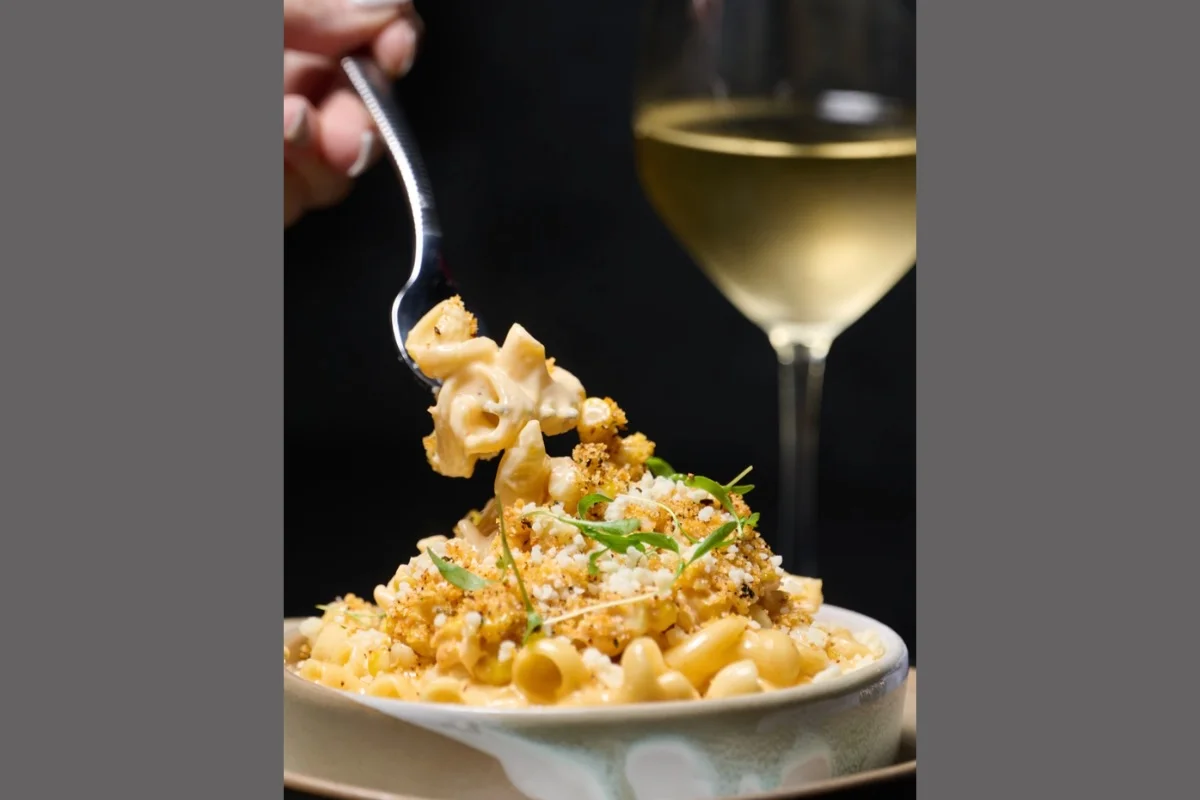
Chef Victor Rosales of Toro Toro in Miami also puts a Mexican spin on mac and cheese, which is served as a side at the popular steakhouse. For peppers, he prefers chipotles, roasting them before infusing them into a cheddar sauce. He also adds chipotle-roasted corn and Tajín-dusted breadcrumbs for an extra punch of color, texture and heat. For pasta he opts for torchio, whose twists and ridges are ideal for delivering all the flavors into a single bite. “The shape simply holds the cheese and the deliciousness of the sauce,” he explains.
 Credit: Toro Toro
 At Toro Toro, mac and cheese finds smoky heat through chipotle-infused cheddar sauce, chipotle-roasted corn and Tajín-dusted breadcrumbs.
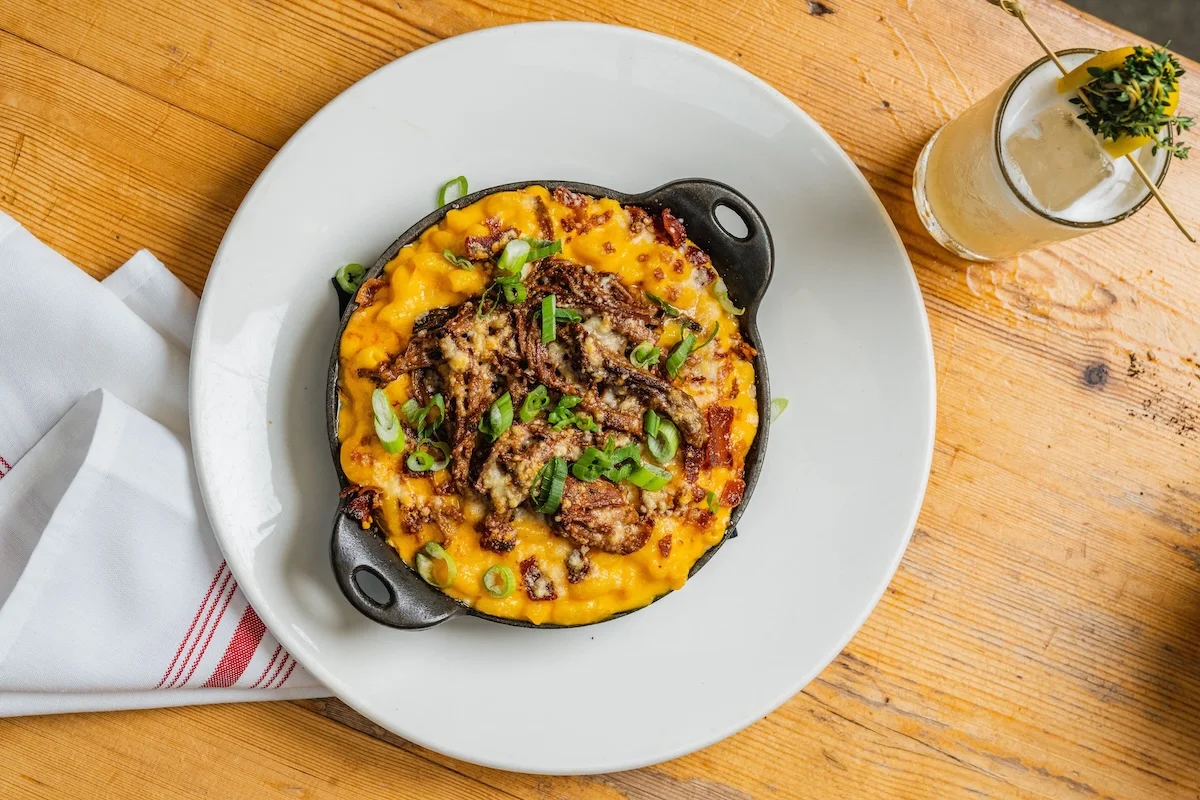
Peppers also play a role in the Cuban-Peruvian-inspired mac at fellow Miami concept, Finka Table & Tap. Chef/Owner Eileen Andrade opts for aji amarillo (Peruvian yellow pepper), which she boils three times to cut down on the heat before sautéing with butter, onions and garlic for a sauce. Then, she makes a classic roux, adding milk; heavy cream; a mix of Asiago, white cheddar and mozzarella; and finally, the pepper sauce. The made-to-order mac is finished in the salamander with a topping of Parmesan, slow-braised carne asada, crumbled bacon and scallions, all served in a cast-iron skillet.
“At the end of the day, it’s pasta, and who doesn’t want to have pasta as an appetizer?” says Andrade, adding that “there are so many different ways to make mac and cheese. You can play with the sauce. You can play with the toppings and the color. You can add different proteins. I think it’s a fun item that most menus have because it’s delicious. I love a good mac and cheese.”
 Credit: Finka Table & Tap
 Finka’s aji amarilla-spiked Mac N’ 3 Cheese is topped with slow-braised carne asada and crumbled bacon for an extra-indulgent shareable.
Before Chef/Owner Derrick Turton (aka “Chef Teach”) opened his soul food restaurant World Famous House of Mac in Miami in 2015, the culinary school grad worked in the music business, managing artists like Pitbull and A$AP Rocky. Following tours, he’d throw barbecues for the musicians and crew at his house. “We’d get together and everybody would bring their family, kids, moms. I would do these big spreads, and the thing that always stood out to everyone was my mac and cheese,” he recalls. Turton eventually opened House of Mac as a food truck, followed by four brick-and-mortar locations. Three didn’t survive the pandemic, but his Wynwood location is still thriving and offers more than 15 varieties of mac and cheese, with the original Five Cheese Mac as the base for all subsequent builds.
“The thing about mac and cheese, especially for the African-American community, is it’s kind of a sacred dish. For most holidays, it’s just as—if not more—important than the turkey or the ham, so people don’t play around with it because they’re so used to traditional ways of making it,” he explains.
Turton takes a different approach, channeling creativity through music and his Trinidadian background to experiment with different flavor profiles, sauces and combinations. “There’s really no genre—young, old, Black, white, pink, purple, green—everybody loves some form of mac and cheese,” says Turton, who offers fun takes like pizza, chicken Parm, and Philly cheesesteak macs, as well as versions that pay homage to his roots. His base is a roux mixed with a Parmesan-Romano cheese sauce and a blend of sharp cheddar, smoked Gouda, mozzarella and fontina. Blue cheese also crops up in the Buffalo Chicken Mac.
Best-sellers include Jerk Chicken and Jerk Shrimp macs, each made with a coconut milk Alfredo sauce spiced up with Scotch bonnets and topped with panko breadcrumbs. There’s also a Beef & Broccoli Mac topped with cheddar-Jack that Turton’s former Chinese-Jamaican chef created when the restaurant first opened. “When I see somebody do the little happy dance when they take the first bite, that’s instant gratification,” Turton says. “That’s like my version of watching somebody say the lyrics to my song. At the end of the day, it’s all art.”
 Credit: Mac Shack
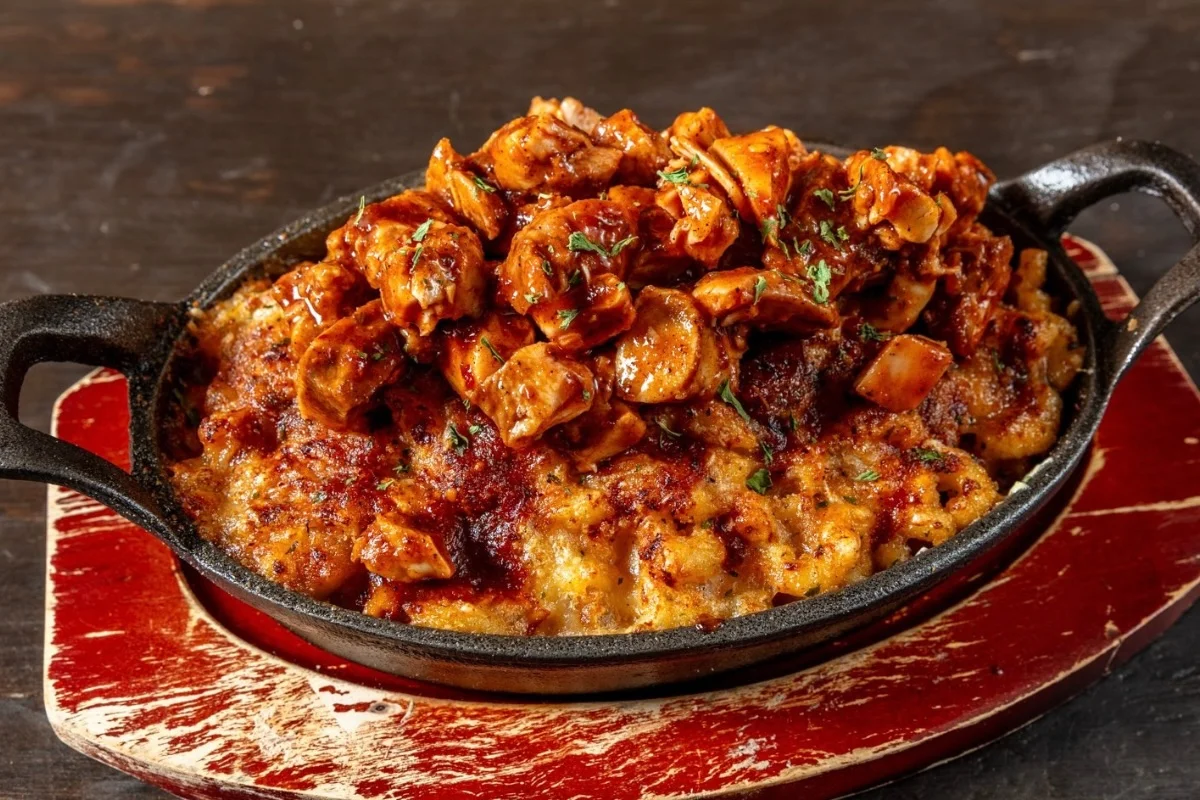
 Mac Shack’s jerk chicken option combines three milder cheeses (fontina, Gouda and Swiss), allowing the Caribbean spices to shine.
The chef/owner of New York City’s Mac Shack shares the sentiment that mac and cheese is meant to be reinvented, and he wants the dish to be recognized as more than just a side. “When I opened up years ago, I used to tell customers that this isn’t your grandmother’s mac and cheese,” says Clinton Philbert, who has two Brooklyn locations of the 12-year-old restaurant.
Among the dozen or so varieties are classics as well as contemporary versions that reflect his Caribbean roots, including a Jamaican Curry Mac made with curry sauce in a béchamel base along with Parmesan, fontina and Monterey Jack. Mac Shack also adds its own sofrito (known as epis in Haitian cuisine) for more heat plus optional proteins, from shrimp to duck to lobster.
Like Turton, Philbert has a jerk mac on the menu, this one eschewing coconut milk in favor of fontina, Gouda and Swiss to “let the spices sing.” In the past, he’s created a Korean mac with udon noodles and gochujang sauce and even a burger with a baked mac and cheese bun that still shows up on the menu from time to time. Philbert estimates he’s experimented with more than 200 different macs over the years. After all, “mac and cheese is the comfort food of the planet,” he says.
About the Author
 Liz Grossman has been a Chicago-based writer, editor and storyteller for 25 years. She’s the former editor-in-chief of Plate, a national, award-winning trade publication for the professional chef industry. As co-founder of the nonprofit storytelling series, Between Bites, Liz is passionate about live lit and giving back to the Chicago food community. She has served as a James Beard judge for the Chef and Restaurant Awards and has also served as a moderator for the FAB, Mise and the CIA Worlds of Flavor and Menus of Change conferences. Her writing has appeared in Newsweek, Chicago, Robb Report, Veranda, Food Service Director and more. Follow her at @elizabites_ChiRead More Stories by Liz Grossman
Rip, Tear and Pull-Apart Breads Menuing four fun, interactive styles
Flavor Trends, Strategies and Solutions for Menu Development[google_sidebar_ad adslug="2026-04-Surround-Kens-320x50"...
Tart Cherries Make Flavor Magic Reimagine ways to put their power of sour to work in modern menu development
Flavor Trends, Strategies and Solutions for Menu Development[google_sidebar_ad...
Spread a Little Indulgence Clean-label nut butters deliver dairy-free creaminess with a naturally premium read
Flavor Trends, Strategies and Solutions for Menu Development[google_sidebar_ad adslug="2026-05-Surround-Puratos-320x50"...
