



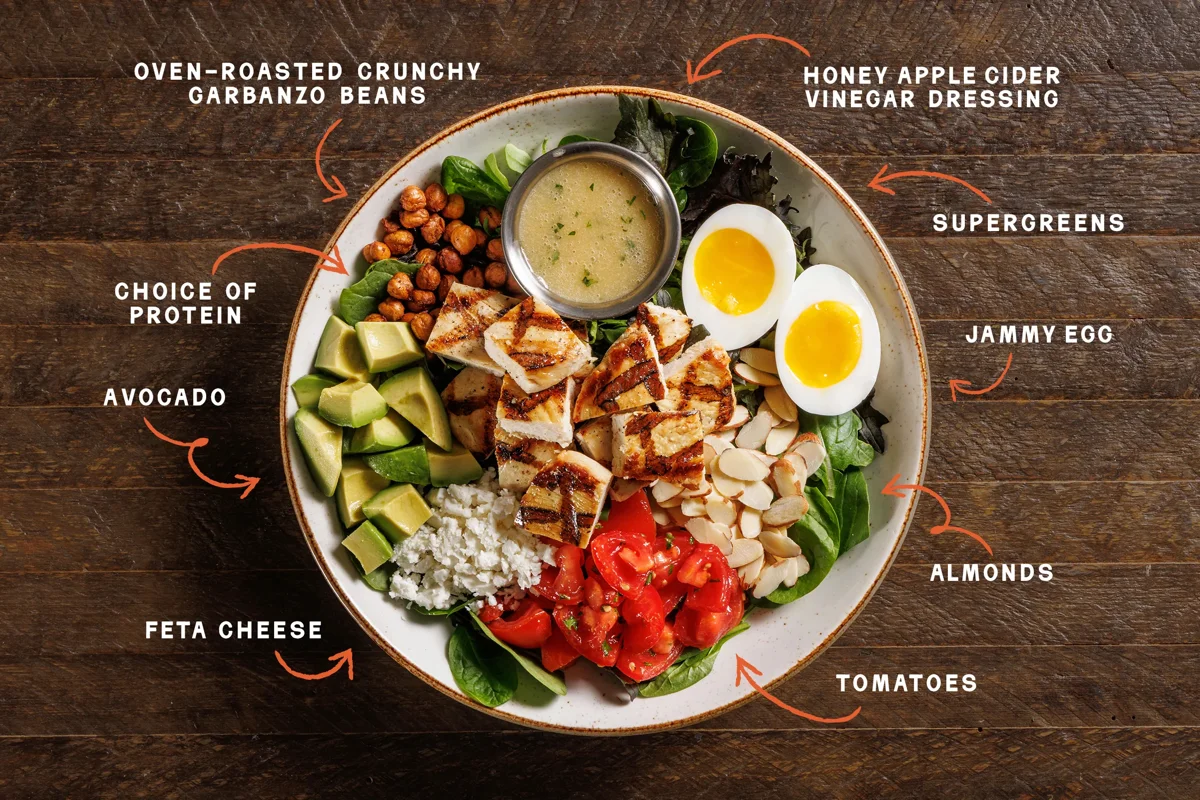
Lazy Dog’s new Protein Crunch Bowl features a strategic calibration of ingredients and nutrients for a flavor-packed meal that will appeal to health-conscious consumers and GLP-1 users alike.
Credit: Lazy Dog
SPECIAL REPORT
The Basics of GLP-1 Menu Innovation
Understanding the flavor cravings of GLP-1 Guests
When chefs and menu R&D experts are asked about creating dishes that appeal to guests using GLP-1 medications, the word “precision” comes up more than once. That’s not to imply the process requires advanced, time-intensive techniques to prepare recipes that fit the bill, but it does demand some forethought beyond smaller portions. Fats should be used sparingly and come from whole food sources; protein should be balanced by fiber; acid should bring forth flavor, not reflux; and presentation should still be thoughtfully crafted.
“We didn’t just shrink plates. We recalibrated composition. Balanced macronutrients in smaller servings help avoid nausea or heaviness—something many GLP-1 users experience,” says Angel Roque, culinary director of Cuba Libre Restaurant. Last year, he worked with physician Dr. Charlie Seltzer to create the GLP Wonderful Menu, featuring five new dishes that were engineered specifically for this growing demographic.
Roque believes a more science-informed culinary model is the future of menu development. In building the GLP Wonderful menu, he was guided by four pillars: protein density first, fiber without bulk overload, portion engineering and flavor intensity in smaller bites. “When someone eats less, flavor and presentation of the dish must work harder,” he adds. “We used our branded citrus-garlic sauces, slow braising, proper searing and seasoning precision so guests feel satisfied even with a smaller volume of food.”
The menu includes…
Gabe Caliendo, co-founder and VP of R&D at Lazy Dog Restaurant & Bar, took similar steps in creating the Protein Crunch Bowl, part of the brand’s new Mindful Meals menu. Inspired in part by his own eating habits, the dish features a choice of chicken, steak or salmon plus oven-roasted garbanzo beans, jammy egg, avocado, feta, tomatoes and almonds atop supergreens with honey-apple cider vinegar dressing on the side. Guests seeking a heartier base can also sub rice in for the greens.
Caliendo didn’t hyper-focus on the GLP-1 community when he built the dish, but several elements align with the eating preferences and limitations of these consumers. Read on for a look at how Cuba Libre and Lazy Dog developed these new offerings, plus tips for making GLP-1 menu modifications.
I. Fat: The Gateway to Flavor
“I had a great baking instructor when I was in culinary school, and he would always tell me: Fat is flavor. You’ve got to have fat,” Caliendo says. In many traditional Western cuisines, creams, butters and meat renderings are the go-to vehicles for flavor via fat. Unfortunately, these can be common triggers for digestive distress among the GLP-1 population.
“GLP-1 users already have slowed digestion at times from the drug, and fat can slow it down even more,” Roque explains. “Excessive fat can also trigger nausea. We used controlled amounts of healthy fats—enough for flavor and absorption, not excess heaviness.”
But this doesn’t mean eschewing dairy and meat altogether. Moderate portions of fresh cheeses with lower fat content, like mozzarella, ricotta and feta, are more easily digested than say cheddar, cream cheese or brie. Plus, techniques such as slow-braising and sous-vide lock in juicy, tenderness without relying on heavy cooking oils and sauces.
The GLP-Wonderful menu at Cuba Libre makes use of these cooking methods and more. The Vaca Frita stars braised brisket—not skirt or flank cuts—which is seared rather than fully pan-fried per the traditional preparation. Similarly, the Camaron Salteado features sautéed, not pan-fried, shrimp to reduce the overall fat content.
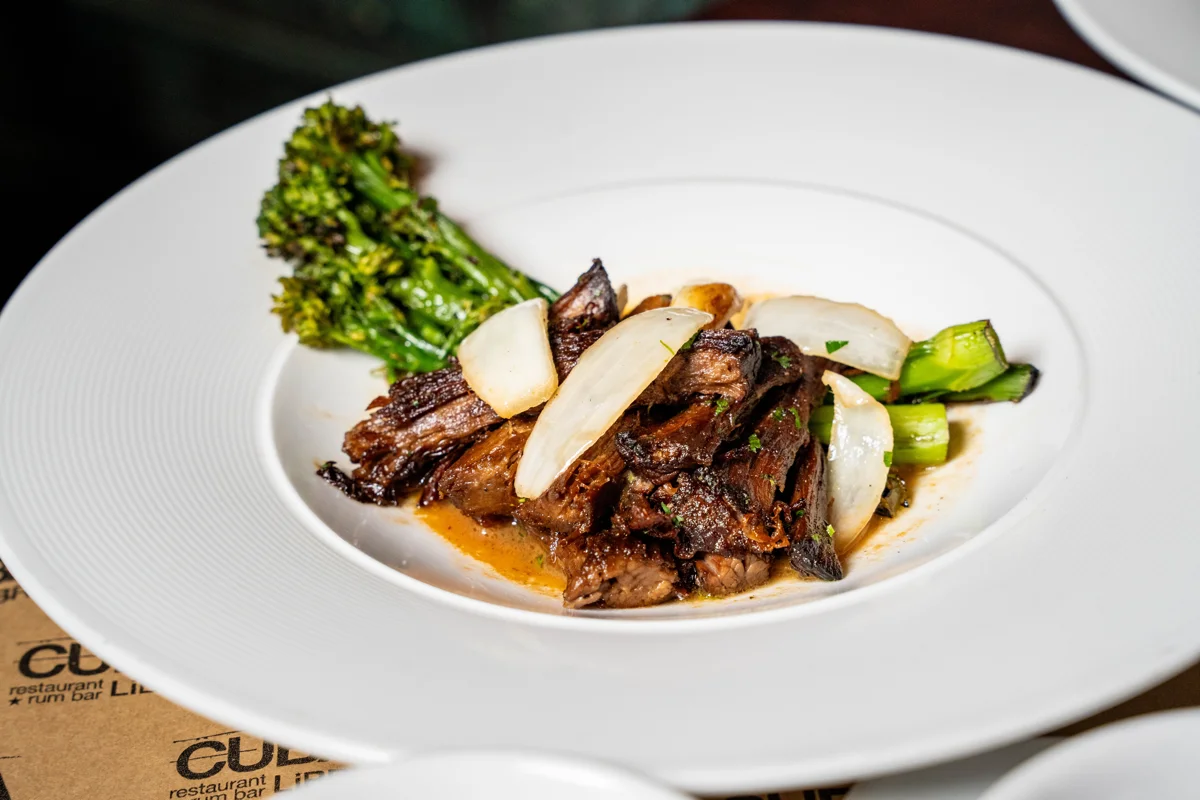 Credit: Cuba Libre
 Part of Cuba Libre’s GLP-Wonderful menu, the Vaca Frita opts for braised brisket, providing flavorful fat without the butter or creams used in pan-frying.
At Lazy Dog, Caliendo still does his old baking instructor proud by leveraging fat as a flavor
carrier. But in the case of the Protein Crunch Bowl, the macronutrient comes not from a heavy dressing or fried ingredients but rather half an avocado and jammy egg. “Those are both natural ingredients that you can just take as they are,” he explains.
And again, technique also comes into play. Deep-frying would imbue the garbanzos with rich flavor and crunchy texture—but they would also soak up the fry oil. So instead, Caliendo oven-roasts the beans, minimizing the grease and leaving the fat to healthier sources, like the avocado and egg, as well as slivered almonds and feta cheese.
II. Acid, Salt and Seasoning: Flavor Minus the Heft
If fat is what ushers in flavor, then acid and salt are what put it in technicolor. A new honey-apple cider vinegar dressing brightens the flavor medley of the Protein Crunch Bowl. “The dressing gives you that sharp tang; it’s very tart but also nicely balanced with honey,” Caliendo says. “You feel the tang in the back of your molars. It makes you want to eat, and it gets your palate excited. It’s kind of like an amuse bouche happening in your mouth.”
Too much acid overpowers other flavors and can also upset even the strongest constitutions; for GLP-1 users, the risk is even greater, making it all the more important to moderate and balance acidic elements. Honey smooths out the sharpness of the apple cider vinegar in Lazy Dog’s new dressing, just as Cuba Libre’s citrus-garlic sauce lightens the brisket in its GLP-1-friendly Vaca Frita.
“Bright citrus, garlic, and balanced seasoning stimulate appetite without requiring large portions. Strong but clean flavors make smaller servings feel complete,” Roque says. Similarly, the Pollo Asado sees chicken breast marinated in citrus before grilling, while the Camaron Salteado bursts with fresh tang courtesy of grape tomatoes.
While sodium isn’t a huge talking point in the context of GLP-1s, it is a priority among many consumers seeking healthier options. Lazy Dog’s Mindful Meals were designed with this broader group in mind, leading Caliendo to be strategic—and sparing—in his use of salt. “Feta cheese is another secret ingredient for flavor because you get that sharp, salty flavor but you’re not adding salt,” he explains. “So you have your salt, you have your fat, you have your acid, and then the other element would be spice or seasoning. In this particular dish, we don’t have anything spicy, but there are some herbs in the apple cider vinegar dressing.”
At Cuba Libre, the Camaron Salteado is garnished with sprigs of dill, and the Salmon a la Plancha is finished with another layer of the citrus-garlic sauce plus freshly chopped parsley. These high-impact additions bring freshness and flavor, lightening up the protein-centric plates.
III. Thinking About Flavor Beyond Taste
With any dish, taste is not the lone component; aroma, texture and visual cues carry equal weight. This is arguably even more important for consumers taking GLP-1 medications. “Many guests don’t want to feel like they’re ‘on a diet.’ Presentation matters. The dish must look abundant and intentional, not restricted,” Roque says. “This is about metabolic hospitality — designing for how people feel during and after the meal.”
Elegant plating and pops of color provided by vegetables, herbs and even edible flowers prime guests for a delicious meal. These visual cues also lay to rest any doubts that the GLP-Wonderful dishes are an afterthought or consolation prize for GLP-1 diners.
Vibrant colors and aesthetically compelling presentations are also defining qualities across Lazy Dog’s Mindful Meals selection. The Chili Crunch Ahi Tuna Bowl features deep red hues from the seared tuna, bright orange accents from the spicy garlic crunch and a spectrum of green thanks to edamame, cucumbers and avocado. Meanwhile, the Protein Crunch Bowl boasts the red of tomatoes, burnished gold of roasted garbanzo beans, verdant green of multicolored baby kale and bright yellow of jammy egg yolk.
Texture also plays an important role in designing GLP-1 menus. Crisp fruits, vegetables and even nuts signal freshness and provide an appealing mouthfeel. Consumer panels run through Mattson, an innovation firm with locations in the Bay Area and Chicago, reveal that GLP-1 users gravitate toward crunchy, juicy foods like cucumbers and apples.
At the same time, certain produce items, particularly cruciferous veggies like Brussels sprouts and broccoli should be cooked rather than served raw. And with animal proteins, tender versus thick or grisly, is always a good call. “GLP-1 users often prefer foods that are tender and easy to digest: braised brisket, grilled fish and properly cooked vegetables,” Roque explains.
IV. Macros to the Max
The current obsession with protein bodes well for GLP-1 users. Entrées found on the GLP Wonderful and Mindful Meals menus feature meat, poultry or seafood are no-brainers for protein, but less conventional sources have also emerged in categories as unlikely as beverages like lattes.
“Only one quarter of the plate should be protein, and that still gives you extremely significant macros in terms of protein,” says Erin McGlothlin, senior innovation manager at Mattson. “The rest of the plate can be filled up with fiber.”
Many GLP-1 diners will be on the hunt for these high-protein sources—without sufficient amounts, they risk losing muscle mass. But equally important is fiber, a type of carbohydrate found in whole foods like fruits, vegetables, whole grains, nuts and pulses. So far, fiber hasn’t received as much menu buzz despite hashtags like #fibermaxxing floating around the internet.
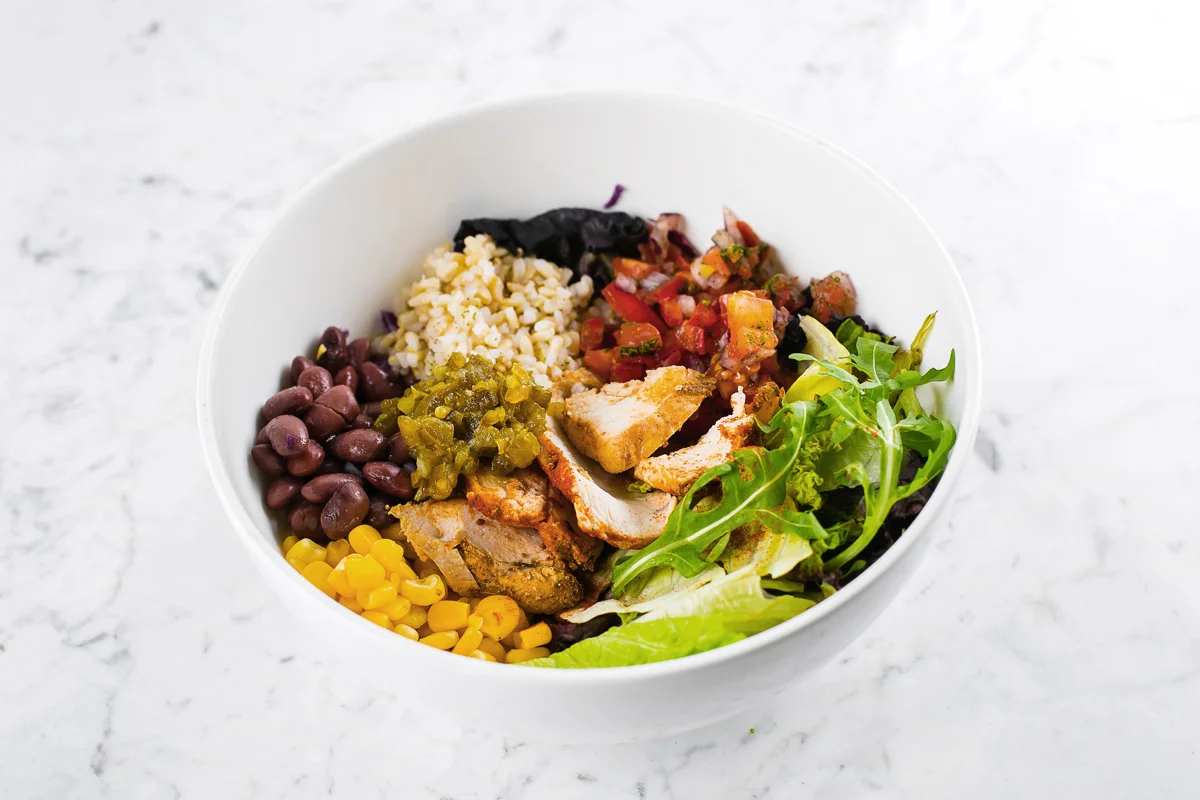
The blueprint for GLP-1-friendly dishes can be applied across a variety of cuisines. In this fajita bowl, marinated chicken accounts for a quarter of the contents, with fiber-rich foods rounding out the rest.
But Caliendo thinks that could change. “Fiber is going to be the next thing after protein. You’re already starting to see it percolate on social media,” he explains. As of now, the Mindful Meals selection includes grams of protein and calories, but Caliendo says it wouldn’t be hard for Lazy Dog or other brands to add fiber content if the conversation heads in that direction.
After all, the Protein Crunch Bowl is loaded with fiber: garbanzo beans, greens, tomatoes, avocado and almonds. The same can be said of the Thai Chicken Salad, with napa cabbage, mint, cilantro, carrots, red bell peppers and cucumbers, and the Wild-Caught Sea Bass, with mashed cauliflower and roasted veggies.
“Fiber is nothing new—that’s why salads are supposed to be healthy because you’re eating fiber,” he adds. “But when the general population starts to manage their fiber intake, then as a restaurant, you have to help them, and that’s kind of where we’re at right now. Some of my current work involves understanding that better.”
Some fiber-rich foods like leafy greens are inherently light and easy to digest, but others can be tougher, especially for GLP-1 diners. As with any composed dish, balance across all ingredients and flavors is paramount. “We didn’t just shrink plates. We recalibrated composition. Balanced macronutrients in smaller servings help avoid nausea or heaviness,” Roque explains. “Instead of heavy grains or excessive starch, we incorporated vegetables like broccolini, mushrooms, asparagus and beans in controlled portions.”
The good news is that this formula can be applied to any global cuisine, mash-up or wholly original culinary creation. McGlothlin offers several bowl ideas that could be a natural fit for fast casuals in particular: an East Asian-leaning miso salmon build, a Mediterranean kofte build and a fajita bowl.
“In the fajita bowl, one quarter of the bowl would be grilled, marinated chicken, and then you can fill the rest of the bowl up with these high-fiber options. You have your black beans—which are high in fiber and also bring protein to the table—peppers and onions and quinoa, and that actually gets you to 15 grams of protein per bowl,” she says. “You can have protein and fiber in a really delicious, appealing way. A lot of operators have these kinds of items, and it’s just reassembling them in a different manner.”
While balanced portions and nutrition are key considerations in attracting GLP-1 guests, Roque says it’s still important to keep flavor as the north star in menu development. Dr. Seltzer, a weight-loss specialist, agrees that flavor is non-negotiable
“Most importantly, Dr. Seltzer said everything has to taste good because appetite is already significantly decreased in GLP-1 users,” Roque explains. “In order for them to want to eat anything, it has to taste great.”
About the Author
 Nicole Duncan is the digital managing editor of Flavor & the Menu. She's reported on the restaurant industry for a decade, most recently as the editor of FSR magazine. In 2021, she won a Folio award for her feature on restaurant tycoon Tilman Ferttita. The following year, FSR was awarded Best Overall Issue for its May 2022 issue featuring Andrew Zimmern. She has profiled well-known chefs including Paola Velez, Fabio Viviani and Daniel Boulud, but also relishes the opportunity to spotlight under-the-radar trends and innovators.Read More Stories by Nicole Duncan
Rip, Tear and Pull-Apart Breads Menuing four fun, interactive styles
Flavor Trends, Strategies and Solutions for Menu Development[google_sidebar_ad adslug="2026-04-Surround-Kens-320x50"...
Tart Cherries Make Flavor Magic Reimagine ways to put their power of sour to work in modern menu development
Flavor Trends, Strategies and Solutions for Menu Development[google_sidebar_ad...
Spread a Little Indulgence Clean-label nut butters deliver dairy-free creaminess with a naturally premium read
Flavor Trends, Strategies and Solutions for Menu Development[google_sidebar_ad adslug="2026-05-Surround-Puratos-320x50"...
